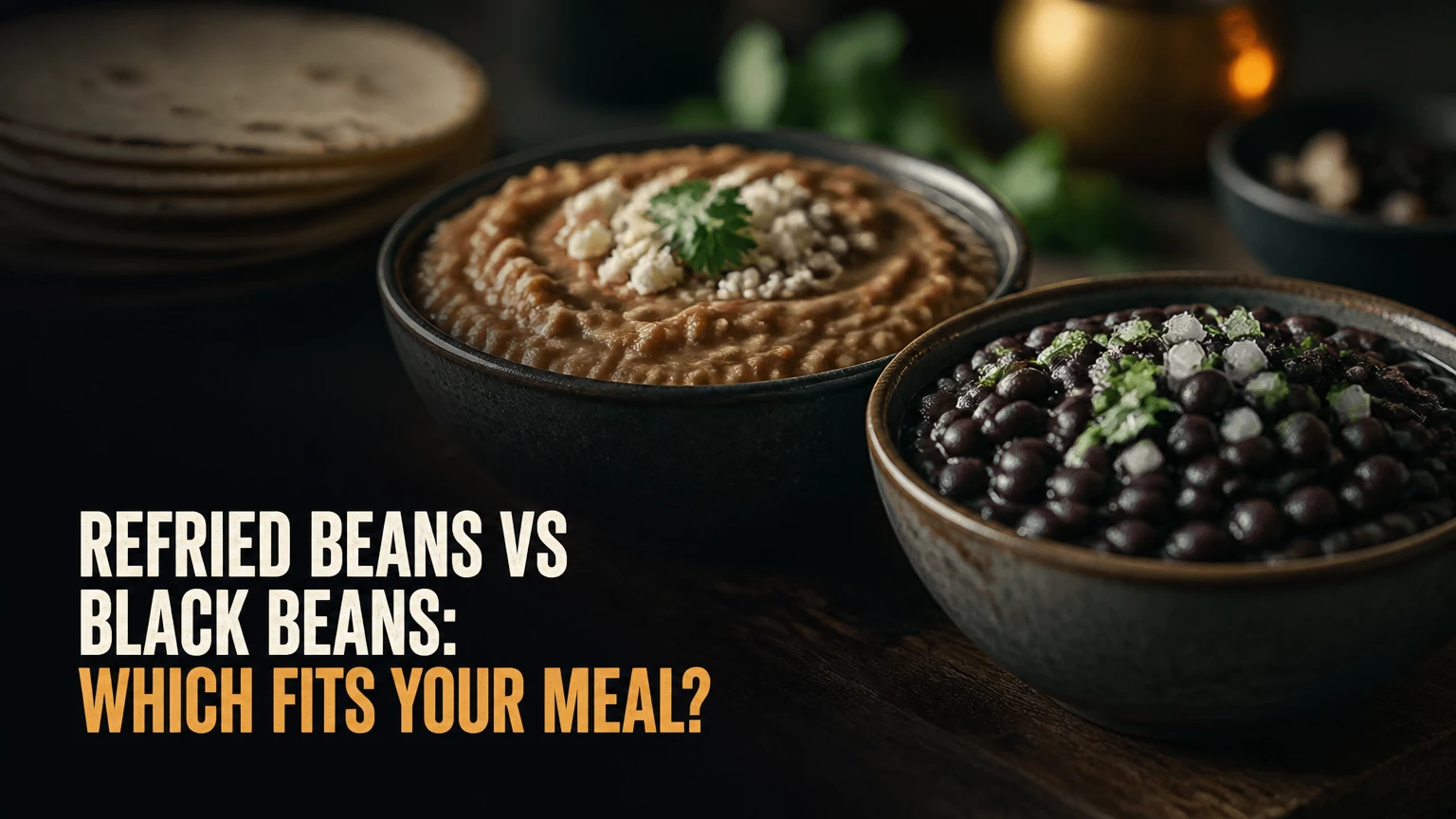
Refried beans are a seasoned, mashed bean preparation, while black beans are a specific whole-bean variety. Black beans usually provide a firmer texture and less added fat, whereas refried beans offer a creamy consistency and concentrated savory flavor. The better choice depends on the dish, ingredient label, sodium target, preparation time, and desired texture.
Key Facts at a Glance
- Black beans are whole legumes; refried beans are cooked beans mashed with liquid, seasonings, and sometimes added fat.
- Refried beans can be made from pinto beans, black beans, or other varieties, so the two terms are not opposites.
- Plain cooked black beans typically contain about 7-9 grams of protein and 6-9 grams of fiber per 100 grams.
- Added oil or rendered fat can raise refried beans’ calories and saturated fat, while canned products may contain substantially more sodium.
- Canned black beans generally require 2-5 minutes of preparation; dry black beans commonly require 1-2 hours of simmering after soaking.
- Black beans can be mashed into refried black beans, but whole refried beans cannot replace black beans when a recipe needs intact beans.
The Core Difference Between Refried Beans and Black Beans
The core difference is category: black beans identify a legume variety, while refried beans identify a cooking method and finished texture. A can of black beans contains intact, dark-skinned beans; a can of refried beans contains a thick paste made from cooked beans, broth or water, seasonings, and potentially oil or animal-derived fat.
The Spanish name frijoles refritos is commonly translated as “well-fried beans,” not necessarily “beans fried twice.” Traditional preparation usually involves cooking beans until tender, mashing them, and heating them in fat or oil. Some modern versions use little or no added fat.
| Attribute | Whole Black Beans | Refried Beans | Practical consequence |
|---|---|---|---|
| Food category | Bean variety | Prepared dish | Compare variety with preparation, not two varieties |
| Physical form | Intact oval beans | Mash or thick purée | Determines bite, spreadability, and binding |
| Typical color | Black-purple skin | Tan, brown, gray-purple, or black | Color depends on bean variety and ingredients |
| Main flavor | Mild, earthy, slightly sweet | Savory, seasoned, concentrated | Refried beans often need fewer additions |
| Common base | Black turtle beans | Pinto or black beans | Check the ingredient list |
| Typical added fat | 0-1 g per 100 g plain cooked | 0-6 g per 100 g, recipe dependent | Fat changes calories and mouthfeel |
What Are Black Beans?
Black beans are small, oval seeds of Phaseolus vulgaris, the same species that includes pinto, navy, and kidney beans. “Black turtle bean” is the common commercial type. The beans retain a dark skin after cooking, while the interior becomes creamy but remains structurally intact.
Black beans work well in salads, soups, grain bowls, chili, tacos, and rice dishes because their skins help them hold together. Their dark color comes partly from anthocyanin pigments, although the practical nutritional value still comes from the bean’s protein, fiber, complex carbohydrate, minerals, and low natural fat.
What Are Refried Beans?
Refried beans are cooked beans reheated with a small amount of cooking liquid and mashed to a spreadable consistency. Pinto beans produce the familiar pale brown version, while black beans create a darker, earthier preparation often associated with southern Mexican cooking.
Commercial cans vary widely. One product may contain beans, water, salt, and onion, while another may contain added oil, rendered fat, cheese flavoring, or preservatives. “Vegetarian” does not automatically mean low sodium, and “fat-free” does not automatically mean minimally processed.
Nutrition: Which Is Healthier?
Plain black beans are usually the better choice for minimizing added fat and controlling ingredients, while refried beans can remain nutritious when prepared with modest oil and limited sodium. Both foods supply plant protein, fiber, folate, iron, magnesium, potassium, and complex carbohydrates, so the recipe and serving size determine the final comparison.
Nutrition labels must be compared by weight or an equivalent serving. A 100-gram comparison is useful because a dense spoonful of refried beans and a bowl of whole beans can contain different amounts of water.
Protein, Fiber, and Calories
Cooked black beans and plain refried beans often have similar protein and fiber values when they contain the same amount of bean solids. Added liquid can lower values per 100 grams, while added fat raises calories without increasing protein or fiber.
| Nutrient, typical per 100 g | Cooked black beans | Refried pinto beans | Refried black beans |
|---|---|---|---|
| Calories | 125-140 kcal | 95-150 kcal | 100-155 kcal |
| Protein | 7-9 g | 5-8 g | 6-9 g |
| Total fiber | 6-9 g | 5-8 g | 6-9 g |
| Total fat | 0.4-1.0 g | 1-6 g | 1-6 g |
| Carbohydrate | 22-26 g | 16-25 g | 18-26 g |
| Saturated fat | 0-0.2 g | 0-2 g | 0-2 g |
These are typical ranges, not a substitute for a package label. The USDA FoodData Central database lists cooked legumes as low-fat, fiber-containing foods, but canned and restaurant preparations can differ because water, salt, and added fat change the final composition.
Fiber also affects satiety and digestion. A sudden large increase in beans may cause gas, especially when a person is not accustomed to fermentable carbohydrates. Rinsing canned beans removes surface liquid and some sodium, but the reduction varies by brand, rinsing time, and the bean’s contact with the packing liquid.
Sodium and Added Fat
Sodium is usually the largest nutritional difference between products, not the distinction between black and refried beans. Unsalted dry black beans start with no added cooking salt, while canned products can range from low-sodium levels to more than 400 milligrams per serving.
| Product type | Typical sodium per 1/2 cup | Added fat | Best control method |
|---|---|---|---|
| Unsalted cooked dry black beans | 0-15 mg | 0-1 g | Salt after cooking to taste |
| Regular canned black beans | 250-500 mg | 0-1 g | Drain and rinse, then compare labels |
| Low-sodium canned black beans | 100-250 mg | 0-1 g | Select the lowest labeled option |
| Homemade refried beans | 0-400 mg | 0-6 g | Control salt, oil, broth, and seasonings |
| Canned vegetarian refried beans | 300-650 mg | 0-5 g | Check both sodium and fat |
| Restaurant refried beans | 400-900+ mg | 3-12 g | Ask about preparation and portion size |
A low-sodium diet favors dry beans or a clearly labeled reduced-sodium product. People managing hypertension, kidney disease, or another sodium-sensitive condition should use the nutrition label and clinician guidance rather than assume that vegetarian beans are low sodium.
Texture, Flavor, and Culinary Performance
Black beans win when a recipe needs intact pieces, while refried beans win when the food needs a smooth spread, cohesive filling, or creamy side. The difference comes from physical structure: whole beans preserve their skins and shape, whereas mashing releases starch and thickens the surrounding liquid.
| Cooking use | Better default | Reason | Useful adjustment |
|---|---|---|---|
| Burrito filling | Refried beans | Spreadable and cohesive | Add 1-2 tablespoons warm broth if stiff |
| Taco topping | Refried beans | Stays on the tortilla | Keep texture slightly thick |
| Bean salad | Whole black beans | Holds shape after tossing | Chill and drain thoroughly |
| Soup or chili | Black beans | Adds distinct pieces | Simmer 10-20 minutes in the broth |
| Dip | Refried beans | Blends with spices and toppings | Loosen with warm water or lime juice |
| Grain bowl | Black beans | Provides bite and visual contrast | Season after draining |
| Tostada base | Refried beans | Creates a protective spread | Use 2-3 tablespoons per tostada |
| Side dish | Either | Texture is the deciding factor | Mash only part of the beans |
Refried beans are also a practical binder. They help fillings stay inside burritos, connect shredded ingredients, and prevent tostada toppings from sliding. Whole black beans provide more textural contrast but may fall from a folded tortilla if used without a sauce or mash.
Which Types Are Available?
The main options include dry black beans, canned black beans, homemade refried beans, canned refried beans, pinto-based preparations, and black-bean preparations. Each option differs in cooking time, ingredient control, texture, and storage life.
| Option | Main ingredients | Typical preparation time | Texture |
|---|---|---|---|
| Dry black beans | Dried beans, water, seasonings | 1-2.5 hours, plus optional soak | Firm to creamy whole beans |
| Canned black beans | Beans, water, salt | 2-5 minutes | Soft whole beans |
| Homemade pinto refried beans | Pinto beans, liquid, aromatics, oil | 15-30 minutes | Creamy tan mash |
| Homemade black refried beans | Black beans, liquid, aromatics, oil | 15-30 minutes | Dark, earthy mash |
| Canned vegetarian refried beans | Beans, water, oil, salt, seasonings | 3-5 minutes | Smooth or lightly chunky |
| Restaurant-style refried beans | Bean base, cooking liquid, added fat | 5-10 minutes to serve | Rich, smooth, often loose |
Refried beans may be vegetarian or vegan, but the label must confirm the ingredients. Traditional recipes can use rendered animal fat, while vegetarian recipes often use canola, sunflower, avocado, or olive oil. The choice changes flavor and saturated fat.
Cost, Time, and Convenience
Canned black beans are usually the fastest whole-bean option, while dry black beans generally provide the lowest cost per cooked cup. Homemade refried beans are economical when made from a batch of dry beans, but canned refried beans save active preparation time.
| Pantry option | Typical retail cost | Yield or serving basis | Active time |
|---|---|---|---|
| Dry black beans, 1 pound | $1.50-$3.00 | 5-7 cups cooked | 10-15 minutes sorting and rinsing |
| Canned black beans, 15 ounces | $0.90-$1.80 | About 1.5 cups drained | 2-5 minutes |
| Canned refried beans, 15 ounces | $1.20-$2.50 | About 1.5 cups | 3-5 minutes |
| Homemade refried beans, 2 cups | $0.75-$2.50 in ingredients | 4 half-cup servings | 15-30 minutes |
| Restaurant side, 1 portion | $2.00-$5.00 typical | 1/2-1 cup | 0 minutes at home |
Dry beans need enough water and time to become fully tender. Canned beans remove that wait, but the package price per cooked cup is usually higher and the sodium may be harder to control.
How to Cook Dry Black Beans
To cook dry black beans, sort and rinse 1 cup of beans, cover them with 3 inches of water, simmer for 60-120 minutes, and salt after the beans begin to soften. The finished beans should crush easily between two fingers, with no hard center.
Step 1: Sort, Rinse, and Soak
Check 1 cup of dry black beans for stones, damaged seeds, and debris, then rinse under cool water. For an overnight soak, cover the beans with at least 3 inches of water for 8-12 hours and drain before cooking.
For a quick soak, boil the beans in abundant water for 2 minutes, turn off the heat, cover for 1 hour, and drain. Soaking can shorten cooking time, but it is optional.
Step 2: Simmer Until Tender
Place soaked beans in fresh water or unsalted broth, add onion, garlic, or a bay leaf, and maintain a gentle simmer. Cook uncovered or partially covered for approximately 60-120 minutes, adding hot water when the beans are no longer submerged.
Salt does not reliably make beans tough. Adding salt during cooking can improve seasoning and skin texture, although very acidic ingredients such as tomatoes, vinegar, and citrus should usually wait until the beans are tender because acid can slow softening.
Step 3: Season and Test
Add salt when the beans are nearly tender, then simmer for another 10-20 minutes. A properly cooked black bean has a creamy interior and intact skin, while a hard white center indicates more cooking time.
A batch made from 1 cup dry beans commonly yields 5-7 cups cooked. Refrigerate cooked beans in their liquid for up to 4 days, or freeze them with some liquid in measured 1-2 cup portions.
How to Make Refried Black Beans
To make refried black beans, heat 1 tablespoon oil with 1/2 cup diced onion, add 2 cups cooked black beans and 1/2 cup bean liquid, mash gradually, and simmer for 10-15 minutes. The finished mixture should spread easily while holding a soft ridge from a spoon.
- Warm the oil in a skillet over medium heat.
- Cook the onion for 4-6 minutes, then add minced garlic for 30 seconds.
- Add cooked black beans and bean liquid.
- Mash with a potato masher, leaving some small pieces for texture.
- Simmer uncovered until the beans hold their shape on a spoon.
- Season with salt, cumin, oregano, or chili powder after tasting.
A blender can make refried beans gummy because high-speed processing releases starch too aggressively. Hand mashing provides better control, especially when the goal is a restaurant-style texture with small bean pieces remaining.
Can You Substitute One for the Other?
Cooked black beans can replace refried beans only after mashing and moistening them, while refried beans can replace whole black beans only in recipes that do not require intact pieces. A practical starting ratio is 1 cup cooked black beans to 3/4 cup thick refried beans, adjusted for moisture.
| Recipe situation | Substitute | Starting amount | Required adjustment |
|---|---|---|---|
| Burrito filling | Mashed black beans for refried beans | 1 cup for 1 cup | Add 2-4 tablespoons broth |
| Bean salad | Refried beans for black beans | Not recommended | Use whole beans for structure |
| Dip | Mashed black beans for refried beans | 1 cup for 1 cup | Add oil, lime, or warm water |
| Chili | Refried beans for black beans | 1/2 cup for 1 cup | Reduce other thickening ingredients |
| Tostada base | Mashed black beans for refried beans | 3/4 cup for 1 cup | Mash very smooth and season |
| Soup | Refried beans for black beans | 1/2 cup for 1 cup | Expect a thicker broth |
The substitution changes more than appearance. Refried beans thicken liquid and distribute bean flavor throughout a dish, while whole black beans contribute individual bites and absorb surrounding seasoning.
Which Should You Choose?
Choose whole black beans for intact texture, lower added fat, ingredient control, salads, soups, grain bowls, and low-sodium meal preparation. Choose refried beans for spreads, burritos, tostadas, dips, and any dish that benefits from a cohesive, creamy filling.
For Low-Sodium Eating
Choose unsalted dry black beans when sodium control is the priority. If using canned beans, compare labels, drain them, rinse them under running water, and avoid adding salty broth until the dish has been tasted.
Homemade refried black beans can also fit a low-sodium pattern when the cook controls salt and uses unsalted bean liquid. Canned refried beans require closer label inspection because the beans are already mashed, making rinsing impractical.
For Vegan or Vegetarian Meals
Choose a product labeled vegetarian or vegan, because refried beans are defined by preparation rather than dietary status. Whole canned black beans are often simpler for plant-based meals, but seasonings and flavorings still deserve a label check.
For homemade beans, use vegetable oil and vegetable broth. A small amount of neutral oil can create a creamy mouthfeel without requiring a large quantity.
For High-Protein Meal Prep
Choose whichever form helps you eat a consistent portion, because both can deliver similar protein when the bean content is comparable. Whole black beans are easier to measure in salads and bowls, while refried beans make compact fillings for wraps and burritos.
Pair beans with grains, corn tortillas, eggs, tofu, dairy, or another protein source when a meal needs more total protein. Beans provide valuable plant protein, but they are not a concentrated protein food compared with tofu, fish, poultry, or dairy.
For Tacos, Burritos, and Tostadas
Choose refried beans as a base or filling and black beans as a topping or side. Refried beans adhere to tortillas and create a moisture barrier, while whole black beans add contrast when layered with rice, salsa, cabbage, or avocado.
For a lighter meal, use a thin layer of refried beans and add whole black beans elsewhere on the plate. That combination supplies both cohesion and texture without making the entire dish soft.
Troubleshooting Common Problems
Why Are Black Beans Still Hard?
Hard black beans usually result from old beans, insufficient cooking time, hard water, or acidic ingredients added too early. Continue simmering with fresh hot water, test every 15 minutes, and reserve tomato, citrus, and vinegar for the end.
A small amount of baking soda, approximately 1/8 teaspoon per cup of dry beans, may soften stubborn beans, but too much can create a soapy flavor and mushy skins. A pressure cooker can shorten cooking time, although exact timing depends on bean age and appliance pressure.
Why Are Refried Beans Dry or Chalky?
Dry refried beans need warm liquid, not cold water. Stir in 1 tablespoon of warm bean liquid, unsalted broth, or water at a time until the beans become spreadable, then taste again for seasoning.
A chalky texture can also indicate undercooked base beans. Adding fat may improve mouthfeel, but it cannot fully repair beans that were never tender.
Why Are Refried Beans Too Runny?
Simmer runny refried beans uncovered over low to medium-low heat for 5-15 minutes, stirring frequently to prevent scorching. The mixture is ready when a spoon dragged across the pan leaves a path that closes slowly.
If the beans will cool before serving, stop slightly looser than the final target because starch thickens during cooling. Adding dry seasoning or extra mashed beans can thicken the mixture without introducing much sodium.
Should You Add Salt at the Beginning?
Salt may be added during cooking without automatically toughening beans, although acidic ingredients can delay softening. The practical rule is to season the cooking liquid moderately, taste near the end, and delay acidic ingredients until tenderness is established.
This approach produces seasoned interiors and avoids the common problem of adding a large amount of salt after cooking. Canned beans need less additional salt because the packing liquid usually contributes sodium.
The Bottom Line
Refried beans vs black beans is not a strict variety-versus-variety comparison: black beans are a whole legume, while refried beans are a mashed preparation that can use black beans. Choose black beans for intact texture, lower added fat, salads, soups, and sodium control. Choose refried beans for creamy spreads, burritos, tostadas, dips, and fast comfort-food meals.
Black beans can become refried beans with a skillet, aromatics, liquid, and 10-15 minutes of mashing and simmering. The best choice is the one that matches the dish’s required structure and the package’s actual sodium and fat values.
Frequently Asked Questions
Are black beans healthier than pinto refried beans?
Plain black beans usually have less added fat and fewer processing ingredients than canned pinto refried beans, but both can be nutritious sources of fiber and plant protein. A homemade pinto preparation with limited oil and salt may compare favorably with a heavily salted canned black-bean product, so labels and recipes matter more than color alone.
Are refried black beans the same as black beans?
Refried black beans begin as black beans but are no longer the same preparation after cooking, mashing, and reheating. Refried black beans retain the variety’s earthy flavor and dark color while gaining a thick, spreadable texture. The term “refried” describes the finished dish, not a separate bean species.
Can you eat refried beans straight from the can?
Canned refried beans are generally ready to eat after opening because manufacturers cook the beans before packaging, but heating improves flavor and texture. Warm them in a saucepan or microwave, stir thoroughly, and add 1-2 tablespoons water if the product is too thick.
Do refried beans count as a vegetable serving?
Beans are legumes, and dietary guidance may count them toward either the vegetable group or the protein foods group depending on the meal pattern. Refried beans still provide fiber and nutrients, but added sodium, oil, cheese flavoring, or large portions can change the meal’s overall nutrition.
How long do homemade refried beans last?
Refrigerate homemade refried beans in a covered container for up to 4 days and cool them promptly after cooking. Freeze portions for approximately 2-3 months for best quality. Reheat with water or bean liquid because the starch thickens as the beans chill.