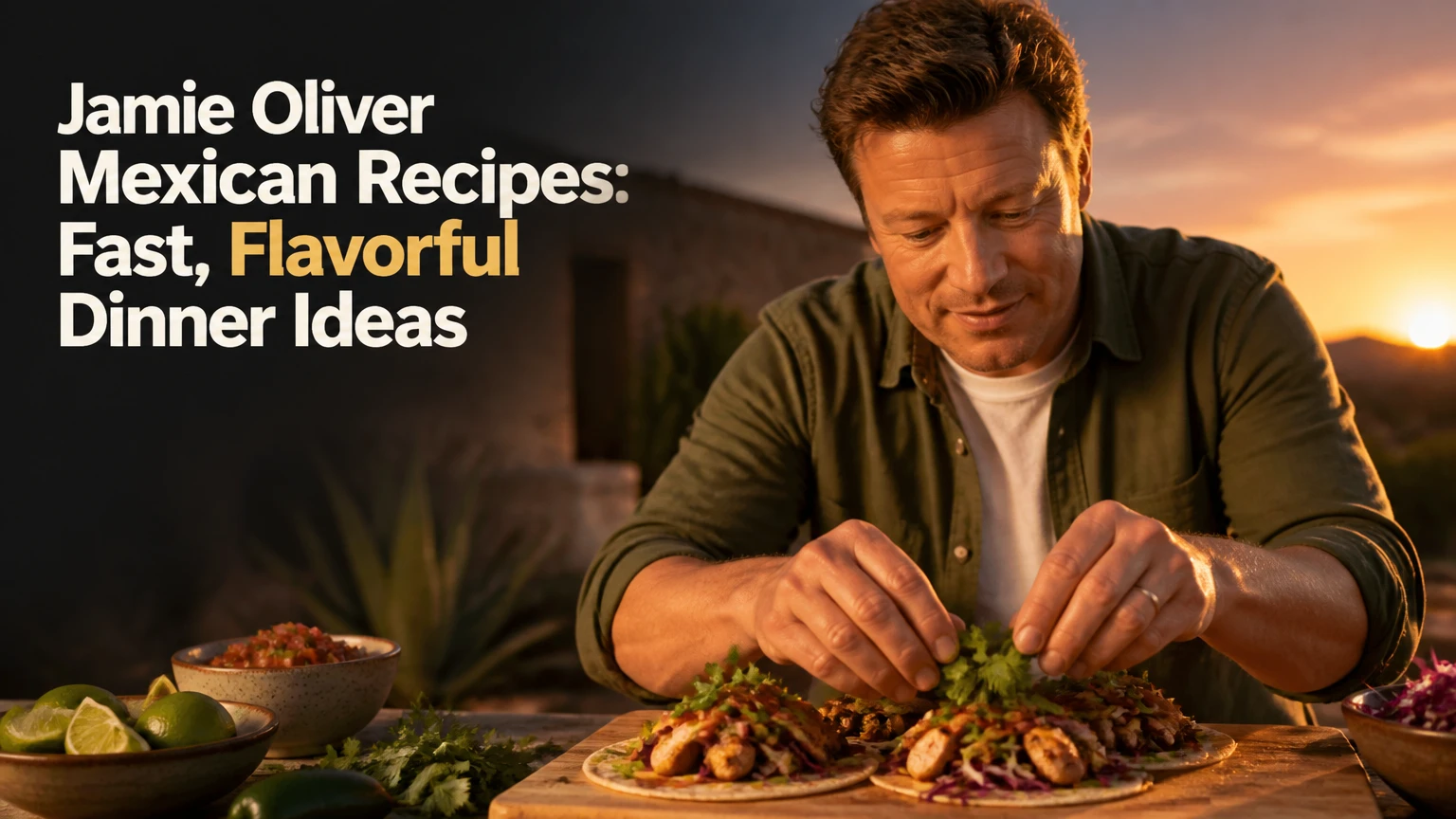
Jamie Oliver Mexican recipes are accessible Mexican-style dishes built around fast cooking, supermarket ingredients, fresh acidity, and contrasting textures. The collection includes tacos, fajitas, burritos, chilli, enchiladas, seafood, chicken, beef, bean, and vegetable options. These recipes are practical adaptations rather than a complete representation of Mexico’s regional cuisines.
What Are Jamie Oliver Mexican Recipes?
Jamie Oliver’s Mexican recipes are simplified, highly adaptable interpretations of Mexican and Tex-Mex home cooking. They commonly combine a seasoned filling with tortillas, beans, peppers, onions, fresh herbs, lime, salsa, avocado, or a cooling dairy-based dressing.
The Jamie Oliver website groups Mexican-style ideas across quick meals, family dinners, vegetarian dishes, and longer braises. The exact selection changes over time, so recipe names, availability, and serving details should be checked on the official Jamie Oliver recipe pages before shopping.
The useful distinction is culinary rather than promotional. Mexican cuisine includes regional traditions from Oaxaca, Puebla, Yucatán, Veracruz, Sonora, and many other areas; a supermarket fajita or quick bean enchilada cannot represent all of them. Jamie Oliver’s strength is reducing preparation barriers while keeping the meal structure recognizable and flexible.
Key Facts at a Glance
- Most quick Jamie Oliver-style taco and fajita meals take 25-40 minutes, including preparation.
- A typical four-person meal uses 8-12 tortillas, 500-600 grams of filling, and 2-3 fresh accompaniments.
- High heat prevents peppers and onions from steaming; a crowded pan is the main cause of soft, watery fajita vegetables.
- Lime, vinegar, tomato, or another acidic ingredient should brighten a dish, not replace seasoning or proper cooking.
- Canned beans provide a low-cost base for enchiladas, tacos, chilli, and burrito fillings.
- Seafood cooks fastest, while shin, brisket, and other collagen-rich beef cuts need several hours of gentle cooking.
How Does the Jamie Oliver Fiesta Method Work?
The method works by preparing separate flavor and texture components, then bringing them together at the table. A typical sequence is seasoning, preparing a sharp slaw or salsa, cooking the filling over high heat, warming tortillas, and adding a creamy or acidic finishing element.
This structure makes the recipes easy to customize. A household can serve mild chicken beside hotter salsa, or offer beans and vegetables alongside meat without preparing an entirely separate meal. The approach also protects texture because wet toppings remain separate until serving.
The Six-Part Cooking Blueprint
- Season the filling. Use olive oil, lime zest, cumin, smoked paprika, garlic, and a measured amount of chilli. A 10-15 minute rest is sufficient for thin meat, prawns, fish, or mushrooms.
- Make the fresh component. Slice cabbage, red onion, coriander, tomato, mango, or radish. Add lime juice or vinegar shortly before serving so the vegetables remain crisp.
- Preheat the cooking surface. Heat a large frying pan or tray for 5 minutes before adding ingredients. A hot surface creates browning instead of steam.
- Cook in a single layer. Thin strips usually need 4-8 minutes; prawns often need 3-5 minutes; thicker chicken pieces require a food thermometer.
- Warm the tortillas. Heat corn or flour tortillas in a dry pan for 20-30 seconds per side, then keep them covered so they remain pliable.
- Assemble at the table. Add filling first, then beans or rice, fresh salsa or slaw, avocado, yogurt, and lime. Keep wet ingredients separate until eating.
The United States Department of Agriculture Food Safety and Inspection Service states, “The only way to tell if food is safely cooked is to use a food thermometer.” For poultry, that means 74°C or 165°F at the thickest point; colour alone is not a reliable test.
Which Jamie Oliver-Style Mexican Dish Should You Choose?
The best choice depends on cooking time, protein preference, equipment, and tolerance for hands-on preparation. Seafood tacos are usually the fastest, fajitas offer the simplest family format, chilli suits batch cooking, and bean enchiladas offer the lowest typical cost.
| Dish type | Typical time | Main filling | Best equipment | Typical UK cost for four |
|---|---|---|---|---|
| Prawn or fish tacos | 25-30 minutes | 500 g seafood | Large frying pan | £12-£18 |
| Chicken fajitas | 30-40 minutes | 600 g chicken | Wide skillet or tray | £9-£15 |
| Beef chilli | 2.5-5 hours | 750 g braising beef | Heavy casserole | £10-£18 |
| Bean enchiladas | 40-55 minutes | 3 cans beans | Baking dish | £5-£9 |
| Vegetable fajitas | 25-35 minutes | 700 g vegetables | Wide skillet | £6-£11 |
Prices are typical supermarket estimates for the United Kingdom, not fixed recipe costs. Brand, season, location, and fresh seafood pricing can change the total substantially.
Seafood Tacos: Best for Speed
Seafood tacos suit cooks who need a complete meal in under 30 minutes. Prawns, white fish, mango salsa, cabbage, lime, and a mild creamy dressing create a fast combination with little oven time.
Use firm white fish such as cod, haddock, or pollock in pieces about 3 centimetres wide. Cook prawns until opaque and curled, but remove them promptly because residual heat continues cooking them. Frozen seafood is practical, provided it is fully thawed and thoroughly patted dry before seasoning.
A useful ratio for four people is 500 grams seafood, 8 tortillas, 250 grams cabbage, 1 mango or 250 grams tomato, and two limes. The principal drawback is timing: seafood tacos lose quality if held hot for 20 minutes while other components finish.
Chicken Fajitas: Best for a Family Dinner
Chicken fajitas are the most forgiving option for mixed preferences because the filling, tortillas, vegetables, and toppings can be served separately. Thin chicken strips cook quickly, while peppers and onions add sweetness without requiring a separate side dish.
For four people, use approximately 600 grams boneless chicken, 3 peppers, 2 onions, 8-12 tortillas, and 250 grams yogurt or avocado dressing. Slice the chicken across the grain and keep pieces close in thickness. Add vegetables after the chicken has browned, or use two pans when the skillet is smaller than 28 centimetres.
Chicken fajitas are not ideal when a cook wants deep, slow-developed chilli flavor. They are a high-heat dinner, not a braise.
Beef Chilli: Best for Make-Ahead Cooking
Beef chilli rewards a long, gentle simmer because connective tissue converts to gelatin and the sauce thickens around the meat. Chopped tomatoes, onion, garlic, cumin, dried chilli, beans, and stock form the usual framework.
For a four-to-six-person batch, a typical starting point is 750 grams beef, 2 cans beans, 2 cans tomatoes, 500 millilitres stock, and 2-4 hours of cooking, depending on the cut. Shin and brisket need longer than minced beef, which can be ready in about 45 minutes.
Cool leftovers in shallow containers within 2 hours, refrigerate them promptly, and reheat until piping hot throughout. Chilli often tastes better the next day, but that improvement comes from rested seasoning, not from unsafe room-temperature storage.
Bean Enchiladas: Best for Value and Vegetarian Meals
Bean enchiladas use seasoned beans, vegetables, tortillas, tomato sauce, and cheese to create a filling baked meal. They are suitable for vegetarian cooks and can be made more substantial with sweetcorn, mushrooms, spinach, or cooked rice.
Mash part of the beans with a small amount of their liquid, then leave the rest whole. The mashed portion binds the filling, while whole beans preserve texture. Use around 3 cans of beans for six to eight enchiladas, depending on tortilla size and additional vegetables.
Enchiladas are less suitable when maximum crispness is the goal. Sauce softens the tortillas during baking, so tacos or tostadas are better for a dry, crunchy texture.
What Ingredients Define the Style?
The defining ingredients are not a fixed national formula. They are a practical combination of aromatic seasoning, acidity, fresh produce, a filling, a tortilla or grain, and a cooling garnish.
| Component | Typical quantity for four | Function | Practical alternatives |
|---|---|---|---|
| Tortillas | 8-12 | Wrapper and carbohydrate | Rice, baked tortilla chips |
| Beans | 2-3 cans, 400 g each | Fibre and bulk | Lentils, chickpeas |
| Lime or vinegar | 2 limes or 30 ml vinegar | Acidity | Lemon, tomato, pickled onion |
| Cumin | 1-2 teaspoons | Warm savoury aroma | Coriander seed |
| Smoked paprika | 1-2 teaspoons | Smoke and colour | Mild chilli powder |
| Fresh coriander | 20-30 g | Herbal finish | Flat-leaf parsley |
| Yogurt or avocado | 150-250 g | Cooling richness | Sour cream, mashed avocado |
Chipotle adds smoke and heat, but it is not essential. A mixture of smoked paprika and a small amount of ordinary chilli provides a similar direction with less heat. For children or heat-sensitive diners, remove fresh chilli from the shared base and serve it separately.
How Should You Balance Heat, Salt, Acid, and Fat?
Balance the dish in that order: season the filling, add acid gradually, then use fat or dairy to soften excessive heat. Acid brightens beans and meat, salt intensifies otherwise muted flavours, and avocado or yogurt reduces the perception of chilli heat.
Add lime to a salsa immediately before serving when crispness matters. Add a small amount of vinegar to sliced onion earlier if a softer quick pickle is wanted. Do not use sugar to hide heavy salting; correct salt by increasing the unsalted bulk of beans, vegetables, or sauce.
A practical tasting sequence is one teaspoon of lime juice, a pinch of salt, then another small adjustment. Large additions make recovery difficult.
How Do You Cook the Core Components Successfully?
Successful Jamie Oliver-style Mexican meals depend more on surface temperature and moisture control than on a long ingredient list. The filling must brown, the fresh component must stay crisp, and the tortilla must be warm enough to fold without becoming wet.
| Component | Heat or setting | Typical duration | Finished cue |
|---|---|---|---|
| Thin chicken strips | High skillet heat | 6-8 minutes | 74°C internal temperature |
| Prawns | Medium-high skillet heat | 3-5 minutes | Opaque centre, firm texture |
| Fish pieces | Medium-high skillet heat | 5-8 minutes | Flakes easily, opaque centre |
| Peppers and onions | High skillet heat | 6-10 minutes | Brown edges, tender centre |
| Bean enchiladas | 190°C oven | 20-25 minutes | Sauce bubbles, cheese melts |
| Tortillas | Dry pan, medium heat | 20-30 seconds per side | Flexible with toasted spots |
Use a tray with a broad surface when cooking for six or more people. A standard 30 by 40 centimetre baking tray handles vegetables more effectively than a small skillet because the ingredients can remain separated.
Why Do Fajita Vegetables Turn Soggy?
Fajita vegetables turn soggy when their moisture cannot evaporate quickly enough. Overcrowding, a cold pan, wet ingredients, and early salting all encourage steaming rather than browning.
Dry sliced vegetables with a towel and preheat the pan until a drop of water evaporates immediately. Cook in batches if the vegetables cover more than one layer. Add salt after the first side has coloured, then remove the vegetables before they become limp.
One practitioner rule is to leave visible metal between pieces during the first 2 minutes of cooking. If the pan surface disappears beneath vegetables, browning will slow sharply.
Can You Prepare These Meals Ahead?
Most components can be prepared 1 day ahead, but tortillas and fresh toppings should be finished close to serving. Cooked chilli and bean fillings tolerate reheating well; dressed cabbage, avocado, and warmed tortillas do not.
| Component | Make-ahead window | Storage method | Finish before serving |
|---|---|---|---|
| Beef chilli | 1-3 days | Covered refrigerator container | Reheat thoroughly |
| Bean enchilada filling | 1 day | Airtight refrigerated container | Fill and bake |
| Cooked chicken | Up to 2 days | Shallow sealed container | Reheat without drying |
| Chopped cabbage | 1 day | Sealed container, undressed | Add lime and salt |
| Mango or tomato salsa | 4-12 hours | Refrigerated bowl | Drain excess liquid |
| Avocado dressing | Same day | Covered with minimal air exposure | Stir and adjust lime |
For entertaining, make the chilli or bean filling first, chop vegetables next, and warm tortillas last. That order reduces the risk of a finished meal sitting uncovered while the cook completes a side dish.
How Does This Approach Compare With More Traditional Mexican Cooking?
Jamie Oliver’s adaptations prioritize speed, substitution, and broad supermarket access, while traditional Mexican cooking often depends on regional ingredients, specialized methods, and culturally specific combinations. Neither category is a single standardized style, so “authentic Mexican” is too broad a label for a meaningful one-line comparison.
| Decision factor | Jamie Oliver-style adaptation | Traditional regional approach |
|---|---|---|
| Weeknight duration | 25-55 minutes | 45 minutes to several hours |
| Common cooking fat | Olive oil or neutral oil | Regional use of oil, lard, or other fats |
| Chilli strategy | Smoked paprika, flakes, canned chilli | Fresh or dried regional chillies |
| Tortilla expectation | Flour or corn tortillas | Usually region-specific corn or flour use |
| Cheese options | Cheddar, feta, or accessible cheese | Queso fresco, cotija, Oaxaca, or local varieties |
| Equipment | Skillet, tray, blender | Comal, casserole, mortar, or blender |
| Main advantage | Accessible and adaptable | Regional specificity and layered technique |
| Main limitation | Can flatten regional distinctions | More sourcing and preparation may be needed |
Jamie Oliver-style dishes are useful entry points, but they should not be presented as substitutes for the full regional foodways of Mexico. A cook seeking a particular regional result should begin with a recipe from a Mexican regional authority rather than assuming a generic “Mexican” profile.
What Are the Best Substitutions?
The best substitute preserves the ingredient’s function, not necessarily its identity. Replace a protein with another protein that cooks in the same time range, and replace a chilli by matching heat, smoke, or both.
| Original ingredient | Substitute | Quantity adjustment | Effect on result |
|---|---|---|---|
| Prawns | Firm white fish | Use equal weight | Adds 2-4 minutes cooking |
| Chicken | Portobello mushrooms | Use 700 g per 600 g chicken | More moisture, less protein |
| Black beans | Pinto beans | Use equal drained weight | Softer, creamier filling |
| Chipotle | Smoked paprika plus chilli | 1 tsp paprika plus ¼ tsp chilli per chipotle | Similar smoke, lower complexity |
| Greek yogurt | Plain yogurt | Use equal quantity | Slightly thinner dressing |
| Corn tortillas | Small flour tortillas | Use equal count | Softer, more elastic wrapper |
| Mango | Tomato and sweetcorn | Use 300 g combined | Less sweetness, more savoury texture |
Drain canned beans, but retain several tablespoons of their liquid for mashing. The starch helps bind the filling without requiring extra cheese or cream.
What Common Problems Need Fixing?
Most failures are recoverable if the cook identifies whether the problem is excess water, excessive heat, insufficient seasoning, or poor timing. The table below gives a direct correction rather than simply naming the mistake.
| Problem | Likely cause | Immediate fix | Prevention |
|---|---|---|---|
| Soggy vegetables | Crowded or cool pan | Drain, then sear in batches | Use a 28 cm or larger skillet |
| Torn tortillas | Cold, dry tortillas | Warm and cover for 5 minutes | Heat 20-30 seconds per side |
| Harsh salsa | Too much raw chilli or onion | Add tomato, avocado, or yogurt | Add chilli gradually |
| Dry chicken | Thin pieces overcooked | Slice and mix with salsa | Remove at 74°C |
| Watery enchiladas | Excess bean liquid or sauce | Rest uncovered for 5 minutes | Drain beans and limit sauce |
| Bland chilli | Salt or acid added too late | Adjust salt, lime, and cumin | Taste at each cooking stage |
Do not rinse away all bean liquid when making a mashed filling. Do not pour cold salsa over a hot skillet and expect the filling to remain crisp. Separate temperature-sensitive components until assembly.
How Much Do You Need for Different Group Sizes?
Scale the filling and tortillas linearly, then increase cooking-surface capacity before increasing seasoning. A four-person recipe doubled in a small pan will usually steam, even when the ingredient ratios remain correct.
| Diners | Filling quantity | Tortillas | Beans | Fresh topping |
|---|---|---|---|---|
| 2 | 300 g | 4-6 | 1 can | 150 g |
| 4 | 600 g | 8-12 | 2 cans | 250-300 g |
| 6 | 900 g | 12-18 | 3 cans | 400 g |
| 8 | 1.2 kg | 16-24 | 4 cans | 500-600 g |
For large groups, use two pans or a broad oven tray rather than extending the cooking time in one crowded vessel. Longer cooking does not compensate for poor evaporation and often dries the outside before the centre is ready.
Which Option Suits Different Home Cooks?
Recipe choice should follow the cook’s constraint, not the most impressive ingredient list. Busy households benefit from tacos or fajitas, while batch cooks gain more from chilli and enchilada filling.
| Home cook | Recommended dish | Active time | Main reason |
|---|---|---|---|
| Busy parent | Chicken fajitas | 25-35 minutes | Separate components suit mixed preferences |
| Budget-conscious cook | Bean enchiladas | 20 minutes active | Canned beans stretch the meal |
| Beginner | Vegetable fajitas | 25-30 minutes | No meat temperature decision |
| Weekend host | Beef chilli | 45 minutes active | Can be made ahead |
| Seafood-focused cook | Prawn tacos | 20-25 minutes | Fast cooking and fresh toppings |
A beginner should learn pan control with vegetables before attempting a large seafood batch. A host should choose a dish that improves after resting rather than one that demands simultaneous last-minute cooking.
FAQ
Are Jamie Oliver Mexican recipes authentic?
Jamie Oliver Mexican recipes are Mexican-style adaptations, not a complete account of authentic regional Mexican cooking. They often use accessible substitutions and shortened methods, which makes them practical for home cooks but can change the chilli, fat, tortilla, cheese, and cooking traditions found in specific Mexican regions.
What is the quickest Jamie Oliver-style Mexican dinner?
Prawn tacos or fish tacos usually take 25-30 minutes from preparation to serving. Chicken fajitas normally require 30-40 minutes because the chicken must reach 74°C or 165°F, while fresh salsa and tortillas can be prepared during the cooking time.
What can replace chipotle in these recipes?
Use smoked paprika with a small amount of mild chilli when chipotle is unavailable. Start with 1 teaspoon smoked paprika and one-quarter teaspoon chilli for each chipotle, then adjust after tasting. The substitute supplies smoke and heat but will not reproduce chipotle’s exact dried-fruit flavour.
Can these recipes be made without dairy?
Yes. Replace yogurt with mashed avocado, blended white beans, or a lime dressing made with olive oil. Keep the creamy component separate until serving, because avocado darkens and bean dressings thicken during refrigeration.
What should you serve with Mexican-style tacos?
Serve tacos with one fresh component, one filling carbohydrate, and an acidic garnish. Cabbage slaw, black beans, rice, tomato salsa, lime wedges, avocado, and warmed tortillas all work, but a meal does not need every accompaniment at once.
How do you store leftover taco filling?
Refrigerate cooked filling in a shallow sealed container within 2 hours and use it within 2-3 days. Store tortillas, salsa, cabbage, and avocado separately so moisture does not make the tortillas tough or the vegetables limp.
The Bottom Line
Jamie Oliver Mexican recipes are strongest when you need accessible ingredients, clear preparation, and a flexible family meal rather than strict regional reproduction. Choose seafood tacos for a 25-30 minute dinner, chicken fajitas for easy assembly, bean enchiladas for value, and beef chilli for make-ahead cooking. The method succeeds when the pan stays uncrowded, the filling reaches a safe temperature, and fresh acidic toppings are added at the end.