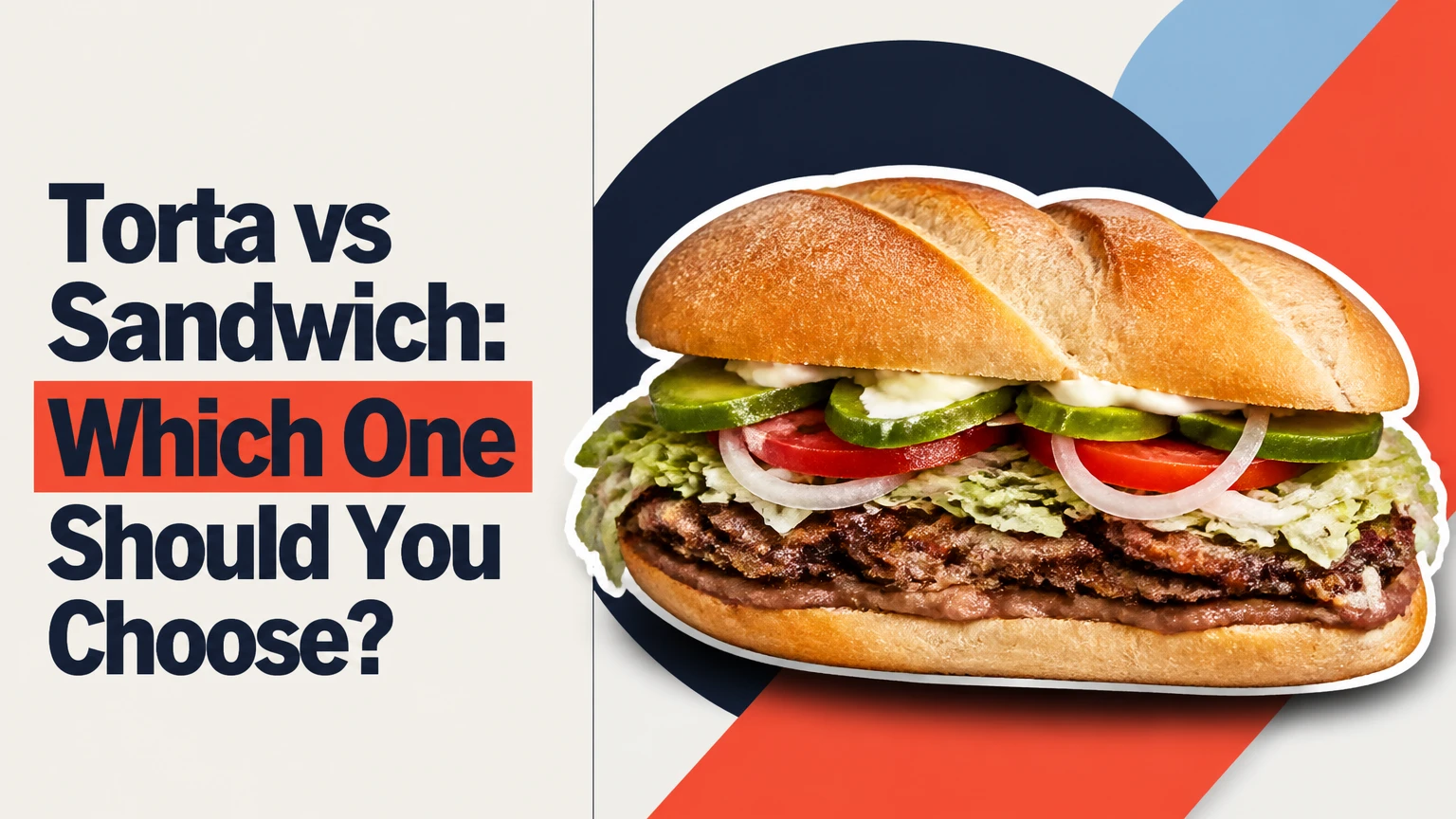
A torta is a Mexican sandwich made most often with a bolillo or telera roll, while “sandwich” is the broader category for bread enclosing or supporting fillings. The torta usually delivers a crustier exterior, warmer and denser fillings, and stronger Mexican condiments, but a sandwich offers more bread, filling, temperature, and dietary options.
Key Facts at a Glance
- A torta is a type of sandwich, but most sandwiches are not tortas.
- Bolillo and telera are the two most recognizable torta breads.
- Refried beans, avocado, cheese, vegetables, and pickled chiles are common torta ingredients, not universal requirements.
- A torta de milanesa commonly takes 10-15 minutes to prepare when the cutlet is already available.
- A cold deli sandwich usually takes 2-7 minutes and travels more cleanly.
- Torta ahogada is a regional Guadalajara specialty built for sauce, not a template for every Mexican torta.
What Is the Difference Between a Torta and a Sandwich?
The essential difference is category versus regional identity: sandwich describes a broad food format, whereas torta identifies a Mexican sandwich tradition with recognizable bread, flavor combinations, and preparation methods. A turkey sandwich, grilled cheese, sub, panini, and torta can all belong to the sandwich category.
The word “sandwich” has no single worldwide construction rule. Some definitions require two pieces of bread, while culinary practice includes rolls, buns, baguettes, pressed loaves, and open-faced preparations. A torta therefore differs through cultural and culinary specificity rather than through a completely separate mechanical design.
Tortas also vary substantially. A torta in Mexico City may use a crusty roll and several hot fillings; a Guadalajara torta ahogada uses birote and chile sauce; a regional shop may offer a simple egg torta. No single ingredient defines every torta.
Comparison at a Glance
| Attribute | Mexican torta | Cold deli sandwich | Submarine sandwich | Panini or melt |
|---|---|---|---|---|
| Typical bread | Bolillo or telera, 90-150 g | Sliced loaf, 60-100 g | Long roll, 120-220 g | Ciabatta or sourdough, 100-180 g |
| Usual serving temperature | Warm or hot | Cold | Cold or warm | Hot |
| Typical assembly time | 10-15 minutes | 2-7 minutes | 5-10 minutes | 8-12 minutes |
| Moisture tolerance | High with crust and toasting | Low to medium | Medium to high | High after pressing |
| Typical US menu price | $11-$17 | $8-$15 | $10-$18 | $10-$16 |
What Bread Makes a Torta Different?
Bolillo and telera make a torta recognizable because both are crusty Mexican wheat rolls with enough strength for substantial fillings. Bolillo is usually oval with a firmer crust, while telera is broader and flatter, often marked by two shallow grooves that create three visual sections.
Bread affects more than appearance. A crisp crust resists compression, and a moderately open crumb can hold beans, vegetables, cheese, and meat without collapsing immediately. Sliced sandwich bread has a softer, thinner structure, so hot juices and wet vegetables can weaken it faster.
Birote is another important regional bread. Guadalajara’s torta ahogada traditionally uses a firm, salty roll that remains functional around chile broth. Replacing it with an ordinary soft bun changes the eating method because the bread absorbs sauce and loses its shape sooner.
Bread Comparison
| Bread | Shape and weight | Crust behavior | Best use | Practical substitute |
|---|---|---|---|---|
| Bolillo | Oval, 90-130 g | Firm and crisp after toasting | Standard hot torta | Small French roll |
| Telera | Wide, flat, 100-150 g | Crisp edge with softer center | Layered torta | Small sesame roll |
| Birote | Dense, elongated, 110-160 g | Highly resistant to broth | Torta ahogada | Dense sourdough roll |
| Pullman loaf | Rectangular slices, 60-90 g | Soft and thin | Cold lunch sandwich | Whole-grain sliced bread |
| Ciabatta | Irregular roll, 100-180 g | Crisp shell, airy crumb | Pressed sandwich | Rustic Italian roll |
Is a Soft Hamburger Bun the Same as Torta Bread?
A soft hamburger bun can hold a simple torta-style filling, but it does not reproduce the structure of a bolillo or telera. The bun has a tender crust and compresses quickly, which suits a dry grilled filling better than a saucy or heavily layered one.
For a home substitute, choose a small crusty roll between 90 and 150 grams. Toast the cut sides for 2-3 minutes, then let the surface cool for about 30 seconds before adding wet ingredients.
How Is a Mexican Torta Built?
A practical torta uses a toasted roll, one spread or moisture barrier, a central filling, fresh vegetables, and an acidic condiment. Refried beans are common on the lower half, but mayonnaise, avocado, crema, or a dry spread may replace them depending on the recipe and region.
A reliable assembly sequence protects the bread while keeping temperature and texture distinct. Put hot ingredients near the center, use cheese or beans between juicy fillings and the crumb, and add watery vegetables immediately before closing.
Basic Torta Assembly
- Split one 90-150 gram bolillo or telera lengthwise. Remove only loose excess crumb if the roll is crowded.
- Toast the cut faces for 2-3 minutes. Use 5 grams of butter or oil if the surface sticks.
- Warm 60-90 grams of refried beans. Spread the beans across the lower half in a layer about 3-5 millimeters thick.
- Add 100-150 grams of cooked filling. Place the hottest component directly over the beans.
- Add 30-45 grams of cheese. Oaxaca, panela, or a mild melting cheese works according to the style.
- Add 30-50 grams of avocado and 40-60 grams of tomato or onion. Keep wet slices thin.
- Finish with 10-20 grams of pickled jalapeños or a spoonful of salsa. Close and press lightly for 20-30 seconds.
You will know the torta is assembled correctly when the roll stays intact after a firm squeeze, the filling reaches the edges without spilling, and the cut surface remains crisp for at least several minutes. Cold beans, an un-toasted roll, and excess salsa are the most common causes of failure.
Common Torta Components
| Component | Typical quantity | Function | Common examples |
|---|---|---|---|
| Crusty roll | 1, 90-150 g | Structural shell | Bolillo, telera, birote |
| Bean spread | 60-90 g | Moisture barrier and richness | Pinto or black beans |
| Main filling | 100-150 g | Protein and primary flavor | Milanesa, eggs, grilled chicken |
| Cheese | 30-45 g | Salt, fat, cohesion | Oaxaca, panela, quesillo |
| Fresh garnish | 70-110 g | Coolness and texture | Avocado, tomato, onion |
| Acidic topping | 10-30 g | Brightness and heat | Pickled jalapeños, salsa verde |
Why Do Tortas Handle Wet Fillings?
Tortas handle wet fillings better because toasted crust, thicker bread, and strategic spreads slow liquid movement. A bean layer contains fat and starch, while a crisp cut surface creates a temporary moisture barrier between sauces and the crumb.
The protection is limited, not absolute. A torta ahogada is deliberately soaked, and its dense regional roll is selected for that purpose. An ordinary bolillo will eventually become soft if covered with broth, especially when it is warm and has been hollowed too aggressively.
Compression also changes the eating experience. A plancha or skillet warms the roll, softens cheese, and reduces vertical movement, but pressing too heavily squeezes sauce toward the edges and removes the contrast between crisp crust and soft filling.
A sandwich can use its own barriers. Cheese between tomatoes and bread, lettuce beneath a wet filling, and a thin layer of butter or mayonnaise each reduce direct water contact. These techniques matter more than a rigid rule that every sandwich must use a particular order.
Which Torta Styles Matter Most?
The most useful torta styles to know are torta de milanesa, torta ahogada, torta Cubana, and pambazo. They differ in bread, filling, sauce, and cooking method, so ordering one requires more than recognizing the word “torta.”
Torta de Milanesa
Torta de milanesa uses a breaded fried cutlet, often beef or chicken, with a crusty roll and fresh toppings. The cutlet usually extends beyond the bread, creating a crisp edge and a strong contrast with avocado, tomato, beans, lettuce, or pickled chiles.
This is the most approachable style for first-time diners because the flavor structure resembles a familiar crispy cutlet sandwich. It is best eaten soon after assembly, since steam from the hot cutlet gradually softens the roll.
Torta Ahogada
Torta ahogada is a Guadalajara specialty in which a crusty birote roll filled with slow-cooked meat is dipped into or covered with chile-based sauce. The dish is intentionally messy and may be eaten with utensils, napkins, or gloves rather than as a clean handheld lunch.
Sauce level matters when ordering. A lightly dipped version preserves more crust, while a fully covered version prioritizes broth absorption and chile flavor. A soft roll is a poor substitute because it can disintegrate before the filling is finished.
Torta Cubana
Torta Cubana is a Mexico City-style loaded sandwich associated with multiple savory fillings, melted cheese, and a substantial roll. Recipes vary by stand, but the defining idea is abundance rather than one universally fixed ingredient list.
Portion control determines whether this style works as a meal. A half portion or shared order is more practical for diners who want to sample the combination without dealing with a tall, unstable stack.
Pambazo
A pambazo is related to the torta family but has a distinct preparation: the bread is dipped in guajillo chile sauce, griddled, and filled commonly with chorizo and potatoes. The sauced exterior gives the bread a red color and a fried, slightly crisp surface.
Calling every pambazo a standard torta loses the preparation detail that makes it distinctive. The bread, sauce treatment, and potato filling create a separate Mexican sandwich style.
| Style | Region associated with | Bread treatment | Main filling pattern | Eating method |
|---|---|---|---|---|
| Milanesa torta | Mexico City and nationwide | Toasted bolillo or telera | Breaded chicken or beef cutlet | Handheld with napkins |
| Torta ahogada | Guadalajara, Jalisco | Birote dipped in chile sauce | Slow-cooked meat and sauce | Handheld or with utensils |
| Torta Cubana | Mexico City | Toasted large roll | Multiple savory fillings and cheese | Shared or handheld |
| Pambazo | Central Mexico | Bread dipped and griddled in guajillo sauce | Chorizo and potatoes | Handheld |
| Egg torta | Nationwide | Toasted bolillo or telera | Scrambled or fried eggs | Handheld, often breakfast |
How Does a Torta Compare With Other Sandwiches?
A torta is heavier and more sauce-tolerant than a typical sliced sandwich, but a sub or pressed panini may match it in size and structural strength. The correct comparison depends on bread, temperature, filling moisture, portability, and how quickly the food will be eaten.
| Format | Bread length or size | Typical filling weight | Best temperature | Best situation |
|---|---|---|---|---|
| Torta | 90-150 g roll | 250-450 g total | Warm | Full hot meal |
| Club sandwich | 3 slices, 90-130 g | 180-280 g | Cool or room temperature | Sit-down lunch |
| Sub or hoagie | 20-30 cm roll | 250-450 g | Cold or warm | Large portable meal |
| Panini | 100-180 g roll | 150-300 g | Hot | Crisp cheese-focused meal |
| Wrap | 60-100 g tortilla | 180-300 g | Cold or warm | Compact travel lunch |
| Cemita | 100-160 g sesame roll | 250-400 g | Cool or warm | Puebla-style layered meal |
Torta Versus a Sub
Choose a torta for Mexican spreads, avocado, pickled chiles, and a compact crusty roll. Choose a sub for a longer eating surface, deli-style cold cuts, shredded lettuce, and oil-and-vinegar dressing.
A sub often travels better when wrapped tightly because its fillings are distributed along a longer roll. A torta is more compact but can become unstable when the filling is tall, saucy, or pressed unevenly.
Torta Versus a Wrap
A wrap is usually lighter and easier to transport, especially when the tortilla is sealed at both ends. A torta provides more crust and chew, but a wet filling can escape through the cut sides and soften the roll.
For a commute lasting more than 30 minutes, a wrap generally offers cleaner handling. For immediate eating, a toasted torta gives greater contrast between crisp bread and warm filling.
Torta Versus a Burger
A burger uses a round bun and a patty-centered construction, while a torta uses a Mexican roll and may contain cutlets, eggs, grilled vegetables, or several fillings. The two formats overlap mechanically, but their bread, garnishes, seasoning, and culinary identity differ.
A torta is not defined by a ground-meat patty. Substituting a burger patty into a bolillo creates a torta-style sandwich, not necessarily a traditional named torta.
How Much Time and Money Does Each Require?
A cold sandwich generally takes 2-7 minutes, while a hot torta takes 10-15 minutes when the main filling is already cooked. Home costs commonly fall between $3.50 and $9 per serving for a torta and $2.50-$8 for a basic sandwich, depending on bread, cheese, and protein.
US restaurant prices vary by city and portion size. A typical taco-shop torta costs about $11-$17, while a basic deli or quick-service sandwich commonly costs $8-$15. In Mexico, street tortas may cost roughly 55-100 pesos in many urban settings, but neighborhood, inflation, and filling type change the figure.
These are typical planning ranges, not universal prices. A specialty shop, delivery order, airport concession, or premium bakery can exceed them substantially.
| Option | Home prep time | Typical home cost | Restaurant range | Storage limit |
|---|---|---|---|---|
| Cold sliced sandwich | 2-7 minutes | $2.50-$8 | $8-$15 | 4-6 hours chilled |
| Hot torta | 10-15 minutes | $3.50-$9 | $11-$17 | Best within 15 minutes |
| Torta ahogada | 15-25 minutes | $5-$12 | $12-$20 | Sauce immediately before eating |
| Panini | 8-12 minutes | $4-$10 | $10-$16 | Best within 20 minutes |
| Wrap | 5-10 minutes | $3-$8 | $8-$14 | 4-8 hours chilled |
What Common Mistakes Ruin Either One?
The most damaging mistakes are mismatched moisture, excessive height, and temperature errors. Soggy bread usually results from wet ingredients touching an un-toasted crumb, while filling collapse comes from too much vertical volume or uneven pressure.
Torta Problems and Fixes
- Cold beans tear the bread: Warm 60-90 grams of beans before spreading them.
- Too much crumb makes the sandwich dry: Remove loose interior bread, but leave enough crumb to support the filling.
- A hot cutlet steams the roll: Rest the cutlet for 1-2 minutes before assembly.
- The torta slides apart: Reduce filling height and press for only 20-30 seconds.
- Sauce overwhelms the bread: Add salsa by the spoonful at the table instead of saturating the roll.
Sandwich Problems and Fixes
- Soggy bottom slice: Toast the bread and place cheese or dry lettuce between bread and tomato.
- Tomato leaks: Pat tomato slices dry and use 15-25 grams per sandwich.
- Filling avalanches: Fold deli meat loosely and keep the stack below the bread’s edge.
- Dry texture: Add 10-15 grams of spread, then balance it with pickles or mustard.
- Premature softening: Wrap the sandwich only after hot ingredients stop steaming.
One practitioner rule is to control water before adding more flavor. A sandwich with moderate seasoning and intact structure is more enjoyable than a heavily sauced sandwich that collapses after the first bite.
Which Should You Choose?
Choose a torta when you want a hot, substantial Mexican meal with crusty bread, beans, avocado, cheese, and acidic chile toppings. Choose a conventional sandwich when speed, portability, dietary control, or advance preparation matters more than toasted crust and saucy richness.
For a First-Time Mexican Food Diner
Order a torta de milanesa. The breaded cutlet supplies familiar crunch, while avocado, beans, tomato, and pickled chiles introduce the core torta flavor pattern without requiring a fully soaked sandwich.
For a Commuter
Choose a wrapped sub or sandwich if the meal must travel for 30 minutes or longer. Choose a torta only when it can be eaten within about 15 minutes of assembly and the filling is relatively dry.
For a High-Protein Lunch
A torta can work with 120-180 grams of lean chicken, eggs, or sliced roast meat, but its bread and spreads increase total energy. A whole-grain sandwich with 100-150 grams of lean filling gives more predictable portion control.
For a Vegetarian Diner
Choose a bean-and-cheese torta with avocado, grilled vegetables, and salsa, or use a sliced sandwich with hummus, cheese, and vegetables. Ask whether the beans contain added animal fat if that dietary detail matters.
For a Family or Group
Buy standard sandwiches when people need different fillings. Buy tortas when everyone wants the same hot flavor profile, since shared toppings and a common bread style simplify preparation.
The torta is not automatically better. A torta is a poor choice for neat desk eating, long unrefrigerated storage, or diners who dislike dense bread and strong pickled toppings.
Are Pambazos, Cemitas, and Burgers Tortas?
Pambazos and cemitas are related Mexican sandwich styles, but each has a defining bread or preparation detail. A burger is a neighboring bread-enclosed format, while a generic torta-style sandwich may borrow ingredients without matching a named regional recipe.
| Food | Defining bread | Defining preparation | Common regional association | Same as a standard torta? |
|---|---|---|---|---|
| Torta | Bolillo or telera | Toasted or assembled roll | Mexico, nationwide | Yes |
| Pambazo | Sauce-dipped bread | Griddled after dipping | Central Mexico | No, related style |
| Cemita | Sesame roll | Layered with regional fillings | Puebla | No, related style |
| Torta ahogada | Birote | Dipped or covered in chile sauce | Guadalajara | Regional torta |
| Burger | Round bun | Patty-centered assembly | United States and worldwide | No |
Terminology also changes by Spanish-speaking country. In parts of South America, “torta” can refer to a cake or another baked item rather than the Mexican sandwich. Context, menu language, bread type, and filling identify the intended meaning.
FAQ
Is a torta healthier than a sandwich?
Neither category has a fixed nutrition profile. A torta with fried cutlet, cheese, beans, avocado, and mayonnaise can exceed a simple turkey sandwich in calories, while a bean-and-vegetable torta may provide more fiber and produce than a refined bread sandwich. Compare actual portions and spreads.
Can I make a torta without refried beans?
Yes. Refried beans are common but not mandatory. Replace them with avocado, crema, mayonnaise, cheese, or a thin layer of mashed beans. The replacement should add moisture control and flavor without making the roll wet.
What is the best bread for a torta at home?
Use a fresh bolillo or telera when available. A small French roll, ciabatta, or dense sourdough roll is the closest practical substitute because each has a crust strong enough for hot fillings. Avoid very soft sliced bread for a sauce-heavy torta.
Should a torta be served hot or cold?
Most substantial tortas are best warm because toasting improves crust, warms the filling, and softens cheese. Egg, chicken, and milanesa tortas benefit most from heat, while simple breakfast or deli-style tortas can be served warm or at room temperature.
How do I keep a torta from getting soggy?
Toast the cut sides, use a barrier such as beans or cheese, drain pickled toppings, and add salsa immediately before eating. For transport, pack sauce separately and cool hot fillings briefly before wrapping the torta.
What is the closest non-Mexican alternative to a torta?
A pressed panini or sturdy sub is the closest mechanical alternative. A panini matches the toasted, compressed texture, while a sub matches the volume and crusty roll. Neither automatically reproduces the torta’s beans, avocado, pickled chiles, or Mexican seasoning.
The Bottom Line
Torta vs sandwich is not a strict either-or comparison: a torta belongs to the wider sandwich category, but its Mexican roll, layered fillings, toasted structure, and regional styles give it a distinct identity. Choose a torta for immediate, flavorful, substantial eating; choose a conventional sandwich for speed, customization, and cleaner transport.