A torta is a broad Mexican sandwich category usually built on a telera or bolillo, while a cemita is a Puebla specialty defined by a round sesame egg bun and a characteristic combination of cutlet, quesillo, pápalo, onion, and chipotle. Choose a torta for variety and griddled comfort; choose a cemita for a distinctive Puebla flavor profile and layered texture.
Key Facts at a Glance
A torta is a flexible Mexican sandwich format, not one fixed recipe.
A cemita is a regional Puebla sandwich named for its sesame-covered enriched roll.
Telera is flatter and softer; cemita bread is rounder, richer, and lightly sweet.
Torta cheese is commonly melted, while quesillo in a traditional cemita is usually added in strands without full melting.
Pápalo gives a classic cemita its peppery, citrus-like herbal flavor.
Typical Mexican street-stall prices are about 50-90 pesos, with city, filling, and venue affecting the final amount.
Torta vs Cemita: The Short Answer
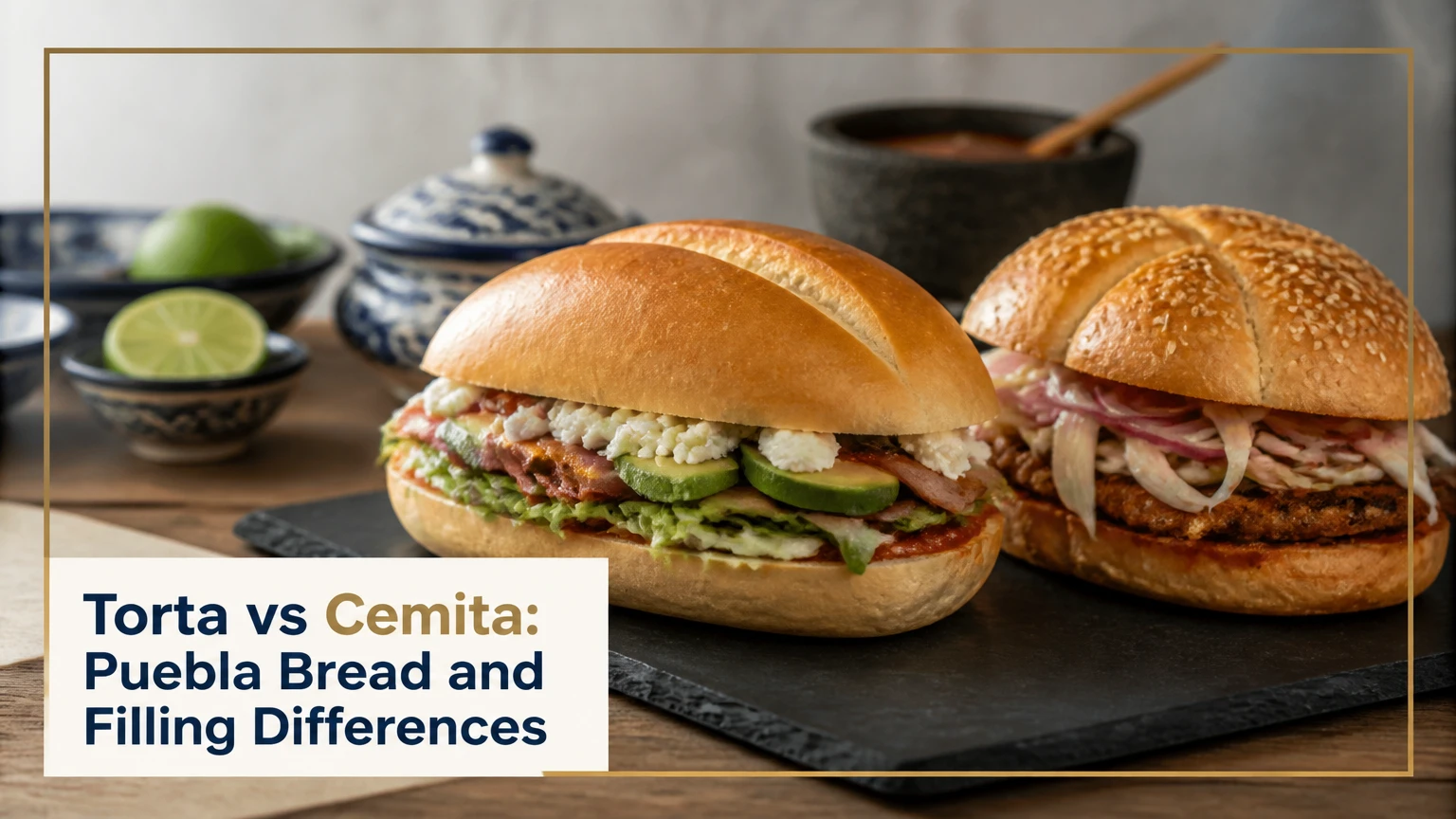
The central difference is flexibility versus regional identity. A torta can contain grilled beef, chicken, milanesa, beans, eggs, deli-style fillings, or even a tamale, and its bread may be toasted or pressed. A cemita usually follows a more recognizable Puebla architecture: sesame cemita bread, avocado, a crisp cutlet, shredded quesillo, onion, pápalo, and chipotle.
The two sandwiches can overlap because “torta” often means any Mexican bread sandwich in everyday usage. A cemita may therefore be called a type of torta in a broad linguistic sense, but ordering a cemita generally signals a specific bread and flavor system rather than a generic sandwich.
Is a Cemita Technically a Torta?
A cemita can be considered a regional type of torta, but the terms are not interchangeable on a menu. “Torta” describes the wider Mexican sandwich family, whereas “cemita” identifies a Puebla-style sandwich and its signature sesame roll.
The distinction resembles the relationship between a general category and a regional subtype. Every traditional cemita is a sandwich, but a torta may use many breads, fillings, and cooking methods that would not qualify as a cemita. The word “cemita” also refers to the bun itself, so a bakery may sell cemita rolls separately from assembled sandwiches.
Serious Eats places cemitas among Mexico’s major sandwich traditions and emphasizes the role of pápalo, quesillo, avocado, and chipotle. That ingredient combination creates a recognizable sensory identity even when the protein changes.
How Does the Bread Change the Sandwich?
Bread controls the sandwich’s moisture tolerance, sweetness, bite, and overall shape. Torta bread is generally oblong and relatively neutral, while cemita bread is round, sesame-coated, enriched, and slightly sweet, so the same filling tastes different in each format.
| Bread | Typical Shape | Texture | Best Use | Common Location |
|---|---|---|---|---|
| Telera | 15-18 cm oval | Soft crumb, lightly crisp crust | Griddled beef, chicken, beans | Mexico City and nationwide |
| Bolillo | 12-18 cm oval or football shape | Firmer crust, airy interior | Cold fillings, breakfast tortas | Nationwide |
| Cemita roll | About 15 cm round | Enriched crumb, sesame crust | Cutlet, quesillo, pápalo | Puebla |
| Birote salado | 15-20 cm elongated | Dense, very crisp crust | Torta ahogada | Guadalajara |
A telera usually has three scored ridges and a flatter profile, which makes it easy to press on a griddle. A bolillo has a more pronounced crust and can tolerate juicy fillings better, although a wet sauce will eventually soften any bread.
Cemita bread contributes more than structure. Sesame adds aroma and crunch, while the enriched crumb brings a mild sweetness that balances smoky chipotle and salty cheese. A soft hamburger bun can hold a filling, but it will not reproduce the flavor or resistance of a Puebla cemita.
Which Ingredients Define Each Style?
Tortas are defined by the bread-and-filling format, not by one mandatory ingredient list. Cemitas have a stronger traditional template, although restaurants and families adapt the protein, cheese quantity, and heat level.
| Attribute | Typical Torta | Traditional Cemita Poblana |
|---|---|---|
| Base spread | Mayonnaise, beans, butter, or crema | Avocado, sometimes with a light oil finish |
| Main filling | Grilled beef, chicken, egg, beans, or cutlet | Breaded cutlet, sliced seasoned meat, or leg preparation |
| Cheese | Oaxaca, panela, melted slices, or no cheese | Shredded quesillo |
| Herb | Cilantro, lettuce, or none | Pápalo |
| Pepper | Jalapeño, serrano, or salsa | Chipotle in adobo |
| Vegetables | Tomato, onion, avocado, lettuce | Onion and avocado, with regional additions |
| Heating | Often pressed or griddled | Bun lightly warmed or left at room temperature |
Pápalo is the most important aromatic distinction. Its leaves taste herbal, peppery, and faintly citrus-like, with a stronger personality than standard cilantro. The herb can dominate a small sandwich, so two to four leaves often provide enough impact.
Quesillo is string cheese that is pulled into thin strands. In a cemita, the strands are commonly placed over the warm filling without being melted into a smooth layer. The result is a loose, fibrous bite rather than the unified stretch of griddled torta cheese.
What Is Flexible and What Is Traditional?
A torta can change almost every component while remaining recognizably a torta. A cemita can also vary, but replacing the sesame roll, avocado, quesillo, or pápalo shifts the sandwich away from the classic Puebla profile.
Authenticity is not a single national rule. Puebla vendors may differ in whether they warm the bun, use more or less chipotle, or choose chicken instead of another cutlet. The reliable test is whether the sandwich preserves the regional bread, layered texture, and herbal-smoky balance.
How Are the Two Sandwiches Assembled?
A torta is commonly assembled around a hot filling and may be pressed until the bread crisps. A cemita is assembled in layers that preserve contrast: crisp cutlet, cool shredded cheese, fresh herb, raw onion, creamy avocado, and a slightly sweet bun.
Torta Assembly
- Split the roll. Cut a telera or bolillo horizontally without crushing the crumb.
- Create moisture barriers. Spread 15-20 grams of mayonnaise, beans, butter, or crema across the cut surfaces.
- Add the hot filling. Place approximately 100-150 grams of grilled beef, chicken, egg, or another prepared filling on the bottom half.
- Add cheese before pressing. Use 30-50 grams of Oaxaca or another melting cheese.
- Griddle the sandwich. Heat a cast-iron pan or flat top to roughly 175-205°C and press for 2-4 minutes.
- Finish with fresh ingredients. Add avocado, tomato, lettuce, onion, or pickled jalapeño after heating.
You will know the torta is ready when the exterior is browned, the cheese has softened, and the filling is hot in the center. Adding watery vegetables before pressing creates steam and weakens the crust.
Cemita Assembly
- Split the cemita roll. Preserve the sesame crust and avoid compressing the top.
- Spread avocado. Use about 30-45 grams on the lower half.
- Add the cutlet. Place one broad, thin, crisp cutlet weighing about 100-150 grams.
- Pile on quesillo. Add approximately 40-70 grams in loose strands.
- Add aromatics. Use thin white onion and two to four pápalo leaves.
- Apply chipotle. Add one to three peppers or about 10-20 grams, depending on heat tolerance.
- Close without flattening. Serve immediately so the cutlet stays crisp.
Freshly fried filling can soften quesillo slightly without turning it into a melted blanket. A broiler or sandwich press changes the intended texture, though some modern restaurants deliberately serve a hot, melted variation.
Which Sandwich Is More Substantial?
A cemita often feels more substantial because its round roll supports a tall stack of cutlet, cheese, avocado, and aromatics. A torta’s portion depends more heavily on the vendor and filling, with typical assembled weights ranging from about 250 to 450 grams.
| Sandwich Style | Typical Bread Weight | Filling Weight | Approximate Total | Eating Profile |
|---|---|---|---|---|
| Chicken torta | 90-130 g | 120-160 g | 260-380 g | Balanced and portable |
| Grilled beef torta | 90-130 g | 130-180 g | 280-420 g | Savory and juicy |
| Torta Cubana | 100-150 g | 180-260 g | 350-520 g | Very dense and rich |
| Cemita de milanesa | 110-160 g | 150-230 g | 320-500 g | Tall, crisp, and filling |
| Cemita de pata | 110-160 g | 130-200 g | 300-450 g | Tangy and gelatinous |
| Torta ahogada | 100-150 g | 120-180 g | 300-500 g with sauce | Messy and highly sauced |
These are typical practitioner ranges, not regulated serving standards. A small neighborhood torta may be lighter than a restaurant cemita, while an oversized Mexico City torta can exceed the portion of either sandwich.
The cemita’s height can also mislead diners. The sandwich may contain more air between layers than its visual scale suggests, while a compact torta with dense filling can feel heavier despite its smaller profile.
What Do Tortas and Cemitas Cost?
Typical street-stall prices in Mexico are about 50-70 pesos for many tortas and 60-90 pesos for many cemitas, although neighborhood, city, protein, cheese quantity, and inflation can shift those ranges. In the United States, metropolitan restaurant prices commonly fall around $12-$16.
| Market and Venue | Torta Price | Cemita Price | Typical Wait | Main Cost Driver |
|---|---|---|---|---|
| Mexican street stall | 50-70 MXN | 60-90 MXN | 2-5 minutes | Filling and location |
| Puebla market counter | 55-85 MXN | 60-100 MXN | 3-7 minutes | Quesillo and cutlet |
| Mexico City casual shop | 70-140 MXN | 80-160 MXN | 5-12 minutes | Rent and portion size |
| United States food truck | $12-$16 | $12-$18 | 8-15 minutes | Labor and specialty bread |
A homemade torta usually costs less when telera, bolillo, or ordinary sandwich rolls are already available. A homemade cemita becomes more expensive when the cook must purchase sesame rolls, quesillo, pápalo, avocado, and a cutlet separately.
What Are the Major Torta Styles?
The main torta styles differ by city, bread, sauce, and filling rather than by one national standard. Torta Cubana favors abundance, torta ahogada depends on Guadalajara bread and sauce, and torta guajolota is a Mexico City breakfast built around a tamale.
| Torta Style | City or Region | Bread | Signature Filling | Serving Method |
|---|---|---|---|---|
| Torta Cubana | Mexico City and other cities | Telera or bolillo | Multiple cooked meats, egg, cheese | Griddled |
| Torta ahogada | Guadalajara | Birote salado | Carnitas-style filling | Drowned in chili-tomato sauce |
| Torta guajolota | Mexico City | Bolillo | One tamale inside the roll | Hot breakfast |
| Torta de milanesa | Nationwide | Telera or bolillo | Breaded chicken or another cutlet | Often pressed |
| Torta de chilaquiles | Mexico City | Bolillo | Chilaquiles, cream, cheese, egg | Hot and highly sauced |
Torta ahogada is the clearest example of why “torta” cannot be reduced to one assembly method. Its dense birote is designed to survive red sauce, and the eating experience is intentionally messy.
Torta guajolota also demonstrates the category’s range. The tamale supplies starch, filling, and seasoning, while the bolillo adds a contrasting crust. It is practical breakfast food rather than a delicate sandwich.
What Are the Major Cemita Styles?
Cemita styles usually vary by filling while retaining the sesame roll and Puebla construction. Cemita de milanesa is the most familiar version, while versions with leg preparation or seasoned sliced meat provide different textures and seasoning levels.
| Cemita Style | Main Filling | Texture | Best Pairing | Typical Heat Level |
|---|---|---|---|---|
| De milanesa | Crisp chicken or cutlet | Crunchy exterior, tender center | Quesillo and pápalo | Mild to hot |
| De pata | Pickled leg preparation | Firm, gelatinous, tangy | Onion and chipotle | Mild |
| De carne enchilada | Thin seasoned meat | Tender, savory, lightly chewy | Avocado and quesillo | Medium |
| De pollo | Fried chicken cutlet | Crisp and mild | Extra chipotle | Mild to medium |
| Vegetariana | Fried vegetables or mushrooms | Crisp, soft, and juicy | Avocado and pápalo | Variable |
A traditional cemita does not require one universally fixed protein. The bread and supporting ingredients carry much of the identity, although a plain cheese sandwich on a sesame bun would not communicate the full cemita poblana experience.
Which Sandwich Is Easier to Make at Home?
A torta is easier to make at home because telera and bolillo are widely available, the filling can be adapted, and pressing is optional. A cemita requires more specialized ingredients and careful layering, but a home cook can produce a convincing version in about 25-40 minutes.
| Home Requirement | Torta | Cemita |
|---|---|---|
| Specialized bread | Low, telera or bolillo | Medium, sesame cemita roll |
| Main preparation | 10-20 minutes | 20-30 minutes |
| Typical total time | 15-25 minutes | 25-40 minutes |
| Key equipment | Skillet or griddle | Frying pan and sharp knife |
| Hardest variable | Moisture control | Cutlet crispness and ingredient balance |
| Typical ingredient cost for two | $8-$14 | $12-$20 |
For a home torta, toast the cut surfaces lightly and keep tomato or salsa away from the crumb until serving. For a cemita, flatten the cutlet to about 6-10 millimeters so it fits the bun without pushing out the cheese and herbs.
The most reliable home substitution is a sturdy sesame roll rather than a sweet hamburger bun. If pápalo is unavailable, cilantro plus a small amount of peppery greens can approximate the herbal effect, but the result is an adaptation rather than a fully traditional cemita.
How Should You Order by Location?
Order a cemita in Puebla when you want the clearest regional expression, and order a torta in Mexico City or Guadalajara when the local style is the main attraction. Menu terminology varies, so ask about bread, sauce, cheese treatment, and filling before choosing.
Useful ordering questions include:
- “¿La cemita lleva pápalo?” asks whether the sandwich includes pápalo.
- “¿Qué tipo de pan usan?” asks which bread the vendor uses.
- “¿La torta va planchada?” asks whether the torta is pressed or griddled.
- “¿Qué tan picante es?” asks about heat level.
- “¿La sirven con quesillo?” confirms the string cheese used in many cemitas.
In Puebla, a cemita with a crisp cutlet, generous quesillo, avocado, pápalo, onion, and chipotle is the clearest benchmark. In Guadalajara, a torta ahogada should be judged by its birote and sauce, not by standards applied to a dry telera sandwich.
Which Sandwich Should You Choose?
Choose a torta for customization, familiar ingredients, a toasted exterior, or a sandwich that travels reasonably well. Choose a cemita for a region-specific experience, sesame bread, crisp cutlet, string cheese, and the sharp herbal flavor of pápalo.
| Diner Profile | Best Choice | Specific Order | Reason |
|---|---|---|---|
| First-time Mexican sandwich diner | Torta | Chicken or grilled beef torta | Flexible flavor and lower ingredient intensity |
| Regional food traveler | Cemita | Cemita de milanesa with pápalo | Strong Puebla identity |
| Heat-sensitive diner | Torta | Cheese and chicken, jalapeño on the side | Easier pepper control |
| Texture seeker | Cemita | Crisp cutlet with quesillo | Sesame, crunch, strands, and herbs |
| Mess-free commuter | Torta | Pressed telera with dry filling | Better structural control |
| Home cook with limited shopping | Torta | Bolillo with beans and grilled filling | Accessible ingredients |
| Large appetite | Cemita or Torta Cubana | Double filling if offered | Higher typical portion |
| Vegetarian diner | Torta | Bean, avocado, cheese, and vegetables | More widely available adaptations |
For the Comfort-Food Diner
Choose a griddled torta with beans, melted cheese, and a savory filling. The toasted bread and warm interior provide a familiar, cohesive bite that does not depend on pápalo or chipotle.
For the Culinary Explorer
Choose a cemita de milanesa with pápalo and quesillo. The sandwich offers more contrast between crisp cutlet, cool cheese strands, aromatic herbs, creamy avocado, and smoky pepper.
For the Home Cook
Start with a torta unless a Mexican market is nearby. Telera, bolillo, beans, avocado, cheese, and a prepared filling are easier to source than a complete cemita ingredient set.
Common Mistakes and Fixes
Torta and cemita failures usually come from moisture, heat, or proportion rather than seasoning. The most effective fixes protect the bread, separate hot and cold ingredients, and preserve the intended cheese texture.
| Problem | Likely Cause | Immediate Fix | Prevention |
|---|---|---|---|
| Soggy torta | Tomato or salsa touches bread | Toast bread and drain vegetables | Use a spread as a barrier |
| Soft torta crust | Pan below 175°C | Press another 1-2 minutes | Preheat the skillet fully |
| Burned bread | Excess heat or butter | Reduce heat to medium | Toast cut side first |
| Limp cemita cutlet | Cutlet rests too long | Re-crisp briefly in a dry pan | Assemble immediately |
| Watery cemita | Wet avocado or vegetables | Drain and blot ingredients | Slice vegetables just before serving |
| Overpowering pápalo | Too many leaves | Remove half the herb | Start with two leaves |
| Melted quesillo | Broiler or press used | Add fresh strands after heating | Keep cheese off direct heat |
A common expert rule is to place wet ingredients between fatty spreads and drier fillings rather than directly against bread. The rule works because beans, avocado, and mayonnaise slow liquid migration through the crumb.
Another counterintuitive point is that more chipotle does not necessarily improve a cemita. Excess sauce can overpower pápalo and soften the cutlet, so add heat in small increments and taste the first bite before adding more.
Is a Cemita Better Than a Torta?
Neither sandwich is universally better because the decision depends on whether variety or regional specificity matters more. A torta wins for customization, accessibility, and griddled comfort; a cemita wins for distinctive bread, layered texture, and Puebla identity.
The honest limitation is that a cemita may be a poor choice for delivery or long commutes. Its crisp cutlet softens, the herb wilts, and the stacked ingredients slide when sealed for 20-30 minutes. A dry, pressed torta usually survives transport better.
A torta is not automatically inferior because it is less standardized. Its open architecture supports local specialties such as ahogada sauce, chilaquiles, tamales, grilled fillings, and regional breads. The category’s flexibility is its defining strength.
FAQ
Is a cemita always made with quesillo?
A classic cemita poblana commonly uses quesillo, but local versions can substitute another mild cheese or omit cheese entirely. Quesillo is important because its loose strands contrast with the crisp cutlet and sesame roll. A sandwich without it may still be called a cemita, but it moves away from the familiar Puebla template.
Can I use a bolillo for a cemita?
A bolillo can hold cemita fillings, but it will not reproduce the sandwich’s defining bread. Cemita rolls are round, sesame-covered, enriched, and mildly sweet, while bolillos are usually more crusty and neutral. Use a sesame roll when possible, and treat bolillo as a practical home substitution.
Are tortas served hot or cold?
Tortas may be hot, warm, or room temperature depending on the filling and vendor. Griddled tortas with cheese and cooked fillings are usually served hot, while some cold deli-style versions are assembled without pressing. Torta ahogada is served with hot or warm filling and sauce rather than a dry toasted format.
What does pápalo taste like?
Pápalo has a strong green flavor with peppery, citrus-like, and slightly earthy notes. Its taste is more assertive than ordinary cilantro, so a small number of leaves can season an entire cemita. Fresh pápalo should look lively and aromatic, not wilted or blackened.
Which sandwich is less messy?
A pressed torta with a relatively dry filling is usually less messy than a cemita or sauced regional torta. Cemitas become difficult to manage because their filling is tall and loose, while torta ahogada is intentionally saturated with sauce. Wrap either sandwich tightly and eat it immediately for better control.
Can a vegetarian sandwich still be a cemita?
Yes, a vegetarian cemita can retain the sesame roll, avocado, quesillo, pápalo, onion, and chipotle while replacing the cutlet with mushrooms, fried vegetables, beans, or a vegetable patty. The vegetarian version preserves the bread and aromatic architecture, although it differs from the most common meat-filled Puebla examples.
The Bottom Line
Torta vs cemita is ultimately a comparison between a broad Mexican sandwich family and a more regionally defined Puebla specialty. Pick a torta when you want choice, griddled bread, easy substitutions, or better portability. Pick a cemita when you want sesame bread, crisp filling, quesillo, pápalo, avocado, and chipotle in a distinctly Puebla-style build.