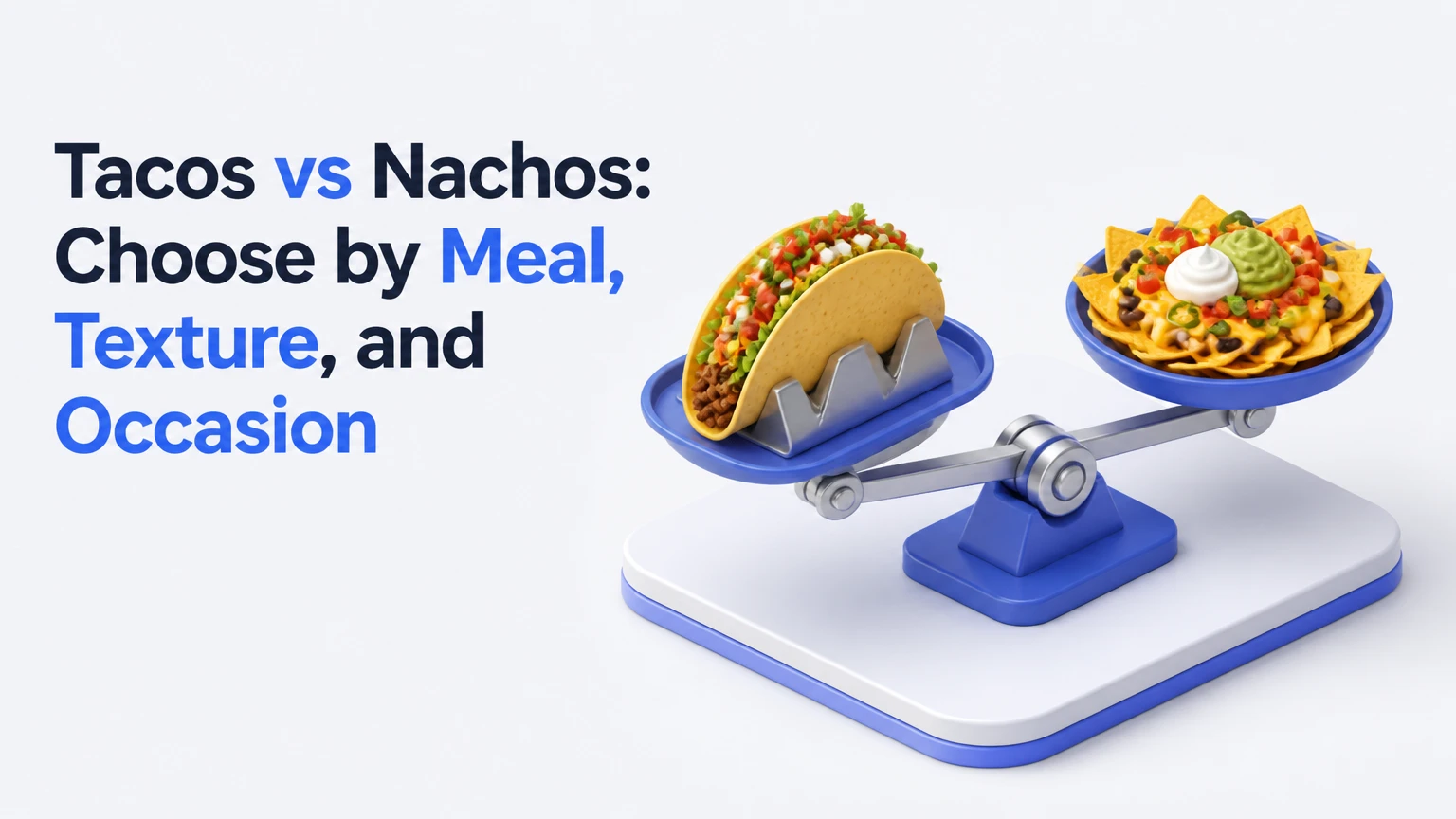
Tacos are individual folded tortillas filled and eaten by hand, while nachos are tortilla chips covered with melted cheese and toppings on a shared plate. Choose tacos for portable portions, clearer serving control, and a higher filling-to-chip ratio; choose nachos for communal eating, fast assembly, and broad topping distribution.
Tacos and Nachos at a Glance
- A taco uses one folded tortilla or shell around a concentrated filling; nachos use many chips beneath distributed toppings.
- Tacos usually provide one portion per person, while a large nacho platter typically serves two to four people.
- Tacos travel and portion more cleanly, but nachos scale more efficiently for groups.
- Typical home taco assembly takes 10-20 minutes; baked nachos take about 15-25 minutes including layering and heating.
- Tacos offer better control over protein, vegetables, and cheese per serving; nachos make cheese and salty chips more central to the dish.
- The best choice depends mainly on portability, group size, texture preference, and topping moisture.
What Are Tacos and Nachos?
Tacos are Mexican dishes built around a tortilla, usually corn or wheat, folded around a filling immediately before eating. Nachos are a Tex-Mex dish built from fried or baked tortilla chips covered with melted cheese and optional additions such as beans, seasoned meat, jalapeños, crema, guacamole, or fresh salsa.
The structural difference determines nearly every eating characteristic. A taco concentrates filling in a narrow vessel, so each diner receives a defined unit. Nachos spread ingredients across a broad surface, so one person may pick up a mostly bare chip while another gets cheese, beans, and toppings in the same bite.
Tacos have deep regional diversity across Mexico, including tacos al pastor, tacos de canasta, tacos de pescado, tacos dorados, and many local preparations. Nachos are associated with Piedras Negras, Coahuila, where Ignacio “Nacho” Anaya is widely credited with creating the dish in the 1940s. The original preparation was considerably simpler than many modern loaded platters.
| Attribute | Tacos | Nachos |
|---|---|---|
| Base | Corn tortilla, flour tortilla, or hard shell | Fried or baked corn tortilla chips |
| Form | Folded individual vessel | Open platter or sheet-pan arrangement |
| Typical eater | One person per 2-4 units | Two to four people per platter |
| Main binder | Tortilla holds filling mechanically | Melted cheese binds toppings to chips |
| Eating method | Usually hands | Hands, fork, or both |
| Common service | Main course or snack | Appetizer, shared meal, or party food |
How Do the Structures Differ?
Tacos rely on tortilla flexibility and hinge strength, while nachos rely on chip rigidity and cheese adhesion. A taco fails when the tortilla splits or the filling slides out; nachos fail when moisture softens the chips or toppings remain unevenly distributed.
Corn tortillas are pliable when warmed, especially when briefly steamed or held in a covered towel. Flour tortillas generally bend more easily and tolerate wetter fillings, although their larger size can encourage overfilling. Hard taco shells resist moisture briefly but fracture under pressure.
Nacho chips need enough thickness to carry toppings without collapsing. Shredded cheese melts into contact points between chips, whereas a thin liquid cheese sauce can run beneath the chip layer and soften the base. That difference explains why layered, baked nachos usually hold better than chips covered with warm sauce after baking.
| Structural factor | Taco effect | Nacho effect |
|---|---|---|
| Wet salsa | Softens the fold and causes tearing | Creates soggy chips beneath the topping |
| Cheese | Adds richness and can block moisture | Melts into the primary adhesive layer |
| Protein size | Small pieces reduce spillage | Large pieces pull chips apart during serving |
| Double base | Two corn tortillas improve hinge strength | Two chip layers improve topping coverage |
| Fresh garnish | Adds acidity and contrast | Must be added after baking to preserve crispness |
Which Has Better Texture?
Tacos provide a contrast between a soft or crisp shell and a moist filling, while nachos provide crunch, melted cheese, and scattered toppings. Tacos are better for a controlled bite; nachos are better for changing texture from chip to chip.
A well-made taco has a deliberate ratio of tortilla, filling, garnish, and salsa. A well-made nacho platter alternates crisp chips, melted cheese, warm toppings, and cool finishes. Neither dish has a universal texture advantage because a soft street taco and a hard-shell taco create very different experiences, just as thin chips and thick sheet-pan chips do.
Which Styles Matter Most?
The most useful taco categories are soft corn, soft flour, hard-shell, grilled, fried, and regional filled varieties. The most useful nacho categories are simple cheese nachos, loaded sheet-pan nachos, individual nachos, and specialty versions using vegetables or potato slices.
Taco style should match filling weight and moisture. Delicate fish or beans work well with soft corn tortillas, while heavily dressed fillings benefit from larger flour tortillas or doubled corn tortillas. Nacho style should match the service setting: individual portions reduce the shared platter’s unevenness, while sheet-pan nachos provide the best group efficiency.
| Style | Base | Typical filling or topping | Best use |
|---|---|---|---|
| Street taco | Two small corn tortillas | Grilled beef, chicken, or vegetables with onion and herbs | Individual meal |
| Hard-shell taco | Fried corn shell | Seasoned ground meat, lettuce, tomato, shredded cheese | Fast family dinner |
| Basket taco | Soft tortilla | Beans, shredded meat, or spiced vegetables | Batch service |
| Seafood taco | Corn or flour tortilla | White fish, shrimp, cabbage, lime-based sauce | Fresh, lighter meal |
| Classic nachos | Corn chips | Melted cheese and pickled peppers | Snack or appetizer |
| Sheet-pan nachos | Thick tortilla chips | Beans, seasoned meat, cheese, peppers | Group meal |
| Individual nachos | Single serving of chips | Cheese, vegetables, beans, fresh toppings | Controlled portions |
| Potato nachos | Thin fried potato slices | Cheese, peppers, beans, and herbs | Specialty variation |
Which Costs Less?
Tacos usually cost less per individual serving when made with modest fillings, while nachos can be cheaper for a group when one tray replaces several separate meals. Restaurant prices vary by city, protein, portion size, and service style, so the figures below are typical ranges rather than fixed market rates.
For home cooking, a basic taco dinner often uses tortillas, a protein or beans, vegetables, and salsa. Nachos require chips, cheese, and toppings, but the cheese quantity can raise the total quickly. A tray with enough topping for four people often costs about $12-$25 at home, while four individual taco plates may cost $16-$32 depending on the filling.
| Purchase scenario | Tacos, typical price | Nachos, typical price | Value observation |
|---|---|---|---|
| Basic home serving | $2.50-$4.50 per person | $3-$6 per person | Tacos allow leaner filling control |
| Casual restaurant | $3-$7 per taco | $10-$20 per platter | Nachos often serve 2-4 people |
| Premium restaurant | $6-$12 per taco | $18-$30 per platter | Specialty toppings drive both prices |
| Four-person home meal | $12-$28 total | $12-$25 total | Nachos can reduce assembly labor |
| Extra topping cost | $0.50-$2 per taco | $2-$8 per tray | Cheese and guacamole affect nacho totals |
Are Tacos or Nachos More Filling?
Tacos are usually more filling per tortilla when they contain a substantial portion of beans, poultry, seafood, vegetables, or other protein. Nachos can be equally filling, but their energy density often comes from chips and cheese, and the amount of protein varies widely across the platter.
A typical adult meal contains two to four small tacos, depending on tortilla diameter and filling density. A large nacho platter may provide four snack portions or two full meal portions. A platter with beans and a substantial protein is more filling than cheese-only nachos, but a cheese-heavy tray can feel dense without providing the same protein quantity.
Nutrition Depends on Assembly
Neither dish is automatically healthier. A pair of small corn tacos with beans, grilled vegetables, and fresh salsa can be lighter than a large cheese-heavy nacho platter, while fried shells, creamy sauces, and oversized fillings can reverse that comparison.
The main nutritional variables are tortilla or chip quantity, frying method, cheese, creamy toppings, protein choice, and vegetable volume. Corn tortillas and tortilla chips are both made from nixtamalized corn in many traditional preparations, but chips generally contribute more base material because diners eat several pieces per serving.
| Serving example | Base amount | Cheese or sauce | Protein or beans | Practical result |
|---|---|---|---|---|
| Two soft tacos | 2 tortillas, 5-6 inch | 0-15 g | 90-120 g | Moderate, portioned meal |
| Three loaded tacos | 3 tortillas, 5-6 inch | 15-30 g | 120-150 g | Higher protein and calories |
| Cheese nachos | 100-120 g chips | 75-100 g cheese | 0-30 g | Dense, lower protein balance |
| Bean nachos | 100-120 g chips | 60-80 g cheese | 120-160 g beans | More filling, still chip-heavy |
| Vegetable nachos | 80-100 g chips | 40-60 g cheese | 80-120 g vegetables | Lighter topping profile |
These quantities are practical serving estimates, not standardized nutrition data. Packaged products and restaurant recipes can differ substantially, so nutrition labels or recipe calculations are necessary for precise tracking.
Which Is Better for Groups?
Nachos are usually better for groups because one sheet pan can feed several people with little individual assembly. Tacos are better when guests need distinct portions, different fillings, or a cleaner service line.
For four adults, plan approximately 12-16 small tacos, or prepare one large 13-by-18-inch sheet pan of nachos with 150-200 g chips, 250-350 g shredded cheese, 400-600 g cooked toppings, and separate bowls of fresh garnishes. A taco bar requires more containers but gives each person greater control.
Nachos become less efficient when the group includes dietary restrictions or strong topping preferences. Tacos handle variation better because each shell can receive a separate filling. Individual nacho cups solve some of the problem, although they require more assembly and reduce the batch advantage.
How Do You Make Tacos Without Tearing?
Warm corn tortillas for 20-30 seconds per side on a dry skillet, then hold them covered in a clean towel. Fill each tortilla with about 60-90 g of main filling, keep wet sauces near the top, and avoid filling beyond one-third of the tortilla’s surface.
Place the most stable ingredient down first, such as beans, cooked vegetables, or chopped protein. Add onions, herbs, shredded cabbage, or lettuce next, then apply salsa and citrus immediately before eating. Two small corn tortillas around a moist filling provide a stronger hinge than one tortilla.
Success checkpoint: the taco should fold without cracking and remain closed when lifted from the center. If the bottom hinge splits, reduce filling, warm the tortilla longer, or use a second tortilla.
A common mistake is adding watery salsa before the shell has been supported by a dry filling. Another is using a cold tortilla directly from storage, which causes cracking rather than bending.
How Do You Build Crisp, Even Nachos?
Arrange sturdy chips in one layer, add shredded cheese and warm toppings, then repeat with a second layer before heating. Bake at about 200°C or 400°F for 5-8 minutes, and add sour cream, guacamole, and fresh salsa after the chips leave the oven.
Use enough cheese to contact the chips without burying them. For a medium sheet pan, 150-200 g of chips and 250-350 g of shredded cheese provide broad coverage. Spread cooked beans, vegetables, and small pieces of protein across both layers rather than concentrating them in the center.
Success checkpoint: the cheese should be fully melted, the outer chips should remain rigid, and the center should still lift with a utensil. If the cheese browns before melting, lower the rack or reduce the heating time.
A broiler can melt cheese in 2-4 minutes, but it demands close observation because chips burn quickly. A conventional oven heats more evenly and is easier to manage for layered trays.
Texture and Holding Time
Tacos are best assembled immediately before serving, while nachos are best baked in small batches close to the time of eating. Typical soft tacos remain structurally pleasant for about 10-20 minutes, while well-layered nachos may retain useful crunch for 10-15 minutes after baking.
The holding window changes with moisture. A dry grilled filling and thick tortilla extend taco quality, while juicy vegetables and abundant salsa shorten it. Nachos with shredded cheese, drained beans, and post-bake garnishes hold better than nachos covered with liquid sauce before heating.
| Holding condition | Tacos | Nachos | Recommended action |
|---|---|---|---|
| Immediate service | Best texture | Best texture | Assemble at the table |
| 10 minutes | Usually acceptable | Outer chips crisp, center softening | Keep garnishes separate |
| 20 minutes | Soft tortillas may weaken | Noticeable sogginess likely | Serve smaller batches |
| 30 minutes | Quality drops sharply | Rebuild rather than reheat | Avoid holding fully assembled |
| Refrigerated leftovers | Shells soften | Chips become limp | Store components separately |
Food safety also matters. Keep cooked fillings hot until service, refrigerate leftovers within two hours, and reheat fillings thoroughly rather than reheating assembled tacos or nachos as a single unit.
Common Failure Modes and Fixes
Taco Blowout
A taco blowout occurs when the bottom hinge splits under filling weight. Use a warmer tortilla, reduce the filling to 60-90 g, drain excess liquid, or double-wrap small corn tortillas.
Soggy Taco Base
A soggy taco base comes from watery salsa, un drained vegetables, or filling placed while excessively wet. Drain cooked beans and salsa, add a dry structural layer first, and apply acidic sauces at the table.
Naked Nachos
Naked chips result from placing toppings only on the top surface. Build two or three shallow layers, distribute cheese across each layer, and keep protein pieces smaller than about 2 centimeters.
Soggy Nacho Center
A soggy center usually follows from thin chips, wet beans, excess sauce, or an overcrowded tray. Drain wet ingredients, use thick chips, limit liquid sauce before baking, and add fresh toppings afterward.
Hardened Cheese
A rubbery cheese layer develops when cheese is overheated or held too long. Combine a good-melting cheese such as Monterey Jack with a sharper cheese, and serve within 10 minutes of heating.
Uneven Serving Temperature
Cold fillings make tacos taste disjointed, while cold centers make nachos unpleasant. Heat fillings before assembly, and preheat the baking tray or oven so nachos melt quickly without prolonged drying.
Which Should You Choose?
Choose Tacos for Individual Meals
Tacos are the better choice for a weeknight dinner, packed meal, or mixed-preference household. Each person can select a tortilla, filling, salsa level, and garnish without disturbing everyone else’s portion.
Tacos also work better when protein matters. A cook can provide 100-150 g of filling per diner, add vegetables, and limit cheese or creamy toppings without rebuilding the entire meal.
Choose Nachos for Parties and Shared Snacks
Nachos are the better choice for game-day service, informal gatherings, and situations where guests can eat over a 10-15 minute window. A sheet pan reduces repeated assembly and lets the cook use leftovers such as beans, roasted vegetables, or chopped cooked meat.
Nachos are a poor choice for long events unless the host serves multiple small trays. One oversized platter becomes soft in the middle before the group finishes it.
Choose Tacos for Portion Control
Tacos provide clearer boundaries because each shell is a visible unit. Soft corn tacos with beans, grilled vegetables, fresh salsa, and a moderate filling are easier to estimate than a shared platter where cheese, chips, and toppings are scooped unevenly.
Nachos can still fit a measured eating plan when served in individual bowls with weighed chips and separated toppings. The communal format simply makes accidental over-serving more likely.
Choose Nachos for Minimal Cleanup
Nachos usually require one sheet pan, one cheese grater, and several topping bowls. Tacos often need a skillet for filling, a tortilla warmer, multiple garnish containers, and a serving station.
The cleanup advantage disappears when nachos contain several wet sauces or when cheese bakes onto an unlined tray. Parchment or foil can reduce scrubbing, although direct contact with a hot metal pan often produces better browning.
Can One Dish Replace the Other?
Tacos can replace nachos as a shared meal only when served as a taco bar with prepped fillings and tortillas. Nachos can replace tacos for a casual meal when the platter includes beans or another substantial protein, vegetables, and enough topping coverage to make each serving balanced.
The substitution changes the eating experience. A taco bar preserves individual choice and portion control, while nachos emphasize communal grazing and variable bites. For children or guests with allergies, separate taco components are usually easier to label and manage.
FAQ
Are tacos healthier than nachos?
Tacos are often easier to make nutritionally balanced because each serving can contain a measured tortilla, protein, vegetables, and salsa. Nachos can match that balance when portions use moderate chips and cheese plus beans and vegetables. Fried shells, creamy toppings, and oversized fillings can make either option energy-dense.
How many tacos should I plan per person?
Plan two to three small tacos per adult for a meal with beans, rice, or another side, and three to four when tacos are the only substantial food. For children, two small tacos is a practical starting point. Prepare 10-15 percent extra tortillas and filling for larger appetites.
Can nachos be made without cheese?
Nachos can be made without dairy cheese, but they need another binder or the toppings will slide from the chips. Refried beans, mashed avocado added after baking, or a plant-based meltable topping can provide adhesion. Keep wet ingredients controlled so the chips remain crisp.
Which dish is easier to eat while standing?
Tacos are generally easier to eat while standing because each portion is enclosed and portable. Hard shells shed fragments, and soft tacos can leak, so use two tortillas, moderate filling, and a napkin. Nachos require a plate, bowl, or fork unless served in individual cups.
What toppings work on both tacos and nachos?
Beans, seasoned vegetables, grilled chicken, shredded lettuce or cabbage, pickled peppers, diced tomatoes, onions, herbs, avocado, and salsa work on both dishes. Use smaller, drier pieces for nachos so chips remain stable, while taco fillings can tolerate larger pieces and more sauce.
How should leftovers be reheated?
Store tortillas, fillings, chips, cheese, and fresh toppings separately. Reheat taco filling in a skillet or microwave, warm tortillas briefly, and assemble again. Reheat nacho toppings separately and use fresh chips; reheating a fully assembled platter usually produces soft chips and hardened cheese.
The Bottom Line
Tacos vs nachos is mainly a choice between controlled individual portions and communal layered eating. Choose tacos for portability, protein-focused meals, dietary variation, and cleaner portion control. Choose nachos for parties, fast batch preparation, and a shared snack with melted cheese and varied toppings. For most dinners, tacos provide the more adaptable format; for casual group service, nachos are usually more efficient.