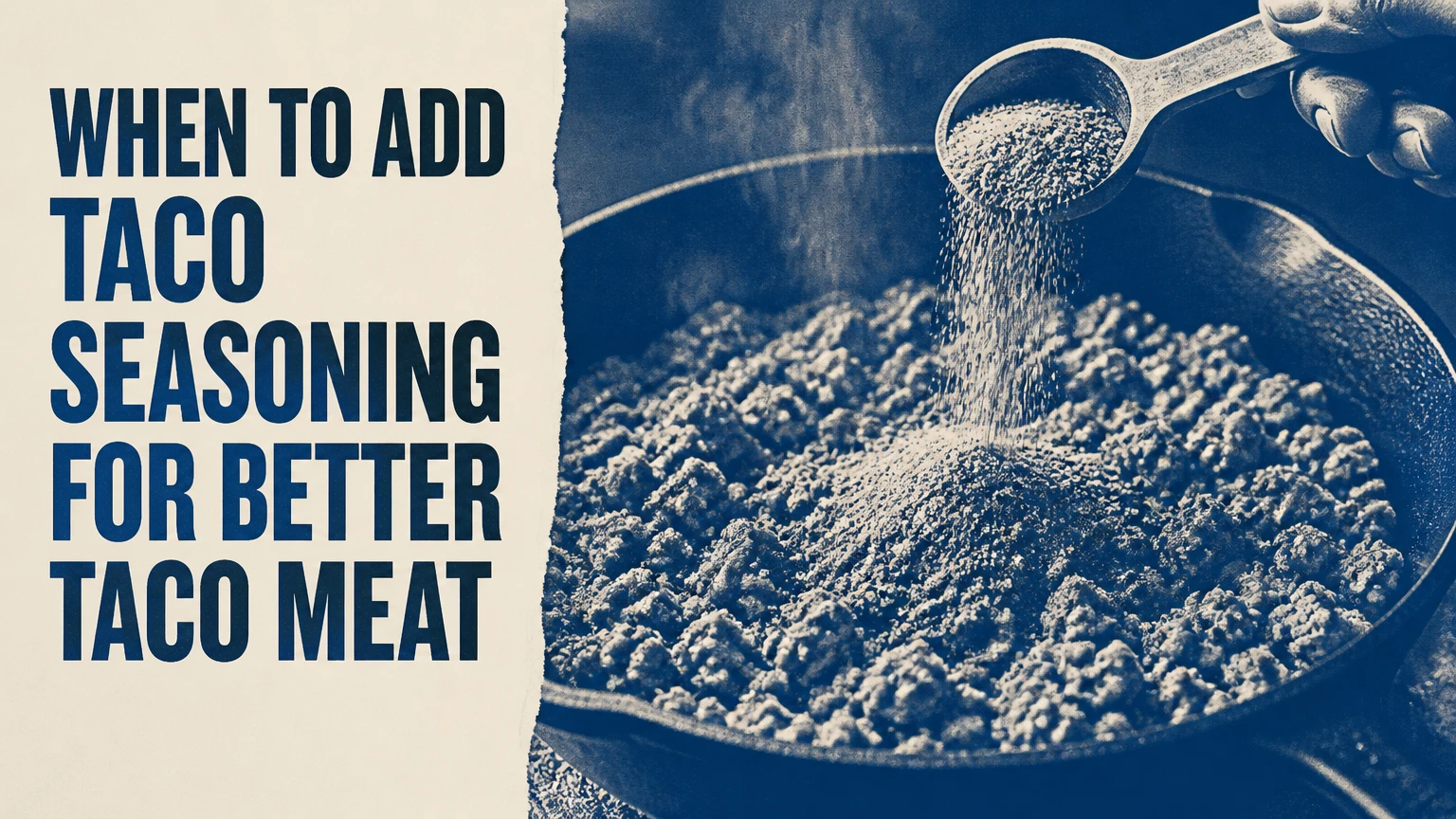
Add taco seasoning after ground meat has browned and excess grease has been drained, then stir in liquid and simmer for 5-10 minutes. This timing protects the spices from scorching, prevents seasoning from being discarded with the fat, and gives starches in many commercial blends time to thicken the taco filling.
Key Facts at a Glance
Add packet or homemade taco seasoning after browning ground meat and draining excess fat.
Use about 2-3 tablespoons of homemade blend per 1 pound of cooked protein.
Add approximately 2/3 cup water or broth per 1-ounce seasoning packet.
Simmer uncovered over medium-low heat for 5-10 minutes.
Season raw meat first only when making a rub for grilling, roasting, or searing.
Taco seasoning added before draining can lose flavor because fat carries spices into the discarded grease.
When to Add Taco Seasoning in a Skillet
For ground beef, turkey, chicken, or another crumbled protein, add taco seasoning once the meat is fully browned and excess grease is removed. Lower the heat before adding the seasoning, because chili powder, garlic, cumin, and dried herbs can scorch when exposed to a hot, dry skillet.
The standard sequence is simple: brown, drain, reduce heat, season, add liquid, and simmer. The seasoning needs moisture to spread evenly through small pieces of meat. Water also activates starches in blends that contain cornstarch or flour, creating a cohesive coating instead of a dusty layer.
Step 1: Brown the Meat Completely
Place 1 pound of ground meat in a wide skillet over medium-high heat. Break it into pieces with a spatula and cook for approximately 6-10 minutes, depending on the meat’s starting temperature and the size of the crumbles.
Ground beef should reach 160°F, while ground poultry should reach 165°F, according to the United States Department of Agriculture Food Safety and Inspection Service. The USDA’s concise instruction is: “Cook ground beef to 160 °F.”
You will know browning is complete when: no raw pink remains, the meat has released and reabsorbed some moisture, and the largest pieces reach the appropriate internal temperature.
Common mistake: adding taco seasoning while the meat is still releasing a large amount of raw moisture. The spices become diluted before browning develops.
Step 2: Drain Only Excess Grease
Remove pooled grease after browning, but do not treat every drop of fat as a problem. A tablespoon or less can help dissolve fat-soluble aroma compounds and keep lean meat from tasting dry.
| Protein | Typical fat issue | What to remove | Seasoning result |
|---|---|---|---|
| 80% lean beef | 3-5 tablespoons per pound | Most visible pooled grease | Rich, moist filling |
| 90% lean beef | 1-2 tablespoons per pound | Only excess liquid fat | Balanced texture |
| Ground turkey | 0-1 tablespoon per pound | Usually none | Leaner, lighter filling |
| Ground chicken | 0-1 tablespoon per pound | Usually none | Moisture depends on added liquid |
Drain before seasoning when you plan to discard substantial fat. If the pan contains only a thin film, leave it in place and continue.
Step 3: Lower the Heat Before Seasoning
Turn the burner to medium-low, or briefly remove the pan from the heat. Sprinkle taco seasoning evenly over the meat rather than dropping the entire pile into one spot.
Stir for 30-60 seconds before adding liquid. That short contact period distributes the spices through the fat and meat without giving dry chili powder enough time to burn.
You will know the heat is suitable when: the seasoning smells aromatic after stirring, but the pan does not produce dark smoke or blackened spots.
Common mistake: keeping the skillet on high while adding dry spices. High heat can create bitter cumin and scorched chili flavors before water cools the pan.
Step 4: Add Water or Broth
Add 2/3 cup water per 1-ounce packet, or begin with 1/2 cup for 2-3 tablespoons of homemade seasoning. Increase the liquid if the mixture contains very lean meat, rice, beans, or vegetables that absorb moisture.
Broth can replace water, but choose low-sodium broth when using a salted packet. Tomato sauce, crushed tomatoes, or salsa can also supply liquid, although each adds acidity, sweetness, and additional sodium.
| Seasoning amount | Starting liquid | Best application | Expected texture |
|---|---|---|---|
| 1 tablespoon | 1/4 cup | Small bean or vegetable portion | Light coating |
| 2 tablespoons | 1/2 cup | 1 pound lean meat | Thick, spoonable filling |
| 3 tablespoons | 1/2-2/3 cup | 1 pound meat or beans | Strongly seasoned sauce |
| 1-ounce packet | 2/3 cup | 1 pound ground meat | Glossy, cohesive mixture |
Add liquid gradually if the pan is very hot. A sudden pour can cause splattering, especially when residual grease remains.
Step 5: Simmer and Reduce
Simmer the seasoned mixture uncovered over medium-low heat for 5-10 minutes, stirring every minute or two. The goal is evaporation and absorption, not vigorous boiling.
The filling is ready when a spatula dragged across the skillet leaves a path for about one second before the sauce flows back. Taco meat should cling to the crumbles while remaining moist enough to fill a tortilla without dripping.
Common mistake: covering the pan. A lid traps steam and can leave the filling watery after the expected cooking time.
Why Add Seasoning After Browning?
Adding taco seasoning after browning gives the cook better control over flavor, moisture, and fat. Dry spices are less likely to burn, seasoning is not discarded with drained grease, and the final simmer distributes salt and aromatics across the cooked protein.
The timing also separates two different cooking goals. Browning develops roasted meat flavor through high heat, while simmering hydrates spices and binds the finished filling. Trying to perform both jobs at once often produces pale meat, scorched spices, or uneven seasoning.
Before Browning Versus After Browning
| Timing choice | Heat exposure | Flavor retention | Best use | Main risk |
|---|---|---|---|---|
| Before browning | High, dry pan | Lower after draining | Thin raw cuts or formed patties | Burned spices |
| During browning | High, changing moisture | Moderate | Small batches with frequent stirring | Uneven distribution |
| After browning | Medium-low, moist pan | High | Ground taco filling | Requires simmering |
| After cooking | Low or off heat | High surface flavor | Final correction | Unhydrated powder |
The common recommendation to season after browning applies most strongly to crumbled meat. It does not mean spices must never touch raw protein. A dry rub or paste belongs on raw whole cuts because there is no later grease-draining step that removes the coating.
How Much Taco Seasoning Should You Add?
Use 2-3 tablespoons of homemade taco seasoning or one 1-ounce packet for 1 pound of ground protein. Start with the lower amount when the blend contains a high proportion of salt, and add more after tasting the simmered filling rather than seasoning aggressively at the beginning.
Packet sizes vary, and tablespoon measurements differ by grind density. A scale is more consistent for bulk preparation, but volume measurements work well for an ordinary skillet meal.
| Protein quantity | Homemade blend | Packet equivalent | Starting liquid |
|---|---|---|---|
| 1/2 pound | 1-1 1/2 tablespoons | 1/2 packet | 1/4-1/3 cup |
| 1 pound | 2-3 tablespoons | 1 packet | 1/2-2/3 cup |
| 2 pounds | 4-6 tablespoons | 2 packets | 1-1 1/3 cups |
| 3 pounds | 6-9 tablespoons | 3 packets | 1 1/2-2 cups |
A seasoning blend without salt can require more volume because salt occupies part of the measured blend in many packets. Taste only after the mixture has simmered, since salt concentration rises as water evaporates.
Should Homemade Taco Seasoning Be Added Differently?
Homemade taco seasoning follows the same timing as a commercial packet when used for ground meat: add it after browning, then hydrate it with liquid. Homemade blends usually contain less starch, so the finished filling may need less water or a longer reduction.
A typical homemade mixture includes chili powder, ground cumin, paprika, garlic powder, onion powder, oregano, black pepper, and optional salt. Chili powder is usually a blend of ground chiles and other spices, not simply powdered hot peppers, so the heat level varies by brand.
| Blend type | Typical salt level | Starch content | Liquid need | Best timing |
|---|---|---|---|---|
| Commercial packet | 500-800 mg sodium per serving is common | Often present | 2/3 cup per packet | After browning |
| Salt-free homemade | 0 mg added sodium | Usually absent | 1/3-1/2 cup | After browning |
| Homemade with cornstarch | Depends on recipe | 1-2 teaspoons per batch | 1/2-2/3 cup | After browning |
| Dry rub blend | Variable | Usually absent | No added liquid required | Before searing |
The nutrition figure on a packet label applies to a stated serving size, not always to the entire packet. Check the package before adding extra salt, broth, canned tomatoes, or cheese.
When Should You Season Chicken, Fish, or Whole Cuts?
Apply taco seasoning to raw whole cuts before cooking when the seasoning functions as a rub, but add it after cooking when the protein is shredded or crumbled. Whole cuts do not undergo the same draining and hydration process as ground taco meat.
For a paste, mix the seasoning with 1-2 teaspoons of oil per pound of protein and coat the surface 15-30 minutes before cooking. Avoid leaving highly salted mixtures on delicate fish for long periods because salt draws out moisture and can firm the surface.
| Protein or format | Add seasoning | Liquid | Typical cooking context |
|---|---|---|---|
| Ground beef | After browning | 1/2-2/3 cup per pound | Skillet |
| Shredded chicken | After shredding or during sauce stage | 1/4-1/2 cup | Covered skillet |
| Chicken breast | Before searing as a paste | None initially | Grill or skillet |
| White fish | 5-15 minutes before cooking | None initially | Pan or oven |
| Black beans | During the final 10 minutes | 2-4 tablespoons | Saucepan |
| Lentils | During the final 10-15 minutes | 1/4 cup if dry | Pot or skillet |
Shredded Chicken
Add taco seasoning after chicken has been cooked and shredded, then stir it into salsa, broth, or cooking juices. Simmer for 5-8 minutes so the seasoning coats the fibers without drying them.
Fish
Use a thin oil-based coating before cooking, not a water-based taco meat method. Fish cooks quickly, and a long simmer can break delicate fillets apart.
Beans and Lentils
Add seasoning after the beans are heated and near the end of cooking. Canned beans need only 8-10 minutes for the spices to infuse, while dry lentils should be fully tender before final seasoning.
Can You Add Taco Seasoning Before Browning?
You can add taco seasoning before browning, but that method is usually inferior for ground meat. Spices can scorch on the skillet surface, and draining the meat afterward may remove seasoning suspended in the grease.
Pre-seasoning works better when the protein is not drained and when the cooking surface is not excessively hot. It can also work for small quantities mixed into meatballs or patties, where the spices remain inside the food.
Use the following decision rule:
- Ground meat that will be drained: season after browning.
- Lean ground meat with no visible grease: either timing can work.
- Whole steak, chicken breast, or fish: season before cooking.
- Slow-cooked shredded protein: season at the beginning with enough cooking liquid.
- Cooked beans or lentils: season during the final stage.
The best timing is determined by the protein’s shape and whether cooking liquid or grease will be removed later.
How Do Packet, Homemade, and Sauce Seasonings Compare?
Commercial packets are the most convenient, homemade blends offer the most control, and simmer sauces provide the fastest route to a moist shredded filling. None is universally superior because each format changes the required liquid, salt management, and cooking method.
| Format | Typical cost | Liquid requirement | Main control | Limitation |
|---|---|---|---|---|
| 1-ounce packet | $1.00-$2.50 | About 2/3 cup | Speed | Sodium and heat are preset |
| Bulk homemade blend | $5-$12 per jar | 1/3-2/3 cup | Salt and spice balance | Requires measuring |
| Taco simmer sauce | $3-$7 per jar | Usually none | Moisture and acidity | Shorter refrigerator life after opening |
| Oil-based rub | $0.50-$2 per batch | None | Surface browning | Poor choice for saucy ground filling |
Packet seasoning often contains salt, starch, and anti-caking ingredients. Those ingredients explain why packet directions frequently specify a water addition and a defined simmer.
Homemade seasoning is better for low-sodium cooking, batch preparation, and recipes that already include salty ingredients. A sauce is better for shredded chicken, vegetables, or beans when the desired result is spoonable rather than dry.
What Liquid Should You Add?
Water is the neutral default, while low-sodium broth, salsa, tomato sauce, and cooking juices add distinct flavor and acidity. Use enough liquid to hydrate the spices, but reserve some because vegetables, rice, beans, and lean meat absorb moisture at different rates.
Choose water when the packet is strongly flavored. Choose broth for lean poultry, salsa for a bright filling, and tomato sauce for a softer, stew-like texture.
| Liquid | Amount per pound | Flavor effect | Best pairing |
|---|---|---|---|
| Water | 1/2-2/3 cup | Neutral | Salted packet |
| Low-sodium broth | 1/2 cup | Savory | Ground turkey |
| Salsa | 1/2 cup | Acidic and fresh | Shredded chicken |
| Tomato sauce | 1/3-1/2 cup | Rich and smooth | Beef or beans |
| Lime juice plus water | 1/3 cup water plus 1 tablespoon juice | Bright, acidic finish | Fish or vegetables |
Lime juice should usually be added near the end rather than used as the only liquid. Its acidity improves balance, but it does not replace the hydration and thickening function of water.
Can Taco Seasoning Go in a Slow Cooker?
Taco seasoning can go into a slow cooker at the beginning when the recipe contains sufficient liquid, but browned ground meat should still be cooked and drained separately first. Slow cookers do not evaporate moisture efficiently, so use less added liquid than a skillet recipe.
For shredded chicken, combine the raw chicken with seasoning, salsa, and a modest amount of broth, then cook until the chicken reaches 165°F. Shred the chicken and return it to the sauce for 5-10 minutes before serving.
Slow cooking is a poor method for reducing a watery ground-meat filling. Transfer the cooked mixture to an uncovered skillet and reduce it over medium heat instead.
Common Mistakes and How to Fix Them
Why Does Taco Meat Taste Gritty?
Gritty taco meat usually lacks enough liquid or cooking time. Add 2 tablespoons of water or broth, stir over low heat, and simmer for another 2-3 minutes.
A gritty texture can also result from adding dry seasoning directly to cold, dry meat after cooking. Hydration must occur in the pan.
Why Is the Filling Watery?
Watery taco meat needs uncovered evaporation, not more seasoning. Simmer over medium heat for 3-5 additional minutes, stirring frequently so the bottom does not scorch.
If the mixture remains loose after 10 minutes, remove a small portion of liquid with a spoon or add a measured thickener. A teaspoon of cornstarch mixed with a tablespoon of cold water can tighten a sauce, but many packets already contain starch.
What If the Filling Is Too Salty?
Too-salty taco filling needs dilution or a larger unsalted base. Add unsalted beans, cooked rice, plain meat, or a little tomato sauce, then adjust with lime juice at the end.
Brown sugar can soften the perception of salt, but it does not remove sodium. Sour cream, avocado, and unsalted toppings also reduce the saltiness of each bite without changing the pan’s chemistry.
Why Did the Spices Burn?
Burned spices result from excessive heat, a dry skillet, or prolonged contact with the pan before liquid is added. Transfer the mixture to a clean pan if black residue has spread, then add fresh seasoning with liquid over low heat.
Do not scrape deeply charred material into the filling. Bitter compounds cannot be reliably corrected with sugar or acid.
Why Is the Meat Dry?
Dry taco meat usually lost too much moisture during browning or reduction. Add broth or water 2 tablespoons at a time, stir gently, and stop reducing as soon as the meat becomes glossy.
Very lean poultry benefits from a little oil or salsa during the simmer. Ground beef with moderate fat generally needs less corrective liquid.
How Long Can Seasoned Taco Meat Be Stored?
Refrigerate cooked taco meat within 2 hours, or within 1 hour when the surrounding temperature exceeds 90°F, and use it within 3-4 days. Store the filling in a shallow, covered container so it cools more rapidly.
Reheat leftovers until steaming hot throughout. Add 1-2 tablespoons of water during reheating because the starches continue absorbing moisture in the refrigerator.
| Storage method | Temperature | Typical safe window | Reheating method |
|---|---|---|---|
| Refrigerator | 40°F or below | 3-4 days | Skillet or microwave |
| Freezer | 0°F or below | 2-3 months for best quality | Thaw, then skillet |
| Insulated transport | Above 140°F | Up to 2 hours typical | Keep covered |
| Room temperature | 40-140°F | Maximum 2 hours | Discard after limit |
The USDA FoodKeeper guidance supports the 3-4 day refrigerator window for many cooked meat leftovers. Quality declines before safety does, particularly when the filling contains delicate vegetables.
Practical Timing Rules for Different Meals
Use the cooking method to choose seasoning timing rather than applying one rule to every taco recipe.
- Skillet ground meat: add seasoning after browning and draining.
- Grilled chicken or steak: apply a thin oil-based rub before cooking.
- Pan-cooked fish: season 5-15 minutes before cooking.
- Shredded slow-cooker chicken: add seasoning at the start with salsa or broth.
- Canned beans: add seasoning during the final 8-10 minutes.
- Taco soup: add seasoning with the broth and other liquid ingredients.
- Taco pasta: add seasoning after browning, before adding sauce or pasta liquid.
- Vegetable filling: add seasoning after vegetables soften, then cook for 2-4 minutes.
Expert Rules That Prevent Most Errors
Keep the pan’s fat decision separate from the seasoning decision. Drain grease first when necessary, but retain a thin coating for aroma and moisture. Removing all fat is not automatically better.
Taste after reduction, not immediately after adding the packet. Evaporation concentrates salt, chili, and cumin, so early tasting can lead to over-seasoning.
Use the surface texture as the final indicator. Taco filling is ready when it coats the protein and does not pool liquid around it, regardless of whether the simmer lasted exactly 5 or 10 minutes.
Alternatives When You Do Not Have Taco Seasoning
A taco-style flavor can come from chili powder, cumin, garlic powder, onion powder, oregano, paprika, black pepper, and salt. For 1 pound of meat, begin with 1 tablespoon chili powder, 1 teaspoon cumin, 1/2 teaspoon garlic powder, 1/2 teaspoon onion powder, 1/2 teaspoon paprika, and 1/4 teaspoon oregano.
Add the mixture after browning, just as you would a prepared blend. Include 1/2 cup water or broth, then taste after reduction before adding salt.
For a low-sodium version, omit salt and use lime juice, unsalted broth, tomato, or fresh toppings for balance. For a smoky version, replace some paprika with smoked paprika, but use a small amount because it can dominate delicate poultry and fish.
FAQ
Do You Add Taco Seasoning Before or After Cooking the Meat?
Add taco seasoning after ground meat has cooked and excess grease has been drained. Add liquid immediately afterward and simmer so the spices hydrate. Apply taco seasoning before cooking only when using it as a rub for whole cuts, fish, or another protein that will not be drained.
Can You Put Taco Seasoning Directly on Raw Ground Beef?
You can mix taco seasoning into raw ground beef, but the method is less reliable for skillet taco meat. Spices may scorch during browning, and seasoning can be lost if grease is drained. Add the blend after browning for a more even, saucy result.
Should You Add Taco Seasoning Before or After the Water?
Add taco seasoning first, stir it briefly into the browned meat, and then add water or broth. The brief contact distributes the spices through the meat, while the liquid hydrates the blend and activates any starch. Avoid leaving dry seasoning in a hot pan for more than 60 seconds.
Can You Use Taco Seasoning Without Water?
You can use taco seasoning without water when applying it as a dry rub or oil-based paste to whole meat, fish, or vegetables. Ground taco meat usually needs liquid because dry seasoning can remain gritty and uneven. Salsa, broth, and tomato sauce can replace plain water.
Does Taco Seasoning Expire?
Taco seasoning rarely becomes unsafe immediately after its best-by date if it remains dry and uncontaminated, but its aroma and heat decline over time. Replace an opened packet or homemade blend when it smells flat, clumps from moisture, or shows mold or insect activity.
Can You Add Taco Seasoning to Taco Shells?
Do not add loose taco seasoning directly to hard shells because the powder falls out and tastes harsh. Season the filling instead. For soft tortillas, warm them and add the seasoned protein, beans, or vegetables so the seasoning remains distributed in the moist filling.
The Bottom Line
For skillet taco meat, add taco seasoning after browning and draining, reduce the heat, add about 1/2-2/3 cup liquid per pound, and simmer uncovered for 5-10 minutes. Use a raw-seasoning paste for grilled whole cuts, and add the blend during the final stage for beans and lentils. Knowing when to add taco seasoning prevents burned spices, lost flavor, gritty texture, and watery filling.