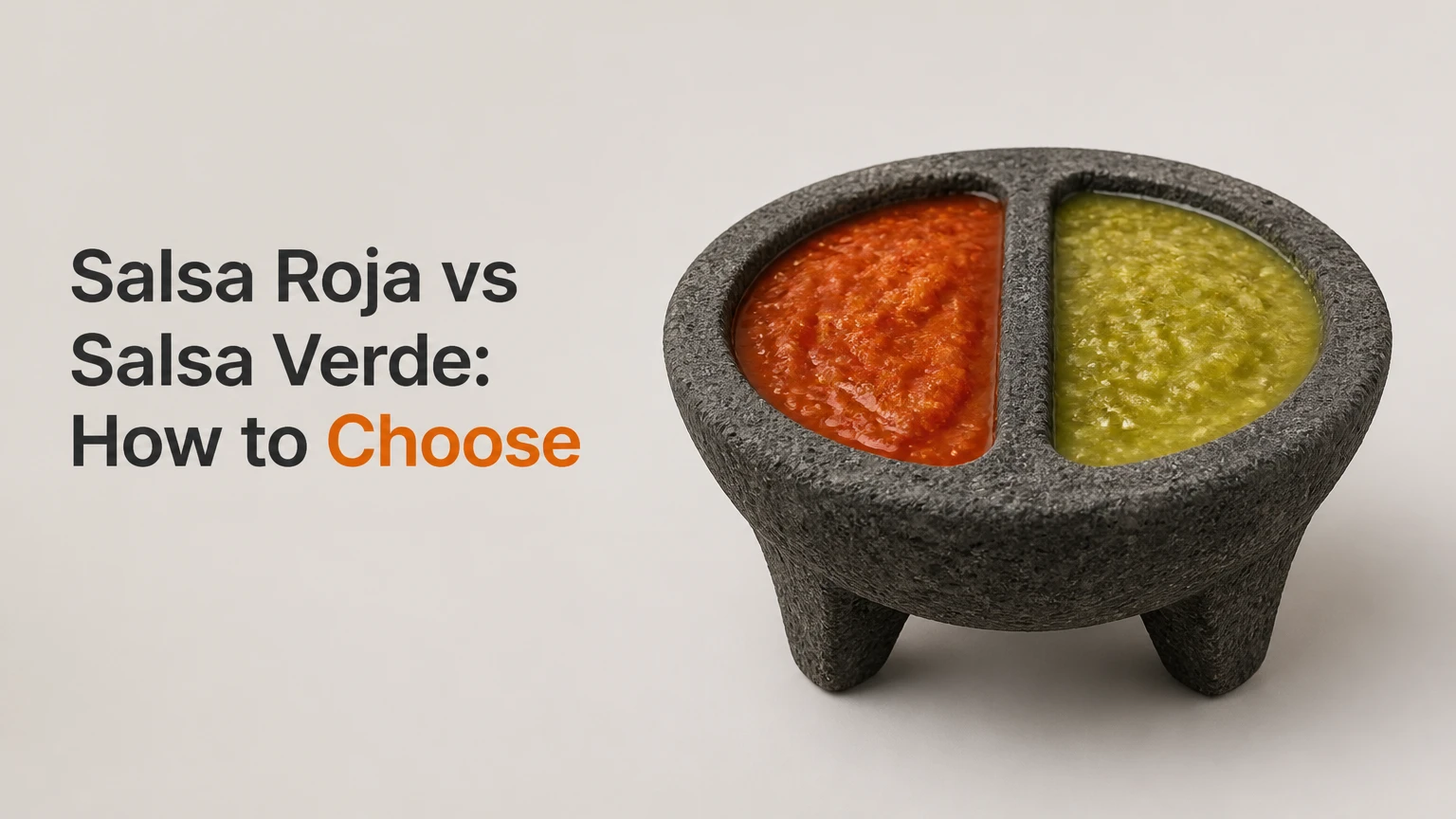
Salsa roja and salsa verde differ first by their principal fruit: salsa roja usually uses red tomatoes, while salsa verde uses tart tomatillos. Salsa roja tends toward sweet, savory, earthy, or smoky flavors; salsa verde tastes sharper, fresher, and more herbal. Neither color determines heat, because chile variety and quantity control spiciness.
Key Facts at a Glance
- Salsa roja uses ripe red tomatoes; salsa verde uses tomatillos, which are botanically distinct from tomatoes.
- Tomatillos supply more noticeable acidity and less natural sweetness than ripe tomatoes.
- Salsa roja commonly tastes fuller and more savory, while salsa verde cuts through rich foods with sharper acidity.
- A roasted version of either sauce tastes smokier than a boiled version.
- Serrano, jalapeño, chile de árbol, and other chiles determine heat more than red or green color.
- Homemade salsa generally keeps 3-7 days refrigerated in a clean, sealed container, depending on ingredients and handling.
What Are the Differences Between Salsa Roja and Salsa Verde?
Salsa roja is a red Mexican sauce built around ripe tomatoes, onion, garlic, salt, and fresh or dried chiles. Salsa verde is a green Mexican sauce built around tomatillos, chiles, onion, salt, and often cilantro. The central difference is the fruit base, not a universal recipe or fixed heat level.
Tomatoes contain more sugar and naturally occurring glutamates than tomatillos, so cooked tomato sauces can develop a rounder, deeper flavor. Tomatillos contain prominent organic acids and pectin, creating a tangier taste and a sauce that may cling more readily after cooking and cooling.
Color can mislead. A green salsa may be extremely hot when it contains several serranos, while a red salsa made with mild dried chile may be gentle. Fresh cilantro, lime, garlic, onion, roasting, and salt also reshape the final profile.
| Attribute | Salsa Roja | Salsa Verde |
|---|---|---|
| Principal fruit | Ripe red tomato | Husked tomatillo |
| Typical acidity | Moderate, tomato-led | High, sharp, tomatillo-led |
| Natural sweetness | Medium to high | Low |
| Common color | Red, orange, or brick | Green, olive, or avocado green |
| Typical texture | Thin, smooth, chunky, or jammy | Thin, pulpy, creamy, or gel-like |
| Common chile choices | Chile de árbol, dried ancho, jalapeño, chipotle | Serrano, jalapeño, poblano, fresh green chile |
| Common flavor direction | Savory, earthy, sweet, smoky | Tart, herbal, grassy, roasted |
Are Tomatillos Green Tomatoes?
Tomatillos are not unripe tomatoes. Tomatillos belong to the Physalis genus and grow inside papery husks, whereas common tomatoes belong to the Solanum genus and develop without a husk.
The sticky coating under a tomatillo husk is normal. Remove the husk, rinse away the resin, and dry the fruit before roasting or blending. Green tomatoes can provide color and acidity in an emergency substitution, but they usually taste less citrusy and can produce a firmer, less cohesive sauce.
How Do Flavor, Acidity, and Texture Work?
Salsa roja gets its body and savoriness from ripe tomato flesh, cooked aromatics, chile compounds, and evaporation. Salsa verde gets its defining sharpness from tomatillo acidity, while cooked tomatillo pulp and pectin can provide a cohesive texture after cooling.
The difference becomes clearest when both sauces use the same onion, garlic, salt, and chile. The tomato version tastes rounder because ripe tomatoes contribute more sugar and umami. The tomatillo version tastes more pointed because acidity arrives earlier on the palate and lingers longer.
A useful kitchen rule is to balance each sauce according to its fruit. Add salt and a small amount of acid to a flat roja. Add roasted onion, avocado, or a little water to soften an aggressive verde. Sugar can mask sourness, but it does not replace proper seasoning or correct poor-quality fruit.
Pectin behavior deserves precision. Cooking can soften tomatillos and help their pulp bind, but salsa verde does not automatically become thick, and raw tomatillos can also produce a substantial purée. Over-blending, excess water, and prolonged storage can make either sauce seem thin.
Which Salsa Is Hotter?
Neither salsa roja nor salsa verde is inherently hotter. Heat depends on the chile’s variety, maturity, seed and membrane handling, and quantity per cup of finished sauce.
For example, a salsa verde with two mild jalapeños may be gentler than a salsa roja containing toasted chile de árbol. A smoky red sauce with chipotle can taste intense without reaching the sharp heat of a raw serrano sauce. Taste one chile before adding the full amount when working with an unfamiliar batch.
| Chile or preparation | Typical heat impression | Common salsa use | Adjustment per 2 cups |
|---|---|---|---|
| Jalapeño | Mild to medium | Roja casera or verde | 1-3 whole chiles |
| Serrano | Medium to hot | Raw or roasted verde | 1-4 whole chiles |
| Chile de árbol | Hot, dry, nutty | Smooth roja | 2-8 dried chiles |
| Chipotle | Medium, smoky | Taquera or tomato roja | 1-3 canned pieces |
| Poblano | Mild, earthy | Roasted verde or creamy sauce | 1-2 roasted chiles |
| Bell pepper | Very mild, sweet | Family-friendly roja | ½-1 pepper |
Which Styles and Preparation Methods Matter Most?
Salsa roja and salsa verde each have raw, boiled, and roasted expressions, but their traditional names and ingredient combinations vary by cook, region, and purpose. Method changes flavor more reliably than color does.
A homestyle roja may use boiled tomatoes, jalapeño, garlic, and salt for a thin everyday table sauce. Salsa de árbol adds toasted dried chiles for sharper heat and a nutty aroma. Salsa taquera may use chipotle or morita for smoke, while salsa asada uses heavily charred ingredients and a rougher texture.
Salsa verde cruda blends raw tomatillos, fresh chiles, cilantro, onion, and salt. Salsa verde cocida softens the fruit and moderates its acidity. Salsa verde asada develops smoky notes from blistered tomatillos and aromatics. Salsa aguacate adds avocado, producing a creamy sauce that is less acidic and more perishable.
| Style | Main ingredients | Method | Typical texture and use |
|---|---|---|---|
| Roja casera | Tomato, jalapeño, onion, garlic | Boiled and blended | Smooth, thin, daily tacos |
| Roja de árbol | Tomato, chile de árbol, garlic | Chiles toasted, fruit cooked | Smooth, hot, nutty |
| Roja taquera | Tomato, morita or chipotle, onion | Roasted or simmered | Smoky, medium-hot, tacos |
| Roja asada | Tomato, serrano, onion, garlic | Comal-charred, crushed | Chunky, smoky, grilled foods |
| Verde cruda | Tomatillo, serrano, cilantro, onion | Raw blended | Sharp, fresh, immediate service |
| Verde cocida | Tomatillo, jalapeño, onion, garlic | Simmered, blended | Softer acidity, enchiladas |
| Verde asada | Tomatillo, serrano, onion, garlic | Comal-charred | Smoky, tart, rich meats |
| Salsa aguacate | Tomatillo, chile, cilantro, avocado | Raw blended | Creamy, tacos and fried foods |
Does Roasting Improve Both Salsas?
Roasting usually adds complexity to both sauces, but it can also introduce bitterness if ingredients blacken deeply or scorch. Char the skin until blistered, then remove heavily burned fragments rather than grinding every black patch into the sauce.
For salsa roja, roasting intensifies tomato sweetness and adds savory smoke. For salsa verde, roasting reduces the raw grassy edge and produces a deeper, less piercing acidity. A skillet, comal, broiler, or high-heat oven can work, although the surface must remain dry enough for blistering.
A molcajete creates a coarse texture because ingredients break apart rather than becoming fully aerated. A blender creates a smoother sauce but can trap air, pale the color, and make the texture seem foamy. Pulse in short bursts and blend solids before adding liquid.
| Method | Roja result | Verde result | Typical active time |
|---|---|---|---|
| Raw blending | Fresh, sweet, loose | Sharp, grassy, acidic | 8-12 minutes |
| Boiling | Soft, unified, mild | Softer, rounder, less sharp | 20-30 minutes |
| Roasting | Sweet, smoky, deep | Smoky, tart, complex | 25-35 minutes |
| Molcajete grinding | Coarse, rustic, aromatic | Coarse, pulpy, bright | 30-40 minutes |
How Should You Compare Cost, Storage, and Nutrition?
Salsa roja is often cheaper and easier to make because fresh tomatoes, canned tomatoes, and dried chiles are widely available. Salsa verde can cost more outside regions where tomatillos are common, although canned tomatillos reduce seasonal and geographic limitations.
Typical home-batch prices vary by country, season, and shopping channel. The following figures use approximate United States grocery pricing for a 2-cup batch, excluding labor and equipment.
| Factor | Salsa roja | Salsa verde | Practical consequence |
|---|---|---|---|
| Fresh fruit quantity | 600-700 g tomatoes | 500-600 g tomatillos | Verde needs husking and rinsing |
| Typical batch cost | $3-$6 | $4-$8 | Canned tomatillos narrow the difference |
| Prep time | 10-15 minutes | 15-20 minutes | Tomatillo cleaning adds 5 minutes |
| Cook time | 10-20 minutes | 8-15 minutes | Tomatillos soften quickly |
| Refrigerator quality | 5-7 days typical | 3-5 days typical | Avocado verde often lasts 1-2 days |
| Freezer quality | Good for 2-3 months | Fair for 1-2 months | Verde may separate after thawing |
Neither sauce is automatically healthier. A two-tablespoon serving can be relatively low in calories, but sodium may vary from roughly 100-250 milligrams depending on the salt added and whether a packaged product contains preservatives. The fruit choice changes flavor and some micronutrients, while serving size controls the practical dietary effect.
For exact nutrition, compare the label of the specific jar or calculate the recipe in a nutrition database. Home recipes differ too widely for a universal calorie or sodium claim.
Can Salsa Verde Be Frozen?
Salsa verde can be frozen, but thawing may create watery separation and a softer texture. The change is most noticeable in raw sauces and avocado-based versions because freezing damages fresh plant cells.
Freeze cooked salsa verde in ½-cup portions, leaving about 1 centimeter of headspace in a freezer-safe container. Thaw it overnight in the refrigerator, drain excess liquid if necessary, then refresh it with chopped cilantro, onion, or a small squeeze of lime. Do not refreeze a thawed batch.
Salsa roja generally tolerates freezing better, especially when cooked and blended smooth. Cool either sauce promptly, refrigerate it in a shallow sealed container, and discard it if it develops mold, gas, an off smell, or an unusual slimy texture.
Which Salsa Should You Choose?
The best choice depends on the food’s richness, the desired heat, and whether you want savory depth or acidity. Choose salsa roja for eggs, rice, lean chicken, and dishes that need tomato sweetness; choose salsa verde for fried foods, rich stews, grilled meats, and meals that benefit from a sharp finish.
| Situation | Recommended sauce | Best style | Reason |
|---|---|---|---|
| Breakfast eggs | Salsa roja | Roja casera | Tomato sweetness supports eggs |
| Chicken tacos | Salsa roja or verde | Roja de árbol or verde asada | Use roja for savoriness, verde for lift |
| Rich shredded meat | Salsa verde | Verde asada | Acidity offsets fat |
| Fried tortillas or chips | Salsa verde | Verde cruda or aguacate | Freshness balances frying |
| Rice and beans | Salsa roja | Roja casera | Savory tomato flavor integrates easily |
| Grilled vegetables | Salsa verde | Verde asada | Tartness sharpens charred vegetables |
| Children or mild palates | Either | Tomato roja with jalapeño | Lower perceived acidity and controlled heat |
| Meal preparation | Salsa roja | Cooked, smooth roja | Better freezing and reheating stability |
Which Salsa Is Better for Tacos?
Salsa roja is usually better for tacos filled with mild chicken, beans, eggs, or grilled vegetables because its savory tomato base adds weight. Salsa verde is usually better for rich fillings, fried preparations, or tacos that need acidity to prevent a heavy finish.
Tortilla type also matters. A thick corn tortilla can support a chunky roasted roja, while a delicate tortilla often works better with a moderately thick verde that clings without soaking through. Add salsa immediately before eating when the tortilla is thin or freshly warmed.
Which Salsa Works Best for Cooking?
Cooked salsa roja is the more forgiving option for simmering because tomato flavor remains recognizable after reduction and reheating. Salsa verde works well in dishes where its acidity remains useful, including baked tortillas, green enchiladas, and stews finished shortly before serving.
Do not reduce a raw verde aggressively for a long period. Extended heat can dull cilantro, darken the sauce, and shift its clean acidity toward a cooked vegetal flavor. Add fresh herbs after the main cooking stage when the dish needs a brighter finish.
How Do You Make Either Sauce Without Common Failures?
A reliable two-cup salsa uses approximately 600 grams of fruit, 1-3 fresh chiles, ¼ onion, 1 garlic clove, and ¾ teaspoon salt, then adjusts seasoning after blending. The decisive variables are water control, chile strength, and stopping the cooking before the fruit loses its intended character.
Step 1: Prepare the Fruit and Aromatics
Core tomatoes and remove damaged areas. For tomatillos, remove the husks, rinse away the sticky film, and dry the fruit so roasting produces browning rather than steaming.
Keep onion and garlic in pieces large enough to handle. Remove chile stems, but retain some seeds and membranes if you want more heat.
Step 2: Choose Raw, Boiled, or Roasted
For a raw salsa, blend fresh ingredients directly. For a boiled salsa, simmer the fruit and chiles in water for 8-10 minutes, removing tomatillos when their bright green color turns olive and the skin begins to soften.
For a roasted salsa, use a dry hot skillet or comal. Turn the ingredients every 2-4 minutes until blistered, then remove garlic when soft and fragrant rather than fully burned.
Step 3: Blend the Solids First
Add fruit, chile, onion, garlic, and salt to the blender before adding water. Pulse until the sauce reaches the desired texture, then add cooking liquid one tablespoon at a time only if the blades stall.
This order preserves concentration. Excess liquid makes salsa run off food and weakens acidity, salt, and chile flavor simultaneously.
Step 4: Correct Salt, Acid, and Texture
Taste after the sauce rests for two minutes. Add salt in ⅛-teaspoon increments, lime only when the sauce needs fresh acidity, and a small amount of water when the texture is too dense.
A sour verde may need more roasted onion, avocado, or additional cooked tomatillo rather than a large amount of sugar. If a salsa tastes bitter, discard severely scorched ingredients before attempting to balance it.
Step 5: Cool and Store Safely
Transfer the finished salsa to a clean, shallow container and refrigerate it promptly. Keep the refrigerator at 4°C or below, and use a clean spoon each time.
Homemade salsa is not shelf-stable unless processed with a tested canning recipe. Refrigeration slows spoilage, but it does not make an untested recipe safe for room-temperature storage.
What Mistakes Ruin Salsa?
The most common salsa failures involve dilution, uncontrolled heat, and poor cooling rather than the choice between red and green fruit. Each problem has a different correction, so adding more ingredients blindly can make the batch harder to repair.
| Failure | Likely cause | Correction | Prevention |
|---|---|---|---|
| Pink or pale foam | Blender running continuously at high speed | Rest 5 minutes, then pulse briefly | Blend in short bursts |
| Watery salsa | Too much cooking liquid | Drain or simmer briefly | Add liquid by tablespoon |
| Harsh sourness | Raw or immature tomatillos | Add roasted onion or avocado | Taste fruit before cooking |
| Bitter finish | Scorched garlic or over-charred fruit | Remove burned pieces | Blacken skins, not flesh |
| Flat roja | Low salt or weak tomato flavor | Add salt, chile, or lime | Use ripe tomatoes or concentrate |
| Brown verde | Oxidation, old cilantro, prolonged heat | Add fresh herbs and serve sooner | Keep covered and cool quickly |
One practitioner rule matters more than most recipe tweaks: never use sugar or baking soda as the first response to sour salsa verde. First check salt, roasted aromatics, fruit maturity, and water concentration. A tiny pinch may help a genuinely aggressive batch, but too much creates a sweet or chemically dull sauce.
Another counterintuitive point is that removing all chile seeds does not guarantee a mild sauce. Much of the perceived heat comes from the inner membranes, and chile variety varies substantially from one pepper to another. Remove membranes for a gentler result, then add chile flesh gradually.
A third rule concerns color. Bright green does not necessarily mean fresher flavor, because oxidation and added herbs can change appearance without improving balance. A well-seasoned olive-green roasted verde may taste better than a neon sauce made from underripe fruit.
Which Should You Choose for Each Cook?
Choose Salsa Roja for Pantry Convenience
Salsa roja suits cooks who need predictable ingredients, freezing flexibility, and a savory sauce for several meals. Canned tomatoes can replace fresh tomatoes when seasonal fruit lacks flavor, although the finished sauce may need less water and more roasting to regain depth.
Choose Salsa Verde for Acidity and Freshness
Salsa verde suits cooks who want a sharper sauce for rich or fried food and who can buy firm, fresh tomatillos. Raw verde rewards immediate serving, while roasted verde offers better depth and a more stable flavor for leftovers.
Choose Roja for Beginners
A boiled tomato salsa is generally easier for a first batch because tomato sweetness masks small seasoning errors. The fruit also gives clearer feedback: blandness usually indicates insufficient salt, chile, onion, or cooking concentration.
Choose Verde for Texture Experimentation
Tomatillo salsa offers more contrast among raw, boiled, roasted, and avocado-based versions. It is the better teaching ingredient for cooks who want to practice acidity, pulsing, draining, and fresh-herb timing.
Frequently Asked Questions
Can salsa roja and salsa verde be served together?
Yes. Serving both sauces creates contrast between tomato sweetness and tomatillo acidity, especially with tacos, eggs, rice, and grilled foods. Keep both at moderate heat if diners will combine them, because two hot sauces can overwhelm the dish even when each tastes balanced alone.
Is salsa roja always made with tomatoes?
Most Mexican salsa roja recipes use red tomatoes, but some red sauces rely heavily on dried red chiles, roasted peppers, or both. The name describes the sauce’s red appearance and style more than one legally fixed ingredient list. Check the recipe when tomato allergy or substitution matters.
Is salsa verde always made with tomatillos?
Mexican salsa verde commonly uses tomatillos, but green sauces in other cuisines may use herbs, green peppers, herbs, or leafy vegetables instead. Within Mexican cooking, tomatillo-based verde is the expected reference, while avocado, cilantro, and chile modify the base.
Why does homemade salsa taste different the next day?
Refrigeration allows salt, chile, onion, and garlic to distribute through the liquid, often making the sauce taste more integrated. Fresh cilantro and raw onion can lose aroma, while tomatillo acidity may seem softer. Stir the salsa, taste again, and adjust before serving.
Can green tomatoes replace tomatillos?
Green tomatoes can replace tomatillos in a pinch, using roughly 1:1 by weight, but the sauce will usually be less acidic and less citrusy. Add lime cautiously after blending and roast the green tomatoes to develop flavor. The substitution works best in cooked verde-style sauces.
Which sauce is better for people sensitive to acidity?
A cooked salsa roja is usually the gentler starting point because ripe tomatoes taste sweeter and cooking softens sharp edges. A boiled verde with mild chiles can also work, but raw tomatillo salsa, lime-heavy recipes, and very hot serrano versions are more likely to feel acidic.
The Bottom Line
Salsa roja vs salsa verde is mainly a choice between tomato-based savory depth and tomatillo-based acidity. Choose roja for eggs, rice, lean fillings, pantry convenience, and freezing; choose verde for rich foods, fried dishes, fresh contrast, and a sharper finish. Chile selection controls heat in both, while boiling, roasting, and blending determine texture.
Pati Jinich summarizes the cultural role of these sauces as “the heart and soul of Mexican cooking,” a useful reminder that salsa is a structural part of the meal rather than a single standardized recipe. Taste the fruit, control the water, season after blending, and choose the sauce that supplies what the dish lacks.
Title tag: salsa roja vs salsa verde: Which One Should You Choose?
Meta description: Compare flavor, heat, cost, storage, and pairings, then choose the right salsa for tacos, eggs, rich foods, or meal prep.