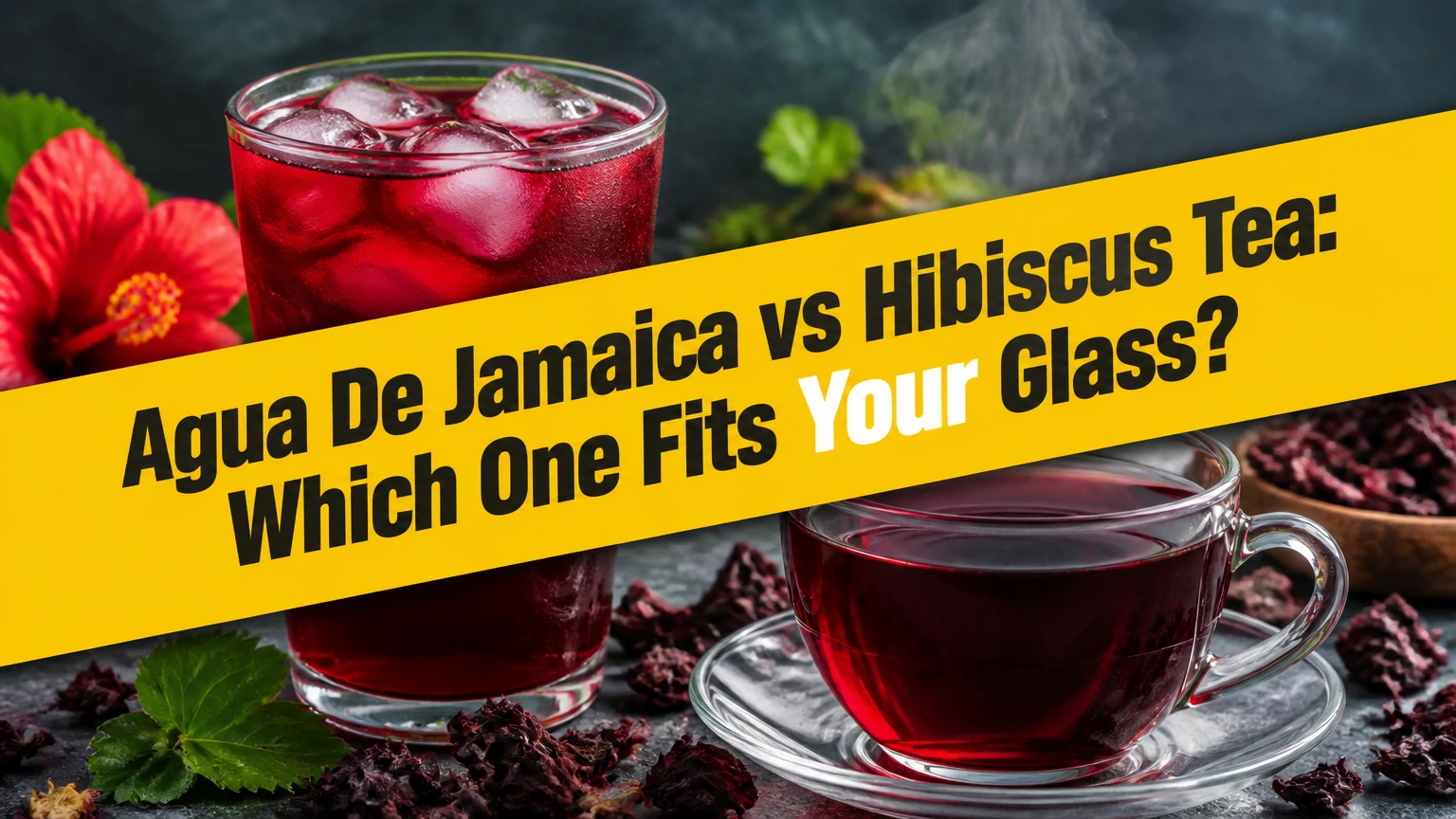
Agua de Jamaica and hibiscus tea usually come from the same plant, Hibiscus sabdariffa, specifically its dried red calyces. Agua de Jamaica is typically a concentrated, sweetened, chilled Mexican agua fresca, while hibiscus tea is usually a smaller unsweetened infusion served hot or iced. The best choice depends mainly on sugar, temperature, strength, and occasion.
Key Facts at a Glance
- Agua de Jamaica and hibiscus tea generally use dried Hibiscus sabdariffa calyces, not ordinary tea leaves.
- Agua de Jamaica is commonly diluted and sweetened after brewing, whereas unsweetened hibiscus tea contains negligible calories.
- Hibiscus calyces contain anthocyanin pigments and organic acids that produce a ruby color and cranberry-like tartness.
- A single cup of hibiscus tea takes about 5-10 minutes; a chilled agua fresca batch usually takes 45-60 minutes including cooling.
- Agua de Jamaica has no fixed calorie count because recipes may contain anything from zero sweetener to several tablespoons of sugar per serving.
- People taking blood-pressure or diabetes medication should ask a clinician before consuming large, concentrated amounts of hibiscus regularly.
Are Agua de Jamaica and Hibiscus Tea Made From the Same Flower?
Agua de Jamaica and hibiscus tea are usually two preparation styles for the same botanical ingredient, Hibiscus sabdariffa. The usable material is the dried calyx, the fleshy cup surrounding the seed pod, rather than the ornamental petals sold for garden hibiscus.
The name “tea” is technically imprecise because true tea comes from Camellia sinensis. Hibiscus tea is an herbal infusion, also called a tisane. “Jamaica” in the Mexican beverage name refers to the Spanish word for hibiscus, pronounced roughly “ha-MY-kah,” not necessarily to the island nation.
The shared ingredient explains the similar red color and sour flavor. The finished beverages differ because a drink’s identity also comes from concentration, sweetener, spices, temperature, and cultural setting.
What Gives Hibiscus Its Red Color and Tart Flavor?
Anthocyanins create the red to deep-purple color in hibiscus calyces, while citric, malic, and other organic acids create the sharp taste. Hot water extracts these water-soluble compounds quickly, and longer contact generally produces a darker, stronger infusion.
Hibiscus is naturally acidic. Citrus juice can sharpen the flavor, while sugar, honey, fruit juice, or dilution reduces the perception of sourness. Excessive heat and prolonged extraction can also pull out more tannin-like compounds, creating a dry, woody finish.
That chemistry creates an important practical distinction: a strong brew is not automatically a better brew. Concentration should match the final serving volume and the amount of sweetener available to balance it.
Agua de Jamaica vs Hibiscus Tea: What Is the Practical Difference?
The practical difference between agua de Jamaica and hibiscus tea is the finished beverage rather than the dried plant. Agua de Jamaica is a large-format, chilled refresco designed for dilution and sweetness, while hibiscus tea is usually a single serving designed for direct drinking with little or no sweetener.
| Criterion | Agua de Jamaica | Hibiscus tea | Decision effect |
|---|---|---|---|
| Typical serving | 8-16 fl oz over ice | 8 fl oz hot or iced | Choose agua fresca for groups |
| Standard strength | 1 cup dried calyces per 3-5 qt finished drink | 1-2 tsp per 8 fl oz | Tea is easier to portion |
| Sweetener | 0-2 tbsp sugar per 8 fl oz, recipe-dependent | 0-1 tsp optional sweetener | Tea usually has less sugar |
| Preparation time | 45-60 minutes hot-brewed | 5-10 minutes | Tea wins for speed |
| Flavor profile | Sweet-tart, concentrated, rounded | Tart, bright, adjustable | Agua fresca tastes softer when chilled |
| Serving temperature | Usually 35-45°F after chilling | About 150-205°F hot, or iced | Tea offers more flexibility |
| Best setting | Meals, warm weather, pitchers | Individual drinks, daily routines | Occasion determines the winner |
Agua de Jamaica often feels fuller because dissolved sugar increases body and suppresses acidity. Hibiscus tea exposes more of the raw tartness, especially when brewed strongly and served without food.
How Do Flavor and Texture Differ?
Agua de Jamaica usually tastes sweeter, colder, and more fruit-like because dilution and sugar moderate the concentrated infusion. Hibiscus tea tastes sharper and lighter, with a dry finish that becomes more noticeable as the dose or steeping time increases.
A tea bag may taste less intense than loose dried calyces because commercial blends can include rosehips, apple pieces, or other filler ingredients. Read the ingredient panel when comparing products, since “hibiscus tea” does not guarantee a single-ingredient infusion.
For a less abrasive cup, use 1 teaspoon per 8 ounces and steep for 5 minutes. For a fuller iced drink, brew double strength and pour it over ice instead of steeping the same leaves for twice as long.
Which Has Less Sugar and Fewer Calories?
Unsweetened hibiscus tea has negligible calories, while agua de Jamaica can contain substantial sugar because traditional recipes often sweeten the concentrate before dilution. The calorie difference comes from the recipe, not from a meaningful nutritional difference between the two forms of hibiscus.
| Finished drink | Added sweetener per 8 fl oz | Approximate added sugar | Approximate calories |
|---|---|---|---|
| Unsweetened hibiscus tea | 0 tsp | 0 g | 0-5 |
| Light agua de Jamaica | 1 tsp sugar | 4 g | 16 |
| Moderately sweet agua fresca | 2 tsp sugar | 8 g | 32 |
| Sweet restaurant-style serving | 1 tbsp sugar | 12-13 g | 48-52 |
| Very sweet batch recipe | 2 tbsp sugar | 24-26 g | 96-104 |
A 2020 review in the Journal of Advanced Pharmaceutical Technology & Research described hibiscus as a source of polyphenols and organic acids, but nutritional value does not make a sweetened beverage low-sugar. The American Diabetes Association’s practical guidance supports checking total carbohydrate and added sugar rather than relying on a drink’s plant-based identity.
For diabetes management, the most predictable option is unsweetened hibiscus tea or agua de Jamaica sweetened with no-calorie ingredients. Honey and agave still contribute sugar, even when they sound less processed than table sugar.
Does Hibiscus Tea Have More Health Benefits Than Agua de Jamaica?
Plain hibiscus tea and unsweetened agua de Jamaica provide broadly similar plant compounds when the same calyces and comparable extraction strength are used. Sweetened agua de Jamaica does not become a health drink merely because its base is hibiscus.
Research has investigated Hibiscus sabdariffa for blood-pressure effects. A 2015 systematic review in the Journal of Hypertension found a possible reduction in blood pressure, but the included trials were limited by differences in dose, duration, and preparation. The evidence does not establish hibiscus as a substitute for prescribed treatment.
The amount extracted also varies widely. A strong, concentrated pitcher may deliver more hibiscus compounds than a weak tea bag, but no universal household serving equals the doses used in clinical research.
How Do You Make Agua de Jamaica?
To make agua de Jamaica, simmer 1 cup of dried hibiscus calyces in 4 cups of water for 8-10 minutes, steep off the heat for 20-30 minutes, strain, sweeten while warm, and dilute to 3-4 quarts. The key success factor is balancing concentration before serving it cold.
Agua de Jamaica Preparation
| Stage | Quantity or setting | Time | Success checkpoint |
|---|---|---|---|
| Simmer | 1 cup calyces plus 4 cups water | 8-10 min | Liquid turns deep red |
| Off-heat steep | Covered saucepan | 20-30 min | Flavor tastes concentrated, not woody |
| Strain | Fine mesh sieve | 3-5 min | No loose calyces remain |
| Sweeten | ½-1 cup sugar per 3-4 qt | 2 min | Sugar dissolves completely |
| Dilute | Add 2-3 qt cold water | 2 min | Final flavor remains tart-sweet |
| Chill | Refrigerator at 40°F or below | 2-4 hr | Drink is cold before adding ice |
- Rinse the dried calyces quickly if they contain dust or fine plant debris. Combine the calyces and water in a stainless-steel or glass saucepan.
- Bring the mixture to a simmer, then maintain moderate heat for 8-10 minutes. Remove the pan from heat and cover it for another 20-30 minutes.
- Strain the concentrate through a fine mesh sieve. Pressing the calyces hard can add sediment and a rougher finish, so use gentle pressure.
- Stir sugar into the warm concentrate. Start with ½ cup for a 3-quart batch, taste after dilution, and add more only if needed.
- Add cold water until the batch reaches 3-4 quarts. Refrigerate it in a covered container and serve over fresh ice.
You will know the ratio works when the drink tastes slightly stronger than desired before icing, because melting ice will dilute it. A common mistake is judging sweetness while the liquid is warm; cold temperatures reduce perceived aroma and can make a balanced batch taste flatter.
How Do You Brew Hibiscus Tea?
To brew hibiscus tea, use 1-2 teaspoons of dried calyces or one tea bag with 8 ounces of freshly boiled water, then steep for 5-7 minutes. Strain before the drink becomes overly tannic, and add sweetener only after tasting the infusion.
Hibiscus Tea Preparation
| Tea format | Water volume | Hibiscus amount | Steeping time |
|---|---|---|---|
| Mild loose-leaf cup | 8 fl oz | 1 tsp | 4-5 min |
| Standard loose-leaf cup | 8 fl oz | 1½ tsp | 5-7 min |
| Strong iced concentrate | 16 fl oz | 3 tsp | 6-8 min |
| Single tea bag | 8 fl oz | 1 bag | 5-7 min |
| Cold infusion | 16 fl oz | 2 tbsp | 8-12 hr refrigerated |
Boil the water to approximately 200-212°F, pour it over the calyces, and cover the mug during steeping. Covering limits heat loss and preserves volatile aroma compounds from additions such as ginger or citrus peel.
For iced tea, brew 16 ounces at double strength, strain it, and pour it over 8-10 ounces of ice. Do not extend steeping to compensate for ice, because stronger extraction can increase dryness without adding useful body.
Can You Cold-Brew Hibiscus?
Cold-brewed hibiscus produces a smoother, less astringent drink than a long hot steep. Combine 2 tablespoons of dried calyces with 16 ounces of cold water, refrigerate for 8-12 hours, strain, and consume within several days.
Cold extraction takes longer but reduces the risk of overcooking the calyces. The resulting drink is usually lighter in aroma, so lime, orange peel, mint, or a small amount of fruit juice can add definition.
How Do Regional Hibiscus Drinks Differ?
Regional hibiscus drinks share an ingredient but differ in culinary purpose and seasoning. Mexican agua de Jamaica emphasizes a sweet-tart chilled refresco, Senegalese bissap often includes mint or orange blossom, and Caribbean sorrel commonly uses ginger and warm spices.
| Beverage tradition | Common region | Typical additions | Usual service |
|---|---|---|---|
| Agua de Jamaica | Mexico and Mexican communities | Cane sugar, lime, cinnamon | Cold, over ice |
| Bissap | Senegal and West Africa | Mint, orange blossom, vanilla | Cold, sweetened |
| Sobolo | Ghana and nearby West African countries | Ginger, pineapple, spices | Cold, sweetened |
| Sorrel | Jamaica, Trinidad, Caribbean | Ginger, cloves, allspice | Chilled, festive |
| Hibiscus tisane | Global | Honey, citrus, mint | Hot or iced |
Names overlap across countries, families, and restaurants. A Jamaican sorrel recipe is not automatically interchangeable with Mexican agua de Jamaica, even though both may use dried hibiscus calyces.
The safest description is ingredient-first: identify the calyces, then state the spices, sweetener, dilution, and serving temperature. That approach avoids treating one regional preparation as the universal definition.
What Do They Cost to Make and How Long Do They Keep?
At typical United States retail prices, loose dried hibiscus costs about $12-$20 per pound, while a 20-count box of hibiscus tea bags often costs $4-$8. Homemade drinks cost less per serving than restaurant agua fresca, but sugar, citrus, packaging, and refrigeration affect the final total.
| Item | Typical retail price | Yield or use | Typical time |
|---|---|---|---|
| Dried calyces, 4 oz | $4-$8 | 8-16 quarts | 45-60 min per batch |
| Dried calyces, 1 lb | $12-$20 | 30-50 quarts | Multiple batches |
| Tea bags, 20 count | $4-$8 | 20 cups | 5-10 min per cup |
| Granulated sugar, 2 lb | $2-$4 | 20-40 sweetened servings | No brew time |
| Restaurant agua fresca | $3-$6 per 16 oz | 1 serving | Immediate |
| Homemade tea serving | $0.25-$0.75 | 8-16 fl oz | 5-10 min |
Store dried calyces in an airtight container away from light, heat, and moisture. Quality commonly remains acceptable for 12-24 months, although aroma and color may decline earlier if the package is repeatedly opened.
Refrigerate prepared drinks at 40°F or below. A conservative household limit is 3-5 days for homemade hibiscus beverages in a clean, covered container; discard the batch if it develops fermentation, cloudiness beyond normal sediment, gas, or an off smell.
What Are the Common Problems and Fixes?
The most common hibiscus problems are excessive bitterness, undissolved sweetener, weak dilution, sediment, and staining. Each problem has a controllable cause, so changing the extraction time or ratio usually works better than adding more sugar.
| Problem | Likely cause | Practical fix | Prevention |
|---|---|---|---|
| Bitter or woody flavor | Simmering over 10-15 min | Dilute with water and add citrus | Use a short simmer plus off-heat steep |
| Too sour | Excessive calyces or low dilution | Add cold water gradually | Measure the final batch volume |
| Weak flavor | Too much water or too little hibiscus | Add a separate concentrate | Brew at a known ratio |
| Sugar at the bottom | Sweetener added cold | Dissolve sugar in warm concentrate | Stir before dilution |
| Heavy sediment | Fine particles or crushed calyces | Filter through a coffee filter | Use a fine sieve |
| Red stains | Pigments on porous surfaces | Rinse immediately with cold water | Use glass or stainless steel |
Hibiscus color can stain light clothing, unfinished wood, and some porous plastics. A glass pitcher makes color inspection easier and reduces lingering odors from strongly acidic liquids.
One expert rule of thumb is to correct strength with water before correcting sweetness with sugar. Sugar can hide harsh extraction temporarily, but dilution fixes the underlying concentration and preserves a cleaner finish.
When Should You Limit or Avoid Hibiscus?
People using blood-pressure medication, diabetes medication, or diuretics should discuss regular concentrated hibiscus consumption with a healthcare professional. Hibiscus may add to blood-pressure or blood-glucose lowering effects, although the size of any interaction depends on dose, medication, and individual response.
Pregnant or breastfeeding people should seek medical advice before using concentrated hibiscus preparations because safety evidence is limited. Occasional culinary use may differ from daily extracts or large pitchers, but the label and serving amount matter.
Hibiscus is also acidic. People with reflux, sensitive teeth, or stomach irritation may tolerate a diluted serving better than a strong infusion, especially when they avoid sipping it continuously over several hours.
The drink is not a proven treatment for hypertension, diabetes, infection, or weight loss. The National Center for Complementary and Integrative Health advises consumers to treat herbal products carefully because evidence, preparation strength, and product quality vary.
Which Should You Choose?
Choose agua de Jamaica for a chilled, sweet-tart pitcher with Mexican culinary context, and choose hibiscus tea for a quick, low-calorie serving whose strength and sweetness you control. The most useful decision is not the plant name; it is whether you want a batch beverage or an individual infusion.
For a Low-Sugar or Diabetes-Conscious Routine
Choose unsweetened hibiscus tea or unsweetened agua de Jamaica. Tea makes portion control easier, while a large pitcher can work if the recipe contains no sugar and the serving size is measured.
For a Mexican Meal or Warm Day
Choose agua de Jamaica. Its cold temperature, dilution, and moderate sweetness pair well with spicy or salty foods, and a 3-4 quart batch can serve a family or small gathering.
For the Fastest Preparation
Choose hibiscus tea bags or measured loose calyces. A cup requires about 5-10 minutes, compared with 45-60 minutes for a hot-brewed pitcher that must cool.
For the Most Tart, Flexible Flavor
Choose hibiscus tea. You can adjust each cup with water, honey, citrus, mint, or ginger without committing an entire pitcher to one sweetness level.
For a Party Pitcher
Choose agua de Jamaica, but sweeten gradually. Prepare the concentrate in advance, label the ingredients, and keep the finished drink refrigerated until service.
Frequently Asked Questions
Is agua de Jamaica caffeine-free?
Traditional agua de Jamaica is caffeine-free because dried hibiscus calyces contain no tea leaves. Commercial products may differ if the blend includes black tea, green tea, yerba mate, or guarana, so check the ingredient list before assuming every hibiscus-labeled product is caffeine-free.
Can I use tea bags to make agua de Jamaica?
Tea bags can make a small batch of agua de Jamaica, but they usually produce a lighter flavor than whole dried calyces. Use 6-8 standard tea bags for 2 quarts, steep for 7-10 minutes, taste, and add chilled water and sweetener gradually.
Why does my hibiscus drink turn purple?
Hibiscus color changes with acidity, water chemistry, concentration, and the specific plant material. More acidic conditions can shift red hibiscus toward magenta or purple, while alkaline water may dull the color. A squeeze of lime can intensify the red-purple appearance.
Can I drink hibiscus tea every day?
Many adults tolerate a moderate unsweetened serving, but daily use is not appropriate for everyone. People taking blood-pressure or diabetes medication, people with frequent reflux, and those who are pregnant or breastfeeding should obtain individualized medical guidance first.
Does adding sugar make agua de Jamaica healthier?
Adding sugar does not improve the drink’s health profile; it changes the flavor and energy content. One tablespoon of sugar contributes roughly 12-13 grams of sugar and about 48-52 calories, so use the smallest amount that balances the acidity.
Can I reuse the dried hibiscus calyces?
You can reuse calyces once for a weaker second infusion, but the color and acidity will decline substantially. For agua de Jamaica, fresh calyces provide more predictable strength, while a second steep can work in a lightly flavored iced tea or blended fruit drink.
The Bottom Line
Agua de Jamaica vs hibiscus tea is mainly a comparison of preparation and purpose, not of botanical identity. Both usually use Hibiscus sabdariffa calyces, but agua de Jamaica is a chilled, diluted, often sweetened batch beverage, whereas hibiscus tea is a quick hot or iced tisane. Choose agua de Jamaica for a meal or gathering, and choose unsweetened hibiscus tea for speed, calorie control, and flexible daily serving size.