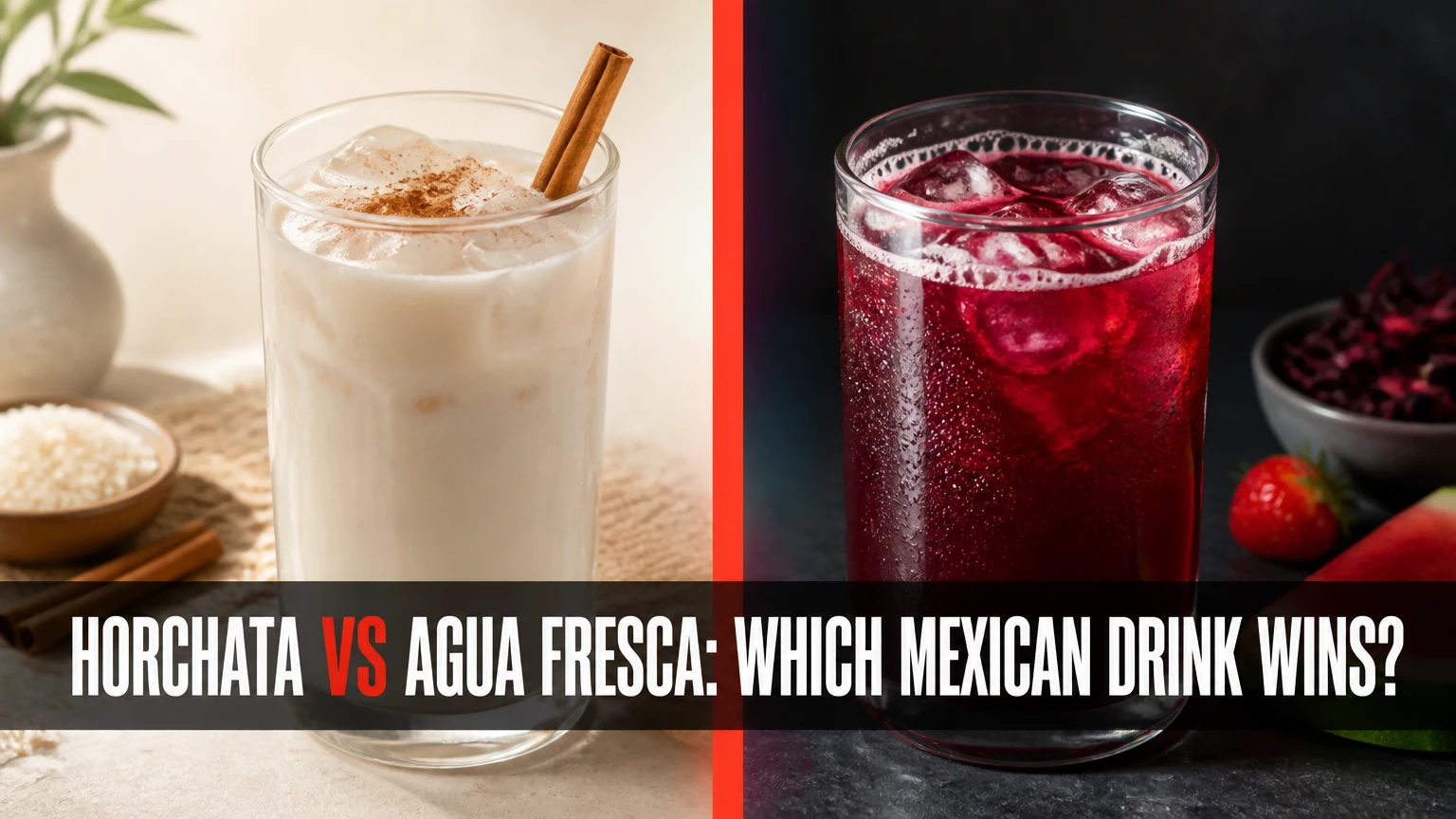
Horchata is a specific kind of agua fresca, while agua fresca is the broader Mexican category that includes fruit, flower, seed, grain, and herb drinks. Choose horchata for a sweet, creamy-tasting rice-and-cinnamon beverage that pairs with chile-rich meals; choose fruit or floral agua fresca for a lighter, brighter drink with faster preparation and easier sugar control.
Key Facts at a Glance
- Horchata belongs to the agua fresca family, so the two terms are not exact opposites.
- Mexican horchata usually contains soaked white rice, cinnamon, water, and sugar; dairy is optional.
- Fruit agua fresca usually combines produce, water, and a sweetener, with straining determined by the desired texture.
- A typical rice horchata needs 4-8 hours of soaking, while a simple fruit agua fresca takes about 10-20 minutes.
- Horchata usually contains more carbohydrate per serving because rice and added sugar remain in the liquid.
- Refrigerated homemade drinks are best consumed quickly: about 2-3 days for horchata and 1-2 days for fresh fruit versions.
What Is the Difference Between Horchata and Agua Fresca?
Horchata identifies one beverage style; agua fresca identifies a whole category. In Mexico, a taquería may offer agua de horchata, agua de jamaica, agua de tamarindo, and agua de sandía on the same menu because each is an agua fresca with a different base ingredient.
The most useful distinction is composition. Horchata extracts starch and flavor from rice, seeds, nuts, or grains, creating an opaque drink with suspended solids. Fruit agua fresca starts with ripe produce, flowers, or a fruit paste, creating a thinner drink whose color and body depend on pulp and straining.
The terminology has regional limits. Spanish horchata de chufa is made from tiger nuts, while Mexican horchata commonly means rice horchata. Central American horchata may use morro or jicaro seeds. Therefore, “horchata” does not identify one universal recipe.
| Attribute | Mexican rice horchata | Fruit agua fresca | Floral or seed agua fresca |
|---|---|---|---|
| Base ingredient | White rice, 1 cup per 6-8 cups liquid | Fruit, 3-5 cups per 6-8 cups liquid | Hibiscus, tamarind, seeds, or grains |
| Appearance | Opaque white or beige | Red, pink, orange, green, or pale yellow | Ruby, brown, cream, or amber |
| Texture | Smooth with suspended starch | Thin to pulpy | Infused or lightly cloudy |
| Typical flavor | Cinnamon, vanilla, sweet rice | Fresh, tart, fruity | Sour, floral, earthy, or spiced |
How Do the Two Drinks Work?
Horchata becomes creamy through extraction and suspension, not necessarily through milk. Soaking hydrates rice or seeds, blending releases starch and flavor compounds, and straining removes larger particles while leaving fine starch suspended in water.
Fruit agua fresca depends on dilution, suspension, or infusion. Blended watermelon retains fine pulp, while strained lime or hibiscus drinks contain fewer solids. Acidity from lime, hibiscus, or tamarind sharpens flavor and can make a drink taste less sweet at the same sugar level.
Ice changes the final balance. A warm pitcher poured over ice can become thin within minutes, so chill the liquid first and add ice to individual glasses. Aim for a serving temperature of roughly 2-4°C, or 35-40°F.
A practical rule follows: thicker ingredients need more straining and stirring, while acidic infusions need careful sweetening after chilling because cold temperatures reduce perceived sweetness.
Why Does Horchata Taste Creamy Without Cream?
Rice starch, finely ground seed material, and optional dairy create horchata’s creamy sensation. The word “creamy” describes mouthfeel in many Mexican recipes, not a guarantee that the beverage contains cream, milk, or condensed milk.
Commercial and restaurant recipes vary. Some use evaporated milk or condensed milk, while others use only rice, water, sugar, and cinnamon. Ask before ordering if dairy avoidance matters, and check sweetened condensed milk separately because it adds both milk and substantial sugar.
Why Does Fruit Agua Fresca Separate?
Fruit agua fresca separates because pulp, plant fibers, and natural pigments have different densities from water. Separation is normal in watermelon, strawberry, guava, and cantaloupe drinks, but a sour smell, fizzing, mold, or a swollen container indicates spoilage rather than ordinary settling.
A vigorous stir restores temporary uniformity. A blender can reincorporate pulp, although repeated blending may create foam. Fine straining produces a cleaner texture but removes some pulp and can reduce the drink’s visual intensity.
Which Types Should You Compare?
The meaningful comparison is between a Mexican rice horchata and a lighter fruit or floral agua fresca. Other horchatas, such as Spanish tiger-nut horchata and Central American morro horchata, should be treated as separate regional beverages rather than assumed substitutes for rice horchata.
| Beverage | Regional association | Main base | Flavor and texture |
|---|---|---|---|
| Horchata de arroz | Mexico | White rice and cinnamon | Sweet, opaque, smooth, spiced |
| Horchata de chufa | Valencia, Spain | Tiger nuts, water, sugar | Nutty, earthy, naturally sweet |
| Horchata de morro | El Salvador and Nicaragua | Jicaro or morro seeds | Toasted, spiced, darker, seed-rich |
| Agua de jamaica | Mexico and Central America | Dried hibiscus flowers | Tart, ruby-red, tea-like |
| Agua de tamarindo | Mexico and Central America | Tamarind pulp or pods | Sour-sweet, brown, dense |
| Agua de sandía | Mexico and the United States | Watermelon | Light, juicy, pink, refreshing |
Agua de jamaica is usually infused and strained rather than blended. Agua de tamarindo requires more pulp management because tamarind fibers and seeds can make straining slow. Watermelon is the fastest option because its high water content often needs little added liquid.
Which Is Lighter, Sweeter, or More Filling?
Fruit agua fresca is generally lighter in mouthfeel, but it is not automatically low in sugar or calories. A large serving can contain several teaspoons of added sugar, especially when the fruit is tart or under-ripe. Horchata tends to be more filling because rice starch, sugar, and optional dairy increase body.
Exact nutrition depends on the recipe. A homemade unsweetened hibiscus infusion may contain almost no energy, while a condensed-milk horchata can resemble a sweet dessert beverage. The ingredient list and serving size matter more than the menu label.
| Typical 12-ounce serving | Main sugar source | Likely body | Practical nutrition note |
|---|---|---|---|
| Unsweetened agua de jamaica | None or fruit acids | Thin | Lowest-sugar option before sweetening |
| Light watermelon agua fresca | Watermelon and 1-2 tsp sugar | Thin | Fruit contributes natural sugar |
| Standard rice horchata | Sugar and rice starch | Medium to full | Usually the highest carbohydrate choice |
| Condensed-milk horchata | Condensed milk and sugar | Full | Dairy-containing and especially sweet |
For calorie control, ask for half sugar, choose unsweetened jamaica, or dilute a sweet batch with chilled water. Stevia or monk fruit can reduce added sugar, but they do not remove the natural sugar in fruit or the carbohydrate contributed by rice.
Horchata is also not a reliable capsaicin neutralizer in the strict chemical sense. Dairy fat and casein can reduce the perception of chile heat more effectively than water, while a dairy-free rice horchata mainly cools, dilutes, and adds sweetness.
Which Drink Pairs Better With Food?
Horchata pairs best with strongly seasoned dishes because its sweetness and cinnamon soften salty, smoky, and chile-forward flavors. Fruit or floral agua fresca pairs better with grilled foods, fresh salsas, citrus-heavy dishes, and meals where a crisp acidic contrast is more useful than richness.
The best choice changes with the dish and the drink’s sweetness. A very sweet horchata can overwhelm delicate seafood, while heavily sweetened watermelon can clash with a dessert. Jamaica’s acidity can cut through rich sauces, and tamarind works well with roasted or fried flavors.
| Meal situation | Better first choice | Reason | Adjustment |
|---|---|---|---|
| Hot chile salsa | Rice horchata | Sweet, starchy mouthfeel | Choose dairy horchata if tolerated |
| Citrus-marinated fish | Jamaica or lime agua fresca | Tartness matches acidity | Request moderate sugar |
| Fried masa dishes | Jamaica or tamarindo | Acidity offsets richness | Serve very cold |
| Mild grilled vegetables | Watermelon or cantaloupe | Fresh fruit stays gentle | Avoid excessive dilution |
Horchata is a poor choice when the goal is a dry, sharply acidic palate cleanser. Fruit agua fresca is a poor choice when the meal already contains strong fruit sweetness and needs a neutral, soothing counterpoint.
How Do You Make Mexican Rice Horchata?
To make rice horchata, soak 1 cup of long-grain white rice with 1 cinnamon stick in 3 cups of water for 4-8 hours, blend, strain, dilute to about 7-8 cups, and sweeten to taste. The most important quality control step is removing grit without stripping away all fine starch.
Ingredients and Equipment
| Item | Typical quantity | Purpose |
|---|---|---|
| Long-grain white rice | 1 cup, about 185 g | Starch and body |
| Mexican cinnamon stick | 1 medium stick | Warm spice |
| Water | 6-8 cups total | Soaking and dilution |
| Sugar | 1/3-1/2 cup | Sweetness |
| Fine-mesh strainer | 1 | Particle removal |
| Blender and pitcher | 1 each | Extraction and chilling |
Step 1: Soak the Rice
Combine rice, broken cinnamon, and 3 cups of water. Cover and refrigerate if the kitchen is warm, then soak for 4 hours for a quick batch or overnight for easier blending.
You will know the rice is ready when individual grains break easily between your fingers. A short soak leaves more coarse particles and produces a thinner, grittier drink.
Step 2: Blend the Mixture
Blend the soaked rice, cinnamon, and soaking water for 1-2 minutes, stopping once the liquid looks milky and the rice is finely broken down. Do not assume a longer blend always improves the beverage, because excessive heat can make the mixture foamy and harder to strain.
Step 3: Strain and Dilute
Pour the mixture through a fine-mesh strainer, nut-milk bag, or several layers of cheesecloth. Stir in 3-5 cups of cold water, then add sugar, vanilla, or dairy according to the recipe.
The finished drink should feel smooth with a slight starchy body. If it feels sandy, strain it again through clean cheesecloth rather than adding more water.
Step 4: Chill and Serve
Refrigerate horchata for at least 2 hours, stir before serving, and pour over ice in individual glasses. Fine rice particles settle during storage, so separation alone does not indicate spoilage.
A dairy-free version uses water only or an unsweetened plant beverage. A dairy version may include evaporated milk, but the added milk changes the storage and allergen profile.
How Do You Make a Fast Fruit Agua Fresca?
A fast fruit agua fresca needs 4 cups of ripe fruit, about 2 cups of cold water, 1-3 tablespoons of sweetener, and optional lime. Blend for 30-60 seconds, strain if needed, dilute to taste, and serve within the same day for the brightest flavor.
Watermelon is the easiest starting point. Strawberry, pineapple, cucumber, cantaloupe, guava, and mango require different amounts of water because their fiber and sweetness vary.
| Fruit or base | Starting quantity | Water range | Finishing ingredient |
|---|---|---|---|
| Watermelon | 4 cups | 1-2 cups | Lime and mint |
| Strawberry | 4 cups | 2-3 cups | Lime |
| Cantaloupe | 4 cups | 1-2 cups | Pinch of salt |
| Pineapple | 4 cups | 2-3 cups | Lime or ginger |
Taste after chilling, not immediately after blending. Cold temperature and melting ice both change sweetness, acidity, and concentration.
Watermelon Method
Blend 4 cups of seedless watermelon with 1 cup of cold water and 1-2 tablespoons of sugar. Strain for a clean drink or retain the pulp for a fuller texture, then add lime and additional water until the beverage tastes balanced.
Keep the finished agua fresca refrigerated. Add ice only to each glass, because ice stored in the pitcher rapidly dilutes the batch.
How Long Do Horchata and Agua Fresca Last?
Homemade horchata usually keeps for 2-3 days in a refrigerator at 4°C or below, while fresh fruit agua fresca is best within 1-2 days. Commercial products may last longer because sealed packaging and validated processing change the storage conditions.
The overview’s broader 3-5-day horchata range is possible for some refrigerated recipes, especially strained dairy-free batches, but it should not be treated as a universal safety guarantee. Dairy, warm storage, repeated pitcher opening, and contaminated utensils shorten the useful window.
| Storage question | Horchata | Fruit agua fresca | Best practice |
|---|---|---|---|
| Refrigerated quality peak | 24-48 hours | Same day to 24 hours | Keep covered at 4°C or below |
| Typical homemade limit | 2-3 days | 1-2 days | Use clean containers |
| Room-temperature exposure | Discard after 2 hours | Discard after 2 hours | Use 1 hour above 32°C |
| Freezing | Possible, texture changes | Possible, texture changes | Freeze without ice |
Discard either drink if it develops sour fermentation, gas, mold, unusual viscosity, or an off odor. Stirring can recombine settled solids; it cannot make spoiled liquid safe.
What Are the Main Mistakes?
The most common horchata failure is coarse texture, and the most common fruit agua fresca failure is poor balance after dilution. Both problems are preventable when the cook controls particle size, water volume, sweetener, and temperature in that order.
Horchata Troubleshooting
- Gritty texture: Soak longer and pass the liquid through fine cheesecloth or a nut-milk bag. A second strain is more effective than extra blending.
- Gray, muddy appearance: Use a whole cinnamon stick instead of adding a large amount of ground cinnamon directly to the pitcher.
- Too thick: Add cold water in 1/2-cup increments and retaste before adding sugar.
- Too sweet: Dilute with unsweetened water or milk, then add a small pinch of salt to sharpen the flavor.
- Weak cinnamon flavor: Steep the cinnamon in the soaking liquid longer or add a fresh stick during chilling.
Agua Fresca Troubleshooting
- Watery flavor: Reduce dilution or add more fruit puree instead of adding sugar alone.
- Harsh acidity: Add water first, then sweetener in teaspoon increments.
- Fast separation: Stir before each pour, or strain more finely for a cleaner texture.
- Foam: Let the pitcher rest for 5-10 minutes after blending, then skim if needed.
- Dull flavor: Chill the fruit and liquid before serving, and add lime only after tasting.
A practitioner rule of thumb is to correct concentration before sweetness. Sugar can mask weak fruit flavor, but it cannot restore aroma lost through over-dilution.
Which Should You Choose?
Choose horchata when texture, sweetness, cinnamon, and comfort matter more than speed or low sugar. Choose agua fresca when you want a lighter drink, a faster recipe, a fruit-specific flavor, or greater control over acidity and sweetener.
Choose Horchata If You Want a Spiced Meal Pairing
Rice horchata suits tacos with hot salsa, chile-rubbed dishes, and meals where a smooth sweet drink provides contrast. Select a dairy-free version when you want the body of rice without milk, and ask about condensed milk if sugar intake matters.
Choose Agua de Jamaica If You Want the Lightest Profile
Agua de jamaica is the strongest choice for tartness and low sweetness before sweetening. Hibiscus creates a ruby infusion with a tea-like flavor, so it works for diners who dislike creamy textures or heavy drinks.
Choose Watermelon Agua Fresca If You Need Speed
Watermelon agua fresca can be ready in approximately 10 minutes when the fruit is already cold and cut. It is useful for family meals, but its natural sugar still counts, and its flavor fades sooner than a properly chilled hibiscus infusion.
Choose Tamarindo If You Want Complexity
Tamarindo delivers a sour, fruity, brown-sugar-like profile with more depth than watermelon or lime. It requires careful straining because pod fibers and seeds make the preparation slower.
| Preference | Recommended drink | Why it fits | Main limitation |
|---|---|---|---|
| Creamy texture | Rice horchata | Suspended rice starch adds body | More prep and carbohydrate |
| Low added sugar | Unsweetened jamaica | Tart hibiscus needs less sweetener | Tea-like bitterness |
| Fast preparation | Watermelon agua fresca | Blend-and-serve workflow | Shorter quality window |
| Nutty regional flavor | Chufa horchata | Tiger nuts provide earthiness | Less common outside Valencia |
| Strong chile pairing | Horchata with dairy | Sweetness and casein soften heat | Dairy and sugar may be present |
Frequently Asked Questions
Is horchata healthier than agua fresca?
Neither category is automatically healthier because recipes differ in sugar, serving size, dairy, and fruit content. Unsweetened jamaica is usually the lowest-sugar choice, while condensed-milk horchata is usually the richest. A half-sugar fruit agua fresca can fit a balanced meal better than either heavily sweetened option.
Is Mexican horchata dairy-free?
Mexican horchata can be dairy-free when made with rice, water, cinnamon, and sugar. Many restaurants add evaporated milk, regular milk, or condensed milk, so people avoiding dairy should ask about the exact recipe and preparation equipment before ordering.
Which drink has more sugar?
Horchata often has more added sugar because its rice and cinnamon base needs substantial sweetening, especially when dairy is included. Fruit agua fresca can also be high in sugar when prepared with sweet fruit and several tablespoons of added sweetener per pitcher.
Can children drink horchata or agua fresca?
Children can generally drink either beverage as an occasional sweet drink, provided the ingredients are suitable and the batch has been refrigerated safely. Serve small portions, choose reduced-sugar recipes, and check for dairy or nut ingredients in horchata variations.
Can you make horchata without rice?
Yes. Horchata variations use tiger nuts, morro seeds, sesame seeds, almonds, or other grains depending on the region. The substitute changes the flavor, allergen profile, extraction time, and texture, so a chufa or seed horchata should not be judged by the standards of Mexican rice horchata.
What should you order with spicy tacos?
Order horchata when the tacos come with intense chile heat and you prefer a sweet, full-bodied pairing. Order jamaica or tamarindo when the tacos are rich or fried and you want tartness to refresh the palate between bites.
The Bottom Line
Horchata vs agua fresca is not a choice between unrelated drinks: horchata is one member of the larger agua fresca family. Rice horchata wins for cinnamon flavor, body, and spicy-food pairing, while fruit or floral agua fresca wins for speed, brightness, seasonal variety, and easier sugar adjustment.