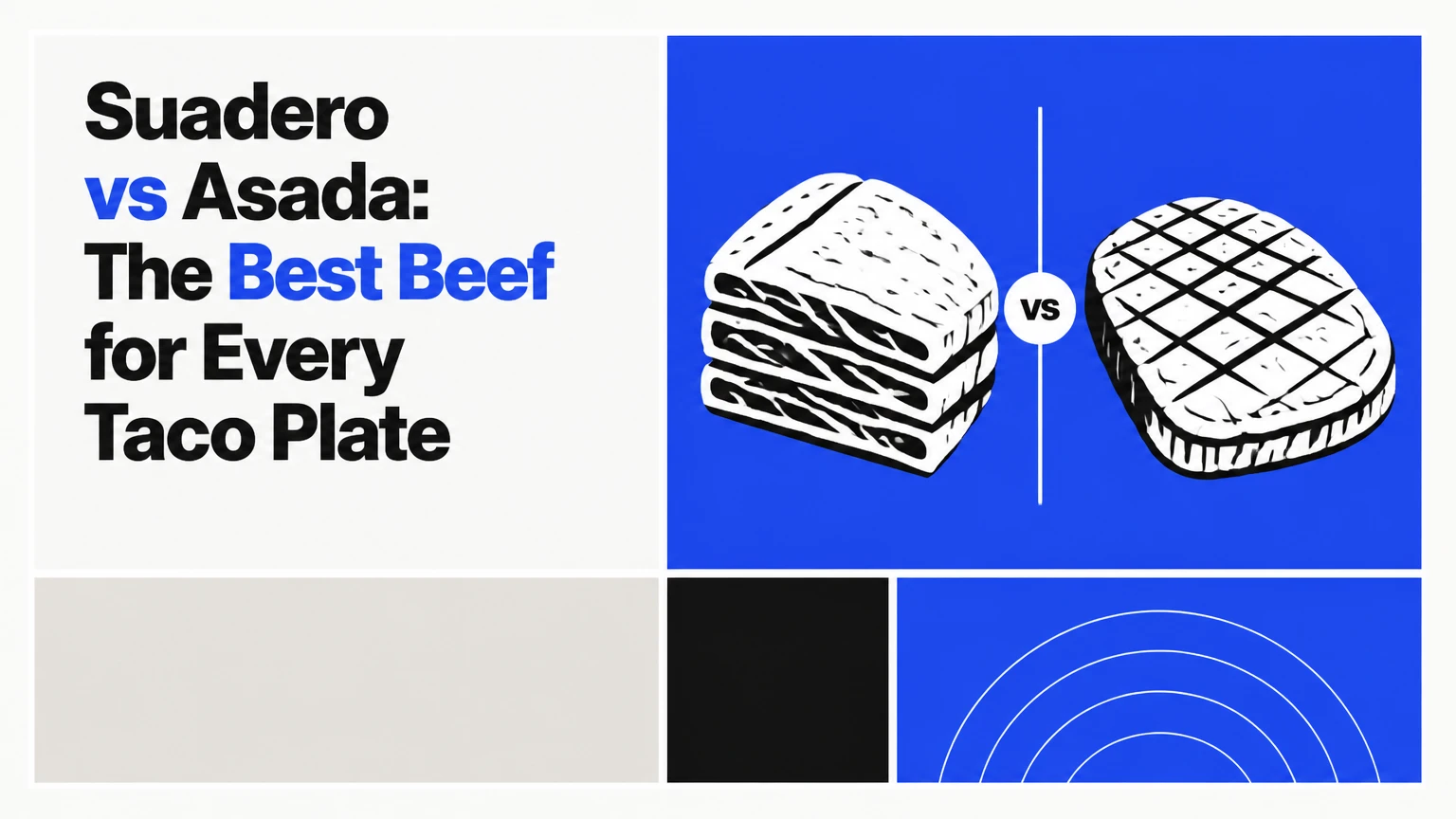
Suadero is a beef cut and taco preparation usually cooked slowly until tender, then chopped and crisped on a hot griddle. Carne asada is thin beef grilled quickly over direct heat, with flavor driven by browning, smoke, seasoning, and the selected cut. Choose suadero for rich, soft tacos and batch cooking; choose carne asada for speed and char.
Key Facts at a Glance
- Suadero commonly comes from the lower breast, brisket area, or a regional “rose meat” section, so the exact butcher’s cut is not universal.
- Carne asada means grilled beef, not a single anatomical cut; flank, skirt, flap, sirloin, and thin chuck are common choices.
- Suadero usually needs 2.5-5 hours of gentle cooking, while carne asada often needs 4-8 minutes on a hot grill.
- Suadero develops a soft interior and crisp chopped edges; carne asada develops a grilled crust with a firmer steak-like bite.
- Typical United States home-cooking costs run about $5-$12 per pound for suadero substitutes and $7-$18 per pound for common asada cuts.
- USDA FSIS recommends cooking whole beef steaks and roasts to 145°F, followed by a 3-minute rest; ground or mechanically tenderized beef has different guidance.
What Is the Difference Between Suadero and Carne Asada?
Suadero and carne asada differ mainly in identity and cooking method: suadero refers to a particular beef section and its slow taco preparation, while carne asada describes beef grilled over direct heat. Suadero converts connective tissue into gelatin through prolonged moist or fat-assisted cooking. Carne asada relies on rapid surface browning before the interior overcooks.
The terms can overlap on a menu. A taqueria may grill a thin piece of suadero, while another may label a slow-cooked taco simply “suadero.” Mexican butcher terminology also varies by city and supplier, which makes English-language cut charts unreliable when treated as universal definitions.
Carne asada is broader. The dish can use arrachera, which commonly refers to skirt steak, or cuts such as flank, flap, sirloin, and thinly sliced chuck. Marinades range from a simple salt-and-garlic seasoning to citrus, herbs, and spices. Citrus is common, but it does not define carne asada.
| Decision factor | Suadero | Carne asada |
|---|---|---|
| Culinary identity | Beef cut and taco preparation | Grilled beef dish and method |
| Main heat method | Gentle braise or fat-assisted simmer, then griddle sear | Direct grill heat at 450-600°F |
| Typical raw thickness | 1-3 inch pieces or thin sliced portions | 1/8-1/4 inch steaks |
| Typical home cook time | 2.5-5 hours | 4-8 minutes |
| Finished texture | Soft, juicy, chopped, crisp-edged | Charred, juicy, steak-like, sliced |
| Best service format | High-volume tacos and holding | Immediate tacos, plates, and gatherings |
| Main failure | Tough meat from insufficient tenderizing time | Dry or chewy meat from overcooking |
| Typical flavor emphasis | Beef fat, broth, griddle seasoning | Smoke, char, marinade, browned crust |
Is Suadero a Cut of Beef or a Cooking Style?
Suadero is both a regional beef-cut term and a preparation associated with tender, chopped tacos. Mexican usage does not map perfectly to one United States retail label, so suadero may be sourced from brisket-adjacent meat, lower breast, rose meat, or another relatively thin, connective-tissue-rich section.
The distinction matters at the butcher counter. Ask for meat suitable for long cooking if the label “suadero” is unavailable. Brisket flat, thin chuck, bottom round with added cooking fat, and certain lower-belly cuts can work, but each needs a different cooking time because collagen and fat levels vary.
“Rose meat” is especially inconsistent across markets. Some sellers use the phrase for a particular beef section, while others use it as a house label. Inspect the meat rather than relying on the name: a good slow-cooking substitute has visible connective tissue, moderate fat, and enough thickness to remain juicy during prolonged cooking.
| Retail label or term | Likely characteristics | Suitable method | Typical adjustment |
|---|---|---|---|
| Suadero | Thin, connective-tissue-rich beef | Gentle braise plus sear | Cook 2.5-4 hours |
| Brisket flat | Leaner, dense muscle fibers | Covered braise | Add 1-2 tablespoons fat per pound |
| Skirt steak | Long fibers, strong beef flavor | Very hot grill | Slice thinly across grain |
| Flank steak | Lean, broad muscle sheet | Grill or pan sear | Marinate 1-4 hours |
| Flap meat | Loose grain and moderate fat | Hot grill | Stop near medium doneness |
| Thin chuck steak | More collagen and marbling | Braise or thin grill slices | Use low heat unless sliced very thinly |
Why Does Suadero Become Tender While Carne Asada Stays Fast?
Suadero becomes tender because prolonged cooking softens collagen in connective tissue, while carne asada stays fast because thin beef reaches serving temperature before its surface loses excessive moisture. Suadero needs time for conversion; carne asada needs heat control and accurate slicing.
A covered pot at roughly 185-205°F keeps the liquid or rendered fat below a hard boil. Three hours is a useful starting point for small suadero pieces, but a thick brisket substitute may need 4-5 hours. The practical test is resistance: a fork should enter with little pressure, and a piece should separate without a rubbery pull.
Carne asada benefits from a hot grate, dry surface, and uncrowded cooking area. A grill surface around 450-600°F can brown a 1/8-1/4-inch steak in roughly 2-4 minutes per side. Thin meat has little thermal buffer, so an extra minute can change juicy slices into dry fragments.
What Cut Gives Each Method Its Best Texture?
Suadero performs best with a cut containing connective tissue and enough fat to tolerate extended cooking. Carne asada performs best with a naturally tender, thin-cut muscle whose grain can be identified and sliced across after grilling.
| Desired result | Recommended cut | Preparation | Main risk |
|---|---|---|---|
| Soft chopped taco filling | Suadero or brisket flat | Covered slow cook, then dice | Undercooking collagen |
| Smoky, tender slices | Skirt or flap meat | Grill 2-4 minutes per side | Overcooking thin meat |
| Lean grilled tacos | Flank steak | Light marinade, high heat | Dry edges |
| Budget grilled tacos | Thin chuck steak | Slice 1/4 inch, brief grill | Chewy connective tissue |
| Mild steak flavor | Sirloin | Salt, grill, slice across grain | Limited fat and crust |
| Crisp griddle bits | Cooked suadero | Dice and sear in rendered fat | Excessive surface drying |
How Do You Cook Suadero at Home?
Cook suadero by seasoning 2 pounds of beef, covering it with a small amount of liquid and fat, holding it at a gentle simmer for 2.5-5 hours, then chopping and searing it on a hot griddle. The success factor is collagen conversion without a violent boil.
Step 1: Prepare the Beef
Cut 2 pounds of suadero or brisket flat into 2-3-inch pieces. Trim hard exterior fat, but retain thin internal fat because lean meat can dry during long cooking.
Season with approximately 2 teaspoons of kosher salt per 2 pounds of beef. Add garlic, black pepper, bay leaf, or onion if desired. The meat should taste seasoned before it enters the pot.
Step 2: Add Controlled Moisture and Fat
Place the beef in a heavy pot with 1 cup of water or unsalted beef broth and 2-4 tablespoons of rendered beef fat. The liquid should reach roughly one-third of the meat’s height, not completely flood it.
Cover the pot tightly. A shallow layer reduces the chance of boiling the meat aggressively while still creating a humid cooking environment.
Step 3: Cook Until Fork-Tender
Hold the pot at approximately 185-205°F for 2.5-5 hours. Check after 2.5 hours, then continue in 30-minute increments until a fork enters easily.
The meat is ready when a diced piece compresses under light pressure and shows no rubbery resistance. A bubbling boil is a failure signal because high agitation can toughen the exterior before the interior softens.
Step 4: Chop and Crisp
Remove the tender beef, reserve several tablespoons of cooking fat, and chop the meat into 1/4-1/2-inch pieces. Heat a comal, cast-iron skillet, or griddle until a water droplet evaporates immediately.
Add the reserved fat and spread the beef in one layer. Sear for 3-6 minutes, turning once or twice, until browned edges appear.
Step 5: Season at Service
Taste the crisped meat before adding more salt because cooking liquid concentrates seasoning. Serve in warm corn tortillas with onion, cilantro, salsa, and lime.
A useful practitioner rule is to crisp only the portion needed immediately. Holding already-crisped suadero in a covered container softens the edges and removes the texture contrast that makes the preparation distinctive.
How Do You Cook Carne Asada Without Drying It Out?
Cook carne asada by slicing or buying beef 1/8-1/4 inch thick, seasoning it shortly before grilling, searing it over a 450-600°F surface for about 2-4 minutes per side, and slicing across the grain after a brief rest. Thickness and grill temperature determine success more than marinade complexity.
Step 1: Select and Trim the Steak
Choose 1.5-2 pounds of skirt, flank, flap, sirloin, or thin chuck for four servings. Remove thick surface membranes from skirt steak because they remain tough after grilling.
For thicker flank or sirloin, slice after cooking. For thin skirt or flap meat, leave the piece intact while grilling so it does not overcook instantly.
Step 2: Season or Marinate Briefly
Use salt, garlic, ground pepper, onion, and herbs for a non-acid seasoning. If using lime juice or another acidic ingredient, marinate thin beef for 30 minutes to 4 hours under refrigeration.
Acid changes the outer protein structure, but longer exposure does not guarantee tenderness. Past several hours, thin meat can develop a soft, uneven surface rather than a better grilled texture.
Step 3: Dry the Surface and Heat the Grill
Remove excess marinade and pat the beef dry. Preheat charcoal, gas, or an indoor cast-iron grill until the cooking surface reaches approximately 450-600°F.
Drying is important because surface water consumes heat through evaporation. A wet steak steams first, delaying browning and encouraging gray patches.
Step 4: Grill Quickly
Place the beef over direct heat without overlapping pieces. Grill thin steaks for about 2-3 minutes per side, and thicker 1/4-inch pieces for about 3-4 minutes per side.
Use USDA FSIS guidance for final safety decisions: whole beef steaks should reach 145°F with a 3-minute rest. Mechanically tenderized beef requires greater care because bacteria can be moved below the surface.
Step 5: Rest and Slice Across the Grain
Rest the grilled beef for 3-5 minutes, then identify the muscle fibers and cut perpendicular to them. Across-grain slicing shortens the fibers and can make a moderately firm cut easier to chew.
Slice before adding salsa or lime. Cutting immediately after removal can release more juice onto the cutting board, while excessive resting cools thin steaks quickly.
Which One Is Faster, Cheaper, or Better for a Crowd?
Carne asada is faster because active grilling usually takes under 10 minutes, while suadero is often cheaper per serving and easier to hold for a crowd after cooking. Suadero requires more elapsed time, but its batch-friendly texture makes service more predictable.
Retail prices vary by region, trimming, season, and whether a butcher sells a named Mexican cut. The ranges below are typical United States estimates, not fixed market prices. Taco prices also depend on location, portion size, tortilla count, and restaurant overhead.
| Cost or time measure | Suadero | Carne asada |
|---|---|---|
| Typical raw price per pound | $5-$12 | $7-$18 |
| Raw quantity for four taco eaters | 2-2.5 pounds | 1.5-2 pounds |
| Active preparation time | 20-35 minutes | 25-45 minutes |
| Cooking time | 2.5-5 hours | 4-8 minutes |
| Typical cooked yield | 55%-70% of raw weight | 65%-75% of raw weight |
| Home meal cost before toppings | $18-$35 | $22-$45 |
| Restaurant taco range in many US cities | $2.50-$5 | $3.50-$7 |
| Practical holding window | 1-3 hours in cooking juices or fat | Best within 15-30 minutes |
Suadero can cost less because brisket-adjacent and connective-tissue-rich cuts are often priced below premium skirt or well-trimmed flank. However, a low raw price does not eliminate energy cost or the need for a heavy pot.
Carne asada may be the better value when only two people are eating. A small amount of steak cooks quickly, leaves fewer leftovers, and avoids several hours of stove use.
Which Has Better Flavor and Tenderness?
Suadero usually has the more yielding texture and deeper rendered-beef flavor, while carne asada usually has the stronger smoky crust and fresher grilled aroma. The answer changes when a lean suadero substitute is undercooked or when carne asada uses well-marbled skirt and an intensely hot grill.
Suadero’s flavor comes from concentrated beef juices, cooking fat, browned edges, and any aromatics added to the pot. Its interior is less steak-like because the meat is cooked until connective tissue softens, then chopped into small pieces.
Carne asada’s flavor comes from the Maillard reaction, smoke exposure, browned seasoning, and the cut’s own fat. A dry surface and hot grate matter more than a long marinade. The preparation is at its best shortly after grilling, before chopped pieces lose heat and moisture.
Which Texture Works Better in a Taco?
Suadero works better for soft, richly coated tacos with chopped filling, whereas carne asada works better for diners who prefer distinct grilled slices and firmer chew. Neither texture is inherently superior because tortilla size, salsa moisture, and intended service time affect the result.
Suadero’s small pieces distribute fat and seasoning throughout a taco. Carne asada’s longer slices provide a more obvious steak bite, but poor across-grain cutting can make even an expensive cut seem tough.
Which Method Is More Forgiving?
Suadero is more forgiving after it reaches tenderness because the meat can remain warm in its cooking liquid or fat without drying immediately. Carne asada is less forgiving because thin steaks can move from juicy to dry within one or two minutes.
Suadero still has a narrow early-stage failure: stopping at two hours when the cut needs four leaves collagen only partly converted. Adding more gentle cooking usually repairs that problem. Boiling, however, can produce a dry exterior and cloudy cooking liquid.
Carne asada failures are usually immediate and harder to reverse. Overcooked steak cannot be made rare again, although slicing it thinly, adding salsa, and serving it in smaller tacos can improve the eating experience.
What Are the Most Common Mistakes?
The most common suadero mistake is treating a connective-tissue-rich cut like a quick steak. The most common carne asada mistake is treating a thin steak like a roast that can tolerate extended cooking.
- Suadero boiled aggressively: Lower the heat to a quiet simmer and extend cooking until fork-tender.
- Suadero still chewy: Add 30-45 minutes of covered cooking, then test again rather than increasing heat.
- Suadero greasy: Drain briefly, reserve only enough fat for the final sear, and add fresh salsa for acidity.
- Carne asada steamed on the grill: Cook smaller batches, dry the surface, and leave space between pieces.
- Carne asada turned mushy: Reduce acidic marinade time to 30 minutes-4 hours and discard excess marinade.
- Carne asada tough despite correct doneness: Slice across the grain and use a thinner, more tender cut next time.
A counterintuitive professional practice is to salt suadero before slow cooking but salt thin carne asada immediately before grilling when a wet marinade is not used. Long salting can help thicker beef season internally, while thin marinated steaks do not need an overnight soak.
Which Should You Choose?
Choose suadero for soft tacos, advance preparation, large groups, and rich beef flavor. Choose carne asada for a weeknight meal, outdoor grilling, smoky char, and immediate service.
Choose Suadero If You Are Feeding a Crowd
Suadero is the stronger choice for 8-20 diners because a large batch can finish before guests arrive and remain moist in its cooking juices. Dice and crisp portions as needed instead of exposing the entire batch to the griddle at once.
A 10-pound raw batch typically produces approximately 5.5-7 pounds cooked, enough for roughly 55-80 tacos using 1.5-2 ounces of meat per tortilla.
Choose Carne Asada for a Fast Weeknight Meal
Carne asada suits a 30-45-minute dinner when the grill or cast-iron skillet is already available. Prepare toppings while the grill heats, cook the beef in batches, and serve immediately after slicing.
Flank or flap meat offers a useful balance of price and flavor. Skirt steak cooks fastest but can become chewy if the grill is crowded or the grain is cut incorrectly.
Choose Suadero for Rich, Crisp Edges
Suadero delivers the better result when crispy chopped edges and a soft center matter more than smoke. The final sear should be brief and hot, because prolonged griddling drives moisture out of already-tender meat.
Choose Carne Asada for Smoke and Char
Carne asada is the better selection when grilled aroma, browned seasoning, and visible char define the meal. Charcoal adds smoke exposure, but a preheated cast-iron pan can still create strong browning indoors.
| Diner or situation | Better choice | Useful specification | Reason |
|---|---|---|---|
| Two-person weeknight | Carne asada | 1.5 pounds, 4-8 minutes | Minimal leftovers and fast service |
| Ten-person gathering | Suadero | 5-6 pounds raw, 3-5 hours | Batch holding and predictable portions |
| Crisp taco preference | Suadero | Dice 1/4-1/2 inch, sear 3-6 minutes | Maximum browned surface |
| Smoke-focused meal | Carne asada | Skirt or flap, 450-600°F | Direct-fire crust and aroma |
| Tight food budget | Suadero | Brisket flat or labeled suadero | Lower typical price per pound |
| Indoor apartment cooking | Suadero | Covered heavy pot, cast-iron finish | Less smoke than open grilling |
| Leaner meal preference | Carne asada | Flank or sirloin, trim visible fat | Less added cooking fat |
| Make-ahead service | Suadero | Hold 1-3 hours in juices | Better moisture retention |
What Can Replace Suadero or Carne Asada?
Brisket flat and thin chuck can replace suadero in a slow, covered preparation, while flank, flap, skirt, and sirloin can replace one another for carne asada when sliced and cooked according to thickness. Substitution should follow connective tissue and thickness, not merely color or price.
Do not replace a slow-cooking suadero recipe with flank steak and keep the same five-hour timing. Flank has a different structure and will dry during prolonged cooking. Likewise, do not grill a thick brisket piece for four minutes and expect suadero’s tenderness.
For a lower-fat suadero-style result, use lean brisket flat, reduce added fat, and retain the cooking liquid. For a budget carne asada, use thin chuck, marinate briefly, and slice across the grain after grilling.
How Should You Store and Reheat the Meat?
Store cooked suadero and carne asada in shallow containers within 2 hours, refrigerate at 40°F or below, and use refrigerated leftovers within 3-4 days according to USDA food-safety guidance. Reheat suadero with cooking juices, while reheating carne asada briefly to limit further drying.
Suadero reheats well in a covered skillet with 1-2 tablespoons of broth or reserved juices per serving. Crisp the portion for 1-3 minutes at the end.
Carne asada reheats best in a hot skillet for 30-60 seconds per side or in a covered pan with a small spoonful of liquid. Microwave heating is convenient but can create tough edges, especially with thin flank or skirt.
FAQ
Is Suadero the Same as Brisket?
Suadero is not universally identical to brisket. Suadero commonly comes from a lower-breast or brisket-adjacent area, but Mexican butcher terminology varies by region and supplier. Brisket flat can substitute effectively in a slow taco preparation when the piece contains enough connective tissue and receives gentle, covered cooking.
Is Carne Asada Always Marinated?
Carne asada is not always marinated. Salt, garlic, pepper, and direct grilling are sufficient, while citrus, herbs, and other seasonings are optional regional or household choices. Thin beef benefits from 30 minutes-4 hours of acidic marination, but prolonged citrus exposure can soften the surface excessively.
Can You Grill Suadero?
You can grill suadero when the meat is sliced thinly or has been tenderized through precooking. Raw, thick suadero generally needs slow cooking because its connective tissue remains chewy after a short grill session. Precooked suadero can receive a hot final grill or griddle sear for smoky, crisp edges.
Which Has More Fat, Suadero or Carne Asada?
Suadero often contains or absorbs more cooking fat because the traditional preparation uses rendered beef fat or another cooking fat. Carne asada varies widely: skirt and flap can be moderately fatty, while trimmed flank and sirloin are leaner. Cut selection and trimming determine the final fat difference more than the dish name alone.
Can You Make Carne Asada in a Cast-Iron Pan?
Cast-iron cookware can produce excellent carne asada when preheated for 5-8 minutes and used in small batches. A dry surface, 450-600°F pan temperature, and 2-4 minutes per side create browning without steaming. Ventilation matters because high-heat searing produces smoke indoors.
Which Is Better for Tacos, Suadero or Asada?
Suadero is better for soft, rich, chopped tacos that may be served over an extended period. Carne asada is better for smoky, steak-like tacos served immediately. For a party, choose suadero; for a fast grilled dinner, choose carne asada. The correct choice follows service timing and texture preference.
Conclusion: Suadero vs Asada
Suadero and carne asada solve different cooking problems. Suadero turns a connective-tissue-rich beef cut into tender, crisp-edged taco filling through slow cooking, while carne asada turns thin beef into smoky, browned slices through direct heat. Choose suadero for batch service and richness; choose carne asada for speed, char, and immediate eating.