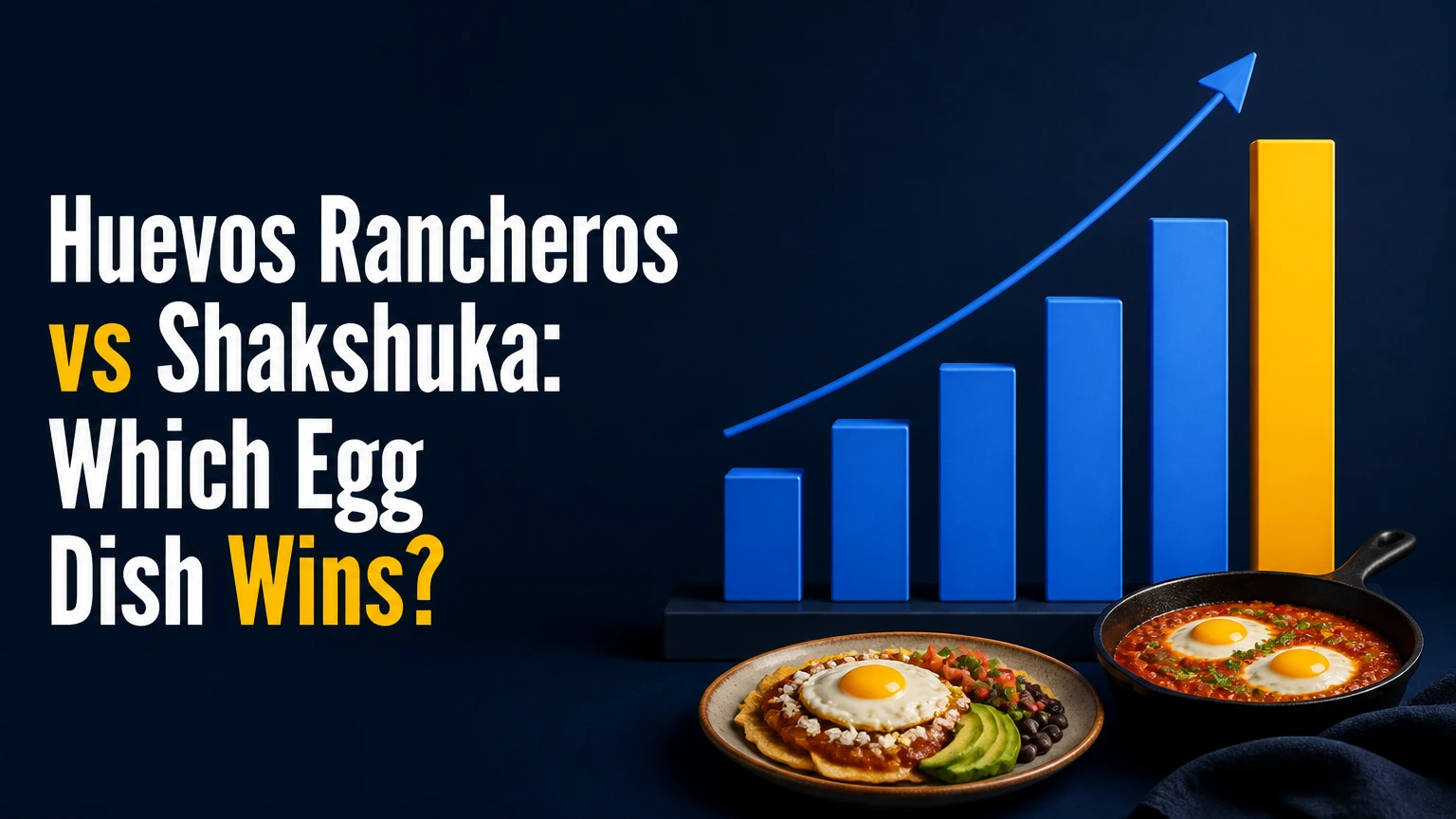
Huevos rancheros is a Mexican layered breakfast of fried eggs, corn tortillas, beans, and salsa ranchera, while shakshuka is a North African and Middle Eastern skillet dish that poaches eggs in spiced tomato sauce. Choose huevos rancheros for crisp texture and fast assembly; choose shakshuka for one-pan cooking, vegetables, and group service.
Key Facts at a Glance
- Huevos rancheros traditionally uses fried eggs, lightly fried corn tortillas, refried beans, and warm tomato-chile salsa.
- Shakshuka poaches raw eggs directly in a reduced tomato, pepper, onion, garlic, and spice sauce.
- Huevos rancheros usually reaches the table in 15-25 minutes; shakshuka typically takes 30-40 minutes when the sauce starts from raw vegetables.
- Huevos rancheros delivers more textural contrast, while shakshuka creates a softer, stew-like plate.
- Both dishes can be vegetarian and naturally gluten-free when commercially prepared ingredients contain no wheat.
- Shakshuka scales more easily for a group, but huevos rancheros is usually faster for two servings.
What Is the Difference Between Huevos Rancheros and Shakshuka?
Huevos rancheros is an assembled Mexican breakfast, whereas shakshuka is a one-pan egg stew. The defining difference is structural: huevos rancheros keeps its components identifiable in layers, while shakshuka cooks the eggs inside the sauce so the egg whites and tomato base become part of the same dish.
The names also point to different culinary histories. Rancheros relates to rural workers or ranch life in Mexico, although the dish has developed many restaurant and household forms. Shakshuka is associated with North Africa, especially Tunisia, and with Middle Eastern foodways; its exact origin is debated because related tomato-and-egg preparations spread across the Mediterranean and former Ottoman culinary networks.
A plate of huevos rancheros generally includes one or two eggs, two corn tortillas, refried beans, salsa ranchera, and optional avocado or cheese. A skillet of shakshuka generally includes eggs, tomatoes, onion, bell pepper, garlic, olive oil, cumin, paprika, and herbs, with bread used for dipping rather than as a cooked base.
Master Comparison Table
| Criterion | Huevos rancheros | Shakshuka |
|---|---|---|
| Culinary identity | Mexican breakfast plate | North African and Middle Eastern skillet |
| Egg technique | Fried separately, usually sunny-side up | Poached in tomato-pepper sauce |
| Starch structure | Corn tortillas under the eggs | Bread served alongside |
| Bean component | Refried pinto or black beans, 100-180 g | Usually absent, optional white beans |
| Sauce profile | Bright salsa ranchera, 120-180 ml | Reduced spiced tomato sauce, 250-400 ml |
| Typical home time | 15-25 minutes | 30-40 minutes |
| Texture | Crisp, creamy, saucy, layered | Soft, spoonable, stew-like |
| Best service style | Individual plates assembled immediately | Shared skillet or shallow serving dish |
How Do the Cooking Techniques Differ?
Huevos rancheros separates cooking from assembly: tortillas are fried, beans and salsa are warmed, eggs are fried, and the plate is built at the last moment. Shakshuka combines sauce production and egg cooking in one pan, so the sauce must reach the correct thickness before the eggs enter.
Huevos Rancheros Workflow
- Fry the tortillas: Heat 5-10 milliliters of neutral oil per tortilla in a skillet. Cook each corn tortilla for about 10-15 seconds per side, until flexible with lightly crisp edges.
- Warm the beans: Heat 100-180 grams of refried beans with 15-30 milliliters of water or stock. Stir until spreadable, then hold over low heat.
- Warm the salsa: Simmer salsa ranchera made with tomato, onion, garlic, and serrano or jalapeño for 5-8 minutes.
- Fry the eggs: Use 5-10 milliliters of oil or butter per egg. Cook until whites set while yolks remain fluid.
- Assemble immediately: Place tortillas on the plate, spread on beans, add eggs, spoon salsa over the whites, and leave the yolks visible.
The success checkpoint is a tortilla that bends slightly under a fork without collapsing beneath the beans. The common mistake is frying until rigid, which turns a breakfast plate into a difficult-to-cut tostada.
Shakshuka Workflow
- Soften the vegetables: Cook diced onion and bell pepper in 15-30 milliliters of olive oil for 7-10 minutes.
- Add aromatics and spices: Stir in garlic, cumin, paprika, coriander, and red pepper flakes for about 60 seconds.
- Reduce the tomatoes: Add 400-800 grams of crushed or diced tomatoes. Simmer uncovered for 10-20 minutes.
- Create wells: Make one shallow indentation for each egg, spacing the wells 5-7 centimeters apart.
- Poach the eggs: Crack eggs into the wells, cover, and cook on low for 5-8 minutes.
- Finish off heat: Remove the pan when the whites are opaque and the yolks still tremble slightly.
The sauce must hold a clean channel when a spoon moves through it. Watery sauce causes egg whites to spread, while over-reduced sauce can scorch before the whites finish cooking.
Which Dish Has Better Texture and Flavor?
Huevos rancheros wins for textural contrast, while shakshuka wins for integrated sauce flavor. Fried corn tortillas, refried beans, fried egg whites, liquid yolk, and fresh salsa create separate sensations; shakshuka combines softened vegetables, concentrated tomato, tender whites, and runny yolk in each spoonful.
| Sensory attribute | Huevos rancheros | Shakshuka |
|---|---|---|
| First bite | Corn tortilla and salsa | Tomato, pepper, and egg |
| Crunch | 10-20 seconds of tortilla frying | Usually 0 minutes of internal crunch |
| Acid | Fresh tomato and chile salsa | Cooked tomato with reduced acidity |
| Heat | Serrano, jalapeño, or chile de árbol | Harissa, red pepper flakes, or paprika |
| Richness | Yolk, beans, oil, optional cheese | Olive oil, yolk, optional feta |
| Finish | Cilantro, avocado, cotija | Parsley, feta, yogurt, or bread |
Huevos rancheros can taste brighter because salsa is warmed briefly rather than cooked down for a long period. Shakshuka develops deeper sweetness when onions and peppers soften fully and tomatoes reduce, but excessive simmering can erase the fresh character of the dish.
A practical rule follows: choose huevos rancheros when texture is the main pleasure, and choose shakshuka when sauce is the main pleasure.
Which Dish Is Faster and Easier?
Huevos rancheros is faster for one or two servings if beans and salsa are ready, while shakshuka is easier to manage when feeding several people from one pan. Huevos rancheros requires coordination across separate components; shakshuka requires patience during sauce reduction and close attention during the final egg-poaching stage.
| Cooking situation | Huevos rancheros | Shakshuka | Better choice |
|---|---|---|---|
| Two servings from prepared ingredients | 15-20 minutes | 20-25 minutes | Huevos rancheros |
| Two servings from raw ingredients | 20-25 minutes | 30-40 minutes | Huevos rancheros |
| Six servings in one vessel | 35-45 minutes across pans | 35-45 minutes in a large skillet | Shakshuka |
| Sauce prepared in advance | 10-15 minutes | 10-15 minutes | Tie |
| Washing after cooking | 2-3 vessels | 1-2 vessels | Shakshuka |
| Holding before service | 2-5 minutes maximum | 5-10 minutes maximum | Shakshuka |
Shakshuka is not automatically easier. A cook must reduce enough liquid, distribute eggs evenly, and stop cooking before residual heat hardens the yolks. Huevos rancheros is more forgiving about the egg itself, because each egg can be removed individually when ready.
Which Dish Is Lighter or More Nutritious?
Shakshuka is usually lighter when cooked with moderate olive oil and served without large amounts of bread or cheese, while huevos rancheros can provide more fiber and carbohydrate because of beans and corn tortillas. Neither dish has a fixed calorie value because oil, egg count, cheese, beans, and accompaniments determine the final portion.
| Typical home portion | Huevos rancheros | Shakshuka |
|---|---|---|
| Eggs | 2 large, about 140 kcal | 2 large, about 140 kcal |
| Main starch | 2 corn tortillas, 100-120 kcal | Bread, 0-250 kcal depending on portion |
| Beans or sauce | Beans, 120-180 kcal | Tomato-pepper sauce, 120-220 kcal |
| Added cooking fat | 10-20 ml, 80-160 kcal | 10-20 ml, 80-160 kcal |
| Cheese and toppings | 0-120 kcal | 0-100 kcal |
| Typical total | 450-700 kcal | 350-650 kcal |
These are ingredient-based estimates, not laboratory measurements. The United States Department of Agriculture FoodData Central lists a large egg at roughly 70 calories, but restaurant portions vary substantially because cooks may use additional oil, butter, cheese, bread, or meat.
Shakshuka gains vegetable volume from tomatoes and peppers. Huevos rancheros gains a more substantial fiber and starch contribution from beans and corn. For a lower-carbohydrate plate, reduce tortillas or bread; for a higher-fiber meal, retain the beans or add chickpeas to the tomato sauce.
How Much Do They Cost to Make?
A typical home cook spends approximately $2.50-$5.50 per serving on either dish in the United States, with eggs, canned tomatoes, oil, and staple spices keeping both economical. Huevos rancheros costs more when imported tortillas, cotija, avocado, and premium salsa are added; shakshuka costs more when feta, harissa, or specialty bread is included.
| Ingredient category | Huevos rancheros, typical serving | Shakshuka, typical serving |
|---|---|---|
| Eggs | $0.60-$1.20 | $0.60-$1.20 |
| Tomato and chile base | $0.60-$1.50 | $0.70-$1.60 |
| Starch | $0.30-$1.00 for tortillas | $0.50-$1.80 for bread |
| Beans or cheese | $0.40-$1.50 | $0.30-$1.50 |
| Oil and herbs | $0.20-$0.60 | $0.30-$0.80 |
| Estimated total | $2.10-$5.80 | $2.40-$6.90 |
The largest cost variable is not the egg. It is the accompaniment. Restaurant prices also include labor, rent, service, and presentation, so a brunch menu price cannot be used as the ingredient cost.
For budget cooking, use dried spices, canned tomatoes, ordinary corn tortillas, and beans cooked in batches. Fresh avocado and specialty cheese are optional garnishes rather than structural requirements.
What Variations Should You Try?
Huevos rancheros variations preserve the dish’s layered Mexican format, while shakshuka variations usually alter the sauce base, seasoning, or added protein. A variation becomes a different dish when it replaces the core cooking structure, so tomato eggs served over rice should not automatically be labeled huevos rancheros.
| Variation | Base dish | Defining additions | Texture or flavor change |
|---|---|---|---|
| Huevos divorciados | Huevos rancheros | Salsa roja and salsa verde | Two contrasting chile profiles |
| Huevos motuleños | Yucatecan huevos rancheros | Black beans, ham, peas, plantain, queso fresco | Sweeter, heavier, more elaborate |
| Tex-Mex rancheros | Restaurant adaptation | Flour tortilla, cheddar, chorizo | Richer, softer, less traditional |
| Green shakshuka | Shakshuka | Spinach, chard, leeks, herbs | Leafy, savory, less acidic |
| Matbucha-style | Shakshuka | Slow-cooked tomato and pepper paste | Sweeter, denser, more concentrated |
| Merguez shakshuka | Shakshuka | Spiced sausage | Meatier, hotter, higher in fat |
| Bean shakshuka | Shakshuka | Chickpeas or white beans | More fiber and a thicker stew |
Huevos divorciados demonstrates how salsa choice changes the eating experience without removing the tortilla, egg, and bean foundation. Green shakshuka demonstrates a larger departure because the tomato base can disappear entirely.
Can You Make Either Dish Ahead?
Both dishes allow advance preparation, but only the sauces and beans should be made ahead; cooked eggs and assembled tortillas lose quality quickly. Shakshuka has the stronger make-ahead system because the vegetable-tomato base can be refrigerated for three to four days and reheated before adding fresh eggs.
| Component | Refrigeration window | Freezer suitability | Reheating method |
|---|---|---|---|
| Salsa ranchera | 3-4 days | 2-3 months | Saucepan, 5-8 minutes |
| Refried beans | 3-4 days | 2-3 months | Low heat with water |
| Shakshuka sauce | 3-4 days | 2-3 months | Skillet, simmer until hot |
| Fried tortillas | 1 day | Poor texture after freezing | Dry skillet, 30-60 seconds |
| Fried or poached eggs | Same day | Not recommended | Cook fresh |
For meal prep, freeze sauce in single or double-serving containers, thaw it overnight, bring it to a simmer, and add eggs only when serving. Do not freeze fully cooked shakshuka if runny yolks matter, because reheating changes the whites and yolks at different rates.
Which Dish Works Better for Dietary Restrictions?
Both dishes are naturally vegetarian, and traditional corn-tortilla huevos rancheros is gluten-free when the salsa, beans, and seasonings are verified. Shakshuka is also gluten-free without bread, while feta, yogurt, chorizo-style sausage, and other toppings require separate checks for dairy, additives, or cross-contact.
| Dietary requirement | Huevos rancheros adjustment | Shakshuka adjustment |
|---|---|---|
| Gluten-free | Use certified corn tortillas | Serve with rice, potatoes, or certified bread |
| Dairy-free | Omit cotija or use avocado | Omit feta and yogurt |
| Vegan | Replace eggs with tofu or chickpea scramble | Use tofu, chickpeas, or white beans |
| Lower carbohydrate | Use one tortilla and more beans | Skip bread and add leafy greens |
| Higher protein | Add a third egg or extra beans | Add chickpeas or lean poultry-free sausage |
| Lower sodium | Make salsa and beans from scratch | Use no-salt-added tomatoes and stock |
A diner with celiac disease should verify packaged tortillas, canned tomatoes, spice blends, and refried beans rather than relying on the dish name. Cross-contact often comes from shared griddles, restaurant fryers, or prepared sauces.
What Are the Most Common Cooking Mistakes?
The most damaging huevos rancheros mistake is assembling too early, while the most damaging shakshuka mistake is adding eggs before the sauce has reduced. Both errors are timing problems, but the recovery differs: refresh a soft tortilla with brief dry heat, whereas a thin shakshuka needs more simmering before the eggs enter.
| Failure mode | Likely cause | Immediate fix | Prevention |
|---|---|---|---|
| Soggy tortilla | Under-frying or excess salsa | Toast briefly in a dry skillet | Fry until edges lightly crisp |
| Hard tortilla | Excessive frying | Replace with a fresh tortilla | Limit frying to 10-15 seconds per side |
| Cold beans | Poor holding temperature | Reheat with 15 ml water | Warm components together |
| Scattered egg whites | Watery shakshuka sauce | Remove eggs, reduce sauce if possible | Simmer until spoon tracks remain |
| Hard shakshuka yolks | Lid left on too long | Remove pan immediately | Check every 60 seconds after 4 minutes |
| Burned sauce | High heat after reduction | Transfer to a new pan | Use low heat during poaching |
An expert rule of thumb is to remove shakshuka from the burner when the whites are barely opaque at the center. Residual heat continues cooking the eggs for roughly one to three minutes, especially in cast iron.
Another practical rule applies to huevos rancheros: spoon salsa over the egg white, not directly over the tortilla. The tortilla retains its structure longer, and the yolk remains visible for controlled mixing at the table.
How Do They Compare With Similar Egg Dishes?
Huevos rancheros and shakshuka differ from chilaquiles, menemen, and eggs in purgatory because each neighboring dish uses a different relationship between eggs, starch, and sauce. Chilaquiles toss fried tortilla pieces in salsa; menemen scrambles eggs into peppers and tomatoes; eggs in purgatory poaches eggs in an Italian tomato sauce.
| Dish | Egg treatment | Starch or base | Sauce structure | Key distinction |
|---|---|---|---|---|
| Huevos rancheros | Fried whole eggs | Whole corn tortillas | Separate salsa | Layered Mexican plate |
| Shakshuka | Poached whole eggs | Bread alongside | Shared tomato stew | One-pan North African format |
| Chilaquiles | Fried, scrambled, or whole | Tortilla pieces | Salsa coats chips | Crisp-to-soft tortilla mixture |
| Menemen | Soft scrambled | Bread alongside | Tomato-pepper skillet | Eggs are stirred into vegetables |
| Eggs in purgatory | Poached whole eggs | Bread alongside | Italian tomato sauce | Different seasoning tradition |
The comparison matters when ordering at a restaurant. A menu may use “rancheros” for any egg dish with tomato sauce, but the presence of tortillas, beans, and separately fried eggs provides a stronger structural test.
Which Should You Choose?
Choose huevos rancheros for two people, crisp tortillas, strong chile salsa, and a breakfast that rewards immediate assembly. Choose shakshuka for four or more diners, one-pan service, a vegetable-forward meal, or a sauce that can be prepared in advance.
Choose Huevos Rancheros If You Value Texture
Huevos rancheros is the better choice for diners who want crisp corn, creamy beans, liquid yolk, and sharp salsa in separate layers. The dish also suits cooks with prepared beans and salsa who need food on the table within 20 minutes.
Huevos rancheros is less suitable for buffet service. The tortillas soften, fried eggs cool quickly, and individual plates require assembly close to serving time.
Choose Shakshuka If You Are Feeding a Group
Shakshuka is the better choice for four to eight diners because one wide skillet can hold several eggs and move directly to the table. A 30-centimeter skillet usually fits four to six eggs without crowding, while an oval roasting dish or larger pan accommodates eight eggs.
Shakshuka is less suitable when every diner wants a different yolk firmness. Eggs in one pan finish within a narrow window, so staggered individual preferences require removing eggs separately or using multiple pans.
Choose the Lighter Version If You Control Accompaniments
Shakshuka with 10 milliliters of olive oil, no cheese, and a modest bread portion is usually the lighter meal. Huevos rancheros can reach a similar range when made with one tortilla, restrained oil, beans, fresh salsa, and no cheese or avocado.
Neither dish is automatically healthy or unhealthy. Portion size and added fat decide more than the dish label.
Choose the More Traditional Structure
Select huevos rancheros when the Mexican combination of tortilla, beans, fried egg, and salsa is the point of the meal. Select shakshuka when eggs poached in a spiced tomato and pepper stew are the desired experience.
Avoid calling every tomato-based egg preparation one dish or the other. Culinary identity depends on technique and composition, not color alone.
FAQ
Are Huevos Rancheros and Shakshuka the Same Dish?
Huevos rancheros and shakshuka are not the same dish. Both use eggs and tomatoes, but huevos rancheros fries eggs separately and serves them over corn tortillas, beans, and salsa, while shakshuka poaches eggs inside a simmering tomato and pepper sauce.
Which Dish Is More Spicy?
Huevos rancheros is often sharper and more chile-forward because salsa ranchera can use serrano, jalapeño, or dried chiles. Shakshuka may be mild or hot depending on harissa, cayenne, or red pepper flakes, and its longer-cooked tomato base usually gives heat a rounder flavor.
Can I Make Huevos Rancheros Without Beans?
You can make huevos rancheros without beans, but the result loses a traditional component and becomes a simpler egg-and-salsa plate. Replace beans with avocado, sautéed vegetables, or a small amount of rice if needed, while retaining corn tortillas and separately fried eggs.
Can Shakshuka Be Made Without Tomatoes?
Shakshuka can be made without tomatoes in green versions that use spinach, chard, herbs, leeks, or zucchini. The sauce must still be thick enough to support egg wells, so drain leafy vegetables and reduce excess liquid before adding the eggs.
Which Dish Is Better for Dinner?
Shakshuka is usually better for dinner because its tomato sauce, vegetables, beans, or added sausage create a substantial one-pan meal. Huevos rancheros works well for dinner when paired with rice, salad, roasted vegetables, or extra beans, especially when a lighter meal is preferred.
Can I Use Flour Tortillas for Huevos Rancheros?
You can use flour tortillas in a Tex-Mex interpretation, but corn tortillas provide the more traditional flavor and firmer fried texture. Flour tortillas soften faster under salsa and often need less frying, so add sauce immediately before serving.
The Bottom Line
Huevos rancheros vs shakshuka is a choice between layered contrast and integrated one-pan comfort. Huevos rancheros wins for speed, crisp tortillas, beans, and bright Mexican salsa; shakshuka wins for group service, vegetable content, make-ahead sauce, and flexible dinner portions. Choose the dish that matches your serving format and preferred texture, not merely the presence of eggs and tomatoes.