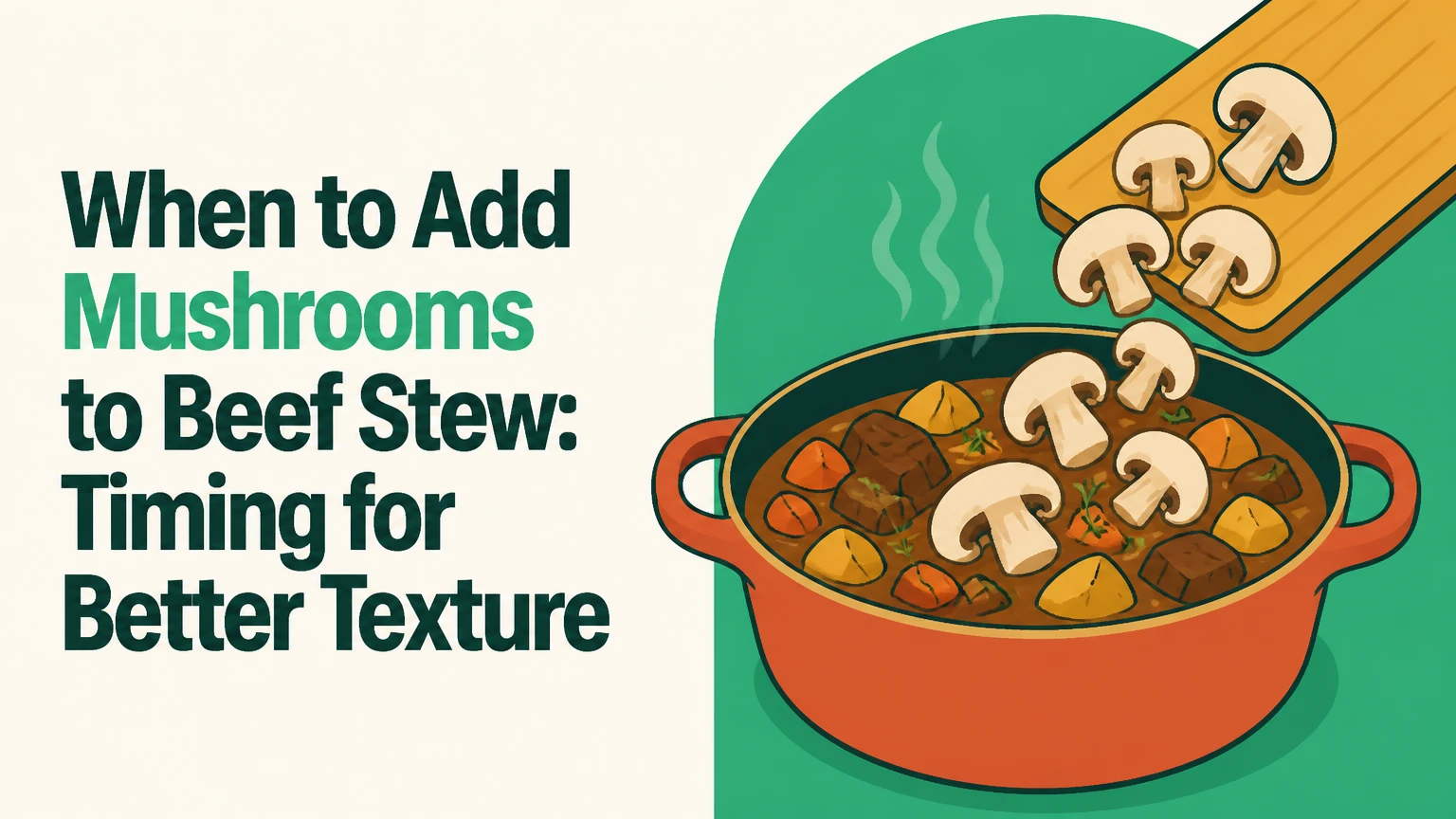
Add raw mushrooms to beef stew during the final 30-45 minutes of gentle simmering, when the beef and vegetables are nearly tender. Add mushrooms that have been browned in a separate skillet during the final 10-15 minutes. This timing lets mushrooms absorb the braising liquid while limiting shrinkage, gray color, and excess water in the gravy.
Key Facts at a Glance
- Raw sliced mushrooms usually need 30-45 minutes in a simmering beef stew.
- Pre-seared mushrooms usually need 10-15 minutes in the finished stew.
- Whole or thick-cut mushrooms need about 10-15 minutes longer than thin slices.
- A pound of fresh mushrooms can release roughly 1.5-2 cups of water during cooking.
- Mushrooms added at the beginning become soft and deeply integrated rather than firm and distinct.
- Dried mushroom soaking liquid can enter the stew early, while rehydrated mushroom pieces usually enter during the final 30-45 minutes.
When to Add Mushrooms to Beef Stew
The best default is the final 30-45 minutes for raw mushrooms and the final 10-15 minutes for browned mushrooms. The correct point is determined by stew temperature, mushroom size, and whether the beef already needs more time to become tender.
A typical stovetop beef stew takes 2-3 hours at a gentle simmer. Add mushrooms when a fork enters the beef with moderate resistance and the potatoes or carrots are close to done. Adding them earlier rarely harms food safety, but it sacrifices texture and may thin the gravy.
| Mushroom condition | Add to stew | Typical cooking time | Expected result |
|---|---|---|---|
| Thin raw slices | Final 20-30 minutes | 20-30 minutes | Soft, tender, less distinct |
| Halved raw buttons | Final 30-45 minutes | 30-45 minutes | Tender center, visible shape |
| Thick raw quarters | Final 35-50 minutes | 35-50 minutes | Meaty bite, stronger water release |
| Pre-seared pieces | Final 10-15 minutes | 10-15 minutes | Browned edges, defined texture |
| Rehydrated dried pieces | Final 30-45 minutes | 30-45 minutes | Concentrated mushroom flavor |
| Mushroom powder | Beginning or middle | 60-180 minutes | Integrated savory flavor, no pieces |
Why does timing matter?
Mushrooms lose water before they absorb much stew flavor. Raw mushrooms placed into a hot braising liquid first release moisture, shrink, and soften; only afterward do their pores and tissues take on the surrounding stock.
Mushroom cell walls contain chitin, a fungal structural material, but chitin does not make mushrooms resistant to every texture change. Heat, salt, acidity, mechanical stirring, and cooking time still soften the mushroom tissue. The most useful practical distinction is water loss and structure, not a fixed chemical resistance to overcooking.
Mushrooms contain glutamate and other savory compounds, while dried mushrooms can contain concentrated ribonucleotides such as guanylate. These compounds contribute to a fuller savory impression alongside beef stock, browned meat, and aromatics. They do not chemically bond to beef and multiply umami exponentially; that description exaggerates a flavor interaction that is real but sensory rather than exponential.
Should You Sear Mushrooms Before Adding Them?
Sear mushrooms first when the stew has a thick gravy, when you want firm pieces, or when the mushrooms are the main secondary flavor. Add the browned pieces near the end so their surface remains flavorful instead of dissolving into the braising liquid.
Pre-searing drives off some surface water and creates browned compounds through the Maillard reaction. It also keeps the mushroom’s released liquid in a separate pan, where you can reduce it before adding it to the stew.
How do you brown mushrooms for beef stew?
- Wipe visible soil from 225-450 grams of mushrooms with a damp cloth or rinse them briefly, then dry them thoroughly.
- Cut large mushrooms into 2.5-4 centimeter pieces. Keep small buttons whole or halve them.
- Heat 1-2 teaspoons of neutral oil in a wide skillet over medium-high heat.
- Arrange mushrooms in one layer, leaving about 1 centimeter between pieces where possible.
- Cook for 5-8 minutes, turning twice, until the edges are golden brown and the pan is nearly dry.
- Add 1-2 tablespoons of the stew liquid and scrape up the browned residue.
- Stir the mushrooms and skillet juices into the stew for the final 10-15 minutes.
You will know the mushrooms are ready when their edges are brown, their centers are tender, and the skillet no longer contains a large pool of liquid. The most common error is salting heavily at the beginning, because salt draws moisture out before the mushrooms can brown.
| Searing choice | Pan temperature | Cooking time | Best use |
|---|---|---|---|
| Small whole buttons | Medium-high | 6-8 minutes | Rustic stew with visible mushrooms |
| Halved cremini | Medium-high | 5-7 minutes | Beef stew with thick gravy |
| Thick portobello cubes | High, then medium | 8-10 minutes | Meaty mushroom pieces |
| Sliced shiitake caps | Medium-high | 4-6 minutes | Strong savory flavor |
| Mixed mushrooms | Medium-high in batches | 7-12 minutes | Dinner-party presentation |
What if the pan is crowded?
A crowded skillet steams mushrooms instead of browning them. Cook 225 grams at a time in a 30-centimeter skillet, or use a second pan when preparing more than 450 grams.
This rule matters because mushrooms shrink substantially as water leaves them. A pan that looks comfortably filled at the start can become wet and crowded within minutes. Browned mushrooms should show color before they enter the stew.
Can You Add Raw Mushrooms Directly?
Raw mushrooms can go directly into beef stew, and the method works well for weeknight cooking. Add thick slices, halves, or quarters during the final 30-45 minutes, then maintain a gentle simmer rather than a hard boil.
The direct method uses the stew as both the cooking liquid and the seasoning medium. It requires no extra skillet, but the mushrooms release more water into the gravy than pre-seared mushrooms do.
Direct-add method
- Check the beef first. Continue cooking if the beef remains chewy or the root vegetables are still firm.
- Clean the mushrooms and cut them into pieces at least 1 centimeter thick.
- Add 225-450 grams of mushrooms for a typical 4-6 portion stew.
- Submerge the pieces in the liquid without aggressively stirring the beef.
- Simmer uncovered or with the lid slightly ajar for 30-45 minutes.
- Taste the gravy during the final 10 minutes and adjust salt only after the mushroom water has dispersed.
The method is complete when mushroom centers feel tender but retain enough resistance to hold their shape. Thin slices may finish in 20 minutes, while whole large mushrooms can need 45-60 minutes.
How much water can mushrooms add?
Fresh mushrooms commonly contain about 80-90% water by weight, a range consistent with food-composition references such as USDA FoodData Central entries for common raw mushrooms. A 450-gram package can therefore release approximately 360-405 grams of water, although evaporation and pan temperature determine how much remains in the stew.
| Fresh mushrooms added | Approximate water content | Possible water released | Gravy management |
|---|---|---|---|
| 225 grams | 180-203 grams | 120-180 milliliters | Keep lid ajar |
| 340 grams | 272-306 grams | 180-270 milliliters | Reduce uncovered |
| 450 grams | 360-405 grams | 240-360 milliliters | Use a wide pot |
| 680 grams | 544-612 grams | 350-550 milliliters | Sear in batches |
The water does not automatically ruin the stew. A wide pot, uncovered finish, and properly reduced base can absorb the added moisture. The risk increases when the stew already contains a thin stock or when the lid remains tightly closed.
Which Mushrooms Work Best in Beef Stew?
Cremini mushrooms are the best general-purpose choice because they offer a firm texture, earthy flavor, and moderate price. White buttons suit mild stews, portobello pieces suit a meatier profile, and shiitake caps provide stronger savory character but require stem trimming.
| Variety | Preparation | Add point | Typical grocery price |
|---|---|---|---|
| White button | Whole, halved, or thick-sliced | Raw at 30 minutes | $3-$6 per pound |
| Cremini or baby bella | Halved or quartered, preferably seared | Seared at 10-15 minutes | $4-$8 per pound |
| Portobello | Remove gills if desired, cube at 2.5 centimeters | Seared at 15-20 minutes | $5-$10 per pound |
| Shiitake | Remove woody stems, slice caps | Seared at 10-15 minutes | $7-$14 per pound |
| Oyster | Tear large clusters into pieces | Seared at 10-15 minutes | $6-$12 per pound |
| Dried porcini | Soak, chop, strain liquid | Liquid early, pieces late | $25-$60 per pound dry |
Prices vary by region, season, package size, and whether mushrooms are conventional or specialty-grown. Dried mushrooms have a high apparent price per pound because they are sold without their original water weight.
How should dried mushrooms be used?
Soak dried porcini or chanterelles in 240 milliliters of warm water for 15-25 minutes. Strain the soaking liquid through a coffee filter or fine mesh to remove grit, then add the clear liquid near the beginning of cooking and add the chopped mushrooms during the final 30-45 minutes.
Dried mushrooms are valuable when fresh mushrooms are unavailable or when the stew needs concentrated flavor. The soaking liquid can contain sediment, so pouring it directly into the pot may create a gritty sauce.
What Is the Best Timing for Different Appliances?
Stovetop and oven stews usually take 2-3 hours, slow cookers need a later mushroom addition for better structure, and pressure cookers should finish the beef before mushrooms receive a short uncovered simmer. Appliance timing changes because pressure and trapped steam accelerate softening while limiting evaporation.
| Appliance | Beef cooking stage | Raw mushroom timing | Seared mushroom timing |
|---|---|---|---|
| Stovetop Dutch oven | 2-3 hours total | Final 30-45 minutes | Final 10-15 minutes |
| Covered oven, 160°C | 2.5-3.5 hours total | Final 35-45 minutes | Final 10-15 minutes |
| Slow cooker, low setting | 7-9 hours total | Final 45-60 minutes | Final 15 minutes |
| Slow cooker, high setting | 3.5-5 hours total | Final 30-45 minutes | Final 10-15 minutes |
| Electric pressure cooker | 30-40 minutes under pressure | After pressure release, 8-12 minutes | After pressure release, 5-10 minutes |
When should slow-cooker mushrooms be added?
Add raw mushrooms during the final 45-60 minutes on low or the final 30-45 minutes on high. Add them earlier only when you want very soft mushrooms and do not mind extra liquid in the finished stew.
A slow cooker traps nearly all released moisture. That makes raw mushrooms more likely to dilute the sauce than they would in an uncovered Dutch oven. Seared mushrooms added during the final 15 minutes provide a cleaner flavor and more defined shape.
When should pressure-cooker mushrooms be added?
Cook the beef and vegetables under pressure first, release pressure safely, then add mushrooms and use the sauté function for 8-12 minutes. Pressure-cooking mushrooms for the entire cycle often produces collapsed pieces and a thinner sauce because the pot cannot evaporate moisture.
For a pressure-cooker stew, mushroom timing is also a thickening issue. If the broth needs reduction, leave the lid off during the final sauté stage and stir occasionally.
How Do You Choose Between Raw and Seared Mushrooms?
Choose raw mushrooms for convenience and a softer, integrated result; choose seared mushrooms for concentrated flavor and firmer texture. Neither method is universally superior because each changes the stew’s water balance, surface browning, and final mouthfeel.
| Decision factor | Raw addition | Pre-seared addition | Preferred method |
|---|---|---|---|
| Extra cookware | One pot | One pot plus skillet | Raw |
| Gravy thickness | Releases more water | Releases less water into pot | Seared |
| Mushroom texture | Soft and integrated | Firm edges and defined pieces | Seared |
| Total active work | 3-5 minutes | 12-18 minutes | Raw |
| Flavor intensity | Mild, braised flavor | Browned, concentrated flavor | Seared |
| Best timing | 30-45 minutes | 10-15 minutes | Depends on texture |
Mushrooms added from the beginning can still be useful in a rustic gravy. They shrink heavily and lose their shape, but their flavor becomes part of the base. That result is different from a mistake when the cook intentionally wants a smooth, mushroom-rich sauce.
Are mushrooms better than adding mushroom powder?
Mushroom powder is better for background flavor, while fresh mushrooms are better for texture and visual presence. Add 1-2 teaspoons of powder per liter of stew during the first hour, then add fresh mushrooms later if you want both depth and distinct pieces.
Powder does not release the same volume of water as fresh mushrooms. It can also intensify salt perception, so taste the stew after the powder hydrates before adding more seasoning.
What Mistakes Make Mushroom Stew Worse?
The most damaging mistakes are adding thin mushrooms too early, crowding the searing pan, sealing a watery stew with its lid on, and judging mushroom readiness before the beef is tender. Each problem has a practical recovery method.
Mistake 1: Adding mushrooms at the beginning
Early mushrooms become gray, small, and soft during a long braise. If they have cooked for less than an hour, remove them with a slotted spoon and replace them with freshly seared mushrooms near the end. If they have cooked for several hours, leave them in and treat them as part of the gravy.
Mistake 2: Boiling aggressively
A hard boil breaks mushroom pieces apart and can make beef fibers tighten before collagen fully converts. Maintain a simmer with small, occasional bubbles, typically around 90-96°C at sea level.
Mistake 3: Washing and storing mushrooms wet
Brief rinsing does not automatically ruin mushrooms, but mushrooms should be dried before searing. Soaking them for several minutes increases surface moisture and delays browning.
Mistake 4: Salting before browning
Salt can draw water toward the surface before the pan is hot enough to evaporate it. Season the mushrooms lightly after they begin to brown, then let the stew provide the remaining seasoning.
Mistake 5: Adding too many mushrooms
A large mushroom load can overwhelm the gravy’s liquid ratio. Use the table below as a starting point, then reduce stock slightly when adding more than 450 grams.
| Stew size | Mushroom quantity | Stock adjustment | Final reduction |
|---|---|---|---|
| 2 portions | 150-225 grams | Reduce stock by 60 milliliters | 5-10 minutes |
| 4 portions | 225-340 grams | Reduce stock by 60-120 milliliters | 8-12 minutes |
| 6 portions | 340-450 grams | Reduce stock by 120-180 milliliters | 10-15 minutes |
| 8 portions | 450-680 grams | Reduce stock by 180-240 milliliters | 12-18 minutes |
How Do You Fix Watery Beef Stew After Adding Mushrooms?
Fix watery beef stew by removing the lid and reducing the liquid over a medium simmer for 10-15 minutes. If the beef and vegetables are already tender, remove them first so they do not overcook while the gravy concentrates.
A cornstarch slurry is a faster option. Mix 1 tablespoon cornstarch with 1 tablespoon cold water for approximately 500-750 milliliters of gravy, stir it into the simmering stew, and cook for 1-2 minutes. Add another half batch only if the sauce remains thin.
| Problem | Likely cause | First fix | Expected time |
|---|---|---|---|
| Thin gravy | Mushroom water stayed trapped | Simmer uncovered | 10-15 minutes |
| Gray, soft mushrooms | Added too early | Replace with seared batch | 15 minutes |
| Tough mushroom centers | Pieces too large | Simmer covered briefly | 10-20 minutes |
| Bland mushroom flavor | No browning or seasoning | Add seared mushrooms or powder | 5-15 minutes |
| Gritty liquid | Unfiltered dried mushroom water | Strain and replace liquid | 5 minutes |
Do not thicken a stew immediately after adding mushrooms unless the gravy was already thin. The mushroom water may take several minutes to distribute, and premature thickening can produce a sauce that becomes pasty after reduction.
Can Frozen or Canned Mushrooms Go Into Beef Stew?
Frozen and canned mushrooms can replace fresh mushrooms, but both need different handling. Frozen mushrooms should be thawed and drained before addition, while canned mushrooms should be rinsed and added during the final 10-15 minutes because they are already cooked.
Frozen mushrooms usually have a softer texture because ice crystals damage their cell structure. Sauté them until their released water evaporates, then add them near the end. Canned mushrooms offer convenience but rarely develop the same browned flavor as fresh mushrooms.
Fresh oyster mushrooms, mushroom powder, and rehydrated dried porcini are useful alternatives when standard button mushrooms are unavailable. Each alternative changes either texture, salt level, or water load, so adjust the stew after the substitute has entered the pot.
How Should You Store and Reheat Mushroom Beef Stew?
Cool mushroom beef stew in shallow containers and refrigerate it within two hours, following the United States Department of Agriculture’s general leftover guidance. Use refrigerated leftovers within 3-4 days, or freeze them for longer storage.
Reheat the stew until the center reaches 74°C, the USDA recommended minimum for leftovers, then hold it at a gentle simmer rather than boiling it for an extended period. Mushrooms become softer after reheating, so seared mushrooms added near serving time will retain more texture than mushrooms cooked throughout the original stew.
If freezing, expect potatoes and mushrooms to soften after thawing. A practical improvement is to freeze the beef gravy and add freshly seared mushrooms while reheating.
FAQ
Can mushrooms cook in stew for six hours?
Mushrooms can remain safe during a six-hour stew, but they will usually become small, soft, and fully integrated into the gravy. Add fresh mushrooms during the final 30-45 minutes when you want recognizable pieces, or use mushroom powder early for background flavor.
Should mushrooms be added before potatoes?
Mushrooms do not need to be added before potatoes. Add potatoes according to their own cooking time, then add mushrooms once the beef and potatoes are nearly tender, usually during the final 30-45 minutes.
Do mushroom stems belong in beef stew?
Tender stems from button and cremini mushrooms can remain attached and should be cut with the caps. Woody shiitake stems should be removed, while thick portobello stems can be trimmed, chopped finely, and added to the gravy.
Can I add mushrooms after the stew is finished?
You can sauté mushrooms separately and fold them into finished beef stew. This method gives the strongest contrast between browned mushroom surfaces and soft beef, although the mushrooms will absorb less braising flavor than pieces simmered for 10-15 minutes.
Why do mushrooms taste rubbery in stew?
Rubbery mushrooms usually result from undercooked thick pieces, dry high heat without enough fat, or a texture naturally associated with a dense variety. Simmer thick pieces for another 10-20 minutes, or slice them smaller before the next batch.
The Bottom Line
When to add mushrooms to beef stew depends on the texture and gravy you want. Add raw, thick-cut mushrooms during the final 30-45 minutes; add browned mushrooms during the final 10-15 minutes; and add dried mushroom soaking liquid early while reserving the softened pieces for later. Check beef tenderness first, control the mushroom water, and keep the finished stew at a gentle simmer.