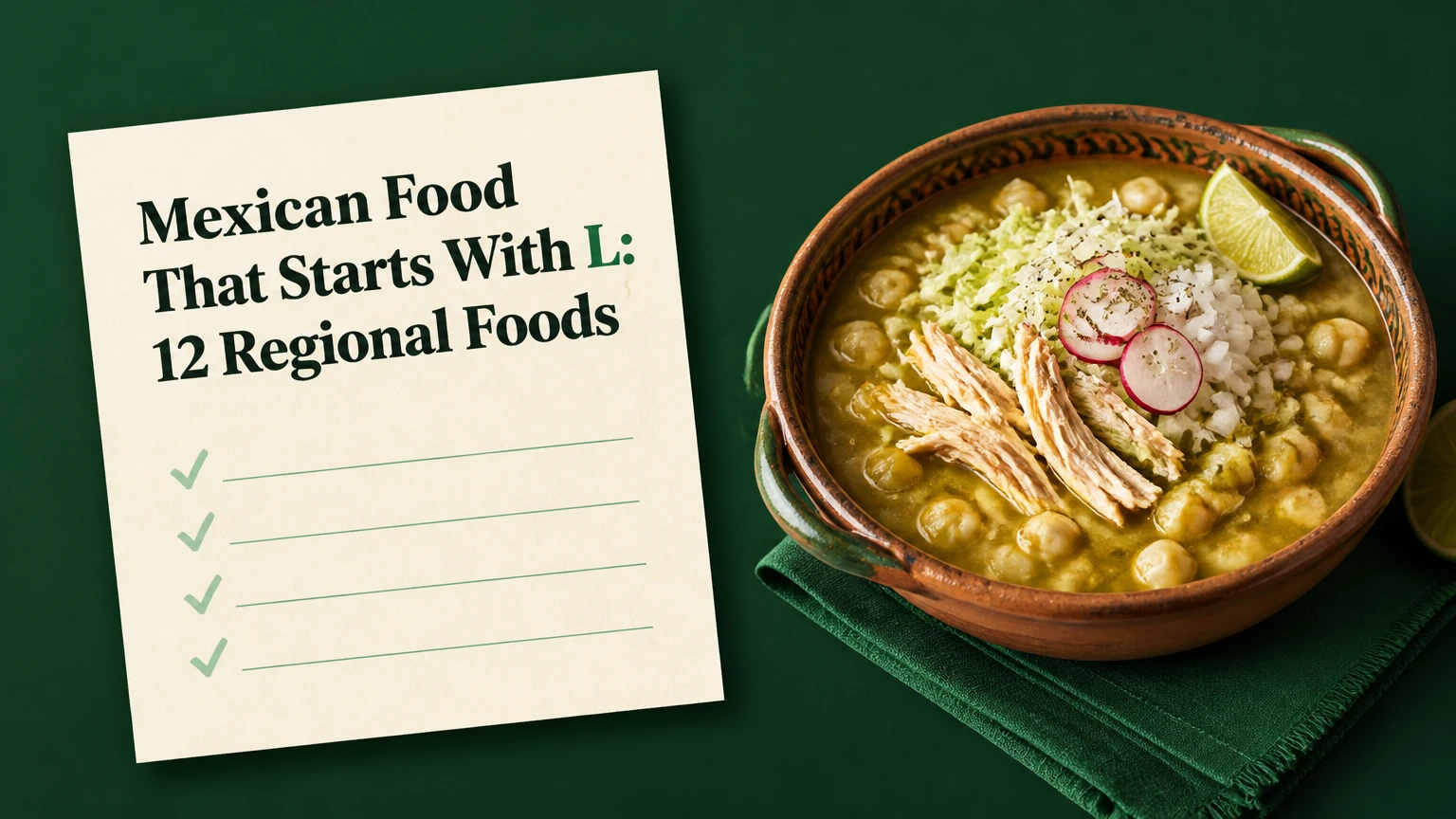
Mexican food that starts with L includes lechón, longaniza, lengua, langosta, lomitos de Valladolid, lomo adobado, lentejas, limón, lima, leche quemada, and licuados. The best-known savory examples are lechón and longaniza, while lengua, Baja-style langosta, and Yucatecan lomitos offer distinct regional flavors and preparation methods.
Key Facts at a Glance
- Lechón is slow-roasted young pig, usually served with crisp skin, tender meat, salsa, and pickled onions.
- Longaniza is a seasoned sausage with regional versions that may be fresh, smoked, or briefly dried.
- Lengua means beef tongue, which becomes tender after a long simmer and is commonly served in tacos.
- Langosta estilo Puerto Nuevo is a Baja California lobster meal traditionally paired with flour tortillas, beans, rice, and sauces.
- Limón and lima are citrus ingredients used to balance fatty foods, season seafood, and brighten salsas.
- Typical prices vary sharply by region: a lentil dish may cost 50-120 MXN, while restaurant lobster can exceed 500 MXN.
What Mexican Foods Start With L?
The most useful answer is a regional list rather than a single dish, because Mexican culinary vocabulary includes complete meals, proteins, ingredients, desserts, and drinks beginning with L. Lechón and longaniza have the strongest national recognition, but lengua, langosta, lomitos, and lomo adobado are equally relevant for diners exploring regional food.
Some names describe an ingredient rather than a finished dish. Limón, lima, leche, and lentejas appear in recipes across Mexico, while licuado usually describes a blended drink whose ingredients change by household or market. The table separates recognizable dishes from foundational ingredients and preparations.
| Food beginning with L | Category | Main region or use |
|---|---|---|
| Lechón | Slow-roasted young pig | Yucatán, Mexico City, central Mexico |
| Longaniza | Fresh or dried sausage | Central Mexico, Yucatán, Toluca |
| Lengua | Braised beef tongue | Nationwide, especially taco shops |
| Langosta estilo Puerto Nuevo | Lobster meal | Baja California |
| Lomitos de Valladolid | Braised seasoned meat | Valladolid, Yucatán |
| Lomo adobado | Marinated loin | Nationwide |
| Lentejas a la mexicana | Lentil stew | Nationwide home cooking |
| Limón | Citrus garnish and seasoning | Nationwide |
| Lima | Sweet citrus ingredient | Yucatán and southeastern Mexico |
| Leche quemada | Caramelized milk dessert | Northern and central Mexico |
| Licuado | Blended fruit or grain drink | Markets and breakfast counters |
Which L Foods Are the Most Traditional and Recognizable?
Lechón, longaniza, lengua, langosta estilo Puerto Nuevo, and lomitos de Valladolid are the strongest choices when the searcher wants named Mexican dishes rather than ingredients. These foods connect a specific preparation to a region, cooking technique, or eating occasion.
Lomo adobado and lentejas are more everyday foods. They appear in home kitchens and fondas, but recipes vary considerably. Leche quemada, limón, lima, and licuado are useful additions to a complete alphabetical list, although they should not be presented as equivalent to a famous regional main course.
1. Lechón: Best for a Regional Feast
Lechón is young pig roasted until the meat is tender and the skin becomes crisp. In Yucatán, cooks commonly season it with sour orange, garlic, oregano, salt, and sometimes achiote, then serve the chopped meat in tacos, tortas, or plates with pickled red onion.
The cooking method requires careful temperature control. A whole animal may weigh 5-12 kilograms and require roughly 4-8 hours, depending on the oven, size, and whether the meat is butterflied. A home cook should use a butcher-prepared portion rather than attempt a whole carcass without suitable ventilation, a large roasting tray, and a reliable thermometer.
The crisp skin depends more on surface drying than on a magical final temperature. Refrigerating the uncovered, salted skin for 8-24 hours removes surface moisture; a short high-heat finish then improves blistering. Naranja agria, or sour orange, gives Yucatecan lechón its sharp citrus character, but a blend of orange juice and lime can substitute when sour orange is unavailable.
A common correction matters here: lechón is not uniquely Mexican. Similar preparations exist throughout Spain, the Caribbean, and Latin America, so a restaurant should identify its regional style instead of calling every roast suckling pig Yucatecan.
Typical cost: 150-350 MXN per kilogram at a market or casual vendor, with plated restaurant portions often costing 250-700 MXN.
2. Longaniza: Best for Tacos and Quick Meals
Longaniza is a long, seasoned sausage traditionally made with coarsely minced swine meat, fat, vinegar, chiles, garlic, and spices. Mexican longaniza differs from many chorizos because it is often sold in a long continuous casing, although actual grind, length, drying, and seasoning vary by region and producer.
Fresh longaniza usually needs thorough cooking and should not be treated as shelf-stable cured meat. A practical method is to place it in a cold skillet with 2-3 tablespoons of water, cook over medium heat until the water evaporates, then let the rendered fat brown the sausage for another 4-8 minutes. This reduces burnt chile solids and helps the center cook evenly.
Longaniza works in tacos, with potatoes, over eggs, or alongside nopales. The sausage is highly seasoned, so adding salt before tasting often makes the finished dish too salty. Fresh versions generally belong in the refrigerator and should be used within 1-2 days after opening unless the package gives a different instruction.
| Longaniza style | Typical seasoning | Texture and color | Common use |
|---|---|---|---|
| Longaniza roja | Guajillo, garlic, vinegar, oregano | Red, juicy, coarse | Tacos and potatoes |
| Longaniza verde | Green chile, herbs, pepitas, tomatillo | Green, herbaceous | Toluca-style dishes |
| Longaniza de Valladolid | Achiote, sour orange, garlic, local spices | Dark red, aromatic | Yucatán breakfasts and tacos |
| Smoked longaniza | Chile, salt, smoke | Firmer, deeper red | Grilling and slicing |
| Fresh market longaniza | Vinegar, chile, garlic | Soft, moist, uncooked | Skillet meals |
3. Longaniza de Valladolid: Why Is It Different?
Longaniza de Valladolid is a Yucatecan sausage associated with Valladolid and nearby communities. Its profile typically combines achiote, sour orange, garlic, and dried chiles, producing a strongly aromatic sausage that may be grilled, fried, or served in tacos.
The product is culturally important, but it should not automatically be called geographically protected. Commercial naming and production standards can vary, and “traditional” does not mean every sausage sold under the name follows one fixed formula. Ask whether the sausage is fresh, smoked, or dried before choosing a cooking method.
The best pairing is a sharp, fresh accompaniment. Pickled red onion, habanero, lime, and a tomato-based salsa cut through the sausage’s fat and chile intensity. Longaniza de Valladolid is a stronger travel choice than a generic sausage when visiting Yucatán, but local preparation matters more than a label printed for tourists.
4. Lengua: Best for Tender Taco Meat
Lengua is beef tongue cooked slowly until its dense muscle fibers become soft enough to slice or shred. Mexican taquerías commonly simmer lengua with onion, garlic, bay leaf, and salt, then serve it in corn tortillas with cilantro, onion, salsa, and lime.
A whole tongue usually weighs 1-1.8 kilograms and needs approximately 2.5-4 hours in a conventional pot, or about 60-90 minutes in a pressure cooker. The outer skin should be removed while the tongue is still warm, because it becomes harder to peel after cooling.
Lengua has a mild beef flavor and a smooth, rich texture. It is a better introduction to organ meats for diners who dislike liver because it lacks liver’s metallic taste. The main limitation is yield: a whole tongue produces less usable meat than its raw weight suggests after trimming and peeling.
| Preparation | Equipment | Typical time | Finished texture |
|---|---|---|---|
| Simmered tongue | Heavy pot | 2.5-4 hours | Soft, sliceable |
| Pressure-cooked tongue | Pressure cooker | 60-90 minutes | Very tender |
| Taco-shop braise | Pot or steam table | 3-5 hours | Shreddable |
| Chilled tongue | Refrigerator after cooking | 4-12 hours | Firm, thinly sliced |
5. Langosta Estilo Puerto Nuevo: Best for Baja Seafood
Langosta estilo Puerto Nuevo is a Baja California lobster meal associated with the coastal town of Puerto Nuevo. The lobster is commonly split, cooked in a pan or on a grill, and served with flour tortillas, beans, rice, melted butter, and salsas.
The dish is less about complex seasoning than about freshness and accompaniments. A typical restaurant plate may cost 500-1,200 MXN, depending on lobster size, season, location, and whether the meal is in Puerto Nuevo, Ensenada, or a resort area.
The name identifies a style, not a guarantee of origin. Restaurants outside Baja may use the same description for a similar lobster plate. Ask about the lobster’s source, weight, and cooking method, especially when a low advertised price excludes side dishes or uses a smaller portion.
What Are Lomitos, Lomo Adobado, and Lentejas?
Lomitos de Valladolid are small pieces of meat braised in a Yucatecan tomato-based sauce, while lomo adobado is marinated loin cooked with chile and spices. Lentejas a la mexicana is a homestyle lentil preparation commonly built with tomato, onion, garlic, vegetables, and sometimes smoked or fresh sausage.
These three foods demonstrate why alphabetical food searches can mix regional specialties with everyday dishes. Lomitos are strongly associated with Yucatán, lomo adobado appears throughout Mexico, and lentils are inexpensive pantry food adapted to local ingredients.
| Dish | Core ingredients | Typical cooking time | Typical serving |
|---|---|---|---|
| Lomitos de Valladolid | Meat cubes, tomato, onion, garlic | 60-120 minutes | Rice and tortillas |
| Lomo adobado | Loin, dried chile, vinegar, garlic | 30-90 minutes plus marinating | Sliced with salsa |
| Lentejas a la mexicana | Lentils, tomato, onion, carrot | 35-60 minutes | Bowl with tortillas |
| Lentejas con longaniza | Lentils, sausage, vegetables | 45-75 minutes | Main meal |
| Lomo en salsa roja | Loin, tomato, chile, spices | 45-90 minutes | Family lunch |
How Do You Make Lentejas a la Mexicana?
To make basic Mexican lentils, simmer 250 grams of rinsed lentils with about 1.5 liters of water until tender, then add a cooked tomato, onion, garlic, carrot, and herb base for the final 15-20 minutes. The lentils are ready when they hold their shape but crush easily between two fingers.
Salt timing depends on the lentil and water quality. Adding salt during the last third of cooking is a dependable household method, although modern lentils usually soften without difficulty. Add diced potato, plantain, or cooked longaniza for a heavier meal, or use vegetable stock and omit sausage for a meat-free version.
Lentils are among the most economical L foods. A pot typically yields 4-6 servings and keeps refrigerated for 3-4 days in a covered container. Cool leftovers promptly and reheat until steaming throughout.
How Are Limón and Lima Used in Mexican Cooking?
Limón usually refers to the small, strongly acidic Mexican lime, while lima often refers to a sweeter, more aromatic citrus used in southeastern Mexico. Both fruits season seafood, tacos, soups, fruit, and drinks, but they are not interchangeable in every recipe because their acidity and aroma differ.
Lime juice brightens rich foods through acidity, but citrus does not make raw seafood microbiologically safe. Acid changes the texture and color of fish in ceviche and aguachile, yet refrigeration, fresh seafood, clean utensils, and short holding times remain necessary.
Lime is best added near serving when the goal is freshness. Extended contact can make herbs bitter, soften onions excessively, and turn seafood mushy. For tacos, one or two wedges per serving is usually enough to sharpen flavor without drowning the salsa or meat.
| Citrus | Flavor profile | Common Mexican use | Practical substitute |
|---|---|---|---|
| Mexican limón | Sharp, floral, acidic | Tacos, ceviche, salsa | Key lime or bottled lime juice |
| Persian lime | Juicy, moderately acidic | Drinks and marinades | Mexican lime |
| Lima dulce | Sweet, fragrant, low sharpness | Yucatán drinks and desserts | Orange with lime |
| Sour orange | Bitter, acidic, aromatic | Yucatecan marinades | Orange plus lime |
| Calamansi | Very sharp, floral | Regional or modern kitchens | Lime plus orange zest |
Which L Food Should You Choose?
The best choice depends on the meal’s purpose. Longaniza is the practical home-cooking option, lengua rewards diners seeking a tender taco filling, lechón fits a feast, Puerto Nuevo lobster suits a Baja seafood trip, and lentejas provide the lowest-cost meat-free meal.
| Situation | Best choice | Typical cost | Reason |
|---|---|---|---|
| Fast weekday dinner | Longaniza con papas | 90-220 MXN for 2-3 portions | Cooks in 20-30 minutes |
| First taco-shop visit | Lengua | 25-60 MXN per taco | Mild, tender, richly textured |
| Yucatán food trip | Lomitos or longaniza de Valladolid | 100-350 MXN per plate | Strong regional identity |
| Large family meal | Lechón | 150-700 MXN per diner | Scales well for groups |
| Baja coastal meal | Langosta estilo Puerto Nuevo | 500-1,200 MXN per plate | Signature seafood format |
| Budget meat-free lunch | Lentejas a la mexicana | 50-120 MXN for 4-6 portions | Low-cost pantry ingredients |
| Dessert or sweet finish | Leche quemada | 30-100 MXN per portion | Caramelized milk flavor |
| Breakfast drink | Licuado | 35-90 MXN per glass | Fruit, milk, oats, or grains |
What Is Best for a Beginner Cook?
Longaniza con papas is the easiest savory option because the sausage already contains its seasoning and requires one skillet. Lentejas are the best low-cost option, while lengua is manageable for an intermediate cook who can plan several hours ahead.
Avoid beginning with whole-animal lechón. A portion from a reputable vendor gives the characteristic flavor without the specialized oven, ventilation, handling space, and temperature control required for a whole roast.
What Is Best for a Vegetarian Diner?
Lentejas a la mexicana, lima-based salads, leche quemada, and fruit licuados provide the most accessible meat-free choices. Check the cooking liquid, because lentils at restaurants may contain rendered sausage, animal stock, or smoked meat.
Limón and lima are supporting ingredients rather than complete meals. Pair them with beans, rice, roasted vegetables, tortillas, or mushroom preparations to create a balanced plate.
How Should These Foods Be Stored and Reheated?
Fresh longaniza should remain refrigerated at 4°C or below and should be cooked within the package’s stated period, commonly 1-2 days after opening. Cooked lechón, lengua, lomo, and lomitos generally keep 3-4 days when cooled quickly and stored in shallow, covered containers.
Do not leave cooked meat or sausage at room temperature for more than two hours, or one hour when the surrounding temperature exceeds 32°C. Reheat leftovers until the center is steaming, and reheat crisp-skinned lechón in a hot oven rather than a microwave when texture matters.
| Food | Refrigerator guidance | Reheating method | Quality warning |
|---|---|---|---|
| Fresh longaniza | 1-2 days after opening | Skillet with water, then brown | Sour smell or sticky surface |
| Cooked lengua | 3-4 days | Covered skillet with broth | Dry slices indicate overheating |
| Cooked lechón | 3-4 days | Hot oven, uncovered skin | Skin softens in sealed storage |
| Lomitos | 3-4 days | Saucepan over medium heat | Add water if sauce thickens |
| Lentejas | 3-4 days | Saucepan until steaming | Stir to prevent scorching |
Common Mistakes With Mexican L Foods
Overheating longaniza: High heat burns chile particles before the center cooks. Start in a cold pan with a small amount of water, then brown after the liquid disappears.
Skipping tongue peeling: The outer membrane is unpleasantly chewy. Peel lengua while warm, then chill the cleaned meat for easier slicing.
Expecting lime to sterilize seafood: Citrus changes protein texture but does not remove every food-safety risk. Use very fresh seafood, maintain refrigeration, and serve promptly.
Drying out lomo adobado: Lean loin loses moisture quickly. Marinate for 2-12 hours, sear briefly, and finish gently in sauce rather than cooking it aggressively.
Making lechón skin soggy: Steam trapped under foil softens crackling. Store meat and skin separately when possible, and reheat the skin uncovered.
Assuming every green sausage is longaniza verde: Color alone proves nothing. Ask the vendor which herbs, seeds, chiles, and meat mixture create the green appearance.
A useful practitioner rule is to separate moisture management from flavor management. Citrus, tomato, and sauces build flavor, but dry surfaces, gentle heat, and uncovered reheating determine texture.
Frequently Asked Questions
Is longaniza the same as Mexican chorizo?
Longaniza and Mexican chorizo are related seasoned sausages, but they are not identical. Longaniza is often longer and coarser, while chorizo is commonly sold in short links or loose bulk form. Regional producers may use overlapping recipes, so casing, grind, freshness, and seasoning provide better clues than the name alone.
Is lechón always made from a young pig?
Lechón traditionally means young pig, especially suckling pig, but restaurant usage can be broader. Some vendors use larger young animals or label a roast preparation lechón even when it does not meet a strict suckling-pig definition. Ask about animal size and cooking style when authenticity matters.
Where can I find lengua in Mexico?
Lengua is widely available at taco stands, mercados, and traditional restaurants throughout Mexico. Mexico City, Guadalajara, Monterrey, and many northern cities have dedicated taco vendors offering it. Availability is often highest in the morning and early afternoon, because tongue requires long advance cooking.
What does lomitos de Valladolid taste like?
Lomitos de Valladolid typically tastes savory, tomato-rich, garlicky, and mildly spicy, with tender meat pieces in a thin red sauce. The dish is less intensely chile-forward than many adobos. Restaurants may vary the sauce with habanero, local herbs, or boiled egg, so the exact plate differs by cook.
Can I make Mexican L foods without meat?
Yes. Lentejas a la mexicana, vegetable dishes seasoned with limón or lima, leche quemada, and fruit licuados are meat-free options. Replace animal stock in lentils with vegetable stock, and confirm that restaurant beans, rice, and sauces do not contain rendered animal fat or meat broth.
What is the cheapest Mexican food that starts with L?
Lentejas a la mexicana is usually the least expensive complete meal because lentils, tomato, onion, and carrots are low-cost pantry ingredients. Typical home preparation costs about 50-120 MXN for four to six servings, while longaniza tacos and restaurant seafood cost substantially more.
The Bottom Line
Mexican food that starts with L ranges from feast dishes to everyday staples. Choose lechón for crisp skin and a regional gathering, longaniza for fast tacos, lengua for tender braised meat, langosta estilo Puerto Nuevo for Baja seafood, and lentejas for an inexpensive meat-free meal. Limón and lima complete the list as essential Mexican citrus ingredients.