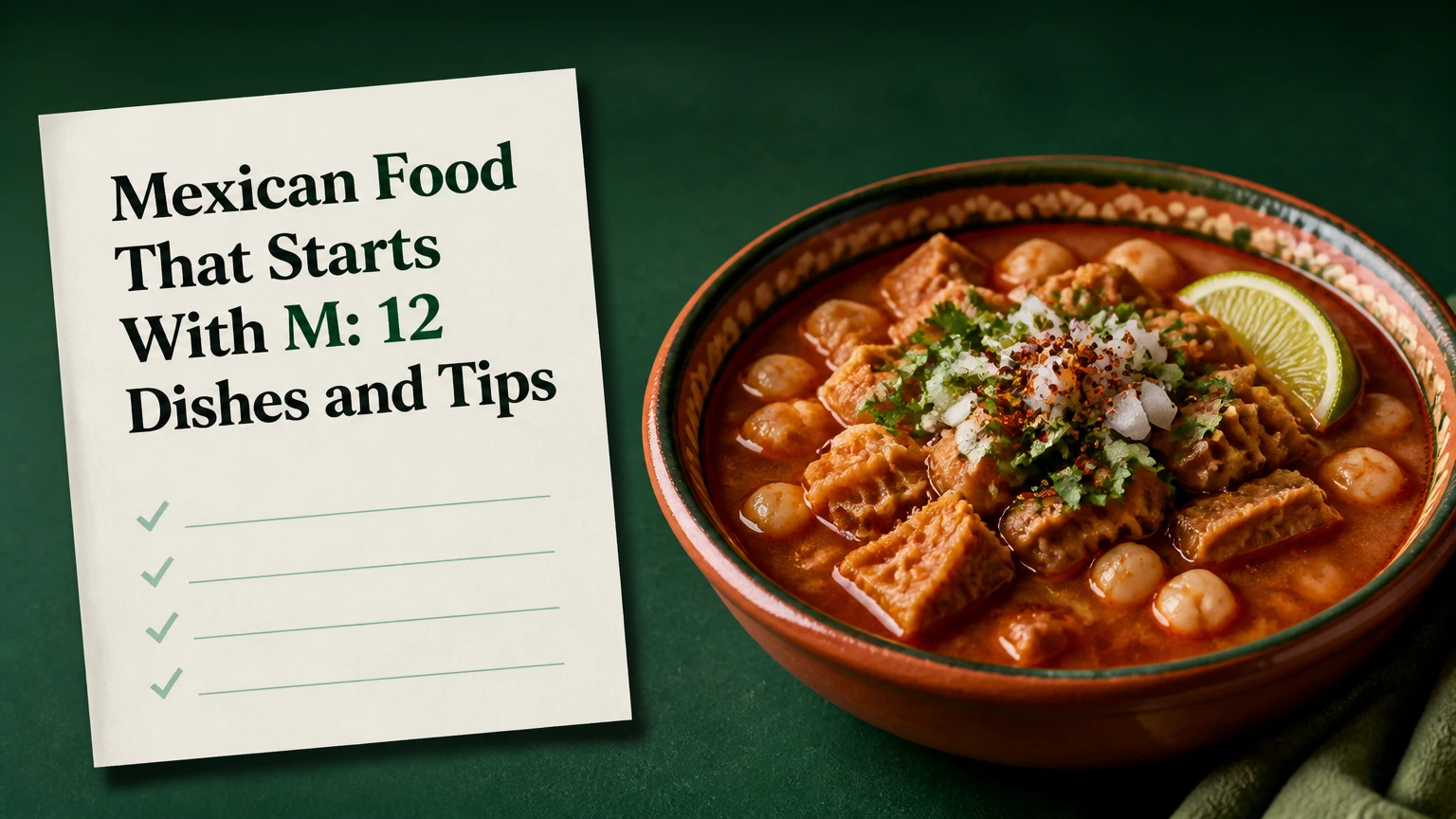
Mexican food that starts with M includes mole, menudo, milanesa, molletes, salsa macha, machaca, memelas, mixiotes, mariscos, manchamanteles, marquesitas, and mazapán. The best-known savory choices range from complex chile sauces and slow-cooked soups to crisp cutlets, bean-and-cheese breakfasts, and intensely flavored condiments.
Key Facts at a Glance
- Mole is a blended Mexican sauce made from ingredients such as dried chilies, spices, seeds, nuts, tomatoes, or chocolate, depending on the regional style.
- Menudo is a tripe soup, usually simmered for several hours in a red chile broth or a lighter broth.
- Milanesa is a thin, breaded cutlet that cooks in approximately 10-15 minutes once prepared.
- Molletes are toasted bread halves topped with refried beans and melted cheese, commonly finished with pico de gallo.
- Salsa macha is an oil-based chile, seed, nut, and garlic condiment associated especially with Veracruz and neighboring regions.
- Machaca, memelas, mixiotes, and marquesitas expand the list beyond the five dishes most often returned for this query.
What Mexican Foods Start With M?
The most recognizable Mexican foods beginning with M are mole, menudo, milanesa, molletes, salsa macha, and machaca. Additional regional and snack foods include memelas, mixiotes, mariscos, manchamanteles, marquesitas, mazapán, and muéganos.
| Food | Category | Main ingredients | Typical serving |
|---|---|---|---|
| Mole | Sauce | Dried chilies, spices, seeds, nuts, fruit or chocolate | Chicken, turkey, vegetables |
| Menudo | Soup | Tripe, broth, hominy, dried chilies | Large bowl with lime and onion |
| Milanesa | Breaded cutlet | Thin beef or chicken, egg, breadcrumbs | Rice, beans, salad, sandwich |
| Molletes | Open-faced bread | Bolillo, refried beans, melting cheese | Breakfast or light meal |
| Salsa macha | Condiment | Dried chilies, oil, garlic, seeds, nuts | Tacos, eggs, vegetables |
| Machaca | Dried meat dish | Shredded dried beef, eggs, tomato, onion | Breakfast tacos or tortillas |
| Memelas | Corn preparation | Thick masa, beans, cheese, salsa | Oaxaca-style antojito |
| Mixiotes | Wrapped stew | Marinated meat or vegetables, chile sauce | Steamed in a thin cooking wrapper |
The letter M covers several culinary categories rather than one cooking tradition. Mole is a sauce, menudo is a soup, and molletes are bread-based, while memelas and mixiotes belong to the wider family of Mexican antojitos and regional preparations.
Which M Foods Are Most Important to Know?
Mole, menudo, milanesa, molletes, and salsa macha are the five most useful starting points because they appear frequently on Mexican restaurant menus and represent different cooking techniques. Machaca and memelas are essential additions when the goal is cultural or regional completeness rather than simple menu recognition.
Mole varieties
Mole is a thick, blended sauce whose flavor comes from toasted, fried, ground, and simmered ingredients. Mole poblano commonly combines dried chilies, spices, seeds, nuts, and a small amount of chocolate, while mole verde relies more heavily on fresh herbs, green chilies, pumpkin seeds, and tomatillos.
| Mole style | Common region or association | Color | Typical flavor | Common pairing |
|---|---|---|---|---|
| Mole poblano | Puebla | Dark brown | Spiced, nutty, gently sweet | Chicken or turkey |
| Mole negro | Oaxaca | Nearly black | Roasted, smoky, bittersweet | Chicken, turkey, vegetables |
| Mole verde | Oaxaca and central Mexico | Green | Herbal, fresh, savory | Chicken, pork-free vegetables |
| Mole amarillo | Oaxaca | Yellow-orange | Chile-forward, earthy | Chicken, vegetables, tortillas |
| Manchamanteles | Oaxaca and Puebla | Reddish brown | Fruity, spicy, aromatic | Chicken or turkey |
The cooking mechanism is cumulative. Toasting creates roasted aromas, blending distributes fat and spice, and simmering softens harsh edges. A mole can require 3-6 hours when made from scratch because each ingredient must be prepared without scorching before the final sauce is strained and adjusted.
Mole is not a single standardized recipe. Restaurant mole may be thick and sweet, while a home version may be thinner, hotter, or more savory. The label alone does not predict the exact ingredient list.
Menudo styles
Menudo is a slow-simmered soup made with beef tripe, usually served with hominy in a red chile broth. Menudo rojo uses dried red chilies such as guajillo, while menudo blanco omits the red chile base or uses a much lighter broth, depending on regional practice.
| Menudo style | Broth profile | Main visual cue | Typical garnish | Cooking time |
|---|---|---|---|---|
| Menudo rojo | Red chile broth | Brick-red liquid | Lime, onion, oregano | 4-7 hours |
| Menudo blanco | Clear or pale broth | Light liquid | Lime, onion, cilantro | 4-7 hours |
| Northern-style menudo | Robust red broth | Red chile color | Dried oregano, lime | 5-7 hours |
| Sinaloa-style menudo | Lighter regional broth | Pale to moderate color | Onion, herbs, lime | 4-6 hours |
Tripe changes texture through prolonged gentle cooking. Collagen gradually softens, but a hard boil can tighten the tissue and leave it chewy. Traditional preparation often includes cleaning and preliminary boiling before the tripe enters the seasoned broth.
Menudo is frequently associated with weekend meals because the process is long and the soup benefits from resting. The garnish matters: lime adds acidity, onion adds freshness, and dried oregano supplies an aromatic contrast to the rich broth.
Milanesa types
Milanesa is a thin cutlet coated in flour, beaten egg, and breadcrumbs before shallow frying. Beef and chicken are common Mexican versions, and the cutlet may be served as a plate meal or placed inside a torta.
| Milanesa type | Cutlet thickness | Frying time per side | Best use | Main risk |
|---|---|---|---|---|
| Milanesa de res | 5-8 mm | 2-3 minutes | Plate or torta | Toughness from overcooking |
| Milanesa de pollo | 6-10 mm | 3-4 minutes | Family dinner | Undercooked center |
| Milanesa de cerdo | 5-8 mm | 2-3 minutes | Traditional variation | Dryness |
| Vegetable milanesa | 8-15 mm | 2-4 minutes | Vegetarian meal | Coating separation |
The crisp coating depends more on surface dryness and oil temperature than on a particular breadcrumb. Pat the cutlet dry, press the crumbs firmly into the egg layer, and fry at a typical 175-190°C. Oil below that range encourages absorption and sogginess; oil above it darkens the crumbs before the center cooks.
Milanesa is one of the easiest M foods for a weeknight meal. It is less suitable for long takeaway trips because steam trapped in packaging softens the crust within minutes.
Molletes
Molletes are open-faced Mexican sandwiches made by slicing a bolillo or similar roll lengthwise, spreading refried beans over the cut side, adding melting cheese, and broiling until the cheese bubbles. Pico de gallo usually supplies the fresh, acidic finishing element.
| Mollete version | Bread base | Bean layer | Cheese choice | Typical finish |
|---|---|---|---|---|
| Clásico | Bolillo | Pinto or black beans | Oaxaca or Chihuahua | Pico de gallo |
| Con chorizo | Bolillo | Seasoned refried beans | Melting cheese | Tomato and onion |
| Con huevo | Bolillo | Refried beans | Oaxaca cheese | Fried or scrambled egg |
| Vegetarian | Whole-grain roll | Black beans | Monterey Jack or Oaxaca | Avocado and salsa |
Molletes work because the bread provides crunch, the beans provide moisture and protein, and the cheese forms a rich melted layer. A typical serving uses one bread roll, 60-90 g of refried beans, and 50-75 g of shredded cheese.
Molletes are best eaten immediately after broiling. Refrigeration makes the bread tough, while reheating can dry the beans before the cheese melts again.
What Other Mexican Foods Begin With M?
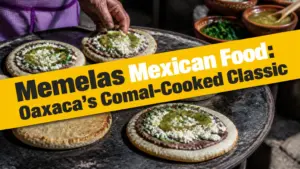
Machaca is dried, shredded beef rehydrated and cooked with egg, tomato, onion, or chile, especially in northern Mexican cuisine. Memelas are thick oval masa bases, commonly spread with beans and topped with cheese, salsa, or a small amount of meat or vegetables.
| Food | Region or association | Form | Flavor profile | Typical occasion |
|---|---|---|---|---|
| Machaca | Northern Mexico | Shredded dried beef | Salty, savory, chile-friendly | Breakfast |
| Memelas | Oaxaca | Thick corn cake | Toasted corn, beans, cheese | Snack or breakfast |
| Mixiotes | Central Mexico | Steamed wrapped stew | Chile-rich, tender, aromatic | Celebration meal |
| Mariscos | Coastal Mexico | Seafood dishes | Fresh, acidic, chile-based | Lunch or dinner |
| Marquesita | Yucatán | Crisp rolled wafer | Sweet, crunchy, cheesy or fruity | Street dessert |
| Mazapán | Mexico City and nationwide | Peanut confection | Sweet, crumbly, nutty | Candy or gift |
| Muéganos | Central Mexico | Fried dough clusters | Crisp, sweet, syrup-coated | Dessert |
Mariscos is a category rather than one dish. Menus may use the word for ceviche, shrimp preparations, fish soups, or mixed seafood plates. Marquesitas are especially associated with Yucatán street stalls, where a thin batter is cooked crisp and filled while warm.
Manchamanteles is both a mole style and a named dish. Its characteristic profile often includes dried chilies, spices, fruit, and a savory base, creating a brighter and fruitier result than dark mole negro.
How Are These M Foods Prepared?
Mexican foods beginning with M use several distinct techniques: roasting and blending for mole, gentle simmering for menudo, breading and shallow frying for milanesa, broiling for molletes, and oil infusion for salsa macha. The technique determines texture more strongly than the letter category itself.
| Food | Primary technique | Typical active time | Typical total time | Main control point |
|---|---|---|---|---|
| Mole | Toast, blend, simmer | 60-120 minutes | 3-6 hours | Prevent scorched chilies |
| Menudo | Clean, simmer | 45-75 minutes | 4-7 hours | Maintain a gentle simmer |
| Milanesa | Pound, coat, fry | 20-30 minutes | 20-30 minutes | Keep oil at 175-190°C |
| Molletes | Toast, top, broil | 10-15 minutes | 10-15 minutes | Melt cheese without burning bread |
| Salsa macha | Fry, infuse, cool | 15-20 minutes | 25-35 minutes | Avoid burning garlic |
Salsa macha depends on controlled oil infusion. Oil extracts fat-soluble chile compounds and aromatic ingredients, but garlic and small chile pieces can burn quickly. A reliable practice is to cook garlic until pale gold, remove the pan from heat, then add delicate chile flakes to the residual heat.
How Do You Make Classic Molletes?
Classic molletes take approximately 10-15 minutes and require bolillo, refried beans, melting cheese, and pico de gallo. The success factor is moisture control: warm beans spread easily, but an excessively thick bean layer makes the bread soggy before the cheese browns.
Ingredients and equipment
- 1 bolillo, split lengthwise
- 120-180 g warm refried beans
- 100-150 g shredded Oaxaca, Chihuahua, or Monterey Jack cheese
- 80 g pico de gallo
- Baking sheet and broiler or toaster oven
Steps
- Toast the bread. Place the split bolillo cut-side up and toast for 2-3 minutes at medium heat or under moderate broiler heat. The surface should feel dry and pale golden.
- Spread the beans. Add 60-90 g of warm refried beans to each half. Keep the layer even and approximately 5 mm thick.
- Add the cheese. Cover the beans with 50-75 g of shredded cheese per half, leaving no large exposed areas.
- Broil the molletes. Broil on high for 3-4 minutes, watching continuously. The cheese should bubble and develop small golden patches.
- Finish with salsa. Add pico de gallo after broiling so tomato juices do not soften the bread during cooking.
The mollete is ready when the crust remains firm underneath and the cheese stretches when lifted. If the bread browns before the cheese melts, lower the rack or cover the crust edges with foil.
Which M Food Should You Choose?
Choose molletes for a fast breakfast, milanesa for a familiar crisp main course, mole for layered flavor, menudo for a slow-cooked soup, and salsa macha for concentrated chile heat. First-time diners generally find molletes and chicken milanesa more accessible than menudo, whose tripe texture is distinctive.
| Situation | Best choice | Why | Typical time | Typical home cost |
|---|---|---|---|---|
| Fast breakfast | Molletes | Four core ingredients and broiler cooking | 10-15 minutes | $3-$7 |
| Family dinner | Chicken milanesa | Familiar texture and quick frying | 25-35 minutes | $8-$16 |
| Weekend project | Mole | Complex sauce with many layers | 3-6 hours | $15-$35 |
| Soup meal | Menudo | Large batch and reheating tolerance | 4-7 hours | $18-$35 |
| Spice-focused meal | Salsa macha | Small batch condiment with wide uses | 25-35 minutes | $6-$14 |
| Vegetarian option | Memelas or molletes | Beans, masa, cheese, and salsa | 15-30 minutes | $4-$10 |
Typical restaurant prices vary by city, portion size, and service level. As a broad North American guide, molletes may cost $6-$14, milanesa plates $15-$28, menudo $12-$24, and mole-based entrées $18-$35. Local Mexican restaurants in Mexico will use different peso prices and may offer smaller regional portions.
What Is the Difference Between Mole and Salsa Macha?
Mole is a cooked, blended sauce designed to coat a main dish, while salsa macha is an oil-based condiment designed to be spooned onto food in small amounts. Mole usually has a smoother texture and broader spice architecture; salsa macha is more concentrated, oily, nutty, and often crunchy.
| Attribute | Mole | Salsa macha |
|---|---|---|
| Base | Blended chile and spice sauce | Oil infused with chilies and aromatics |
| Texture | Smooth or slightly coarse | Oily, coarse, sometimes crunchy |
| Serving amount | 100-200 ml per entrée | 5-15 ml per serving |
| Preparation time | 3-6 hours | 25-35 minutes |
| Main use | Coat chicken or vegetables | Finish tacos, eggs, beans, and soups |
| Storage | Refrigerated sauce | Refrigerated after opening |
Neither condiment is automatically hotter. Mole can contain several mild dried chilies, while salsa macha may use hot chile de árbol or similar varieties. Ask about the chile blend rather than judging heat from the name.
What Are the Best Vegetarian and Gluten-Free Alternatives?
Vegetarian diners can choose molletes, memelas, vegetarian milanesa, vegetable mole, or salsa macha, while gluten-free diners should verify the bread, breadcrumbs, wrappers, and stock because recipes vary. Menudo requires the largest adaptation, since replacing tripe changes the dish from traditional menudo into a plant-based chile soup.
| Original food | Vegetarian adaptation | Gluten-free check | Important change |
|---|---|---|---|
| Molletes | Beans, cheese, avocado, mushrooms | Replace bolillo with certified GF bread | Bread texture changes |
| Milanesa | Eggplant, cauliflower, mushrooms, tofu | Use cornmeal or GF crumbs | Frying time varies |
| Mole | Serve over vegetables or beans | Check stock and packaged spices | Sauce remains recognizable |
| Menudo | Hominy, mushrooms, jackfruit, or soy | Verify broth and spice mixes | No tripe texture |
| Memelas | Beans, cheese, squash, mushrooms | Masa is naturally corn-based | Confirm no wheat toppings |
Salsa macha often contains peanuts, almonds, or sesame, so allergy checks are necessary. A seed-only version can use pumpkin seeds and sesame, while an allergy-conscious version should omit all nuts and use toasted seeds only.
What Common Mistakes Affect M Foods?
The most common failures are scorched mole ingredients, tough menudo, detached milanesa coating, soggy molletes, and bitter salsa macha. Each problem has a specific cause, so adding more seasoning rarely fixes the underlying texture or heat issue.
| Problem | Likely cause | Practical correction | Prevention |
|---|---|---|---|
| Bitter mole | Chilies, seeds, or nuts burned | Add unsalted stock and adjust gradually | Toast briefly over moderate heat |
| Rubbery menudo | High heat or insufficient cooking | Continue gentle simmering in 30-minute blocks | Keep liquid barely bubbling |
| Soggy milanesa | Wet meat or cool oil | Drain on a rack and refry briefly | Dry meat and avoid crowding |
| Burned mollette crust | Bread too close to broiler | Move rack lower and cover edges | Toast bread before topping |
| Bitter salsa macha | Garlic or chile flakes overcooked | Dilute with fresh oil and new toasted seeds | Add flakes after removing heat |
| Watery memelas | Excess salsa or undercooked masa | Return to griddle until firm | Apply toppings immediately before serving |
A practitioner rule of thumb is to treat dried chilies as aromatic ingredients, not as nuts that can tolerate prolonged roasting. Ten to twenty seconds per side is often enough for a thin chile, while thicker pieces may need slightly longer at lower heat.
Another useful rule is to drain fried foods on a wire rack rather than directly on paper. Air circulation preserves the underside crust, whereas trapped steam quickly softens breading.
How Should You Store and Reheat These Foods?
Mole and menudo usually improve after resting overnight, while milanesa and molletes lose texture quickly after refrigeration. Refrigerate cooked dishes in shallow containers within two hours, use clean utensils for salsa macha, and reheat breaded foods in a dry oven or air fryer rather than a microwave.
| Food | Refrigerator window | Best reheating method | Freezer guidance |
|---|---|---|---|
| Mole sauce | 3-4 days | Saucepan over low heat | Freeze 2-3 months |
| Menudo | 3-4 days | Gentle simmer | Freeze broth and hominy separately |
| Milanesa | 2-3 days | 200°C oven for 6-10 minutes | Freeze before frying if possible |
| Molletes | Best same day | Oven or toaster oven | Freeze bread and beans separately |
| Salsa macha | 1-2 months refrigerated | Serve cold or room temperature | Usually unnecessary |
| Memelas | 2 days | Dry skillet or griddle | Freeze masa bases without toppings |
The often-repeated six-month pantry shelf life for homemade salsa macha should not be treated as a universal safety guarantee. Homemade oil-and-garlic mixtures require careful handling, and refrigeration is the safer default unless a tested preservation method and validated acidity control are used.
The Bottom Line
Mexican food that starts with M includes a broad set of sauces, soups, cutlets, breads, antojitos, sweets, and condiments. Start with molletes for speed, chicken milanesa for familiarity, mole for culinary depth, menudo for traditional slow cooking, salsa macha for chile intensity, and memelas for a vegetarian regional option.
Frequently Asked Questions
Is mole always made with chocolate?
No. Mole does not always contain chocolate. Mole verde, mole amarillo, and many regional green or yellow preparations can rely on herbs, tomatillos, seeds, and chilies without chocolate. Mole poblano and some mole negro recipes use chocolate as one balancing ingredient, not as the dominant flavor.
Is menudo healthy?
Menudo can provide protein and gelatin-rich connective tissue, but the nutritional profile depends on portion size, salt, hominy, and added toppings. Restaurant menudo may contain substantial sodium. A smaller serving with onion, lime, and herbs, plus a vegetable side, offers a more balanced meal.
Can I make milanesa without breadcrumbs?
Yes. Crushed corn cereal, masa harina mixed with seasoning, or certified gluten-free crumbs can replace wheat breadcrumbs. The coating will differ in color and crunch, but the same sequence still applies: dry the cutlet, use egg as the binder, and fry in sufficiently hot oil.
Why is salsa macha so oily?
Oil is the carrying medium for salsa macha’s chile and aromatic compounds. The oil extracts fat-soluble flavors and spreads intense heat across a small serving. Stir the jar before serving, then use one teaspoon at a time because the condiment is more concentrated than a fresh tomato salsa.
Are molletes the same as Spanish molletes?
Mexican molletes and Spanish molletes share a bread-related name but are different preparations. Mexican molletes are typically open-faced bolillo halves with refried beans and melted cheese, while Spanish molletes are soft regional breads that may be served with olive oil, tomato, or other toppings.
Which Mexican M food is easiest for a beginner?
Molletes are usually the easiest beginner choice because they require no complex sauce, long simmer, or precise meat cooking. A beginner can prepare them in 10-15 minutes using bread, canned refried beans, shredded cheese, and fresh salsa, then adjust the topping ratio on the next batch.