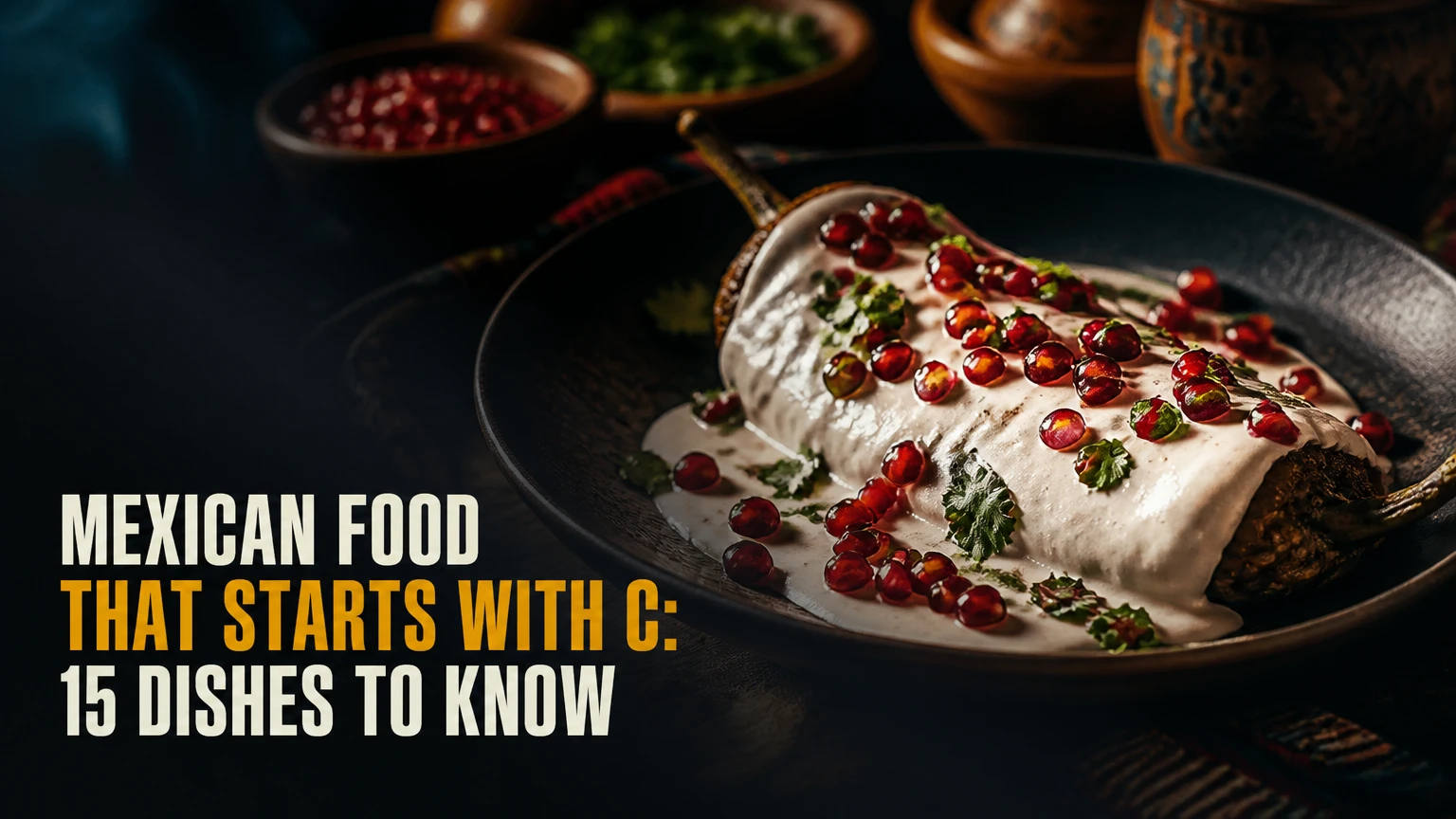
Mexican food that starts with C includes chilaquiles, carnitas, chiles rellenos, ceviche, chalupas, chorizo, cochinita pibil, cajeta, caldo, capirotada, calabacitas, camote, café de olla, cabrito, and cecina. These foods range from breakfast and street snacks to regional stews, grilled meats, seafood preparations, sweets, and traditional drinks.
Key Facts at a Glance
- Chilaquiles are fried corn tortilla pieces simmered briefly in red or green salsa.
- Carnitas traditionally use fatty cuts of pig cooked slowly until tender, then browned.
- Chiles rellenos usually feature roasted poblano peppers filled with cheese or picadillo.
- Ceviche uses citrus juice, seafood, chile, onion, and herbs, but citrus does not eliminate every food-safety risk.
- Cochinita pibil is a Yucatec preparation of citrus-and-achiote-marinated meat cooked slowly in banana leaves.
- Cajeta is a thick caramel made primarily from sweetened goat’s milk.
What Mexican Foods Start With C?
The most recognizable Mexican foods beginning with C are chilaquiles, carnitas, chiles rellenos, ceviche, chalupas, chorizo, cochinita pibil, and cajeta. A broader regional list includes caldo, capirotada, calabacitas, camote, café de olla, cabrito, cecina, carne asada, cacomite, and chilacayote.
The letter C covers several culinary categories. Chilaquiles and caldos are prepared dishes, chorizo and cecina are preserved or seasoned meats, calabacitas and camote are plant foods, while cajeta and capirotada are sweets. Café de olla belongs to the beverage tradition, so a list limited to entrees gives an incomplete picture of Mexican cuisine.
UNESCO recognized traditional Mexican cuisine on its Representative List of the Intangible Cultural Heritage of Humanity in 2010. UNESCO describes it as “a comprehensive cultural model comprising farming, ritual practices, age-old skills, culinary techniques and ancestral community customs and manners.” Regional variation therefore matters more than a single national recipe.
Core C Foods by Category
| Food | Category | Main ingredients | Common region or context |
|---|---|---|---|
| Chilaquiles | Breakfast | Corn tortillas, salsa, crema, cheese, eggs | Central Mexico and nationwide |
| Carnitas | Braised meat | Fatty meat, salt, citrus peel, aromatics | Michoacán |
| Chiles rellenos | Stuffed pepper | Poblano, cheese or picadillo, egg batter | Puebla and central Mexico |
| Ceviche | Seafood preparation | Fish or shellfish, lime, chile, onion | Pacific and Gulf coasts |
| Chalupas | Street food | Small fried masa shells, salsa, meat | Puebla, Hidalgo, Guerrero |
| Chorizo | Sausage | Ground meat, chile, vinegar, garlic | Nationwide |
| Cochinita pibil | Slow-cooked meat | Achiote, citrus, banana leaves, meat | Yucatán |
| Cajeta | Sweet | Goat’s milk, sugar, cinnamon | Guanajuato and central Mexico |
How Are These Mexican C Foods Made?
Mexican C foods rely on several foundational processes: nixtamalization, dry roasting, frying, slow braising, acid curing, and caramelization. The process determines texture as much as the ingredient list does. A tortilla becomes crisp before salsa turns it tender, while citrus changes seafood proteins without providing the same safety control as heat.
Nixtamalization treats dried maize with an alkaline solution, traditionally lime, then washes and grinds it into masa. The process improves dough formation and increases the bioavailability of niacin. Tortillas, chalupas, and many regional antojitos depend on masa rather than wheat flour.
Slow cooking also appears in carnitas and cochinita pibil, but the techniques differ. Carnitas traditionally cook in fat and finish with surface browning. Cochinita pibil cooks with achiote, sour citrus, and moist heat, often wrapped in banana leaves or baked in a covered vessel.
Typical Preparation Times and Prices
The prices below are typical United States restaurant ranges, not fixed Mexican prices. Location, portion size, seafood quality, labor, and restaurant style can change the final amount substantially.
| Food | Active preparation | Total kitchen time | Typical US restaurant price | Best serving temperature |
|---|---|---|---|---|
| Chilaquiles | 15-25 minutes | 25-35 minutes | $10-$16 | Hot |
| Carnitas | 30-45 minutes | 3-4 hours | $14-$22 | Hot or warm |
| Chiles rellenos | 45-60 minutes | 90 minutes | $15-$24 | Hot |
| Ceviche | 20 minutes | 30-60 minutes | $13-$22 | Chilled |
| Chalupas | 20-30 minutes | 30-40 minutes | $8-$15 | Hot |
| Cochinita pibil | 45 minutes | 4-12 hours | $16-$25 | Hot |
| Cajeta | 10 minutes | 45-90 minutes | $5-$10 | Warm or room temperature |
Which Mexican C Foods Are Most Popular?
Chilaquiles, carnitas, chiles rellenos, ceviche, and tacos made with chorizo or cochinita pibil are the most widely recognized choices. Popularity varies by meal and region: chilaquiles dominate breakfast menus, ceviche is strongest in coastal settings, and cajeta appears in desserts rather than savory meals.
1. Chilaquiles
Chilaquiles consist of fried or baked corn tortilla pieces coated in simmered salsa. Cooks usually add crema, crumbled queso fresco, sliced onion, cilantro, eggs, shredded chicken, or another protein immediately before serving.
Chilaquiles verdes use tomatillo-based salsa with a bright, tart profile. Chilaquiles rojos use tomato and dried chiles for a deeper flavor. Chilaquiles divorciados divide the plate between red and green sauces.
The key decision is texture. Briefly coated chips remain partly crisp; longer simmering produces a softer, casserole-like result. Thick, sturdy tortilla pieces perform better than thin commercial chips because they absorb sauce without collapsing immediately.
2. Carnitas
Carnitas are traditionally tender pieces of pig cooked slowly in their own rendered fat or another cooking fat, then browned before serving. The Michoacán style often produces contrasting textures, including moist interior pieces, crisp edges, and browned bits called cueritos or achicalada depending on the cut and preparation.
A practical home method uses shoulder pieces, salt, garlic, orange peel, and water or stock in a heavy pot. The liquid gradually evaporates, the fat renders, and the meat browns in the final stage. A typical batch takes 3-4 hours, with 2-3 pounds of meat producing roughly 6-8 taco servings.
Carnitas are excellent for tacos, tortas, rice bowls, and meal preparation. They are less suitable when a diner wants a lean, low-fat dish or a preparation requiring a clean, delicate flavor.
3. Chiles Rellenos
Chiles rellenos are roasted poblano peppers filled with cheese, picadillo, or another savory mixture. The classic capeado version uses separated eggs, whipped whites, yolks, and hot oil to create a light coating around the stuffed pepper.
Roasting blisters the poblano skin and softens the flesh. After peeling, the pepper must be dried carefully because surface moisture causes batter separation and dangerous oil spatter. A light flour coating helps the egg batter adhere.
Cheese fillings often use queso fresco, Oaxaca cheese, Chihuahua cheese, or another melting variety. Picadillo versions combine seasoned ground meat with ingredients such as tomato, onion, raisins, or spices, although recipes differ widely by household and region.
4. Ceviche
Mexican ceviche is a chilled seafood preparation made with fresh fish or shellfish, lime juice, onion, chile, cilantro, and often tomato or cucumber. The citrus acid changes the appearance and texture of seafood, turning the surface opaque and firmer.
Ceviche should be prepared with seafood intended for raw or lightly cured service and kept refrigerated. The United States Food and Drug Administration warns that citrus marination does not reliably destroy all parasites, viruses, or bacteria, so pregnant people, young children, older adults, and immunocompromised diners should choose fully cooked seafood.
For texture, cut fish into approximately 1-centimeter cubes and cure for about 15-30 minutes before draining excess juice. Longer exposure can produce a rubbery surface, especially with lean white fish. Shrimp ceviche is often poached briefly first, then chilled and mixed with the citrus marinade.
5. Chalupas
Chalupas are small masa-based snacks topped with salsa and a modest amount of meat, cheese, onion, or shredded lettuce. Puebla-style chalupas are typically small fried tortillas with green or red salsa and shredded meat, while the name may refer to larger boat-shaped dishes in other restaurant contexts.
The masa shell should be crisp enough to hold its topping but not so thick that it dominates the dish. Chalupas work well as an appetizer or street-food sampler because a typical serving contains several small pieces rather than one large tortilla.
6. Chorizo
Mexican chorizo is usually a fresh, highly seasoned sausage made with ground meat, dried chile, vinegar, garlic, paprika or annatto, and spices. Unlike Spanish chorizo, Mexican chorizo normally requires cooking before consumption and is not defined by a firm, dry, cured texture.
Cooks commonly remove the casing, crumble the sausage, and fry it with eggs, potatoes, beans, or masa dishes. Because fresh chorizo can contain considerable fat and salt, draining part of the rendered fat improves balance without removing its chile flavor.
7. Cochinita Pibil
Cochinita pibil is a Yucatec dish in which seasoned meat is marinated with achiote, sour citrus, garlic, and spices, then slow-cooked until it can be pulled apart. Traditional preparation uses a pib, an underground oven, while home cooks often use a covered Dutch oven or slow cooker.
Banana leaves help retain moisture and contribute aroma, although they are not the sole source of flavor. Pickled red onion provides acidity and color against the rich, achiote-seasoned filling. Cochinita pibil is commonly served in tacos, tortas, or on small masa-based dishes.
8. Cajeta
Cajeta is a thick caramel made from sweetened goat’s milk, sugar, and often cinnamon or vanilla. Slow heating drives off water and produces a concentrated, dark sauce with a distinctive tang that separates cajeta from ordinary cow’s-milk caramel.
Cajeta can fill empanadas, top flan, accompany churros, or flavor ice cream. It thickens as it cools, so a sauce that appears loose in the pot may reach a spreadable consistency at room temperature.
What Other Mexican Foods Start With C?
Other important Mexican foods beginning with C include caldo, capirotada, calabacitas, camote, café de olla, cabrito, cecina, carne asada, chilacayote, and cacomite. These foods expand the list beyond internationally familiar restaurant dishes.
| Food | Description | Typical use | Key flavor or texture |
|---|---|---|---|
| Caldo de res | Beef and vegetable soup | Main meal | Brothy, savory |
| Caldo tlalpeño | Chicken soup with chickpeas and chile | Lunch or dinner | Smoky, warming |
| Capirotada | Bread pudding with syrup and cheese | Lent season dessert | Sweet, spiced, moist |
| Calabacitas | Squash cooked with corn, onion, or chile | Side dish or vegetarian meal | Tender, vegetal |
| Camote | Sweet potato, roasted or candied | Snack or dessert | Sweet, earthy |
| Café de olla | Spiced coffee brewed in a clay pot | Breakfast or afternoon drink | Cinnamon, piloncillo |
| Cabrito | Young goat, often roasted | Regional specialty | Rich, roasted |
| Cecina | Thin salted and dried or lightly cured meat | Tacos or skillet meal | Salty, chewy |
| Carne asada | Grilled marinated beef | Tacos, plates, gatherings | Charred, savory |
| Chilacayote | Winter squash used in sweets | Candy or preserves | Fibrous, mildly sweet |
Caldos
Caldo means broth or soup, and the term covers multiple regional preparations. Caldo de res typically combines beef, corn on the cob, cabbage, carrots, squash, and potatoes in a clear broth. Caldo tlalpeño commonly includes chicken, chickpeas, epazote, avocado, and chipotle.
Capirotada
Capirotada is a Mexican bread pudding often associated with Lent. Fried or toasted bread absorbs a syrup made with piloncillo, cinnamon, and cloves, while cheese, raisins, peanuts, or fruit may add contrasting salt, sweetness, and texture.
Calabacitas and Camote
Calabacitas are squash preparations that may include corn, tomato, onion, cheese, or green chile. They are among the most adaptable vegetarian C foods because the ingredients cook quickly and work as a filling, side dish, or taco topping.
Camote means sweet potato. Vendors may roast it, steam it, or serve it with syrup and condensed milk. The word can describe the ingredient itself rather than one standardized national recipe.
Which C Food Is Best for Each Situation?
Chilaquiles are best for a fast breakfast, ceviche suits a chilled seafood meal, carnitas feed a group, and calabacitas provide the simplest vegetarian option. Cochinita pibil offers the strongest regional centerpiece, while cajeta is the most practical choice for dessert.
| Situation | Best choice | Reason | Main limitation |
|---|---|---|---|
| Fast breakfast | Chilaquiles | 25-35 minutes total | Softens quickly |
| Vegetarian meal | Calabacitas | One-pan preparation in 20-30 minutes | Less protein without beans or cheese |
| Seafood lunch | Ceviche | Chilled and ready in 30-60 minutes | Requires careful seafood handling |
| Large gathering | Carnitas | 6-8 servings from a 2-3 pound batch | Long cooking time |
| Special dinner | Chiles rellenos | Strong presentation and texture contrast | Batter requires precise handling |
| Make-ahead filling | Cochinita pibil | Reheats well for tacos | Marinade and slow cooking take hours |
| Dessert topping | Cajeta | Stores refrigerated for several weeks | Can scorch during reduction |
| Budget meal | Caldo | Stretches vegetables and broth | Simmering takes time |
For a Beginner
Chilaquiles rojos are the easiest entry point because the dish depends on sauce and assembly rather than delicate frying or raw seafood. Use thick tortilla chips, simmer a tomato-and-chile salsa for 5-10 minutes, and combine the two immediately before serving.
For a Vegetarian Diner
Choose calabacitas, cheese-filled chiles rellenos, or chilaquiles without meat. Confirm that beans, rice, and salsa contain no hidden meat stock, because restaurant recipes often use broth for seasoning.
For a Lower-Fat Meal
Ceviche served with cucumber, lettuce, or a small baked tostada is lighter than fried snacks or fat-cooked meats. Fully cooked shrimp with fresh citrus and vegetables offers a safer alternative for diners who should avoid raw seafood.
For Meal Preparation
Carnitas and cochinita pibil hold their texture better than chilaquiles. Store the filling separately from tortillas, salsa, crema, and onion, then reheat the meat in a skillet or oven before assembly.
How Do You Prevent Common Problems?
The most common failures are soggy chilaquiles, rubbery ceviche, separated chile relleno batter, scorched cajeta, and dry slow-cooked meat. Each problem comes from a specific mismatch between moisture, temperature, timing, or ingredient structure.
Chilaquiles Become Soggy
Use thick, rigid tortilla pieces and a concentrated salsa. Heat the salsa first, then toss the chips for 30-90 seconds rather than soaking them for several minutes. Add crema and cheese after plating because dairy toppings contribute additional moisture.
Ceviche Becomes Rubbery
Limit the initial lime cure to approximately 15-30 minutes for small fish cubes. Drain excess juice when the exterior turns opaque, then add fresh lime immediately before serving. Do not leave seafood in citrus overnight.
Batter Slides Off Chiles Rellenos
Dry the peeled pepper thoroughly, close the opening with a toothpick if necessary, and dust the surface with flour before dipping. Oil near 175°C helps the batter set quickly without burning the coating.
Cajeta Scorches
Use medium-low heat and stir the bottom and corners of the pan every few minutes. A heavy saucepan distributes heat more evenly than a thin pot. Remove cajeta while it is slightly looser than the final desired texture.
Slow-Cooked Meat Turns Dry
Keep the cooking vessel covered during the moist portion of the process and avoid cutting the pieces too small. Meat that is tender but dry usually lost too much liquid before its connective tissue softened.
How Do These Foods Compare?
For maximum richness, carnitas and chorizo lead the group; for freshness, ceviche is the clear choice; for technical difficulty, chiles rellenos require the most control. Chilaquiles offer the fastest payoff, while cochinita pibil delivers the strongest slow-cooked regional character.
| Food | Richness | Skill level | Reheating quality | Dietary considerations |
|---|---|---|---|---|
| Chilaquiles | Medium | 2/5 | Low after sauce is added | Vegetarian if toppings contain no meat |
| Carnitas | High | 3/5 | High | High-fat traditional preparation |
| Chiles rellenos | Medium-high | 4/5 | Medium | Cheese option can be vegetarian |
| Ceviche | Low-medium | 3/5 | Not recommended | Raw seafood requires caution |
| Chalupas | Medium-high | 3/5 | Low | Fried masa and toppings |
| Chorizo | High | 2/5 | High | Fresh sausage must be fully cooked |
| Cochinita pibil | High | 3/5 | High | Marinade ingredients vary |
| Cajeta | High sweetness | 2/5 | High | Milk-based and sugar-dense |
Chilaquiles Versus Chalupas
Chilaquiles are a sauced tortilla dish intended to soften during service, while chalupas are individual crisp masa snacks designed to retain a firm shell. Choose chilaquiles for breakfast and chalupas for smaller portions or shared appetizers.
Carnitas Versus Cochinita Pibil
Carnitas emphasize rendered fat, browned edges, and salt-forward seasoning. Cochinita pibil emphasizes achiote, sour citrus, banana-leaf aroma, and moist shreddable texture. Carnitas are usually faster to re-crisp, while cochinita pibil offers a more pronounced Yucatán flavor profile.
Ceviche Versus Cooked Seafood
Ceviche provides a firm, fresh texture without stove cooking, but citrus does not provide the same pathogen control as heat. Choose cooked seafood for high-risk diners or when the seafood source and cold chain are uncertain.
What Should You Order or Cook First?
Start with chilaquiles if speed and low technical risk matter most. Choose carnitas for a filling that serves several people, ceviche for a chilled coastal preparation, chiles rellenos for a hands-on project, and cajeta when the goal is a traditional Mexican sweet.
A practitioner’s rule is to separate components until the final service stage. Keep salsa away from tortilla pieces, store toppings separately from slow-cooked fillings, and cool cooked foods promptly in shallow containers. These small decisions preserve texture better than adding extra seasoning.
Another useful rule concerns chile heat. The chile variety contributes more than raw heat: guajillo adds berry-like depth, ancho adds dried-fruit notes, chipotle adds smoke, and serrano adds fresh sharpness. Adjusting the chile type often improves a dish more than simply increasing the quantity.
One limitation deserves emphasis: English-language restaurant menus often use familiar names loosely. A dish called “chalupa” may be a Puebla-style small fried masa shell, a Tex-Mex shell, or a larger tostada-like item. Ask about the tortilla, topping, and cooking method when the distinction matters.
Frequently Asked Questions
Are all Mexican foods that start with C savory?
No. Cajeta, capirotada, camote, and chilacayote can be sweet, while café de olla is a traditional coffee preparation. Savory examples include chilaquiles, carnitas, ceviche, caldos, chorizo, and calabacitas. The letter identifies the name, not the meal course or flavor profile.
Which Mexican C food is vegetarian?
Calabacitas are naturally adaptable to vegetarian cooking, and chiles rellenos can use cheese instead of picadillo. Chilaquiles also become vegetarian when the salsa, beans, rice, and toppings contain no meat stock or animal-based seasoning. Restaurant preparation should be confirmed rather than assumed.
Which Mexican C foods are gluten-free?
Chilaquiles, chalupas, chiles rellenos, calabacitas, ceviche, carnitas, and cochinita pibil are commonly made with naturally gluten-free ingredients. Cross-contact can occur through shared fryers, flour tortillas, seasoning blends, or sauces thickened with wheat, so packaged ingredients and kitchen practices require verification.
Can chorizo be eaten without cooking?
Fresh Mexican chorizo should be fully cooked before eating because it is generally a raw sausage rather than a dry, shelf-stable product. Remove it from the casing, crumble it into a skillet, and cook until no raw center remains. Cured Spanish chorizo follows different handling instructions.
What is the healthiest Mexican food that starts with C?
Ceviche with a modest portion of baked tostada or cucumber is often the lightest option, provided the seafood is handled safely. Calabacitas with beans can also provide a balanced meal with vegetables and plant protein. Nutrition changes substantially with oil, cheese, crema, portion size, and accompaniments.
What Mexican C food is best for a party?
Carnitas are the most practical party choice because a large batch holds well and can fill tacos, tortas, or bowls. Cochinita pibil also scales effectively, although its longer marinade and cooking time require advance planning. Keep tortillas, salsa, onions, and meat in separate serving containers.
The Bottom Line
Mexican food that starts with C ranges from quick chilaquiles and crisp chalupas to coastal ceviche, Michoacán-style carnitas, Yucatec cochinita pibil, stuffed chiles rellenos, and goat’s-milk cajeta. Choose chilaquiles for breakfast, calabacitas for a vegetarian meal, ceviche for a chilled seafood dish, carnitas for group serving, and cajeta for dessert.