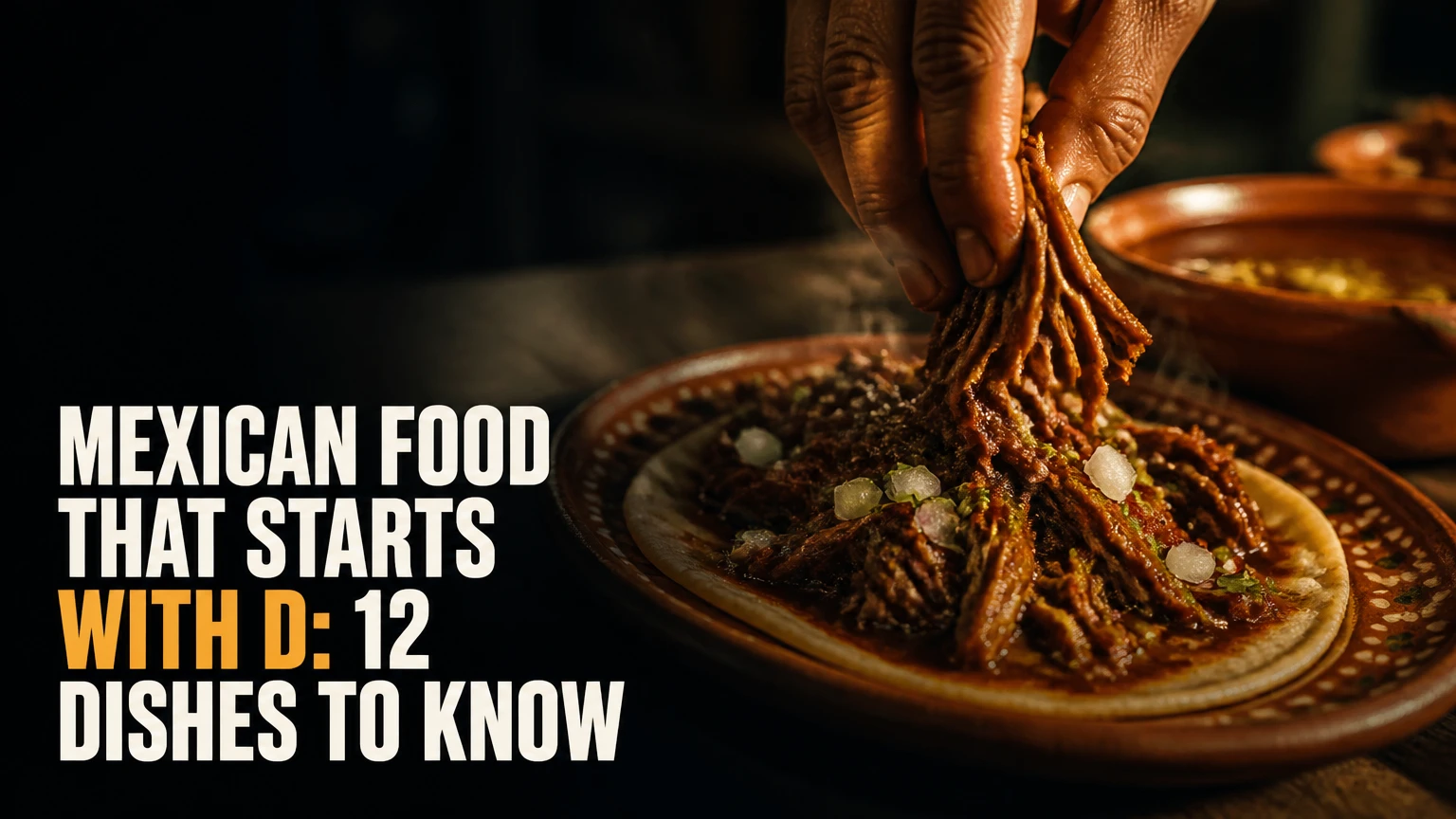
The most established Mexican foods beginning with D include dobladas, discada, dorados, duquesas, and several sweets such as dulce de camote. Dobladas are folded tortillas treated with salsa, while discada is a northern mixed-meat preparation. Duquesas and stuffed dates require regional or modern classification rather than the same national recognition.
Key Facts at a Glance
- Dobladas are folded tortillas, commonly softened, filled, covered with salsa, and served with cheese or cream.
- Discada is a northern Mexican cooking method that combines chopped ingredients on a large steel disk.
- Dorados means “golden” and commonly describes crisp fried tacos or taquitos, although recipes vary by region.
- Duquesas are sweet pastries associated with Mexican bakery traditions, especially in southeastern Mexico.
- Dulce de camote is a candied sweet-potato dessert prepared with sugar, cinnamon, and sometimes citrus peel.
- Dátiles rellenos are stuffed dates, but their Mexican identity is less standardized than that of dobladas or discada.
What Counts as Mexican Food That Starts With D?
A Mexican dish qualifies for this list when its commonly used Spanish name begins with D and the preparation has a meaningful connection to Mexican regional cooking, Mexican bakeries, or Mexican home kitchens. That standard includes established dishes, descriptive dish names, and regional sweets, but it should not imply that every item has nationwide recognition.
The strongest examples are dobladas, discada, and dorados. These names describe recognizable savory preparations found in regional restaurants, markets, or family cooking. Duquesas, dulce de camote, and dulce de calabaza belong primarily to the dessert and bakery category.
The distinction matters because Spanish food names can describe a technique rather than one fixed recipe. The Real Academia Española defines doblada in Mexican usage as a folded corn tortilla, which supports the term’s culinary meaning but does not establish one universal filling or salsa.
12 Mexican Foods Beginning With D
The list below ranks dishes by a combination of Mexican culinary recognition, regional specificity, usefulness to a searcher, and clarity of preparation. Recipes differ across states, households, and restaurant menus.
| Rank | Dish | Category | Typical setting | Authenticity confidence |
|---|---|---|---|---|
| 1 | Dobladas | Savory tortilla dish | Home meal or fonda | High |
| 2 | Discada | Northern savory platter | Outdoor gathering | High |
| 3 | Dorados | Crisp tacos or taquitos | Street stand or taquería | High |
| 4 | Duquesas | Pastry or meringue sweet | Bakery or celebration | Medium |
| 5 | Dulce de camote | Candied sweet potato | Home dessert or market | High |
| 6 | Dulce de calabaza | Candied squash | Seasonal dessert | High |
| 7 | Deditos de queso | Cheese-filled snack | Bakery or party table | Medium |
| 8 | Dátiles rellenos | Stuffed-date appetizer | Modern appetizer menu | Low to medium |
| 9 | Dobladas de mole | Mole-covered tortilla dish | Regional restaurant | High |
| 10 | Dulce de leche | Milk-based confection | Bakery or candy shop | Medium |
| 11 | Duraznos en almíbar | Peaches in syrup | Dessert or preserve | Medium |
| 12 | Dientes de perro | Regional plantain preparation | Home cooking | Medium |
1. Dobladas: Best Overall Savory Choice
Dobladas are the best overall answer for a savory Mexican food beginning with D because the name directly describes a widely recognized folded-tortilla preparation. Corn tortillas are softened, folded around a filling or folded plain, then covered with salsa, cheese, onions, or cream.
A typical serving contains three or four tortillas. Common fillings include refried beans, shredded chicken, squash, potato, or queso fresco. Red chile sauce, green tomatillo sauce, and mole each produce a distinct version without changing the basic folded structure.
Dobladas should remain pliable rather than crisp. Warm tortillas under a damp cloth, then pass each tortilla through oil heated to about 175°C or 350°F for 2-3 seconds per side. The brief contact prevents cracking while keeping the tortilla flexible.
Choose dobladas if you want a practical dinner using tortillas already in the kitchen. Do not choose them when you need food that holds for hours, because salsa softens the tortillas quickly.
2. Discada: Best for a Group
Discada is a northern Mexican communal dish cooked on a large steel disk, with chopped meat, vegetables, aromatics, and seasonings combined in stages. The disk was historically associated with an agricultural plow blade, although modern versions use purpose-built steel cookware.
Recipes vary substantially. A home cook might use beef, chicken, sausage, onion, peppers, tomato, garlic, and citrus, while another family may use fewer ingredients and a different cooking order. To accommodate dietary restrictions, a chicken, beef, or mushroom discada can use the same staged technique.
The cooking surface creates separate hot and cooler zones. Ingredients that need browning go toward the center, while cooked components move toward the outer rim. A 40-60 centimeter disk commonly feeds 8-15 people, depending on the amount of meat and whether tortillas, beans, or rice accompany it.
Choose discada if you are feeding a large group outdoors or want a northern Mexican centerpiece. Skip it for a small kitchen meal, because the cookware and ingredient volume are inefficient for two people.
3. Dorados: Best for Crisp Tacos
Dorados are golden, fried tacos or taquitos whose defining feature is a crisp exterior rather than one fixed filling. Potato, chicken, beans, and shredded beef are common fillings, and the finished tacos are often topped with lettuce, crema, cheese, and salsa.
The word dorados means golden, so menu usage can vary. Some restaurants use it for tightly rolled tacos, while others use it for folded tacos fried until crisp. Ask whether the item is folded or rolled when ordering.
Use tortillas that are warm and flexible. Fill each with approximately 30-40 grams of filling, roll tightly, and secure the seam briefly against the pan. Fry at 175-185°C, or 350-365°F, until the shell turns evenly golden, usually within 2-4 minutes.
Choose dorados when texture matters more than softness. Avoid them if the tacos must be transported, because trapped steam turns the shell leathery.
4. Duquesas: Best Mexican Bakery Sweet
Duquesas are sweet Mexican bakery items whose exact form varies, with references describing pastry-based or meringue-style preparations. The name is associated particularly with southeastern Mexican bakery traditions, including Campeche, but the term does not identify one nationally standardized recipe.
One version uses a delicate pastry shell with a coconut or custard filling. Another uses a cone-shaped meringue or baked sweet. Because the same name can describe different products, bakery appearance is a better guide than the word alone.
A pastry version typically takes 45-60 minutes, including chilling and baking. Coconut custard made from coconut milk, egg yolks, sugar, and cinnamon should be heated gently, ideally over a bain-marie, until thick enough to coat a spoon. High heat can curdle the yolks and release liquid.
Choose duquesas when you want a bakery sweet with a regional story. Do not present them as the single definitive Mexican D food, because dobladas and discada have stronger savory recognition and duquesas has multiple forms.
5. Dulce de Camote: Best Traditional Sweet
Dulce de camote is sweet potato cooked slowly with sugar, cinnamon, and water until the surface becomes glossy and the interior turns tender. Piloncillo may replace refined sugar, and orange peel can add fragrance.
The dessert usually begins with peeled or scrubbed sweet potatoes cut into large pieces. Simmering takes about 35-60 minutes, depending on piece size and variety. The syrup should reduce without burning, so low heat is preferable after the liquid begins to bubble.
Dulce de camote is inexpensive because one medium sweet potato commonly yields two dessert portions. Typical home ingredient cost is $1-$3 per four servings, excluding labor and regional price differences.
Choose dulce de camote for a simple, low-equipment dessert. Skip it if you want a crisp pastry or a dessert that can be plated immediately after cooking.
6. Dulce de Calabaza: Best Seasonal Dessert
Dulce de calabaza is squash simmered in a sweet syrup, commonly with piloncillo, cinnamon, and aromatic spices. The syrup penetrates the squash while the peel and flesh soften, creating a dessert with both caramelized liquid and tender pieces.
Large winter squash works better than watery summer squash. Cut pieces should remain large enough to hold their shape during a 45-75 minute simmer. A cinnamon stick and strips of orange peel provide flavor without adding liquid.
This dish is especially associated with seasonal and autumn cooking, although it can appear year-round in home kitchens. Serve it warm with syrup, or chill it and add a small amount of crema for contrast.
| Sweet | Main ingredient | Cooking time | Texture | Typical serving |
|---|---|---|---|---|
| Dulce de camote | Sweet potato | 35-60 minutes | Soft and dense | 150-200 g |
| Dulce de calabaza | Winter squash | 45-75 minutes | Tender and fibrous | 150-200 g |
| Duquesas | Pastry or meringue | 45-60 minutes | Flaky or airy | 1 pastry |
| Dulce de leche | Milk and sugar | 60-120 minutes | Thick and creamy | 30-50 g |
| Duraznos en almíbar | Peaches | 25-40 minutes | Tender and juicy | 1 peach half |
7. Deditos de Queso: Best Small Snack
Deditos de queso are finger-shaped cheese snacks made by wrapping cheese in dough or a tortilla-like wrapper and cooking until the outside is browned. The name is used across Latin American cuisines, so the Mexican connection depends on the recipe, seller, and regional context.
Mexican versions may use queso Oaxaca, mozzarella-style cheese, or another melting cheese. Keep each piece about 8-10 centimeters long and seal the edges firmly so the cheese does not escape during frying or baking.
Bake at approximately 200°C or 400°F for 12-18 minutes, or fry until golden. Serve with salsa, crema, or a fresh tomato relish.
Choose deditos de queso for a party tray or child-friendly snack. Label them as a Mexican-style preparation when the source recipe does not identify a specific Mexican region.
8. Dátiles Rellenos: Best Modern Appetizer
Dátiles rellenos are stuffed dates, usually filled with cheese and sometimes wrapped in a cured meat product or glazed with piloncillo. They appear on contemporary appetizer menus, but they are not as firmly established as a nationwide traditional Mexican dish.
Goat cheese, cotija, cream cheese, and nuts create different textures. For a Mexican flavor profile, use cotija with pumpkin seeds, chile, citrus zest, or a small piloncillo glaze. Bake at 190°C or 375°F for 10-15 minutes, just until the filling warms.
The dates contain concentrated sugar, so they can scorch quickly under a broiler. Check them after five minutes if the glaze contains piloncillo.
Choose stuffed dates for a cocktail-style appetizer or a sweet-savory plate. Do not call them the primary authentic Mexican D dish without naming the restaurant, region, or modern source that uses the term.
How Are Dobladas Prepared?
Dobladas take about 15-20 minutes and require tortillas, salsa, oil, filling, and garnishes. The key factor is tortilla flexibility: a cold, dry tortilla cracks before the salsa can coat it.
- Prepare the salsa. Blend roasted tomatoes or tomatillos with onion, garlic, and chile. Fry the salsa in 1 tablespoon of oil for about 10 minutes, until darker and thicker.
- Warm the tortillas. Steam 12 corn tortillas in a damp cloth for 5 minutes, or pass each through 175°C oil for 2-3 seconds per side.
- Add the filling. Place 1-2 tablespoons of beans, chicken, potato, or cheese in each tortilla. Avoid overfilling, because excess filling prevents a clean fold.
- Fold and coat. Fold each tortilla in half, then spoon warm salsa over the top. Some regional versions dip the tortilla before folding.
- Finish the plate. Add queso fresco, crema, sliced onion, herbs, or extra chile sauce immediately before serving.
The process works because heat softens the tortilla’s starch structure, while warm salsa spreads more evenly and reduces tearing. Serve within 5-10 minutes for the best contrast between soft tortilla and fresh toppings.
Dobladas, Enchiladas, and Dorados: What Is the Difference?
Dobladas are defined by folding, enchiladas by a tortilla coated in chile sauce, and dorados by a golden fried finish. The categories can overlap, so local menu terminology determines the final dish.
| Dish | Defining action | Typical texture | Sauce timing | Common filling |
|---|---|---|---|---|
| Dobladas | Fold tortilla | Soft to lightly fried | Before or after folding | Beans or chicken |
| Enchiladas | Coat tortilla in chile sauce | Soft and saucy | Before plating or rolling | Cheese or chicken |
| Dorados | Fry until golden | Crisp | Usually after frying | Potato or chicken |
| Quesadillas | Cook tortilla with cheese | Toasted and tender | Usually served separately | Melting cheese |
| Tacos dorados | Roll or fold and fry | Crisp shell | Added after frying | Potato or shredded meat |
A dish can be both a doblada and an enchilada when a folded tortilla receives chile sauce. A taco can be dorado because of its fried finish, even if the filling and garnish change.
Which D Foods Are Most Traditionally Mexican?
Dobladas, discada, dorados, dulce de camote, and dulce de calabaza have the strongest claim to Mexican culinary identity on this list. Duquesas are regionally meaningful but less standardized, while stuffed dates and deditos de queso require more careful labeling.
| Dish | Regional connection | National standardization | Main course role | Best evidence of identity |
|---|---|---|---|---|
| Dobladas | Central and regional home cooking | Medium | Yes | Mexican tortilla preparation |
| Discada | Northern Mexico | Low to medium | Yes | Northern disk-cooking tradition |
| Dorados | Multiple Mexican regions | Low | Yes | Taquería and street-food usage |
| Duquesas | Southeastern bakery tradition | Low | No | Regional bakery references |
| Dulce de camote | Broad Mexican dessert tradition | Medium | No | Candied sweet-potato method |
| Dátiles rellenos | Contemporary menus | Low | No | Mexican ingredient adaptation |
“Authentic” should describe a documented regional practice, not merely a Spanish name or a garnish. A restaurant may create a Mexican-inspired stuffed date without claiming that the appetizer is an old national tradition.
How Much Do These D Foods Cost?
Typical home preparation costs range from $1-$3 per serving for sweet-potato dessert to $4-$10 per person for a generous discada, depending on protein, location, and group size. Restaurant and bakery prices vary more than ingredient costs.
| Dish | Typical home cost | Typical preparation time | Typical restaurant or bakery price | Serves |
|---|---|---|---|---|
| Dobladas | $2-$5 for 3 servings | 15-20 minutes | $8-$14 per platter | 2-3 |
| Discada | $35-$90 per large batch | 60-120 minutes | $12-$25 per person | 8-15 |
| Dorados | $2-$6 for 4 servings | 25-40 minutes | $8-$16 per plate | 2-4 |
| Duquesas | $4-$12 for 6 pastries | 45-60 minutes | $2.50-$4.50 each | 6 |
| Dulce de camote | $1-$3 for 4 servings | 35-60 minutes | $4-$9 per portion | 4 |
| Dátiles rellenos | $8-$18 for 12 pieces | 20-30 minutes | $10-$18 per plate | 4-6 |
Prices are typical planning ranges, not fixed national averages. Imported cheese, specialty piloncillo, bakery labor, and tourist-market pricing can substantially increase the final amount.
What Are the Best D Foods for Different Situations?
Dobladas are best for a fast dinner, discada is best for a large gathering, dorados are best for crisp street-food texture, and dulce de camote is best for a low-cost dessert. The right choice depends on serving size, holding time, equipment, and whether the meal is savory or sweet.
| Situation | Best choice | Reason | Practical limit |
|---|---|---|---|
| Weeknight dinner | Dobladas | 15-20 minute preparation | Serve immediately |
| Outdoor gathering | Discada | One disk feeds 8-15 people | Requires large cookware |
| Party appetizer | Dátiles rellenos | 20-30 minute assembly | Glaze can scorch |
| Crisp handheld food | Dorados | Fried shell stays structured briefly | Loses crispness in transit |
| Bakery-style dessert | Duquesas | Pastry presentation | Custard needs gentle heat |
| Budget dessert | Dulce de camote | $1-$3 for four portions | Requires simmering time |
| Seasonal table | Dulce de calabaza | Large batch and warm spices | Needs firm squash |
A practitioner rule is to match moisture to holding time. Dobladas and dorados taste best immediately, while dulce de camote and dulce de calabaza can improve after several hours as the syrup settles.
Common Mistakes and How to Fix Them
Cracked tortillas
Dry tortillas crack because their starch structure has lost moisture. Steam them for 5 minutes or flash-fry them for 2-3 seconds per side before folding.
Soggy dorados
Soggy fried tacos usually contain wet filling or sit beneath sauce. Drain the filling, cool it before rolling, and add salsa at the table rather than before serving.
Watery duquesas filling
Watery custard results from under-reduction, high heat, or curdled egg. Cook coconut custard over a bain-marie, stir continuously, and chill it for at least 30 minutes before piping.
Burned piloncillo syrup
Piloncillo burns when the pan is too hot or the liquid evaporates before the sweet potato softens. Add 2-3 tablespoons of water and reduce over low heat.
Discada cooked unevenly
Crowding the disk traps moisture and prevents browning. Cook ingredients in batches, move finished pieces to the outer rim, and return everything to the center for the final seasoning stage.
Cheese escaping from deditos
Poor sealing allows melted cheese to leak into the pan. Moisten the dough edge, press firmly with a fork, and chill the shaped pieces for 10 minutes before cooking.
Are There Regional or Ingredient Substitutions?
Regional substitutions can preserve the technique even when the original ingredient is unavailable. Use corn tortillas for dobladas, a heavy griddle for small-batch discada, firm squash for candied dessert, and queso Oaxaca or another melting cheese for filled snacks.
| Original ingredient or tool | Practical substitute | Quantity guidance | Result |
|---|---|---|---|
| Fresh corn tortillas | Packaged corn tortillas | 12 tortillas | Steam before folding |
| Piloncillo | Dark brown sugar | 75-100% of original weight | Less mineral flavor |
| Queso Oaxaca | Low-moisture mozzarella | Equal weight | Similar melt, milder flavor |
| Steel discada disk | Large cast-iron skillet | 30 cm minimum | Smaller batch |
| Coconut milk | Evaporated milk plus coconut extract | 240 ml liquid | Less coconut richness |
| Tomatillos | Green tomatoes with lime | Equal volume | Less tartness |
Do not substitute a flour tortilla when the dish’s identity depends on a corn tortilla. Flour can work in a household variation, but the texture and flavor will change substantially.
Which D Dish Should You Choose?
Choose dobladas for the clearest answer to a general Mexican food alphabet question, because the name, technique, and tortilla base are easy to explain. Choose discada for a northern Mexican group meal, dorados for crisp tacos, and dulce de camote for the simplest dessert.
Choose duquesas when the goal is a regional bakery item rather than a universally standardized dish. Choose dátiles rellenos only when you want a modern sweet-savory appetizer and can label its Mexican connection accurately.
The main limitation is terminology. Mexican food names often shift between regions, and a menu may use dorados, dobladas, or duquesas differently from a cookbook. Region, preparation, and serving context are more reliable than the initial letter alone.
Frequently Asked Questions
Is discada a traditional Mexican food?
Discada is a traditional northern Mexican cooking style built around a large steel disk and ingredients cooked in stages. The recipe is not nationally fixed, so households may use different proteins, vegetables, seasonings, and cooking orders. Its strongest regional association is northern Mexico.
Are duquesas savory or sweet?
Duquesas are generally sweet Mexican bakery products, although the exact form varies. Some references describe pastry filled with coconut custard, while others use the name for a meringue-style confection. Confirm the bakery’s ingredients because the name does not guarantee one standard shape.
Can I make dobladas without frying?
Yes. Steam tortillas in a damp cloth for about 5 minutes, then warm them on a dry comal before folding. The result contains less oil and remains soft, although a brief oil dip gives the tortilla greater flexibility and a richer salsa coating.
What Mexican dessert starts with D?
Dulce de camote and dulce de calabaza are strong traditional answers. Dulce de camote uses sweet potato simmered with sugar and cinnamon, while dulce de calabaza uses squash and a sweet syrup. Duquesas are another option when bakery pastries are included.
What is the easiest Mexican food beginning with D?
Dobladas are usually the easiest because they need tortillas, prepared salsa, a simple filling, and approximately 15-20 minutes. Dulce de camote is the easiest dessert, but it requires 35-60 minutes of simmering to soften the sweet potato and reduce the syrup.
What is the difference between a doblada and a taco dorado?
A doblada is identified primarily by its folded tortilla and salsa treatment, while a taco dorado is identified by frying until crisp. A folded taco can become dorado after frying, so the terms can overlap when regional menu usage allows it.
The Bottom Line
The strongest answers for mexican food that starts with d are dobladas, discada, dorados, dulce de camote, dulce de calabaza, and duquesas. Dobladas offer the clearest everyday choice, discada works for groups, dorados provide crisp texture, and the sweets cover bakery, seasonal, and budget-friendly dessert needs.