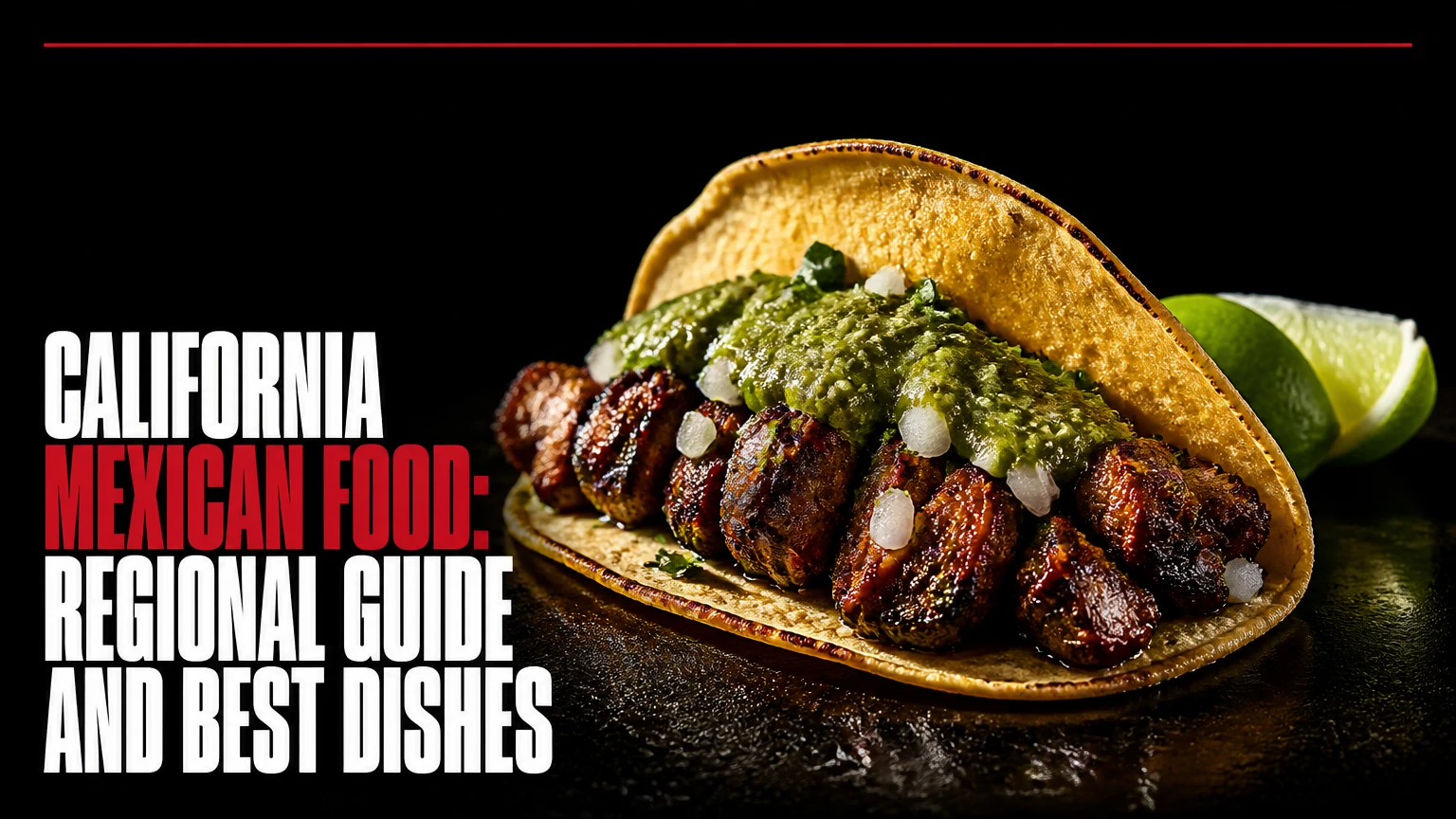
California Mexican food is a broad regional cuisine shaped by Mexican culinary traditions, California agriculture, Pacific seafood, and the state’s taquería culture. Cal-Mex commonly emphasizes grilled meats and seafood, fresh salsa, citrus, vegetables, flour burritos, and regional dishes such as Baja fish tacos, California burritos, Mission burritos, chilaquiles, pozole, and tamales.
Key Facts at a Glance
- Cal-Mex is a regional American cuisine, not a single standardized recipe or restaurant style.
- Baja-style fish tacos typically combine fish, cabbage, crema, lime, and a corn tortilla.
- A California burrito usually contains carne asada, French fries, cheese, salsa, and a large flour tortilla.
- A Mission burrito typically combines rice, beans, meat, salsa, and toppings inside a large flour tortilla.
- Typical casual prices in California range from $2-$5 for one taco, $10-$18 for a burrito, and $18-$30 for a seafood plate.
- Fresh salsa, warm tortillas, grilled proteins, citrus, and regional produce create the style’s most recognizable profile.
What Is California Mexican Food?
California Mexican food is the intersection of Mexican regional cooking and California’s produce, geography, migration, and restaurant formats. The term includes older Mexican-American dishes, Baja-influenced seafood, San Diego taco-shop food, San Francisco burritos, Los Angeles specialties, and modern restaurants that pair Mexican techniques with local vegetables.
The label has two meanings. Cal-Mex often describes a lighter, produce-driven restaurant style associated with California, while California Mexican food can describe nearly any Mexican or Mexican-American cooking found throughout the state. A family-run Oaxacan restaurant, a San Diego taco shop, and a modern vegetable-focused restaurant may all belong to the wider category without cooking the same food.
The California Department of Food and Agriculture identifies California as a major producer of fruits, vegetables, dairy, and nuts. That agricultural base affects restaurant menus through ingredients such as avocados, citrus, tomatoes, leafy greens, chiles, stone fruit, and Monterey Jack. Geography matters too: San Diego’s proximity to Baja California strengthens seafood and taco traditions, while San Francisco’s Mission District made the oversized foil-wrapped burrito nationally recognizable.
Is Cal-Mex the Same as Authentic Mexican Food?
Cal-Mex is not identical to Mexican regional cuisine, although it can contain authentic Mexican dishes and techniques. “Authentic” describes a specific community, region, method, or family tradition more accurately than it describes an entire state.
A restaurant may make handmade tortillas, nixtamalized masa, or Oaxacan mole while also offering California-style substitutions and portions. The most useful questions are: Which Mexican region does the dish reference? Are the ingredients prepared traditionally? Does the menu identify its regional source? Those questions produce better answers than treating all California Mexican food as one category.
How Did California Mexican Cuisine Develop?
California Mexican cuisine developed through Indigenous foodways, Spanish colonial influence, Mexican regional migration, border exchange, agriculture, and postwar restaurant expansion. The state became a meeting point where established Mexican communities adapted familiar recipes to local ingredients, available equipment, customer demand, and urban work patterns.
San Diego’s taco-shop culture gained strength from cross-border movement and Baja seafood traditions. San Francisco’s Mission burrito grew from neighborhood taquerías that built a complete meal into one portable flour tortilla. Los Angeles became a major center for regional Mexican communities, including immigrants from Oaxaca, Puebla, Michoacán, Jalisco, and other Mexican states.
California’s produce economy encouraged fresh garnishes and seasonal menus. The result is not a single linear invention, but a network of regional adaptations. A grilled fish taco, a chile-heavy Oaxacan plate, and a cheese-filled California burrito can all be Californian expressions of Mexican food while retaining different histories.
What Are the Main Regional Styles?
California Mexican food has at least four major dining patterns: San Diego Baja style, San Francisco Mission style, Los Angeles regional Mexican cooking, and statewide taquería or modern Cal-Mex food. Each style differs in tortilla, portion, cooking method, garnish, and regional reference.
| Regional style | Typical location | Defining dish | Signature traits |
|---|---|---|---|
| Baja and San Diego | San Diego, Orange County | Fish taco | Cabbage, lime, crema, battered or grilled fish |
| Mission style | San Francisco Mission District | Mission burrito | Large flour tortilla, rice, beans, salsa, foil wrap |
| Los Angeles regional | Los Angeles County | Chilaquiles or regional taco | Breakfast plates, handmade tortillas, regional sauces |
| Inland Mexican-American | Inland Empire and Central Valley | Burritos, tamales, menudo | Family restaurants, large portions, community traditions |
| Modern Cal-Mex | Statewide urban markets | Seasonal taco or bowl | Local produce, grilled seafood, vegetarian adaptations |
San Diego Baja-Style Food
San Diego Baja-style food is best known for fish tacos, carne asada tacos, California burritos, rolled tacos, and seafood plates. A classic fish taco uses a small corn tortilla, cooked fish, shredded cabbage, creamy sauce, lime, and salsa; the fish may be battered, fried, grilled, or blackened depending on the restaurant.
The California burrito is a distinctly San Diego-style combination of grilled carne asada, French fries, cheese, salsa, and flour tortilla. Typical burritos weigh roughly 1-2 pounds after assembly and cost $11-$20 in casual shops, with extra charges for guacamole, premium seafood, or larger portions.
San Diego food is not automatically light. A grilled fish taco can feel fresh and balanced, while a large California burrito may exceed the size and energy density of a complete restaurant meal. The cooking method and portion matter more than the regional label.
San Francisco Mission-Style Food
A Mission burrito is a large flour tortilla filled with rice, beans, meat or vegetables, salsa, and optional cheese, sour cream, guacamole, and lettuce. Restaurants often wrap the burrito in foil, which compresses the filling, retains heat, and makes a large meal portable.
Mission-style burritos differ from smaller regional Mexican burritos through scale and composition. Rice and beans create volume, while salsa, meat, and garnishes determine much of the flavor. A typical burrito weighs 1-2 pounds, costs $12-$22, and takes 5-12 minutes during normal counter service.
The Mission District also contains taquerías that specialize in tacos, quesadillas, tortas, and regional dishes. La Taqueria is associated with a burrito style that omits rice, demonstrating why “Mission burrito” has internal variation rather than one fixed formula.
Los Angeles and Regional Mexican Enclaves
Los Angeles Mexican food is especially diverse because restaurants often represent a particular Mexican state or city. Oaxacan cooking may include mole, tlayudas, memelas, and quesillo; Puebla-influenced menus may include cemitas and chiles en nogada; Jalisco-style restaurants may feature birria and pozole.
Chilaquiles, tamales, menudo, and pozole are common community foods, but their recipes vary by household and region. A red pozole may use a chile-based broth, while a green version uses tomatillos or green chiles. Menudo is a slow-simmered soup traditionally associated with a distinct beef-stomach ingredient, hominy, lime, onion, and oregano.
Calling every Los Angeles dish “Cal-Mex” erases these distinctions. The broader California Mexican food category is useful for discovery, while regional names provide better culinary accuracy.
Which Dishes Should You Try First?
First-time diners should choose based on cooking method and appetite: fish tacos for Baja freshness, a California burrito for San Diego identity, a Mission burrito for a complete portable meal, and chilaquiles for a saucy breakfast.
| Dish | Main components | Typical price | Texture and flavor | Best first use |
|---|---|---|---|---|
| Baja fish taco | Fish, cabbage, crema, lime, salsa | $3-$7 | Crisp or grilled, acidic, creamy | First taste of Baja style |
| California burrito | Carne asada, fries, cheese, salsa | $11-$20 | Dense, salty, grilled, filling | San Diego specialty |
| Mission burrito | Flour tortilla, rice, beans, filling, salsa | $12-$22 | Soft, substantial, layered | Portable complete meal |
| Carne asada taco | Grilled beef, onion, cilantro, salsa | $2.50-$6 | Charred, savory, bright | Testing a taquería’s grill |
| Tlayuda | Large crisp tortilla, beans, cheese, toppings | $14-$25 | Toasted, broad, layered | Oaxacan regional food |
| Chilaquiles | Fried tortilla pieces, salsa, egg or meat | $12-$22 | Crisp-soft, saucy, savory | Breakfast or brunch |
| Pozole | Hominy, broth, chile, meat, garnishes | $13-$22 | Brothy, tender, aromatic | Soup and community cooking |
| Tamales | Masa, filling, corn husk or leaf | $3-$6 each | Steamed, tender, moist | Breakfast or seasonal meal |
What Makes a California Burrito Different?
A California burrito differs from most standard burritos because French fries replace or supplement the rice and beans commonly used as a filling. Carne asada, cheese, salsa, and guacamole complete the usual structure, although menus vary by city and restaurant.
The fries add salt, starch, and a soft-crisp contrast. They also make the burrito vulnerable to sogginess, so the best versions use well-browned fries, restrained salsa, and a tortilla large enough to close without tearing. Order the salsa inside for an integrated flavor, or request it separately if the burrito will travel more than 15 minutes.
What Is a Good Vegetarian or Vegan Choice?
Vegetarian diners can choose grilled vegetable tacos, bean-and-cheese burritos, chile rellenos, mushroom tacos, calabacitas, or vegetable fajitas. Vegan diners should verify that beans contain no animal fat, rice contains no stock, tortillas contain no added fat, and sauces contain no dairy.
California’s produce makes vegetable-focused ordering practical. Avocado, grilled peppers, squash, mushrooms, cactus, corn, tomatoes, and leafy greens can provide texture without relying on imitation meat. The most reliable order is a corn-tortilla taco plate with beans, grilled vegetables, salsa, and avocado, with dairy ingredients removed.
Which Ingredients Define the Style?
Fresh produce and grilled proteins define the most recognizable Cal-Mex profile, while tortillas, beans, chiles, cheese, citrus, and salsa create structure. Ingredient quality affects the result, but technique determines whether the meal tastes balanced or merely abundant.
| Ingredient | Typical form | Culinary function | Common dishes |
|---|---|---|---|
| Corn tortilla | 4-6 inches, warmed | Nutty base, flexible shell | Tacos, enchiladas |
| Flour tortilla | 10-14 inches | Soft wrapper for large fillings | Burritos, quesadillas |
| Cilantro | Fresh leaves, chopped | Herbal finish | Tacos, salsa, bowls |
| Lime | Fresh wedges or juice | Acid and aroma | Seafood, salsa, crema |
| Tomato | Raw, roasted, or stewed | Sweetness and body | Pico de gallo, salsa |
| Dried chile | Toasted and soaked | Color, heat, depth | Adobo, mole, red salsa |
| Queso fresco | Crumbled | Salty, mild finish | Tostadas, enchiladas |
| Oaxaca cheese | Melted strands | Stretch and richness | Quesadillas, tortas |
| Monterey Jack | Melted slices or shreds | Creamy melt | Burritos, enchiladas |
| Avocado | Sliced or mashed | Fat and softness | Tacos, tostadas, bowls |
Carne asada is usually grilled beef seasoned with salt, citrus, garlic, or a chile mixture. Carnitas traditionally involves slow-cooked, seasoned meat with rendered fat and citrus, although restaurant recipes vary. Seafood brings a strong California connection, especially when grilled fish, shrimp, oysters, or locally available catches replace heavier fillings.
Tortilla choice changes the meal. Corn brings toasted maize flavor and usually suits tacos, while flour provides the flexibility required for a large burrito. Warm tortillas should bend without cracking; a dry tortilla makes even a well-seasoned filling seem stale.
How Much Does California Mexican Food Cost?
Typical 2025 casual prices range from $2.50-$7 for an individual taco, $10-$22 for a burrito, $12-$25 for breakfast or soup, and $18-$35 for seafood entrées. Prices rise in coastal cities, high-rent neighborhoods, full-service restaurants, and locations using premium seafood or handmade tortillas.
| Order type | Typical price | Typical serving | Service time | Main cost driver |
|---|---|---|---|---|
| Street taco | $2.50-$4.50 | 1 taco, 2-3 ounces filling | 3-8 minutes | Meat and neighborhood |
| Taco plate | $12-$20 | 2-4 tacos with sides | 10-18 minutes | Protein and side dishes |
| California burrito | $11-$20 | 1 large burrito, 1-2 pounds | 5-12 minutes | Beef, portion, add-ons |
| Mission burrito | $12-$22 | 1 large burrito, 1-2 pounds | 5-12 minutes | Fillings and location |
| Chilaquiles | $12-$22 | 1 breakfast plate | 12-20 minutes | Eggs, protein, restaurant format |
| Fish or shrimp entrée | $18-$35 | 2-3 tacos plus sides | 12-25 minutes | Seafood market price |
| Tamales by the dozen | $30-$60 | 12 tamales | Same-day or preorder | Labor and seasonal demand |
The cheapest meal is not always the best value. A $4 taco provides more variety, while a $17 burrito provides calories and portability; seafood plates cost more because fish, shrimp, refrigeration, and preparation create higher operating costs.
Cal-Mex Versus Tex-Mex: What Is the Difference?
Cal-Mex generally prioritizes grilled proteins, fresh produce, citrus, seafood, and thinner sauces, while Tex-Mex more often emphasizes beef, melted cheese, beans, flour tortillas, chile gravy, and baked or fried preparations. Both categories contain substantial regional variation, so the table describes common tendencies rather than universal rules.
| Feature | California Mexican food | Tex-Mex | Practical effect |
|---|---|---|---|
| Common protein | Grilled carne asada, fish, shrimp | Ground beef, beef strips, chicken | Different texture and richness |
| Seafood presence | Frequent in coastal cities | Less central in inland menus | More Baja influence in California |
| Cheese style | Queso fresco, Oaxaca, Jack | Cheddar, yellow cheese blends | Salt, melt, and aroma differ |
| Tortilla pattern | Corn tacos, large flour burritos | Flour tacos and burritos | Format varies by dish |
| Sauce profile | Fresh salsa, chile salsa, lime | Chile gravy, tomato sauce, queso | Fresh versus cooked emphasis |
| Common starch | Fries in California burrito | Rice, beans, tortilla chips | Different burrito identity |
| Cooking tendency | Grilled, fresh, lightly fried | Baked, fried, sauced | Different heaviness |
| Vegetable use | Avocado, cabbage, tomato, greens | Beans, onions, peppers | California produce is more visible |
Neither style is inherently more authentic or nutritious. The better choice depends on the desired meal: choose Cal-Mex for grilled seafood and fresh toppings, or Tex-Mex for melted cheese, chile gravy, and a heavier plated format.
Is California Mexican Food Healthier?
California Mexican food can be lighter than a cheese-heavy, fried meal when diners choose grilled proteins, beans, vegetables, corn tortillas, salsa, and modest creamy toppings. A large burrito with fries, cheese, guacamole, and crema can still be energy-dense, even when the ingredients are fresh.
A practical lighter order is two grilled fish or vegetable tacos, black beans, cabbage, salsa, and one lime-based garnish. A practical high-energy order is a California burrito with extra cheese, guacamole, and a sweetened beverage. Freshness improves flavor and micronutrient variety, but it does not erase portion size.
How Should You Order at a California Taquería?
Order by selecting the format first, the filling second, and the salsa and extras last. This sequence prevents a common mistake: choosing a protein before deciding whether you want a light taco plate, a portable burrito, or a full sit-down entrée.
- Choose the format. Select tacos for variety, a burrito for portability, a plate for sides, or soup for a brothy meal.
- Choose the filling. Carne asada tests the grill; fish tests the seafood preparation; beans or vegetables suit meat-free orders.
- Choose the tortilla. Request corn for tacos and flour for a large burrito unless the menu specifies otherwise.
- Set the heat level. Ask whether the salsa is mild, medium, or hot; color alone does not reliably indicate heat.
- Control extras. Add guacamole, cheese, crema, or rice after checking the base price.
- Plan for travel. Request salsa separately when the food will sit longer than 15 minutes.
A taco shop’s strongest signal is often consistency rather than menu size. The grill should produce browned edges without a bitter crust, tortillas should arrive warm, cabbage should remain crisp, and salsa should taste of its ingredients rather than only vinegar or salt.
What Preparation Mistakes Change the Result?
The most damaging mistakes are cold tortillas, burned chiles, watery salsa, overfilled burritos, and overcooked seafood. Each failure changes texture before seasoning can correct it.
| Failure | Likely cause | Observable result | Fix |
|---|---|---|---|
| Cracked tortilla | Tortilla served cold or dry | Filling falls through | Heat 20-30 seconds per side |
| Bitter salsa | Chile toasted until smoking | Harsh, burnt finish | Toast briefly, then remove |
| Grainy salsa | Dried chile soaked too briefly | Rough texture and raw flavor | Soak 15-20 minutes |
| Soggy burrito | Excess salsa or weak wrap | Tortilla tears during eating | Drain fillings, use less liquid |
| Tough fish | High heat for too long | Dry, flaky center | Cook to opacity, then rest briefly |
| Bland beans | No aromatics or finishing salt | Flat, starchy flavor | Add onion, garlic, chile, and salt |
| Watery pico de gallo | Tomatoes salted too early | Liquid pools in the bowl | Drain seeds or serve promptly |
One practitioner rule is to season components separately. Beans, meat, salsa, and tortilla each need enough flavor to remain identifiable after assembly. A burrito cannot be rescued by adding more hot sauce if its beans are watery and its tortilla is cold.
Another useful rule is to protect contrast. Crisp cabbage should not be buried under warm liquid, and fries should not be trapped beneath excessive salsa before serving. California-style food often feels fresh because temperature, crunch, acid, and fat remain distinct.
What Is California Mexican Food Not Good For?
California Mexican food is not a precise label for every Mexican dish in the state, and Cal-Mex is not a reliable guide to traditional preparation, regional origin, or nutritional value. Diners seeking a specific Mexican regional cuisine should use menu terms such as Oaxacan, Yucatecan, Pueblan, Jaliscan, or Baja Californian.
The category also does not guarantee mild seasoning. Fresh salsa can contain intense chiles, while a creamy topping can conceal heat rather than remove it. Seafood dishes may cost substantially more than taquería staples, and large burritos are often poor choices for diners who want a small meal or a crisp tortilla texture.
California’s restaurant scene includes excellent traditional cooking, inventive fusion, fast food, family recipes, and institutional adaptations. Treating one as the standard for all the others creates inaccurate expectations.
Frequently Asked Questions
What Is the Most Famous California Mexican Dish?
The California burrito is probably the most recognizable dish associated with San Diego-style Mexican-American food. Carne asada, French fries, cheese, salsa, and a large flour tortilla form its typical structure. Fish tacos are equally important to Baja-style identity, especially in coastal Southern California, but the California burrito has a more distinctive state-specific format.
Are California Burritos From California?
California burritos are associated with San Diego and Southern California, where taco shops developed the combination of grilled carne asada, fries, cheese, salsa, and flour tortilla. Exact origin claims vary among restaurants and local histories, so no single shop can be treated as universally confirmed without stronger historical documentation.
What Is the Difference Between a Burrito and a Mission Burrito?
A standard burrito may contain a small number of fillings, while a Mission burrito usually uses a large flour tortilla packed with rice, beans, meat or vegetables, salsa, and optional toppings. Mission burritos often weigh 1-2 pounds and are wrapped in foil, making them larger and more portable than many regional versions.
What Salsa Goes Best With Fish Tacos?
A bright salsa with lime, tomato, tomatillo, or fresh chile usually suits fish tacos because acidity cuts through batter, crema, and oil. Smokier roasted salsa works better with grilled fish, while a very watery salsa can soften the tortilla and cabbage too quickly.
Can California Mexican Food Be Gluten-Free?
Many dishes can be gluten-free when prepared with corn tortillas, rice, beans, grilled meat, seafood, and fresh salsa, but cross-contact and hidden ingredients require confirmation. Flour tortillas, some fried coatings, seasoning mixes, and shared fryers can introduce gluten, so diners with celiac disease should ask detailed preparation questions.
What Should a First-Time Visitor Order?
A first-time visitor should order two fish tacos in San Diego, a carne asada taco to assess the grill, or a California burrito when seeking the region’s most distinctive specialty. In San Francisco, a Mission burrito demonstrates the city’s large-format taquería tradition, while Los Angeles rewards choosing a dish tied to the restaurant’s stated regional origin.
The Bottom Line
California Mexican food is a regional network rather than a single fixed cuisine. Its most recognizable Cal-Mex expression combines Mexican techniques with California produce, citrus, grilled proteins, Pacific seafood, fresh salsa, and large taquería formats. Choose Baja fish tacos for freshness, a California burrito for San Diego identity, a Mission burrito for scale, or a regional Mexican restaurant for deeper culinary specificity. The best California Mexican food becomes easier to recognize when you judge the tortilla, cooking method, salsa, portion, and stated regional tradition together.