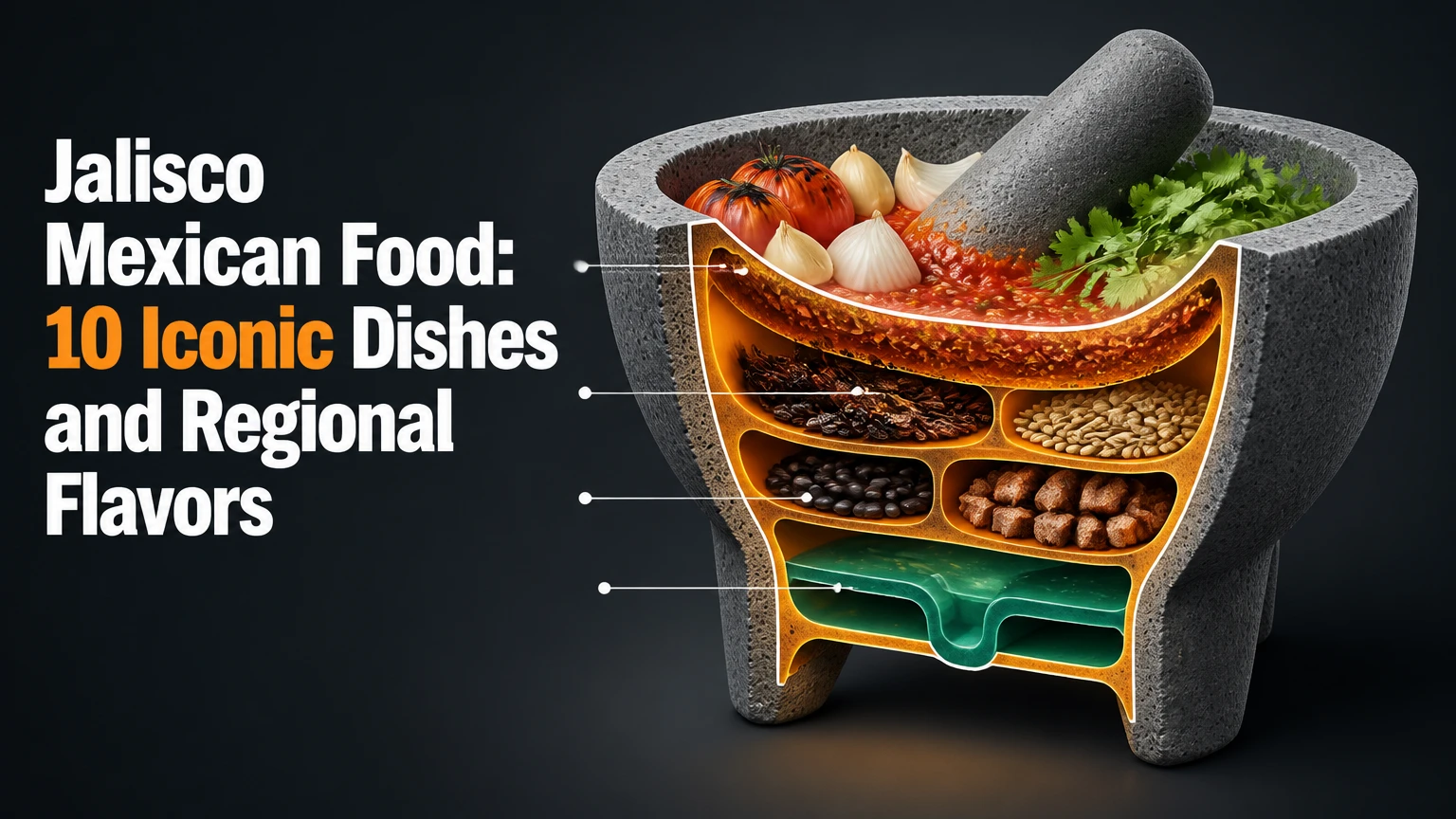
Jalisco Mexican food is the cooking of western Mexico, shaped by Indigenous corn-based traditions, Spanish colonial ingredients, ranching, highland agriculture, and Pacific coastal seafood. Its best-known expressions include birria, tortas ahogadas, carne en su jugo, pozole rojo, pescado zarandeado, tejuino, and a protected regional agave spirit associated with Jalisco.
Key Facts at a Glance
Birria originated as a goat-centered dish in Jalisco, while beef versions are now widely served in Guadalajara and outside Mexico.
A torta ahogada requires firm, crusty birote salado because ordinary bread collapses under chile-tomato sauce.
Carne en su jugo combines thin beef, bacon, beans, tomatillo, onion, and cilantro in a concentrated broth.
Jalisco pozole is commonly red, with hominy, slow-cooked meat, dried chiles, radish, onion, lime, and cabbage.
Tejuino is a lightly fermented corn beverage usually served cold with lime, salt, and sometimes lime sorbet.
Typical street-food prices in Jalisco range from MX$25 to MX$90 per serving in 2026, depending on the dish and city.
What Defines Jalisco Mexican Food?
Jalisco Mexican food is defined by slow-cooked meats, toasted dried chiles, corn, beans, firm wheat bread, bright garnishes, and a sharp contrast between rich broths and fresh acidic toppings. Guadalajara provides the metropolitan core, while Los Altos contributes ranch-style cooking, the coast contributes grilled seafood, and the Tequila Valley contributes agave-centered drinks and food tourism.
The cuisine is neither a single fixed menu nor a uniform statewide style. Guadalajara’s street stalls favor birria tacos, tortas ahogadas, and carne en su jugo; coastal communities such as Barra de Navidad and San Blas emphasize grilled fish; rural highland kitchens use goat, beans, corn dough, and preserved chiles.
UNESCO’s 2010 inscription describes traditional Mexican cuisine as “a comprehensive cultural model comprising farming, ritual practices, age-old skills, culinary techniques and ancestral community customs.” That description applies especially well to Jalisco, where food remains tied to markets, family celebrations, religious gatherings, mariachi events, and communal weekend meals.
How geography changes the plate
| Jalisco area | Food emphasis | Typical ingredients | Best-known setting |
|---|---|---|---|
| Guadalajara | Street food and brothy dishes | Birote, beef, goat, beans, dried chiles | Markets, breakfast stalls, late-night counters |
| Los Altos | Ranch and highland cooking | Goat, dairy, corn, dried chile, beans | Family kitchens and regional fairs |
| Lake Chapala | Inland lake and market food | Fish, corn, vegetables, beans | Lakeside restaurants and town markets |
| Pacific coast | Open-fire seafood | Whole fish, garlic, chile, citrus | Beach restaurants and fish grills |
| Tequila Valley | Agave-linked food culture | Agave syrup, corn, lime, local chiles | Distillery visits and town eateries |
Which Dishes Best Represent Jalisco?
The most representative Jalisco dishes are birria, torta ahogada, carne en su jugo, pozole rojo, and pescado zarandeado. These dishes show the region’s main techniques: long braising, sauce-soaked bread, fast searing, chile-based stewing, and open-fire grilling.
| Dish | Main component | Defining preparation | Typical serving |
|---|---|---|---|
| Birria | Goat or beef | Slow braise with dried chiles and spices | Tacos, consommé, onion, cilantro, lime |
| Torta ahogada | Birote and shredded meat | Sandwich submerged in chile-tomato sauce | Pickled onion, sauce level by preference |
| Carne en su jugo | Thin beef and beans | Sear, blend tomatillo sauce, simmer briefly | Bacon, onion, cilantro, tortillas |
| Pozole rojo | Hominy and meat | Simmer hominy until opened, then add chile broth | Cabbage, radish, oregano, lime |
| Pescado zarandeado | Whole fish | Marinate and grill over direct heat | Tortillas, salsa, vegetables, citrus |
| Tejuino | Corn masa | Ferment briefly, chill, add lime and salt | Cup or clay vessel with lime sorbet |
Birria: goat, beef, tacos, and consommé
Birria is a chile-spiced stew traditionally associated with goat, although birria de res is now more common in many Guadalajara restaurants and international taquerias. The meat cooks slowly with dried chiles, garlic, vinegar or another acidic ingredient, herbs, and spices, producing both tender meat and a concentrated consommé.
The most useful distinction is not “authentic versus inauthentic.” It is the meat, cooking method, and serving format. Goat brings a pronounced, slightly earthy flavor; beef offers a softer, familiar profile and often produces a richer shredded filling. Birria tacos are griddled in the cooking fat, filled with meat and cheese in many contemporary restaurants, then served with consommé for dipping.
A typical home braise takes 3-5 hours, while a pressure cooker can reduce active cooking to approximately 75-100 minutes, excluding pressure release and seasoning adjustment. The broth should taste deep before lime and onion are added. Excessive chile bitterness usually results from burning dried chiles rather than from the number of chiles used.
Why birote salado matters in a torta ahogada
A torta ahogada is a Guadalajara sandwich made with firm birote salado, shredded meat, and a tomato-based chile sauce. The bread is cut, filled, and either partially dipped or fully submerged, while pickled onion adds acidity that balances the rich filling and sauce.
Birote salado differs from a soft bakery roll because its crust and fermented dough structure resist immediate collapse. A substitute baguette can work if it has a dense crumb and thick crust, but sliced sandwich bread becomes paste within minutes.
Restaurants commonly offer sauce by heat level. A beginner can request the tomato sauce first and add chile sauce separately; experienced diners may order the entire sandwich drowned. The second method is messier and produces a more integrated flavor, but it gives the diner less control over heat and texture.
How Is Carne en su Jugo Cooked?
Carne en su jugo is prepared by searing small pieces of thin beef, blending a tomatillo and chile salsa, then simmering the meat with beans until the broth tastes integrated. A reliable home version takes 45-70 minutes and depends more on controlled heat than on prolonged cooking.
- Prepare the meat. Slice 450-500 grams of thin beef into small pieces, season with salt, and dice 100-120 grams of bacon or a comparable smoked meat.
- Render the smoky fat. Cook the diced bacon over medium heat for 6-8 minutes, remove the crisp pieces, and retain approximately 1 tablespoon of fat.
- Sear the beef. Brown the beef in batches for 2-3 minutes per batch. Crowding the pot causes steaming and weakens the broth.
- Blend the green sauce. Blend 5-6 tomatillos, one quarter onion, one garlic clove, cilantro, and one mild green chile with 120 milliliters of water.
- Simmer the dish. Add the salsa, 500-700 milliliters of stock, and 250 grams of cooked pinto beans. Simmer uncovered for 20-30 minutes.
- Finish and serve. Add the reserved crisp bacon, then garnish with raw onion, cilantro, radish, lime, and warm tortillas.
| Stage | Typical time | Temperature or condition | Success checkpoint |
|---|---|---|---|
| Bacon rendering | 6-8 minutes | Medium heat | Fat is clear and bacon is crisp |
| Beef searing | 4-8 minutes | Medium-high heat | Brown edges, no gray steaming |
| Salsa cooking | 5 minutes | Gentle boil | Raw tomatillo smell fades |
| Final simmer | 20-30 minutes | Low simmer | Beef is tender and broth coats a spoon |
| Garnishing | 2 minutes | Off heat | Fresh toppings remain crisp |
The dish is not a conventional soup. Its broth should be thinner than gravy but more concentrated than plain stock. Adding too much water at the beginning produces a bland bowl, while reducing the liquid aggressively can toughen small pieces of lean beef.
What Ingredients Create the Jalisco Flavor Profile?
Jalisco’s flavor profile comes from the interaction of toasted dried chiles, browned meat, corn, beans, acidity, and fresh garnishes. No single chile defines every dish, because cooks select guajillo, ancho, chile de árbol, Yahualica chile de árbol, or milder green chiles according to heat, color, and aroma.
| Ingredient | Culinary function | Common Jalisco use | Practical substitute |
|---|---|---|---|
| Birote salado | Firm structure and fermented flavor | Torta ahogada | Dense baguette |
| Guajillo chile | Red color and mild fruitiness | Birria, pozole | California chile |
| Chile de árbol | Dry heat and sharp aroma | Sauces and torta sauce | Cayenne, used sparingly |
| Cacahuazintle corn | Large, open hominy kernels | Pozole | Prepared white hominy |
| Pinto beans | Creaminess and protein | Carne en su jugo, side dishes | Mayocoba beans |
| Tomatillo | Acidity and green depth | Carne en su jugo, salsa verde | Green tomato with lime |
| Radish and cabbage | Crunch and freshness | Pozole, birria, tortas | Pickled vegetables |
A practitioner’s rule is to toast dried chiles briefly, usually 10-20 seconds per side, then remove them before black spots appear. Burned chile skin contributes harsh bitterness that sugar or extra stock cannot fully repair.
What Is Jalisco Pozole Rojo?
Jalisco pozole rojo is a red hominy stew made by simmering large corn kernels with meat and a blended dried-chile sauce. The bowl is finished with shredded cabbage or lettuce, radish, onion, oregano, lime, and often tostadas or tortillas.
Cacahuazintle corn is traditionally valued because its kernels open during cooking and develop a soft, chewy texture. Prepared hominy reduces the cooking burden substantially, but it still benefits from 45-90 minutes in seasoned broth. A raw dried-hominy preparation can require several hours and careful rinsing.
Pozole is a social dish rather than a quick individual meal. Families often prepare a large pot for weekends, holidays, or gatherings, then let each person adjust acidity, chile heat, herbs, and crunch at the table. Chicken, beef, and other regional versions exist, so the menu description should be checked when dietary restrictions matter.
Why Is Coastal Jalisco Food Different?
Coastal Jalisco food differs because Pacific fishing, tropical produce, and open-fire cooking replace the highland emphasis on braised goat, wheat bread, and dense stews. Pescado zarandeado is the signature example: a whole fish is split, seasoned or marinated, secured in a grill basket, and cooked over wood or charcoal.
Snapper, snook, and similar firm-fleshed fish are practical choices because they withstand direct heat. A typical whole fish serving weighs 500-900 grams before cooking and feeds one hungry diner or two lighter diners when accompanied by tortillas, salad, and rice.
The marinade varies, but often combines chile, garlic, citrus, soy-style seasoning, or regional spice blends. The fish is ready when the thickest flesh flakes easily and reaches approximately 63°C internally. Overcooking produces dry flesh, while weak heat leaves the skin pale and prevents the characteristic smoky crust.
Which Jalisco Drinks Are Traditional?
Traditional Jalisco beverages include tejuino, aguas frescas, lime-based drinks, and regional agave distillates protected by geographic rules. Tejuino is the most distinctive non-intoxicating option: a mildly fermented corn drink with a thick, refreshing texture that is usually served cold with lime, salt, and sometimes lime sorbet.
Tejuino fermentation commonly lasts 1-3 days, although temperature and recipe alter the result. The finished beverage should smell pleasantly tangy rather than rotten or aggressively sour. Refrigeration slows fermentation after preparation, but homemade batches should be consumed promptly and discarded if mold, gas pressure, or an unpleasant odor develops.
Cantaritos are citrus drinks served in clay vessels and traditionally include a regional agave spirit. Diners who avoid intoxicating drinks can request a citrus agua fresca or a non-intoxicating cantarito-style mixture instead. A restaurant’s wording may differ, so confirm ingredients before ordering.
How Much Does Jalisco Food Cost?
Typical 2026 prices in Jalisco range from MX$25-90 for a street-food item, MX$100-250 for a casual restaurant meal, and MX$400 or more for an upscale tasting experience. Prices vary by city, portion size, imported ingredients, tourist demand, and whether the dish includes a drink or side.
| Dining format | Typical price in Jalisco | Typical time at table | Likely order |
|---|---|---|---|
| Market stall | MX$25-60 | 10-25 minutes | Taco, tejuino, small pozole |
| Birria or torta counter | MX$60-140 | 15-35 minutes | Three tacos with consommé or one torta |
| Casual restaurant | MX$100-250 | 35-75 minutes | Main dish, tortillas, agua fresca |
| Coastal seafood restaurant | MX$180-450 | 45-90 minutes | Whole grilled fish and sides |
| Upscale Guadalajara dining | MX$400-1,000+ | 75-150 minutes | Regional tasting or composed meal |
A street taco price of MX$25-45 is typical in many local markets, but popular tourist corridors and premium fillings can cost more. A full birria order usually takes 10-20 minutes when the stew is ready; cooking the birria from raw meat requires several hours.
How Does Jalisco Compare With Other Mexican Regions?
Jalisco is the stronger choice for diners who want brothy meat dishes, firm bread, grilled fish, and chile-forward street food. Oaxaca offers a wider focus on moles, corn masa, and regional cheeses; Yucatán emphasizes citrus-marinated meats and achiote; Puebla is associated with layered sauces and filled dishes.
| Region | Signature dishes | Dominant technique | Heat and acidity | Best match for |
|---|---|---|---|---|
| Jalisco | Birria, torta ahogada, pozole rojo | Braising, grilling, searing | Medium to high heat, bright lime | Broth and street-food fans |
| Oaxaca | Mole, tlayudas, memelas | Grinding, roasting, masa cooking | Toasted, earthy, variable heat | Sauce and corn specialists |
| Yucatán | Cochinita-style dishes, sopa de lima | Achiote marination, roasting | Citrus-forward, moderate heat | Sour and aromatic flavors |
| Puebla | Mole poblano, cemitas, chiles en nogada | Layered sauces and baking | Sweet-savory balance | Celebratory meals |
| Northern Mexico | Flour tortillas, grilled beef, cabrito | Grilling and flour-tortilla cooking | Smoky, savory, moderate heat | Charcoal and large portions |
Jalisco food is less sauce-complex than Oaxacan mole traditions but often more focused on the relationship between broth, meat, bread, and fresh garnishes. That is a difference in culinary emphasis, not a ranking of quality.
What Should Different Diners Order?
First-time diners should begin with carne en su jugo or a mild birria order because both reveal Jalisco’s savory depth without requiring immediate tolerance for a fully spicy torta ahogada. Adventurous diners should choose goat birria, a fully drowned torta, or pescado zarandeado when visiting the coast.
| Diner situation | Recommended order | Request to make | Main limitation |
|---|---|---|---|
| First visit | Beef birria with consommé | Chile on the side | Beef may be richer than expected |
| Low heat preference | Carne en su jugo | Mild salsa and extra lime | Green chile flavor may be reduced |
| Bread-focused eater | Torta ahogada | Sauce added gradually | Messy and difficult to transport |
| Seafood preference | Pescado zarandeado | Fish weight and cooking time | Availability depends on the coast |
| Vegetarian diner | Bean tostadas, vegetable tacos, tejuino | Confirm broth and cooking fat | Traditional signature dishes are meat-heavy |
| Budget traveler | Market pozole or tacos | Ask price before adding extras | Portions vary by stall |
| Family with children | Mild birria, beans, quesadillas | Separate salsa and garnishes | Shared dishes can contain hidden heat |
Health-conscious ordering requires attention to preparation rather than relying on dish names. Grilled fish, bean-based sides, fresh vegetables, and broth with garnishes can reduce heavy fried components, but birria consommé and sandwich fillings may still contain substantial fat and sodium.
Where Can You Find Regional Specialties?
Guadalajara is the most efficient base for sampling core Jalisco dishes because markets, neighborhood counters, and established restaurants serve birria, tortas ahogadas, pozole, and carne en su jugo within the same urban area. Coastal towns are better for fresh pescado zarandeado, while Tequila Valley towns provide agave-centered beverages and regional menus.
Look for establishments with high local turnover, a short focused menu, visible simmering pots, and clear peak hours. A long queue is not proof of quality, but rapid turnover usually means fresher bread, hotter broth, and less time holding cooked meat.
Typical meal timing matters. Birria and tortas may appear early in the day, while grilled fish is often strongest at lunch after the morning catch reaches the kitchen. Tejuino is most common at markets, plazas, and street beverage stands rather than formal dining rooms.
Common Mistakes and How Do You Fix Them?
The most common Jalisco cooking failures are weak broth, bitter chile sauce, collapsing bread, tough beef, slimy nopales, and unsafe storage of fermented drinks. Each problem has a specific cause, so adding more seasoning without identifying the failure usually makes the dish less balanced.
- Torta bread collapses: Replace soft rolls with birote salado or a dense baguette, and add sauce immediately before eating.
- Chile sauce tastes bitter: Discard blackened chiles, blend a fresh batch, and toast replacements only until fragrant.
- Birria broth tastes greasy: Chill the broth, remove some solidified fat, then reheat and correct with salt and lime.
- Carne en su jugo contains tough beef: Use thinner cuts, sear quickly, and keep the final simmer below a hard boil.
- Nopales remain slimy: Slice them, cook with onion and salt for 13-15 minutes, and continue until the released liquid evaporates.
- Molcajete releases grit: Cure a new volcanic-stone mortar by grinding dry rice repeatedly, washing it, and checking that no grit remains.
- Tejuino smells spoiled: Do not taste or salvage a batch with mold, rotten odor, or abnormal pressure. Discard it.
One expert rule applies across these dishes: fix texture before heat. A cook who adds more chile to compensate for watery broth, stale bread, or under-reduced salsa usually increases irritation without improving flavor.
How Can You Adapt Jalisco Recipes at Home?
Home cooks can reproduce the main Jalisco techniques with prepared hominy, dried chiles, a heavy pot, and a reliable thermometer. The closest results come from preserving the structural ingredients, especially firm bread for tortas and toasted chiles for birria or pozole, rather than copying every garnish.
| Recipe | Home equipment | Active time | Total typical time | Main control point |
|---|---|---|---|---|
| Birria | Dutch oven or pressure cooker | 35 minutes | 2-5 hours | Chile toast and meat tenderness |
| Torta ahogada | Saucepan and baking tray | 25 minutes | 35-60 minutes | Bread crust and sauce timing |
| Carne en su jugo | Heavy pot or Dutch oven | 25 minutes | 45-70 minutes | Beef sear and broth reduction |
| Pozole rojo | Large stockpot | 40 minutes | 2-4 hours | Hominy softness and chile balance |
| Pescado zarandeado | Grill and basket | 20 minutes | 35-60 minutes | Direct heat and internal temperature |
A pressure cooker is useful for birria and pozole, but it does not automatically improve flavor. The chile sauce still needs careful blending, and the finished broth often benefits from 10-15 minutes of uncovered reduction after pressure cooking.
Vegetarian adaptations work best when they preserve the dish’s method. Use mushrooms, jackfruit, or roasted vegetables for a taco filling, but build the consommé from toasted chiles, garlic, onion, vegetable stock, and beans rather than labeling a thin chile soup as traditional birria.
Frequently Asked Questions
Is Jalisco food always spicy?
Jalisco food is not uniformly spicy. Birria broth, pozole, and carne en su jugo can be mild when cooks control chile de árbol and serve salsa separately, while a fully drowned torta ahogada may become hot quickly. Ask for mild sauce, chile on the side, or a tomato-only base when heat tolerance is limited.
What is the difference between birria and barbacoa?
Birria is a Jalisco-associated chile-seasoned stew, traditionally made with goat and now frequently prepared with beef. Barbacoa refers to a broader family of slow-cooked meat preparations whose seasoning and cooking method vary by region. A restaurant may use similar cuts, but the chile broth and Jalisco presentation identify birria.
Can Jalisco food be vegetarian?
Vegetarian Jalisco meals are possible, although the region’s most famous dishes center on meat. Order beans, vegetable tacos, roasted corn preparations, nopales, mushroom fillings, quesadillas, tostadas, and tejuino, then confirm that the beans, sauces, and tortillas contain no animal-derived cooking fat or broth.
How long does homemade birria last?
Refrigerated birria generally keeps for 3-4 days when cooled promptly in shallow containers and stored at 4°C or below. Keep meat and consommé together or separately according to intended use, reheat only the portion needed, and freeze extra portions for approximately 2-3 months for best texture.
What is the best Jalisco dish for a quick lunch?
Carne en su jugo is the best quick lunch when a restaurant has a prepared pot, because service commonly takes 10-20 minutes and the dish arrives as a complete bowl with beans, broth, meat, and garnishes. A birria taco order is faster when the kitchen has high turnover.
Why is Guadalajara associated with Jalisco cuisine?
Guadalajara is Jalisco’s largest urban center and a major market for regional ingredients, migration, celebrations, and street-food traditions. The city popularized and commercialized dishes such as torta ahogada, carne en su jugo, and urban birria, while surrounding communities continue to preserve distinct highland and coastal versions.
The Bottom Line
Jalisco Mexican food is best understood as a regional network rather than a single flavor: Guadalajara’s birria, torta ahogada, and carne en su jugo; red pozole from communal kitchens; coastal pescado zarandeado; and tejuino from markets and plazas. Start with beef birria or carne en su jugo, add a torta ahogada when you want the defining Guadalajara experience, and seek coastal specialties outside the metropolitan area. Jalisco Mexican food rewards diners who compare geography, texture, chile heat, and serving context instead of treating every dish as interchangeable.