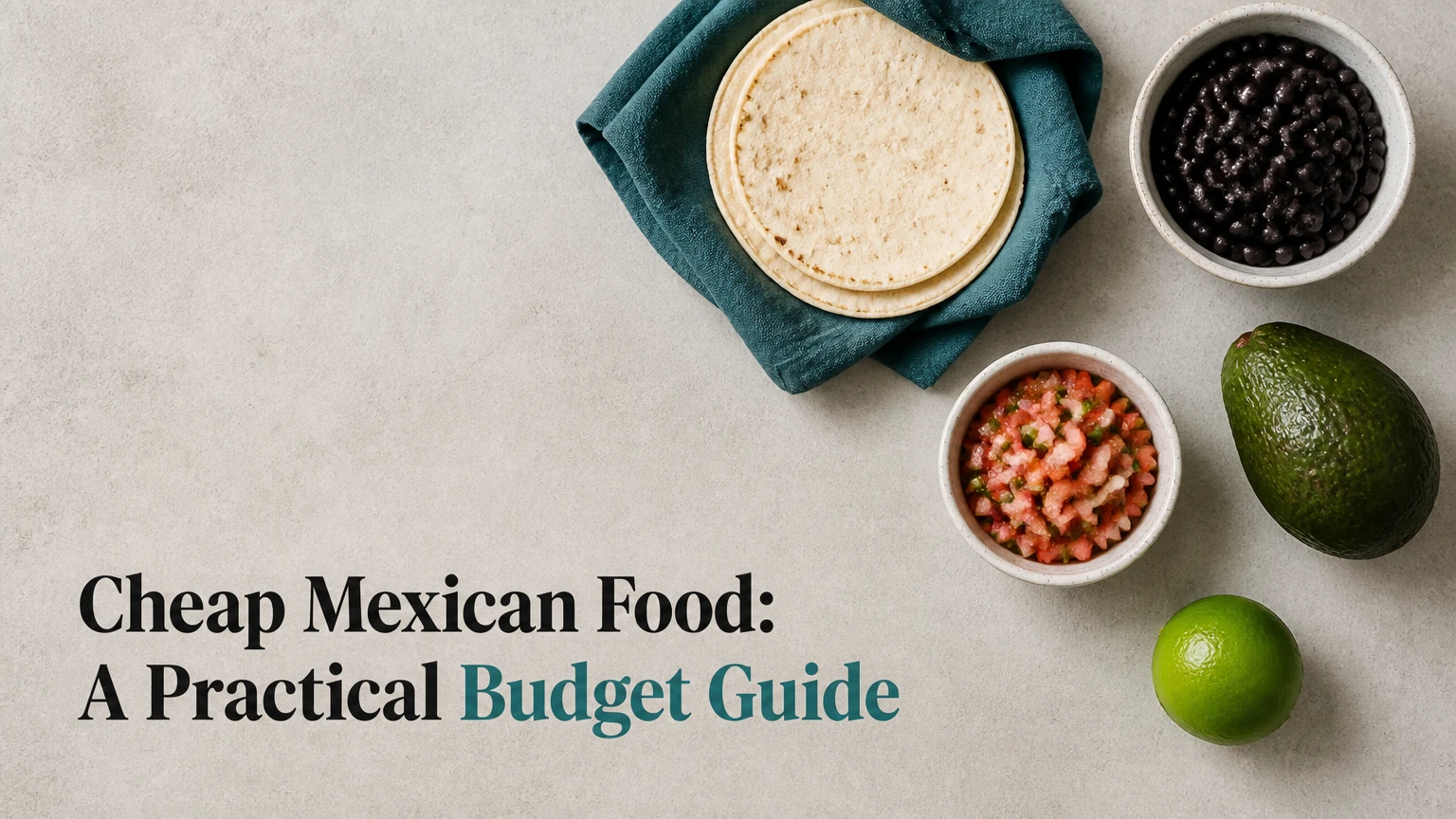
Cheap Mexican food combines corn tortillas, beans, rice, vegetables, cheese, salsa, and carefully cooked fillings into meals that are flavorful, filling, and economical. At restaurants, the best value usually comes from taquerías, lunch plates, bean-based dishes, and à la carte orders. At home, batch-cooked beans, rice, salsa, and chicken thighs can produce meals for approximately $1.50-$3 per serving, depending on local grocery prices.
Key Facts at a Glance
- Cheap Mexican food usually relies on masa, beans, rice, onions, cabbage, salsa, and batch-cooked fillings to lower the cost per serving.
- A homemade bean-and-cheese meal typically costs $1.00-$2.25 per serving when ingredients are purchased in standard grocery quantities.
- A restaurant burrito generally provides more calories per dollar than individual tacos, while tacos offer better variety and portion control.
- Dried beans require approximately 75-100 minutes of simmering after soaking, while canned beans reduce preparation time but often cost more per serving.
- Corn tortillas are naturally gluten-free when produced without wheat contamination, but restaurant preparation surfaces can create cross-contact.
- The cheapest order is not always the lowest menu price, because delivery charges, small portions, paid toppings, and leftover waste change the final cost.
What Counts as Cheap Mexican Food?
Cheap Mexican food is a value-oriented category built around inexpensive staples, efficient preparation, and high ingredient reuse. The category includes street tacos, bean burritos, quesadillas, tostadas, tamales, sopes, gorditas, rice-and-bean plates, and vegetable-filled dishes.
Affordability does not mean a dish lacks culinary depth. Mexican food developed across regions with different grains, chiles, herbs, vegetables, cooking fats, and preservation methods. Corn masa, beans, squash, tomato, onion, and chile can create a complete meal without expensive ingredients, while slow braising makes tougher meat cuts tender and deeply seasoned.
The commercial model depends on preparation before service. A taquería may cook fillings in large batches, prepare salsa in advance, warm tortillas continuously, and use the same onions, cilantro, cabbage, cheese, and crema across multiple dishes. High order volume lowers labor cost per plate, but the customer still needs to compare portion size and ingredient quality.
Why Are Beans, Corn, and Rice So Important?
Beans, corn, and rice provide inexpensive carbohydrates, fiber, and plant protein, which makes them effective foundations for filling meals. Corn tortillas also function as plates, wrappers, and scoops, reducing the need for extra packaging and utensils in street-food settings.
A practical budget meal pairs a staple with a protein-rich filling and a high-acid topping. For example, beans with rice, cabbage, salsa, and two tortillas create better texture and nutritional balance than a plain cheese item, while lime or pickled vegetables keep the dish from tasting heavy.
Which Mexican Foods Offer the Best Value?
Burritos usually deliver the most calories per dollar, bean dishes offer the lowest ingredient cost, and tacos provide the best variety when buying a small meal. Value depends on the ratio of edible filling to tortilla, the amount of rice and beans, and whether extras carry separate charges.
| Food | Typical restaurant price | Typical home cost | Typical eating time |
|---|---|---|---|
| Bean taco, each | $1.25-$2.50 | $0.35-$0.70 | 5-8 minutes |
| Meat taco, each | $2.00-$4.00 | $0.75-$1.50 | 5-8 minutes |
| Bean-and-cheese burrito | $6.00-$10.00 | $1.25-$2.50 | 10-15 minutes |
| Quesadilla | $5.00-$9.00 | $1.00-$2.25 | 8-12 minutes |
| Tostada | $3.00-$6.00 | $0.60-$1.25 | 8-10 minutes |
| Rice-and-bean plate | $8.00-$14.00 | $1.50-$3.00 | 15-20 minutes |
| Tamale, each | $2.50-$5.00 | $0.80-$1.50 | 8-12 minutes |
| Sope or gordita | $3.50-$7.00 | $0.90-$1.75 | 10-15 minutes |
Prices are typical United States ranges rather than national averages. Urban rents, regional wages, food delivery fees, taxes, and neighborhood demand can move menu prices far outside these brackets.
Are Tacos or Burritos Cheaper?
Burritos are usually cheaper per calorie, while tacos are often cheaper for a small appetite or a mixed order. A $9 burrito containing beans, rice, cheese, and a filling may provide two meals, whereas three $3 tacos provide more flavor variety but may contain less total food.
| Criterion | Tacos | Burritos | Quesadillas | Tostadas |
|---|---|---|---|---|
| Typical order price | $6-$15 for 3-5 | $7-$14 each | $5-$9 each | $6-$12 for 2 |
| Typical tortilla count | 3-10 small tortillas | 1 large flour tortilla | 1-2 tortillas | 1 fried corn base |
| Portability | High | Very high | Medium | Low |
| Leftover quality | Medium, tortillas dry | High, filling reheats well | Medium, cheese firms | Low, shell softens |
| Best value use | Variety | Fullness | Meatless meal | Crunch and toppings |
How Does the Affordable Mexican Food Model Work?
Affordable Mexican food works through cross-utilization, batch cooking, low-cost staples, and rapid assembly. One pot of beans can fill tacos, burritos, tostadas, sopes, and quesadillas, while one salsa and one vegetable garnish can serve the entire menu.
Slow cooking is especially useful for collagen-rich cuts. Gentle heat and moisture convert connective tissue into gelatin over approximately 2-4 hours, depending on the cut and cooking temperature. Chicken thighs generally require less time than beef chuck, while a dry lean cut can become tough even when cooked longer.
Assembly speed affects restaurant economics. A prepared taco can be finished in 30-90 seconds, but the customer-facing speed depends on the queue, tortilla heating, filling temperature, and number of toppings. Food trucks may have lower seating costs but can charge more for limited service capacity or high-demand locations.
Which Ingredients Reduce the Cost Most?
Dried beans, rice, masa, cabbage, onions, carrots, eggs, and seasonal squash usually reduce cost most effectively because they have low prices per edible portion and work across several meals. Cheese and prepared sauces add flavor quickly but can raise the cost faster than beans or vegetables.
| Ingredient | Typical package price | Approximate usable servings | Common uses |
|---|---|---|---|
| Dried pinto beans, 1 pound | $1.50-$3.00 | 8-10 | Tacos, burritos, plates |
| Long-grain rice, 2 pounds | $2.00-$4.00 | 12-16 | Bowls, plates, burritos |
| Corn tortillas, 30 count | $2.00-$5.00 | 10-15 meals | Tacos, tostadas, enchiladas |
| Cabbage, 1 head | $2.00-$4.00 | 8-12 servings | Slaw, taco topping |
| Chicken thighs, 2 pounds | $5.00-$10.00 | 6-8 | Tacos, bowls, filling |
| Onions, 3 pounds | $2.00-$5.00 | 12-18 servings | Salsa, garnish, beans |
| Tomatoes, 2 pounds | $3.00-$6.00 | 6-10 servings | Salsa, rice, topping |
| Block cheese, 8 ounces | $3.00-$6.00 | 6-8 servings | Quesadillas, beans, tacos |
What Are the Main Types of Cheap Mexican Food?
The main budget-friendly types are tacos, burritos, quesadillas, tostadas, sopes, gorditas, tamales, and rice-and-bean plates. Each format changes the balance between masa, filling, toppings, portability, and storage life.
Tacos are flexible because a small amount of filling can be spread across several tortillas. Burritos maximize fullness through rice, beans, and a large flour tortilla. Quesadillas can be inexpensive when cheese is used sparingly and combined with mushrooms, squash, beans, or vegetables.
Tostadas provide crunch but are less suitable for transport because moisture quickly softens the fried base. Sopes and gorditas use thicker masa, so they are more filling but require more dough and cooking time. Tamales are labor-intensive at home, yet individual restaurant portions can be convenient when purchased ready to heat.
Which Options Work Best for Specific Needs?
| Situation | Best option | Typical serving | Main reason |
|---|---|---|---|
| Lowest home cost | Beans with tortillas | 2 tacos or 1 bowl | $1.00-$1.75 |
| Maximum fullness | Bean-and-rice burrito | 1 large burrito | 600-900 calories typical |
| Gluten avoidance | Corn-tortilla tacos | 3-5 tacos | Wheat-free base |
| No reheating | Tacos or tamales | 3 tacos or 2 tamales | Portable and ready to eat |
| Vegetarian protein | Beans with rice and cheese | 1 bowl or burrito | 15-25 grams protein typical |
| Crisp texture | Tostadas | 2-3 tostadas | Fried corn base |
| Family meal | Rice, beans, toppings | 4-6 servings | Shared components reduce waste |
How Can You Make Cheap Mexican Food at Home?
A low-cost home meal requires six stages: plan a shared ingredient set, cook beans and rice, prepare one filling, make salsa, heat tortillas, and portion leftovers. A four-serving batch generally takes 90 minutes to 3 hours, although active work is often under 40 minutes.
Before You Start
| Requirement | Typical amount |
|---|---|
| Total time | 2-3 hours, including simmering |
| Active time | 30-40 minutes |
| Servings | 4-6 |
| Grocery cost | $14-$25 |
| Main equipment | 1 pot, 1 skillet, blender or knife |
| Core ingredients | 1 pound beans, 2 cups rice, 30 tortillas |
| Filling | 2 pounds chicken thighs or 16 ounces mushrooms |
| Salsa ingredients | 1 pound tomatoes or tomatillos, 1 onion, 1 chile |
Step 1: Plan the Shared Ingredients
Choose one bean, one grain, one filling, two vegetables, one salsa, and one tortilla type. This structure prevents buying separate ingredients for every meal and gives leftovers several possible formats.
Use pinto beans for creamy refried beans or black beans for bowls and tacos. Choose cabbage instead of packaged lettuce when storage matters, because a whole cabbage commonly lasts 2-4 weeks under refrigeration.
Step 2: Cook the Beans
Rinse 1 pound of dried beans, soak them for 8-12 hours if convenient, then simmer them in fresh water with half an onion and one garlic clove. Add salt after the beans begin softening, and cook for 75-100 minutes after soaking or approximately 2-3 hours without soaking.
The beans are ready when the center has no chalky firmness. If the skins split but the center remains hard, continue simmering and keep the beans covered with water.
Step 3: Prepare the Rice
Rinse 2 cups of long-grain rice, toast it in 1 tablespoon of oil for 3-5 minutes, then add 4 cups of broth or water, 4 ounces of tomato sauce, 1 teaspoon of cumin, and 1 teaspoon of salt. Cover and simmer for 18-22 minutes, then rest for 10 minutes before fluffing.
Toasted rice absorbs seasoning more evenly and remains separate. If the rice is wet, remove the lid for 5 minutes over low heat; if it is hard, add 2 tablespoons of water and steam for another 5 minutes.
Step 4: Batch-Cook the Filling
Season 2 pounds of chicken thighs with salt, garlic, cumin, oregano, and citrus juice. Simmer covered with 1 cup of water or broth for 35-50 minutes, shred the meat, then brown portions in a skillet for 4-6 minutes before serving.
Vegetarian cooks can sauté 16 ounces of mushrooms with 2 cups of beans, onion, and chile for 12-15 minutes. A filling should be moist enough to bind but dry enough to keep tortillas from tearing.
Step 5: Make a Fresh Salsa
Char 1 pound of tomatoes, half an onion, two garlic cloves, and one mild chile in a dry skillet for 8-12 minutes. Blend or chop the mixture with salt and citrus juice, then cool it for 10 minutes before serving.
Acid is a balancing tool, not a decoration. One to two tablespoons of lime juice or vinegar can cut richness, sharpen beans, and make a modest amount of filling taste more complete.
Step 6: Heat and Assemble
Heat corn tortillas on a dry skillet for 20-30 seconds per side, stacking them in a clean towel so steam keeps them flexible. Fill each taco with 1.5-2 ounces of filling, then add onion, cilantro, cabbage, and 1-2 teaspoons of salsa.
A tortilla is ready when it bends without cracking and shows small toasted spots. Overfilling causes splitting, leaks, and wasted food, especially when the filling contains rice or thick beans.
How Much Does Homemade Mexican Food Cost?
A four-serving batch of beans, rice, chicken, tortillas, salsa, and vegetables typically costs $14-$25, or approximately $3.50-$6.25 per complete serving when buying all ingredients at once. The cost falls to approximately $1.50-$3 per serving when pantry staples and seasonings are already available.
| Home meal | Ingredient cost per serving | Active preparation | Total batch time |
|---|---|---|---|
| Beans and tortillas | $1.00-$1.75 | 15 minutes | 2-3 hours |
| Bean-and-cheese burrito | $1.50-$2.75 | 20 minutes | 2-3 hours |
| Chicken tacos with salsa | $2.25-$4.25 | 35 minutes | 1-2 hours |
| Rice-and-bean bowl | $1.75-$3.25 | 25 minutes | 1-2 hours |
| Vegetable quesadilla | $1.25-$2.75 | 20 minutes | 30-45 minutes |
| Chicken tostadas | $2.50-$4.50 | 35 minutes | 1-2 hours |
The most important cost distinction is first-purchase cost versus marginal cost. A new cook may spend $25 on oil, spices, rice, beans, tortillas, vegetables, and filling, but the same pantry items can support multiple meals.
How Do You Find Cheap Mexican Food at a Restaurant?
The best restaurant value comes from comparing the complete meal cost, portion size, and included sides rather than choosing the lowest listed item. Look for lunch plates, bean-and-rice combinations, family bundles, weekday specials, and restaurants with clearly priced à la carte tacos.
Ask whether rice, beans, salsa, and toppings are included before ordering. Delivery apps can add $5-$15 through service fees, small-order charges, delivery fees, and menu markups, which can erase the savings of a low-priced entrée.
What Should You Check Before Ordering?
| Ordering factor | Low-cost signal | Cost warning |
|---|---|---|
| Meal format | Plate includes rice and beans | Entrée excludes every side |
| Protein portion | Menu lists ounces or a substantial filling | Rice dominates the container |
| Salsa | Two or more included salsa options | Small paid cups |
| Beverage | Water included or inexpensive | $3-$5 specialty drinks |
| Pickup method | Direct pickup at menu price | Delivery markup plus fees |
| Extras | Cabbage, onion, and salsa included | Guacamole and cheese charged separately |
| Leftovers | Burrito or bowl reheats well | Tostada becomes soft overnight |
An inexpensive restaurant meal is not automatically a good value if it contains mostly rice, uses stale tortillas, or requires several paid additions. Experienced customers often order one filling-heavy item, add free toppings, and skip drinks.
Is Cheap Mexican Food Healthy?
Cheap Mexican food can be nutritionally balanced when beans, vegetables, corn tortillas, and moderate portions of cheese or meat form the base. Restaurant meals can become high in sodium, saturated fat, and calories when fried shells, large flour tortillas, creamy toppings, processed meats, and salty sauces are combined.
A home bean-and-vegetable bowl can provide approximately 15-25 grams of protein and 12-18 grams of fiber, depending on the bean portion and toppings. Restaurant nutrition varies substantially, so these figures are typical planning ranges rather than laboratory measurements.
Choose grilled or simmered fillings, beans, salsa, cabbage, and vegetables when reducing saturated fat. Choose corn tortillas or a bowl when limiting wheat, but confirm ingredients and kitchen cross-contact if a medical gluten restriction applies.
What Are the Best Vegetarian and Gluten-Free Choices?
Vegetarian options include bean tacos, enfrijoladas, vegetable quesadillas, mushroom fillings, rice-and-bean bowls, and sopes with beans and vegetables. Gluten-free choices include corn-tortilla tacos, tostadas, tamales, and bowls, provided the fillings, sauces, and preparation surfaces are safe.
Cheese improves protein and flavor but is not required. Beans combined with rice, seeds, eggs, or dairy create more substantial meals than vegetables alone, particularly for people who need a filling meal under a strict budget.
What Common Problems Reduce Value?
The most common budget failures are buying too many separate ingredients, allowing tortillas to dry, cooking lean fillings too aggressively, and storing crisp foods incorrectly. These mistakes increase waste, reduce satisfaction, and make a cheap meal more expensive than planned.
| Problem | Likely cause | Immediate fix | Prevention |
|---|---|---|---|
| Tortillas crack | Cold or dry tortillas | Steam 30-60 seconds | Heat and cover every batch |
| Beans taste flat | Insufficient salt or acid | Add salt and citrus gradually | Season cooking liquid |
| Chicken turns dry | Lean cut or high heat | Add broth and shred finely | Use thighs and covered heat |
| Rice becomes mushy | Excess water or stirring | Rest uncovered 5 minutes | Measure liquid accurately |
| Tostadas turn soggy | Wet filling or early assembly | Drain filling and rebuild | Assemble immediately |
| Food tastes heavy | Too much fat or cheese | Add salsa or cabbage | Use acid and fresh toppings |
A useful practitioner rule is to keep wet components and crisp components separate until eating. Store tortillas, salsa, cabbage, and filling in separate containers so one batch can become tacos, bowls, or quesadillas without losing texture.
How Should You Store and Reheat Leftovers?
Cooked beans, rice, and filling should be refrigerated in shallow containers within two hours and used within 3-4 days. Freeze beans and cooked filling for approximately 2-3 months, while fresh salsa is best used within 3-5 days because texture and flavor decline quickly.
| Component | Refrigerator window | Freezer window | Best reheating method |
|---|---|---|---|
| Cooked beans | 3-4 days | 2-3 months | Pot with 2 tablespoons water |
| Cooked rice | 3-4 days | 1 month | Covered skillet or microwave |
| Cooked chicken filling | 3-4 days | 2-3 months | Skillet with broth |
| Fresh salsa | 3-5 days | Not recommended | Serve cold |
| Corn tortillas | 5-10 days sealed | 1-2 months | Dry skillet, 20 seconds per side |
| Assembled burrito | 1 day | 1 month | Foil-wrapped oven reheating |
Do not freeze lettuce, cabbage slaw, or fresh cream inside a finished burrito. Add those toppings after reheating to restore contrast and prevent watery filling.
Which Budget Strategy Fits Your Situation?
Students usually benefit from beans, rice, tortillas, cheese, cabbage, and one salsa because those ingredients provide several meals with minimal equipment. A student with only a microwave can use canned beans, microwave rice, pre-shredded cabbage, and corn tortillas, although the cost per serving will usually rise.
Time-poor professionals should batch-cook one filling and freeze it in 1-2 serving portions. A five-minute skillet reheat can turn the same filling into tacos, bowls, or quesadillas on different days.
Families should buy components instead of individual finished meals. A pot of beans, a large rice batch, 30 tortillas, and several toppings can serve four people for 2-3 meals while allowing different portion sizes.
Health-conscious diners should prioritize beans, vegetables, salsa, and corn tortillas, then control cheese, fried bases, creamy toppings, and sodium-heavy sauces. The best low-cost plate is usually a bean-and-vegetable bowl or a modest taco order with fresh toppings.
The Bottom Line
Cheap Mexican food is most affordable when staples carry the meal and flavorful toppings provide variety. At home, beans, rice, tortillas, seasonal vegetables, salsa, and one batch-cooked filling can produce four to six meals for approximately $14-$25. At restaurants, compare complete portions, included sides, pickup prices, and reheating quality before choosing the lowest menu number.
The exact value of cheap Mexican food depends on location, portion size, preparation method, and waste. A bean burrito is usually the strongest calorie-per-dollar choice, tacos are better for variety and portion control, and a rice-and-bean bowl is often the easiest option to make nutritious.
Frequently Asked Questions
What Is the Cheapest Mexican Meal to Make?
Beans with corn tortillas are usually the cheapest complete Mexican-style meal, costing approximately $1.00-$1.75 per serving when dried beans and pantry seasonings are available. Add rice, cabbage, salsa, or a small amount of cheese to improve texture, fiber, and protein without changing the cost dramatically.
Can Cheap Mexican Food Be Made Without Cheese?
Cheap Mexican food can be made without cheese by using seasoned beans, rice, mushrooms, squash, eggs, cabbage, salsa, and avocado when affordable locally. Acidic salsa, toasted chiles, herbs, and browned onions provide flavor intensity, so cheese is optional rather than structurally necessary.
Are Corn Tortillas Better Than Flour Tortillas for Budget Meals?
Corn tortillas are usually cheaper per small serving and provide a naturally gluten-free base, while flour tortillas hold more filling and are better for large burritos. Corn tortillas also freeze well, but they need brief skillet heating to prevent cracking during assembly.
How Many Tacos Should One Person Order?
Most adults need three to five small tacos for a complete meal, depending on filling, tortilla size, sides, and appetite. Two tacos may be sufficient with rice and beans, while four or five are more typical when tacos are ordered alone and each contains approximately 1.5-2 ounces of filling.
What Is the Best Cheap Mexican Food for Meal Prep?
Bean-and-rice bowls, burrito fillings, and cooked chicken fillings are the best meal-prep choices because they refrigerate for 3-4 days and freeze for 1-3 months. Keep tortillas, salsa, cabbage, and other fresh toppings separate so reheated meals retain different temperatures and textures.