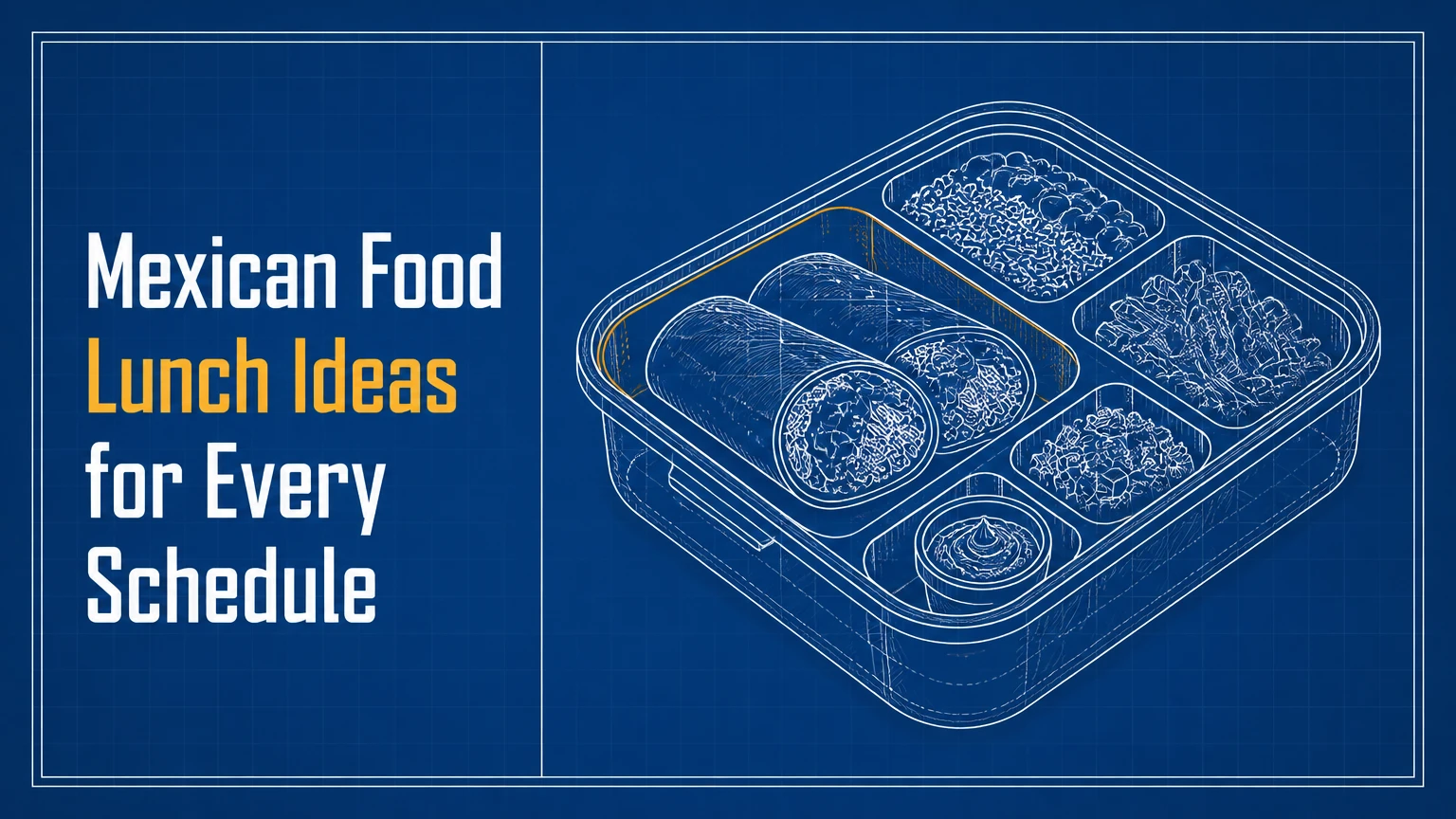
Mexican food lunch ideas include tacos, enchiladas, tostadas, rice bowls, soups, salads, quesadillas, and slow-cooked dishes such as pozole or picadillo. The most practical lunches combine a corn or wheat base, a protein or bean filling, a chile-based sauce, and fresh toppings. Choose the format according to available time, portability, reheating needs, and budget.
Key Facts at a Glance
A typical homemade Mexican lunch costs about $3-$7 per serving, depending mainly on protein and produce prices.
Most assembled lunches take 10-30 minutes when cooked beans, grains, salsa, or protein are already available.
Corn tortillas usually provide better reheating texture for tacos, while flour tortillas are easier to roll into burritos.
Beans, corn, rice, vegetables, and a separate protein component let one meal-prep batch produce several different lunches.
Refrigerated cooked components should generally be used within 3-4 days and reheated until steaming hot.
Fresh toppings should be packed separately because moisture makes tortillas, tostadas, and chips soft.
What Counts as a Mexican Lunch?
Mexican lunch food is a broad family of regional dishes built around ingredients such as nixtamalized corn, beans, chiles, tomatoes, squash, rice, herbs, and varied proteins. Mexican cuisine is not one fixed flavor profile: coastal meals may emphasize fish and citrus, while central and southern regions use different chile sauces, masa preparations, vegetables, and cooking methods.
A practical lunch can be traditional, adapted for a home kitchen, or inspired by Mexican flavor patterns. A tortilla filled with beans and vegetables may be a sensible everyday meal even when the recipe does not reproduce a specific regional dish.
The Mexican Lunch Formula
Most flexible lunches follow four components: a base, a filling, a sauce, and a fresh or acidic finish. A useful starting ratio is 2 small tortillas or 1 medium bowl, 90-120 grams of filling, 1/4-1/2 cup of beans or rice, and 2-4 tablespoons of salsa or vegetables.
The formula works because each part contributes a different function. Beans and meat add protein, tortillas and rice provide energy, salsa supplies acidity and heat, and vegetables add texture and volume. The formula is a planning tool, not a rule of authenticity.
15 Mexican Lunch Ideas
The best choice depends on active cooking time and how the lunch will be eaten. Tacos and quesadillas suit fast preparation, bowls and enchiladas suit leftovers, while tostadas and cold salads work better when crispness or cool texture matters.
| Lunch idea | Active time | Typical cost | Best use | Storage result |
|---|---|---|---|---|
| Bean and vegetable tacos | 10-15 min | $2-$4 | Fast vegetarian lunch | Filling keeps 4 days |
| Chicken tinga tacos | 15-25 min | $4-$6 | Batch cooking | Chicken keeps 4 days |
| Shrimp tacos with citrus salsa | 20-25 min | $6-$9 | Fresh same-day meal | Best within 1 day |
| Beef picadillo bowl | 30-40 min | $5-$8 | Hearty leftovers | Keeps 3-4 days |
| Chicken enchiladas | 45-60 min | $5-$8 | Family lunch | Refrigerate 3-4 days |
| Bean tostadas | 15-20 min | $2-$4 | Crisp lunch at home | Assemble immediately |
| Tortilla soup | 30-45 min | $3-$6 | Cool-weather lunch | Broth keeps 4 days |
| Salpicón-style beef salad | 90-150 min | $6-$10 | Hot-weather meal | Salad keeps 2 days |
| Pozole | 120-180 min | $5-$9 | Large batch | Broth keeps 4 days |
| Black bean burrito | 15-20 min | $2-$5 | Portable lunch | Wrap and chill 1 day |
| Huevos rancheros | 20-25 min | $3-$5 | Late breakfast or lunch | Best fresh |
| Chicken burrito bowl | 25-35 min | $4-$7 | Meal prep | Components keep 4 days |
| Vegetable quesadilla | 10-15 min | $2-$4 | Low-cost lunch | Best fresh |
| Chile-lime fish bowl | 25-35 min | $5-$8 | High-protein lunch | Fish keeps 1-2 days |
| Calabacitas with beans | 20-30 min | $2-$5 | Vegetable-forward lunch | Keeps 3 days |
1. Bean and Vegetable Tacos
Bean and vegetable tacos are the fastest low-cost option because canned or cooked beans need only seasoning and reheating. Warm 1 cup of beans with 1/2 teaspoon ground cumin, 1/4 teaspoon dried oregano, and 1 tablespoon water, then fill four warmed corn tortillas with sautéed onion, bell pepper, cabbage, or squash.
Add salsa, lime, and a small amount of cheese after cooking. The vegetables should remain slightly firm so the tortillas do not become wet. For more protein, add 1/2 cup cooked lentils or 2 eggs.
2. Chicken Tinga Tacos
Chicken tinga is shredded chicken simmered with tomato, onion, garlic, and chipotle chile. Use about 450 grams cooked chicken with 1 1/2 cups sauce to produce six substantial tacos or four bowls.
The preparation takes 15-25 minutes when the chicken is already cooked. Tinga is especially useful for meal prep because the sauce protects the chicken from drying during reheating. Pack cabbage, avocado, or crema separately.
3. Shrimp Tacos With Citrus Salsa
Shrimp tacos deliver a fresh lunch in about 20 minutes. Season 450 grams peeled shrimp with lime zest, garlic, ground chile, and salt, then cook for 2-3 minutes per side until opaque and firm.
Use two small tortillas per serving and add citrus salsa only at the table. Shrimp has a shorter storage window than beans or chicken, so prepare only the amount needed for one or two lunches. The meal is unsuitable for a lunchbox that cannot stay chilled.
4. Beef Picadillo Bowls
Picadillo combines seasoned ground beef with onion, garlic, tomato, potato, carrot, and sometimes squash. A batch made with 450 grams beef and 3 cups diced vegetables usually yields four servings and takes 30-40 minutes.
Serve 3/4 cup picadillo over 1/2 cup rice, or spoon it into tortillas. Potatoes absorb sauce as they sit, so reserve 2-4 tablespoons broth or tomato sauce for reheating. Picadillo is filling, but its saturated fat and sodium rise quickly when fatty beef, salty broth, and cheese are combined.
5. Chicken Enchiladas
Chicken enchiladas suit a family lunch or planned leftovers because one baking dish provides several portions. Dip eight corn tortillas briefly in warm red or green sauce, fill each with 60-75 grams shredded chicken, roll, cover with 1 1/2 cups sauce, and bake at 190°C for 20 minutes.
Corn tortillas should be warmed before rolling. Cold tortillas crack and release filling. Enchiladas are softer than tacos after refrigeration, so pack them for reheating rather than eating cold.
6. Bean Tostadas
Tostadas use crisp baked or fried tortillas as a flat base. Spread each shell with 1/4 cup refried or mashed beans, then add shredded lettuce, tomato, onion, avocado, salsa, and a modest amount of cheese.
Assemble tostadas immediately before eating. Beans and salsa should be thick, not watery. For packed lunches, carry the shell and toppings in separate containers, then construct the tostada at work.
7. Tortilla Soup
Sopa de tortilla uses a tomato and garlic broth with fried or baked tortilla strips, avocado, cheese, and sometimes chicken. Simmer 1 liter broth with blended tomato, onion, garlic, and dried chile for 20-25 minutes, then add toppings after serving.
The soup itself stores well, but tortilla strips become soft in the broth. Keep strips, avocado, cheese, and lime separate. The dish is useful for stretching a small amount of chicken across four servings.
8. Salpicón-Style Beef Salad
Salpicón is a cold shredded beef preparation mixed with lime, onion, oregano, lettuce, tomato, and avocado. It requires more planning because beef may take 90-150 minutes to become tender, but the finished salad needs no reheating.
Use about 115 grams cooked beef per serving and add lime shortly before eating. Acid improves flavor but gradually softens vegetables. This lunch is a strong choice for hot weather, provided the container remains below 4°C.
9. Pozole
Pozole is a soup made with hominy, broth, chiles, and a protein or bean component. A home batch commonly takes 2-3 hours on the stovetop, although cooked hominy and a pressure cooker can shorten active work.
Prepare the broth and hominy in a large batch, then offer shredded cabbage, radish, onion, lime, and dried chile separately. Pozole tastes fuller after one night in the refrigerator, but toppings must remain separate.
10. Black Bean Burritos
A black bean burrito is portable because a flour tortilla encloses moist ingredients more securely than a corn tortilla. Fill one large tortilla with 3/4 cup beans, 1/3 cup rice, 1/4 cup vegetables, salsa with limited liquid, and optional cheese.
Place filling below the center, fold the bottom over it, fold in both sides, and roll tightly. Leave about 2-3 centimeters around the edges. Overfilling is the main reason burritos split.
11. Huevos Rancheros
Huevos rancheros can move from breakfast to lunch when served with beans and two tortillas. Fry or poach two eggs, cover them with warm tomato-chile salsa, and add 1/2 cup beans for a more sustaining plate.
Prepare the salsa in advance, but cook eggs immediately before serving. Reheated eggs become rubbery, which makes this a poor office meal unless the eggs are intentionally scrambled.
12. Chicken Burrito Bowls
A chicken burrito bowl separates the meal into components, making it easier to control portions and texture. Start with 1/2 cup rice, add 90-120 grams chicken, 1/2 cup beans or vegetables, then finish with salsa, lettuce, and avocado.
Bowls are among the strongest meal-prep formats because each component has a distinct storage behavior. Reheat rice, beans, and chicken together, then add cold toppings afterward.
13. Vegetable Quesadillas
Vegetable quesadillas take 10-15 minutes and need only tortillas, cheese, and cooked vegetables. Use 30-45 grams cheese per quesadilla with 1/2 cup mushrooms, squash, corn, spinach, or peppers.
Cook over medium heat rather than high heat. Medium heat melts the cheese before the tortilla burns. Quesadillas are inexpensive and appealing to children, but they need a fresh salsa or bean side to become a complete lunch.
14. Chile-Lime Fish Bowls
Fish bowls combine quickly cooked fish with rice, beans, cabbage, and citrus salsa. Cook a 120-150 gram fish portion for roughly 3-5 minutes per side, depending on thickness, until the center is opaque and flakes easily.
Fish is a poor candidate for long meal-prep storage because texture declines faster than chicken or beans. Prepare one or two portions, and keep cabbage and salsa cold until serving.
15. Calabacitas With Beans
Calabacitas combine squash, corn, onion, tomato, and sometimes cheese with beans on the side. Sauté 2 cups sliced squash and 1 cup corn for 8-10 minutes, then add 1 cup cooked beans and a spoonful of salsa.
This is a practical vegetable-forward lunch with low ingredient cost. Add a corn tortilla or 1/2 cup rice when more energy is needed.
How Do You Build a Mexican Lunch?
Build a Mexican lunch in five stages: choose a base, cook or portion the filling, prepare a sauce, add vegetables, and finish with a contrasting topping. A complete assembly usually takes 10-30 minutes when at least one cooked component is ready, while a fully raw-to-finished meal can take 30-60 minutes.
Step 1: Choose the Format
Select tacos for flexibility, a bowl for meal prep, enchiladas for batch baking, tostadas for crisp texture, or soup for a warm meal. Format determines which ingredients can be stored together.
| Format | Base quantity | Filling quantity | Best temperature | Main limitation |
|---|---|---|---|---|
| Tacos | 2-3 tortillas | 90-120 g | Warm | Tortillas soften in storage |
| Burrito | 1 large tortilla | 1-1 1/4 cups | Warm | Overfilling causes tearing |
| Bowl | 1/2 cup grain | 90-120 g | Warm base, cold toppings | Requires a container |
| Tostadas | 2 shells | 1/2-3/4 cup | Room temperature | Moisture destroys crispness |
| Enchiladas | 2 per serving | 120-150 g | Hot | Longer preparation |
| Soup | 350-450 ml | 60-90 g | Hot | Toppings must be separate |
Step 2: Portion the Components
Use one measured base, one protein-rich component, and at least one vegetable component. For a bowl, 1/2 cup rice, 1/2 cup beans, 90 grams chicken, and 1/2 cup vegetables creates a substantial starting portion before toppings.
Portioning prevents the common problem of a lunch becoming mostly rice, cheese, or tortilla. People needing more energy can increase the grain or bean portion; people prioritizing vegetables can replace part of the grain with cabbage, lettuce, squash, or peppers.
Step 3: Make or Select the Sauce
Use salsa roja for tomato depth, salsa verde for sharper acidity, chipotle-tomato sauce for smoke and heat, or fresh pico de gallo for raw texture. Start with 2 tablespoons per serving and increase after tasting.
Tomatillo sauces can taste sharply sour when the fruit is underripe or the sauce is undercooked. Simmering for 5-10 minutes usually rounds the flavor better than adding a large amount of sweetener. A tiny pinch of baking soda can reduce acidity, but too much creates a flat, soapy taste.
Step 4: Warm the Base
Warm corn tortillas on a dry comal or skillet for 20-30 seconds per side, then hold them in a covered towel. Heat flour tortillas for 10-15 seconds per side so they become flexible without drying.
For rice, add 1 tablespoon water per cup, cover loosely, and microwave in 60-90 second intervals. Stir once between intervals. The success checkpoint is even steam and a soft texture, not a hard dried edge.
Step 5: Add Fresh Contrasts
Finish with ingredients that change the texture or acidity, such as lime, onion, cilantro, cabbage, radish, avocado, or salsa. Add these after reheating because high heat damages delicate textures and makes leafy vegetables wilt.
A practical rule is to keep wet toppings below the tortilla until the last possible moment. That single choice prevents most soggy tacos and tostadas.
Which Mexican Lunch Format Is Most Practical?
Burrito bowls are the most practical format for four-day meal prep, tacos are the most adaptable for immediate eating, and tostadas provide the best crisp texture when assembled at the last minute. No format wins every situation because portability, reheating, and freshness require different designs.
| Decision factor | Tacos | Burrito bowls | Enchiladas | Tostadas |
|---|---|---|---|---|
| Assembly time | 5-10 min | 5-8 min | 15-20 min | 5-8 min |
| Refrigerated life | 3-4 days, components separate | 3-4 days | 3-4 days | 3 days, shells separate |
| Reheating quality | Moderate | High | High | Low after assembly |
| Portability | Moderate | High | High | Low |
| Crispness | Low to moderate | None | None | High when assembled fresh |
| Portion control | Easy | Easiest | Moderate | Moderate |
| Best audience | Flexible eaters | Office meal prep | Families | Home lunches |
Which Format Works for Work?
Burrito bowls and wrapped burritos travel best because they contain sauces and do not depend on crisp shells. Pack salsa, avocado, and greens separately when possible, and use an insulated lunch bag with a cold pack if the meal will remain unrefrigerated.
Tacos work for work when tortillas and fillings are separated. Tostadas do not work well unless the eater can assemble them immediately. The limitation is structural, not a recipe problem.
How Do You Build a Balanced Mexican Lunch?
A balanced Mexican lunch pairs a carbohydrate base with a protein source, vegetables, and a controlled amount of fat-rich toppings. A practical plate can contain 2 tortillas, 1/2 cup beans, 90-120 grams chicken, fish, or lean beef, and at least 1/2 cup vegetables.
Beans and corn complement one another nutritionally, but the phrase “complete protein” should not imply that every meal must contain both at exact proportions. The National Academies’ dietary reference framework emphasizes total dietary protein and amino-acid adequacy across the overall diet, rather than requiring complementary proteins at one sitting.
| Lunch | Typical energy range | Protein estimate | Main sodium risk | Easy adjustment |
|---|---|---|---|---|
| Bean tacos, 3 | 350-550 kcal | 15-22 g | Canned beans and cheese | Rinse beans, add cabbage |
| Chicken bowl | 500-700 kcal | 30-42 g | Packaged salsa and broth | Use no-salt beans |
| Cheese quesadilla | 400-650 kcal | 15-25 g | Cheese and flour tortilla | Add beans and vegetables |
| Chicken enchiladas, 2 | 450-700 kcal | 25-38 g | Sauce and cheese | Use more filling, less cheese |
| Shrimp tacos, 3 | 400-600 kcal | 28-38 g | Seasoning blend | Use fresh lime and herbs |
| Pozole, 2 cups | 350-600 kcal | 22-35 g | Broth and prepared toppings | Choose lower-sodium broth |
These are typical kitchen estimates, not laboratory results. USDA FoodData Central values vary by brand, recipe, cooking fat, tortilla size, and serving weight, so nutrition labels should guide decisions for medically restricted diets.
Vegetarian and Plant-Forward Swaps
Replace chicken or beef with beans, lentils, mushrooms, roasted cauliflower, tofu, or additional vegetables. Use 3/4-1 cup beans or 120-150 grams tofu when replacing a smaller meat portion, then add salsa and lime to prevent the filling from tasting bland.
Refried beans may contain added fat, so check the ingredient label when that matters. A vegetarian lunch can be high in protein, but a tortilla filled only with cheese and vegetables may be less sustaining than one that includes beans.
What Does Each Option Cost?
Homemade Mexican lunches typically cost $2-$10 per serving, with beans, rice, tortillas, and seasonal vegetables at the low end and shrimp or specialty cuts at the high end. Actual prices vary by country, supermarket, package size, and whether pantry ingredients are already available.
| Eating method | Typical price per serving | Active time | Total waiting time | Best value condition |
|---|---|---|---|---|
| Homemade bean lunch | $2-$4 | 10-20 min | 10-30 min | Pantry staples available |
| Homemade chicken lunch | $4-$7 | 20-40 min | 30-60 min | Batch cooking four portions |
| Homemade seafood lunch | $6-$10 | 20-30 min | 20-30 min | Same-day preparation |
| Meal kit | $9-$15 | 20-35 min | 20-35 min | Minimal shopping time |
| Takeout counter meal | $10-$18 | 5-15 min | 15-45 min | No kitchen access |
| Full-service restaurant | $18-$35 | 5-10 min | 45-90 min | Social meal or regional specialty |
Buying a large bag of rice, dried beans, tortillas, and a family-size package of chicken lowers the average cost across several lunches. Buying pre-cut toppings saves time but generally raises the cost per serving.
Which Ideas Hold Up for Meal Prep?
Chicken tinga, picadillo, beans, rice bowls, and pozole hold up best for meal prep because moist sauces protect the main components during reheating. Tostadas, fresh avocado, fried tortilla strips, and delicate seafood should remain separate or be prepared close to serving.
| Component | Refrigerator life | Freezer suitability | Reheating method | Pack separately? |
|---|---|---|---|---|
| Cooked rice | 3-4 days | Yes, 1-2 months | Covered microwave | No |
| Cooked beans | 3-4 days | Yes, 2-3 months | Saucepan or microwave | No |
| Chicken tinga | 3-4 days | Yes, 2-3 months | Covered microwave | Salsa optional |
| Picadillo | 3-4 days | Yes, 2-3 months | Skillet or microwave | Fresh toppings |
| Corn tortillas | 5-7 days refrigerated | Yes, 1-2 months | Comal or skillet | Usually yes |
| Cut avocado | 1 day | No | Do not reheat | Yes |
| Pico de gallo | 2-3 days | No | Serve cold | Yes |
| Tostada shells | 1-2 weeks sealed | Usually unnecessary | Do not microwave | Yes |
Cool cooked food in shallow containers and refrigerate it promptly. The USDA recommends keeping perishable food out of the temperature danger zone and using refrigerated leftovers within 3-4 days; when uncertain, discard food with an abnormal odor, appearance, or storage history.
A Four-Lunch Prep Plan
Cook 2 cups rice, 3 cups beans, and about 700 grams chicken or picadillo. Prepare one roasted salsa, chop cabbage and onion, and portion four containers.
Use the same components in different formats:
- Day one: chicken bowl with rice, beans, cabbage, and salsa.
- Day two: bean tacos with leftover vegetables and lime.
- Day three: chicken enchiladas assembled with tortillas and sauce.
- Day four: picadillo-style bowl or tostadas with beans and fresh toppings.
The flavor changes because format, temperature, and garnish change. The underlying prep remains efficient.
What Are the Most Common Problems?
Most Mexican lunch failures come from excess moisture, incorrect heat, poor portioning, or storing fresh toppings with hot food. Each problem has a predictable fix.
| Problem | Likely cause | Immediate fix | Prevention |
|---|---|---|---|
| Tortilla tears | Cold or overfilled tortilla | Warm a second tortilla and reduce filling | Use 90-120 g filling |
| Tostada becomes soggy | Watery salsa or early assembly | Drain toppings and rebuild | Store shells separately |
| Rice dries out | Reheating uncovered | Add 1 tbsp water per cup and cover | Reheat in short intervals |
| Sauce tastes sour | Underripe tomatillo or raw acidity | Simmer 5-10 minutes | Taste before seasoning |
| Filling tastes flat | Too little salt or acid | Add lime and a measured pinch of salt | Season each component |
| Cheese burns before melting | Excessive pan heat | Lower heat and cover briefly | Cook on medium |
How Do You Fix Dry Leftovers?
Add 1-2 tablespoons water, broth, or sauce per serving, cover loosely, and reheat in 60-90 second intervals. Chicken and rice recover better when reheated with moisture, while tortillas recover better on a dry skillet.
Do not repeatedly reheat the entire batch. Portion only what will be eaten, because repeated heating damages texture and increases handling risk.
How Do You Control Spice?
Control heat through the chile quantity, seed removal, and sauce serving size rather than removing all seasoning. Use roasted bell pepper, tomato, lime, cumin, and oregano for flavor when preparing lunch for children or spice-sensitive diners.
Serve a hotter salsa separately. That approach lets one base meal suit different eaters without making the entire batch too mild or too hot.
Regional Context and Authenticity
Traditional Mexican lunch foods differ by region, and no single list can represent the entire cuisine. Pozole, tinga, salpicón, enchiladas, tacos, and sopa de tortilla each have multiple local preparations, so ingredients and garnishes should be described as styles rather than rigid formulas.
A practical home adaptation can remain respectful when it names the dish accurately, avoids claiming one version is the only authentic version, and preserves the dish’s defining structure. For example, tinga requires shredded meat in a tomato, onion, and chile sauce, while a generic seasoned chicken taco is a different preparation.
Which Lunch Should You Choose?
Choose bean tacos or vegetable quesadillas when the priority is a 10-15 minute, low-cost meal. Choose chicken bowls, tinga, picadillo, or pozole when the priority is several reheatable servings. Choose tostadas, shrimp tacos, or salpicón when freshness and texture matter more than storage life.
For a balanced default, prepare chicken or beans, rice or tortillas, cooked vegetables, salsa, and fresh cabbage. That combination supports bowls, tacos, enchiladas, and tostadas without requiring a new grocery list for each lunch.
Frequently Asked Questions
Can I make Mexican lunch without rice?
Yes. Replace rice with extra beans, corn tortillas, roasted vegetables, cabbage, potatoes, or a small serving of hominy. A bowl with beans, chicken, vegetables, salsa, and avocado remains substantial without rice, while tacos naturally provide a grain-based structure through the tortillas.
Are corn or flour tortillas better for lunch?
Corn tortillas are better for traditional tacos, lower-cost meals, and crisping, while flour tortillas are better for burritos because their flexibility helps contain moist fillings. Neither is universally better. Choose corn for texture and smaller portions, or flour for portability.
What Mexican lunch can I pack cold?
Salpicón-style beef salad, bean salad, cold rice bowls, chicken tacos with separate toppings, and vegetable wraps can be packed cold. Use an insulated container and cold pack for perishable foods, and keep avocado, salsa, and leafy vegetables separate until serving.
How can I make a Mexican lunch kid-friendly?
Use a mild tomato salsa, soft tortillas, beans, scrambled egg, shredded chicken, rice, and finely chopped vegetables. Serve hot sauce, lime, and stronger garnishes separately. Deconstructed bowls often work better than mixed dishes because children can control each component.
Can Mexican lunch be frozen?
Sauced chicken, picadillo, beans, rice, and pozole freeze well for roughly 1-3 months when sealed with minimal air. Fresh salsa, lettuce, avocado, fried shells, and crisp garnishes should not be frozen because thawing damages their texture.
What is the best high-protein Mexican lunch?
A chicken, fish, shrimp, or lean beef bowl with beans can provide roughly 30-45 grams of protein, depending on portion size. Use 120-150 grams cooked protein plus 1/2 cup beans, then add vegetables and salsa instead of relying on extra cheese.
The Bottom Line
The strongest Mexican food lunch ideas are modular: prepare one protein or bean filling, one grain or tortilla base, one sauce, and fresh toppings that stay separate until serving. Use bowls, tinga, picadillo, enchiladas, or pozole for meal prep; choose tacos, quesadillas, shrimp, or tostadas when the lunch will be eaten immediately.