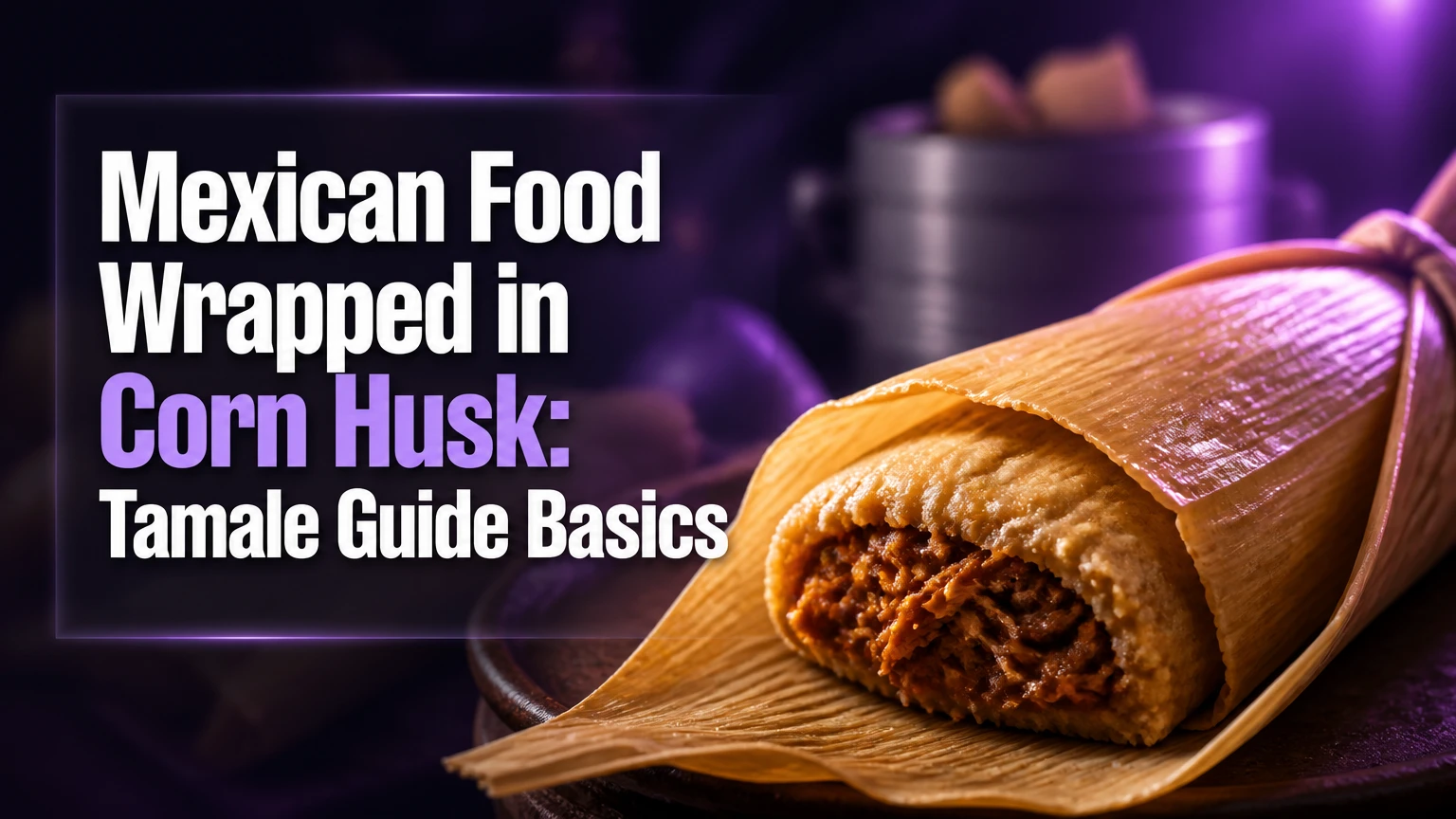
The definitive Mexican food wrapped in a corn husk is a tamale, or tamal in Spanish. A tamale combines seasoned corn masa with a savory or sweet filling, then cooks inside a soaked dried corn husk that is removed before eating. Tamales are steamed, portable, adaptable, and associated with family gatherings, holidays, markets, and everyday breakfasts.
Key Facts at a Glance
- Tamales are steamed packets of seasoned corn masa and filling wrapped in a dried corn husk.
- Corn husks are not edible; diners peel them away before eating the cooked masa.
- Dried husks typically need 30-60 minutes of soaking in hot water before assembly.
- A standard home batch usually takes 3-5 hours, including filling preparation, assembly, steaming, and resting.
- Tamales commonly steam for 60-90 minutes, although large, tightly packed batches may require longer.
- Banana leaves produce a softer, flatter packet and are more common in parts of southern Mexico than corn husks.
What Mexican Food Wrapped in Corn Husk Is Called
Mexican food wrapped in corn husk is called a tamale, or tamal. The plural in English is usually tamales, while Spanish uses tamales as well. The wrapper is a dried corn leaf called hoja de maíz, and the cooked food inside is primarily masa made from treated field corn.
Tamales differ from tacos, enchiladas, and quesadillas because the corn dough cooks around the filling rather than becoming a separate tortilla. The husk gives the soft masa a temporary shape and allows steam to circulate without direct contact with boiling water.
Tamales have deep Mesoamerican roots. The National Museum of Anthropology in Mexico and food historians commonly connect tamales with Indigenous maize-based foodways that existed before European colonization, although individual recipes differ greatly by region and community. UNESCO described traditional Mexican cuisine in 2010 as “a comprehensive cultural model comprising farming, ritual practices, age-old skills, culinary techniques and ancestral community customs and manners.” Tamales fit that wider cultural system because preparation often involves shared labor and seasonal celebrations.
A tamale is therefore a cooking method as well as a dish. The masa, wrapper, filling, folding pattern, and steaming time determine the final result.
How Does a Corn-Husk Tamale Work?
A corn-husk tamale cooks through enclosed steam, which hydrates the masa while the corn starches gelatinize and the structure firms. The soaked husk holds the loose dough in place, limits direct water contact, and contributes a mild vegetal aroma without becoming part of the meal.
Why Is the Corn Husk Used?
The corn husk performs four practical jobs:
- Shape control: A husk supports raw masa until cooking firms it.
- Moisture management: Steam enters gradually while liquid water stays mostly outside.
- Handling: The wrapper allows tamales to be stacked, transported, and reheated.
- Aroma: Hot steam releases a light corn and grassy scent.
The husk is not an airtight package. Small gaps allow steam to reach the masa, which is why a loosely folded wrapper can still cook successfully. The open end normally faces upward so filling and dough remain inside the packet.
What Happens to the Masa?
Masa begins as a soft mixture of ground corn, liquid, salt, and fat. Nixtamalization, the traditional treatment of corn with an alkaline lime solution, loosens the outer hull, improves grinding, and changes the corn’s flavor and handling qualities. The process also makes niacin more available in the corn.
During steaming, masa starch absorbs moisture and sets. Fat separates some particles, producing a tender bite, while whipped air can make the dough lighter. A tamale that feels dense usually has insufficient liquid, insufficient mixing, excessive packing, or a filling that released water into the dough.
Corn-Husk Tamale Components
| Component | Typical amount for 24 tamales | Function | Practical specification |
|---|---|---|---|
| Dried corn husks | 30-36 pieces | Wrapper and shape support | Choose broad, intact leaves |
| Prepared masa | 5-6 pounds | Corn dough structure | Spread 2-3 tablespoons per husk |
| Cooked filling | 3-4 pounds | Flavor and moisture | Use cool, drained filling |
| Broth or water | 2-4 cups | Masa hydration | Add gradually during mixing |
| Fat or oil | 1-1.5 cups | Tenderness and aeration | Lard, shortening, or neutral oil |
| Salt and leavening | 2-3 tablespoons salt, 1-2 tablespoons baking powder | Seasoning and lift | Adjust to the prepared masa |
How Do You Prepare Corn Husks for Tamales?
Prepare dried corn husks by separating them, rinsing away debris, and soaking them in very hot water for 30-60 minutes until flexible. Keep the husks submerged with a plate or bowl, then drain them and wipe away excess water before spreading masa.
Sort the package before soaking. Reserve wide leaves for the main wrapper, narrow leaves for ties or patching, and cracked pieces for lining the steamer. A 1-pound package often contains enough husks for a large batch, but package counts vary.
Wrapper Preparation Steps
- Remove loose fibers and dusty fragments.
- Rinse the husks under cool running water.
- Cover them with hot water in a deep bowl or stockpot.
- Soak for 30 minutes, then test the widest leaves.
- Continue for up to 60 minutes if the edges still crack.
- Drain and stack the leaves under a clean damp towel.
Boiling water softens husks quickly, but it can make delicate leaves curl and split. Very hot tap water or recently boiled water allowed to cool for several minutes gives more control. Do not use moldy, strongly discolored, or musty-smelling husks.
Fresh green corn leaves are different from dried tamale husks. Fresh leaves can wrap small steamed preparations, but they have more moisture, a stronger grassy flavor, and less predictable flexibility.
How Do You Make Tamales in Corn Husks?
Make tamales by preparing the filling, mixing a spreadable masa, soaking the husks, spreading dough on the smooth side, adding a small amount of filling, folding the packet, and steaming it upright. A 24-tamale batch usually requires 3-5 hours, with 60-90 minutes of steaming.
Before You Start
| Requirement | Typical specification | Why it matters |
|---|---|---|
| Batch size | 24 tamales | Manageable for one large steamer |
| Active preparation | 2-3 hours | Includes filling and assembly |
| Steaming | 60-90 minutes | Time varies with density and pot load |
| Resting | 10-20 minutes | Helps masa release from husks |
| Steamer capacity | 16-24 tamales | Prevents tight compression |
| Typical ingredient cost | $35-$70 | Varies by filling and local prices |
You need a steamer pot, a heatproof rack, a mixing bowl, a spatula or masa spreader, soaked husks, prepared filling, and a lid that closes securely. A stockpot with a small elevated rack can work if the rack keeps tamales above the water.
Step 1: Cook and Cool the Filling
Cook the filling until tender, then shred or chop it into pieces no larger than 1 inch. Mix it with a thick red chile sauce, green tomatillo sauce, sautéed vegetables, cheese, or another prepared mixture.
The filling must be cool or lukewarm before assembly. Hot filling softens the masa and makes the wrapper difficult to fold. Drain watery sauces because free liquid often causes leakage and gummy spots.
Success checkpoint: The filling holds together on a spoon without pooling liquid.
Common mistake: Overfilling the husk with a loose, wet mixture.
Step 2: Mix and Aerate the Masa
Place prepared masa in a large bowl and add broth gradually. Mix in fat, salt, and, if used, baking powder until the dough spreads smoothly across a husk without tearing it.
The correct masa resembles thick hummus or soft cake batter. It should feel moist but not runny. The traditional float test can provide a rough indication of aeration: a small piece may float in cold water after thorough mixing, but the test is not definitive because hydration and fat levels affect the result.
Success checkpoint: A thin layer spreads with a damp spoon and does not crumble at the edges.
Common mistake: Adding all the broth at once and creating slack dough.
Step 3: Spread Masa on the Husk
Place the smooth side of a soaked husk upward, with the broad end near you. Spread approximately 2-3 tablespoons of masa into a rectangle about 4 inches wide and 5 inches long, leaving the narrow tip and side edges partly uncovered.
A thinner layer cooks more evenly than a thick one. Keep the upper portion relatively clear so the filling does not push through the open end.
Success checkpoint: The masa layer is even, flexible, and about 3-5 millimeters thick.
Common mistake: Spreading masa onto the rough side, which can increase sticking.
Step 4: Add Filling and Fold
Place 1-2 tablespoons of filling in the center of the masa. Fold one side of the husk over the filling, fold the other side across it, then fold the narrow bottom upward. Leave the top open unless the recipe specifically calls for a tied packet.
For large batches, a strip of soaked husk can tie the packet. Tying is optional when tamales are packed closely in the steamer, but it helps with transport and prevents loose wrappers from opening.
Success checkpoint: The masa surrounds the filling, with no visible gap along the seam.
Common mistake: Using too much filling, which forces masa out during folding.
Step 5: Set Up the Steamer
Add water below the rack, keeping the water level at least 1 inch below the tamale bases. Line the rack with spare husks, arrange tamales vertically with open ends upward, and place a few husks over the top before closing the lid.
Do not let boiling water touch the packets. Add a coin to the bottom of some traditional steamer setups as a sound indicator, but visual checks are safer because the coin does not measure water depth or cooking temperature.
Success checkpoint: Steam circulates around the packets, and the lid remains tightly covered.
Common mistake: Packing tamales horizontally or pressing them so tightly that steam cannot move.
Step 6: Steam and Rest
Steam tamales over a steady medium-high heat for 60-90 minutes. Check the water after 45 minutes and add boiling water if needed, pouring it down the side of the pot rather than over the wrappers.
A finished tamale has masa that pulls away from the husk and feels firm rather than wet. Remove one packet and let it cool for several minutes before judging it. Rest the full batch for 10-20 minutes because the masa continues to set after the heat stops.
Success checkpoint: The wrapper peels away cleanly from firm, cohesive masa.
Common mistake: Unwrapping immediately and mistaking hot, soft masa for undercooked dough.
Which Tamale Varieties Use Corn Husks?
The most recognizable corn-husk tamales include red chile tamales, green tomatillo tamales, rajas con queso, sweet tamales, and plain masa tamales. Regional recipes alter the chile, filling, masa color, shape, and wrapper, so no single filling represents all Mexican tamales.
| Variety | Typical filling | Masa or sauce profile | Common serving context |
|---|---|---|---|
| Tamales rojos | Shredded meat with guajillo and ancho chile | Savory, brick red, moderately mild | Breakfast, holidays, markets |
| Tamales verdes | Chicken or vegetables with tomatillo | Tangy, green, herbal | Family meals and celebrations |
| Rajas con queso | Poblano strips and melting cheese | Savory masa with chile aroma | Vegetarian plates and gatherings |
| Tamales de dulce | Raisins, fruit, coconut, or colored masa | Sweet, lightly spiced, soft | Breakfast or children’s portions |
| Tamales de frijol | Seasoned beans, sometimes chile | Earthy, dense, savory | Regional home cooking |
| Plain masa tamales | No filling or a small central portion | Corn-forward and simple | Accompaniment to stews |
Tamales de dulce may contain sugar, fruit, coloring, or cinnamon, but recipes vary. Sweet tamales should use a separate steamer area when possible because savory sauces can transfer aroma to the dough.
Northern Mexican tamales are often smaller and more tightly filled. Oaxacan tamales are commonly associated with banana leaves rather than corn husks, although local preparation is diverse and the wrapper alone does not define the region.
Corn Husks or Banana Leaves: Which Wrapper Is Better?
Corn husks are usually the better beginner wrapper because dried packs are widely available, soak easily, and create compact individual tamales. Banana leaves suit recipes that need a flatter, softer packet and a stronger vegetal aroma, but they require trimming and heating before folding.
| Feature | Corn husks | Banana leaves |
|---|---|---|
| Preparation | Soak 30-60 minutes | Rinse and heat briefly to soften |
| Finished shape | Narrow, folded packet | Broad, flat or rectangular packet |
| Masa texture | Moderately firm and structured | Softer and more moist |
| Aroma | Mild corn and grass | Stronger green, herbal aroma |
| Typical availability | Dried and shelf-stable | Fresh or frozen in specialty markets |
| Beginner difficulty | Lower | Moderate because leaves can split |
| Best use | Small individual tamales | Large regional-style tamales |
Parchment paper can replace a corn husk in a practical emergency, but it does not provide the same aroma and may not hold the folded shape as securely. Aluminum foil is suitable for some steamed masa packets, yet it changes the cooking environment and should not touch highly acidic fillings for extended periods.
How Much Time and Money Do Tamales Require?
A typical home batch of 24 tamales costs about $35-$70 and takes 3-5 hours from ingredient preparation through resting. Buying prepared masa and ready-made filling reduces active work, while making sauces and cooking a large quantity of filling increases both labor and total cost.
| Scenario | Batch size | Active time | Steaming time | Typical total cost |
|---|---|---|---|---|
| Small home batch | 12 tamales | 90-120 minutes | 60-75 minutes | $20-$35 |
| Standard family batch | 24 tamales | 2-3 hours | 60-90 minutes | $35-$70 |
| Large tamalada | 50-100 tamales | 4-7 hours | 90-150 minutes | $80-$220 |
| Prepared-food purchase | 6 tamales | 0 minutes | Reheat 15-25 minutes | $15-$35 |
| Restaurant plate | 2-3 tamales | 0 minutes | Kitchen-dependent | $12-$25 |
These are typical United States ranges, not fixed prices. Masa, fresh cheese, chiles, and wrappers cost less near a Mexican grocery or tortilleria, while specialty fillings and small retail packages raise the per-tamale price.
Tamales are efficient for groups because the labor occurs once and the finished packets freeze well. The process is less efficient for one or two servings unless prepared tamales are purchased.
How Should You Store, Freeze, and Reheat Tamales?
Store cooked tamales in the refrigerator for up to 4 days or freeze them for about 2-3 months for best texture. Reheat tamales in a steamer for 15-25 minutes, or microwave a damp-wrapped tamale in short intervals until the center is hot.
| Storage method | Maximum practical period | Reheating method | Texture result |
|---|---|---|---|
| Refrigerator, sealed | 4 days | Steam 15-20 minutes | Closest to fresh |
| Freezer, sealed individually | 2-3 months | Steam 25-35 minutes | Moist with slight firmness |
| Frozen, unwrapped | 1-2 months | Microwave with damp towel | Faster, less even |
| Room temperature | 2 hours maximum | Do not rely on reheating | Food-safety risk |
Cool tamales promptly in shallow containers rather than leaving a deep, hot stack on the counter. The United States Department of Agriculture recommends refrigerating perishable cooked foods within 2 hours, or within 1 hour when the surrounding temperature exceeds 90°F.
Keep the husk on during reheating. The wrapper protects the masa and helps retain steam. Frozen tamales can go directly into a steamer, although the center requires more time than refrigerated tamales.
Why Do Tamales Fail?
Tamales fail most often because of incorrect masa hydration, insufficient steaming, excessive filling, or uncontrolled water in the pot. The fastest diagnosis comes from examining whether the masa is dry, sticky, cracked, or firmly attached to the wrapper.
| Problem | Likely cause | Immediate fix | Prevention |
|---|---|---|---|
| Masa stays on husk | Undercooking or no resting | Steam 10-20 minutes longer | Rest before unwrapping |
| Dense, brick-like masa | Too little liquid or aeration | Mix in broth gradually | Spread a thinner layer |
| Soggy bottom | Water touched packets | Drain and continue steaming | Keep water below rack |
| Filling leaks | Excess filling or loose fold | Patch with a husk strip | Use 1-2 tablespoons filling |
| Husks split | Incomplete soaking | Re-soak flexible leaves | Select broad, intact husks |
| Raw center | Overpacked steamer | Steam in smaller batches | Leave gaps for circulation |
The float test is useful but not absolute. A masa sample that sinks may still cook properly if the dough has the right hydration, while an airy sample can still become gummy if the pot is overcrowded.
Altitude also changes steaming. At elevations above approximately 5,000 feet, water boils at a lower temperature, so tamales may need an additional 15-30 minutes and more frequent water checks. The reliable checkpoint is masa release from the husk, not the clock alone.
One practitioner rule matters more than most recipes: do not judge one tamale straight from the pot. Resting changes the texture enough to make an apparently wet tamale seem fully cooked after 15 minutes.
Can Tamales Be Vegetarian, Sweet, or Lower in Fat?
Tamales can be vegetarian, vegan, sweet, or lower in added fat when the masa and filling are adjusted together. Vegetable broth, neutral oil, mushrooms, beans, roasted peppers, cheese alternatives, fruit, and dried spices can replace animal-based ingredients without changing the steaming method.
Vegetarian fillings should be concentrated rather than watery. Good options include rajas with cheese, black beans with chile, mushrooms with epazote, squash blossoms, and roasted vegetables. Drain cooked vegetables before assembly.
For a lower-fat masa, replace part of the traditional fat with broth and neutral oil, but do not remove all fat without testing the texture. Fat limits toughness and improves spreadability. A very lean masa can become firm and dry after refrigeration.
Sweet tamales need a separate masa seasoning profile. Sugar, cinnamon, fruit, raisins, coconut, or pineapple can work, but acidic fruit should be drained so it does not thin the dough. Pink coloring is traditional in some commercial preparations but is optional.
Tamales are naturally gluten-free when the masa, broth, sauces, and seasonings are certified or verified gluten-free. Cross-contact can occur in shared kitchens, particularly through prepared sauces and packaged broth.
What Is a Tamalada and How Are Tamales Served?
A tamalada is a group tamale-making gathering in which several people divide soaking, mixing, spreading, filling, folding, and steaming. The format is practical because assembly is repetitive, and social because a large batch can supply a family or community event.
A common workflow assigns one person to spread masa, another to add filling, and another to fold. Experienced cooks can assemble a tamale in under a minute, while beginners often need 2-4 minutes during the first dozen.
Tamales may be served with salsa, crema, pickled vegetables, beans, or a simple hot drink. In Mexico City, a tamale placed inside a bread roll is called a guajolota, a filling breakfast preparation associated with street vendors. Serving customs vary by city, household, and time of day.
Tamales also carry seasonal associations. Families commonly prepare them for Christmas gatherings, Día de la Candelaria, birthdays, weddings, and community events, although tamales remain everyday food in many regions.
FAQ About Corn-Husk Tamales
Are corn husks edible?
Corn husks used for tamales are wrappers, not food. Diners peel away the husk and eat the steamed masa and filling inside. Fresh corn leaves are technically plant material, but dried tamale husks are fibrous, tough, and unsuitable for chewing.
Can I make tamales without a steamer?
You can make tamales without a dedicated steamer by placing a heatproof rack, inverted bowl, or vegetable steamer inside a deep stockpot. Keep the packets above the water, seal the lid with a clean towel if needed, and monitor the water level throughout cooking.
How many tamales does one pound of masa make?
One pound of prepared masa typically makes about 4-6 medium tamales, depending on the thickness of the spread and the amount of filling. A 5-6 pound batch commonly produces approximately 24 medium tamales, with extra wrappers reserved for damaged leaves and steamer lining.
Should tamales be steamed open-side up?
Tamales should usually be steamed open-side up. The upright position keeps filling inside, supports the masa while it sets, and leaves the open end exposed to circulating steam. Packets should be snug enough to remain upright but not compressed so tightly that steam cannot pass between them.
Why are my tamales still raw after 90 minutes?
Tamales may remain raw after 90 minutes because the steamer was overcrowded, the lid released steam, the water stopped boiling, or the masa layer was too thick. Continue steaming in 10-15 minute increments, verify that water remains below the rack, and rest one sample before testing its texture.
Can I reuse soaked corn husks?
You can reuse clean soaked husks for the same cooking session if they remain intact and have not contacted raw meat or contaminated surfaces. Discard torn or heavily stained husks, and do not store wet husks at room temperature because they can develop odors and microbial growth.
The Bottom Line
The Mexican food wrapped in corn husk is the tamale, a steamed preparation built from nixtamalized corn masa, a seasoned filling, and a softened dried corn wrapper. Corn husks provide shape and a mild aroma, while banana leaves create a softer regional alternative. For reliable results, use moist spreadable masa, cool and drained filling, vertical steaming, a water level below the rack, and a 10-20 minute rest before unwrapping.