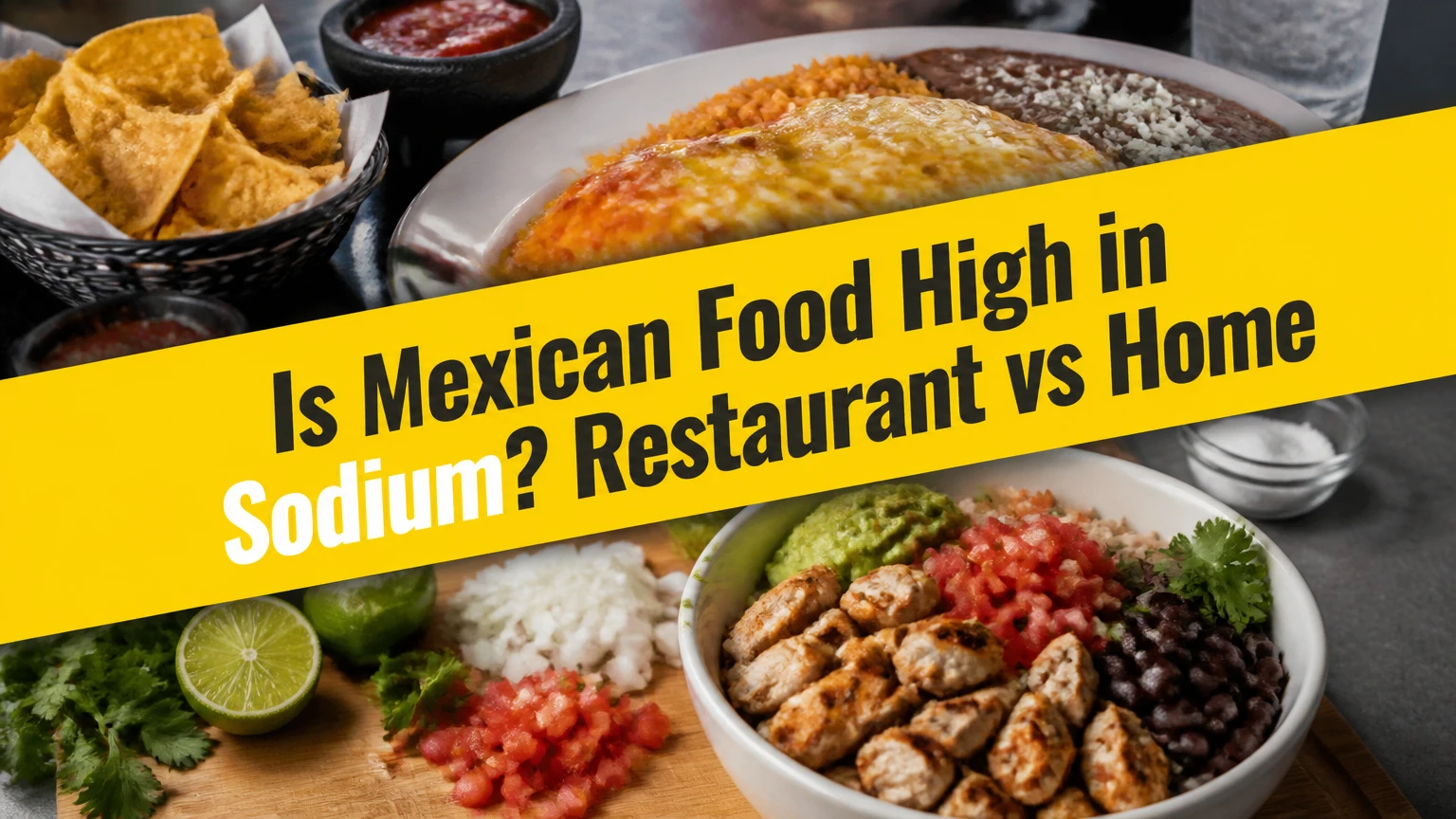
Mexican food can be high in sodium, especially restaurant burritos, enchiladas, combination plates, packaged meals, and salted toppings. Traditional Mexican cuisine is not automatically high or low in sodium: the final amount depends on portion size, tortillas, cooking broth, canned ingredients, cheese, sauces, and added salt. Home cooking usually gives you more control.
Key Facts at a Glance
- The U.S. Food and Drug Administration sets the Daily Value for sodium at less than 2,300 milligrams per day for people age 14 and older.
- The American Heart Association recommends no more than 2,300 milligrams daily and an ideal limit of 1,500 milligrams for most adults, especially those with high blood pressure.
- A restaurant burrito or combination plate commonly reaches 1,500-3,000 milligrams of sodium, depending on size and fillings.
- A corn tortilla often contains approximately 10-30 milligrams of sodium, while a large flour tortilla commonly contains 200-500 milligrams, but labels vary substantially.
- Fresh lime, cilantro, chile, garlic, onion, and toasted spices add flavor without contributing much sodium.
- “Authentic” does not mean low sodium. Salted broth, cheese, prepared meat, canned beans, and seasoning mixes can raise sodium in any recipe.
Why Can Mexican Food Be High in Sodium?
Mexican food becomes high in sodium when several moderately salted components occupy one plate. A flour tortilla, seasoned rice, prepared beans, cooked meat, cheese, salsa, and pickled toppings can each contribute sodium before a diner adds table salt.
Sodium has several culinary functions. Salt improves perceived flavor, helps control moisture in some foods, and extends the shelf life of products such as cheese, prepared sauces, cured ingredients, and canned beans. Commercial kitchens also use concentrated bases, seasoning blends, and ready-made marinades because they produce consistent flavor at scale.
The important distinction is between the cuisine and the preparation system. Fresh corn, dried beans, vegetables, chiles, lime, and herbs are not inherently sodium-heavy. Restaurant portions and processed components create the larger exposure.
How Does Sodium Accumulate in One Meal?
Sodium accumulates across the meal rather than coming from one ingredient alone. A typical restaurant plate can contain 250-500 milligrams from a large flour tortilla, 300-700 milligrams from rice and beans, 400-900 milligrams from seasoned filling, and another 300-800 milligrams from cheese, salsa, and sauces.
| Meal component | Typical sodium range | Main sodium sources | Lower-sodium replacement |
|---|---|---|---|
| Large flour tortilla | 200-500 mg | Salt, leavening agents | Two corn tortillas, 20-60 mg total |
| Seasoned rice | 200-500 mg per cup | Broth, bouillon, salt | Unsalted rice with lime and herbs |
| Refried or canned beans | 300-800 mg per cup | Salt, canned liquid, seasoning | No-salt-added beans, rinsed |
| Grilled filling | 300-900 mg | Marinade, brine, seasoning | Freshly cooked, unsalted chicken or fish |
| Cheese and crema | 100-400 mg | Cheese salt and portion size | Avocado, onion, cilantro |
| Salsa and pickled toppings | 100-700 mg | Prepared salsa, brine, hot sauce | Fresh pico de gallo and lime |
These are typical planning ranges, not universal laboratory values. Recipes, brands, serving sizes, and restaurant procedures can shift the result substantially.
How Much Sodium Is in Common Mexican Dishes?
Common Mexican dishes range from under 300 milligrams to more than 2,500 milligrams of sodium per serving. The lowest choices usually rely on fresh ingredients and simple cooking, while the highest choices combine a large tortilla, seasoned fillings, cheese, sauces, and salty sides.
| Dish or meal | Typical sodium range | Why the range changes | Practical lower-sodium order |
|---|---|---|---|
| Two street-style tacos | 300-700 mg | Meat seasoning, tortilla count, salsa | Corn tortillas, grilled filling, fresh salsa |
| Burrito | 1,500-3,000 mg | Tortilla, rice, beans, cheese, sauces | Bowl, half rice, no cheese, sauce on side |
| Enchiladas, two to three | 1,200-2,400 mg | Sauce, cheese, filling, tortillas | Light sauce, fresh filling, no added cheese |
| Fajita plate | 1,000-2,300 mg | Marinade, tortillas, sides, salsa | Grilled vegetables, corn tortillas, no salty sides |
| Quesadilla | 900-1,800 mg | Cheese, flour tortilla, filling | Corn tortilla with a smaller cheese portion |
| Ceviche | 250-800 mg | Seafood seasoning, tomato juice, crackers | Fresh ceviche without salted crackers |
| Chicken soup | 300-1,500 mg | Homemade stock versus bouillon | Unsalted stock and fresh vegetables |
| Nachos | 1,200-2,800 mg | Chips, cheese, beans, meat, salsa | Baked unsalted chips, beans without added salt |
A two-taco serving is not automatically low sodium. A heavily seasoned filling and commercial salsa can make the dish comparable to a small sandwich or soup meal. Conversely, a burrito bowl can be substantially lower than a wrapped burrito when the flour tortilla and cheese are removed.
Are Tacos Lower in Sodium Than Burritos?
Tacos are usually lower in sodium than burritos because they contain less tortilla, rice, beans, cheese, and sauce. Two corn-tortilla tacos with a fresh filling may contain 300-700 milligrams, while a large restaurant burrito commonly contains 1,500-3,000 milligrams.
The comparison changes when tacos contain heavily salted meat, multiple sauces, or flour tortillas. Taco quantity also matters: four restaurant tacos can equal or exceed the sodium in one moderate burrito.
Which Mexican Dishes Usually Have the Least Sodium?
Fresh ceviche, unsalted homemade chicken soup, grilled vegetables, plain beans, and tacos on corn tortillas are often among the easier choices to adapt. These dishes remain lower in sodium only when cooks avoid bouillon, salted crackers, prepared marinades, and large amounts of cheese.
| Lower-sodium choice | Typical sodium range | Ingredient to verify | Best preparation |
|---|---|---|---|
| Fresh vegetable tacos | 100-400 mg for two | Tortilla label and salsa | Corn tortillas, lime, avocado |
| Homemade bean bowl | 200-600 mg | Beans and broth | Dried beans or no-salt-added canned beans |
| Fresh ceviche | 250-800 mg | Seafood seasoning and crackers | Lime, chile, cilantro, no salted crackers |
| Grilled chicken salad | 400-900 mg | Chicken marinade and dressing | Unsalted chicken, dressing on side |
| Vegetable soup | 300-900 mg | Stock or bouillon | No-salt-added stock |
| Guacamole with vegetables | 100-400 mg | Added salt and packaged chips | Fresh vegetables instead of chips |
Ceviche deserves a qualification. Lime juice adds acidity, not a meaningful amount of sodium, but restaurant ceviche may include salted tomato juice, commercial seasoning, crackers, or a large serving of tortilla chips.
Are Corn Tortillas Lower in Sodium Than Flour Tortillas?
Corn tortillas are generally lower in sodium than flour tortillas, but corn tortillas are not universally sodium-free. The FDA requires packaged foods to list sodium per serving, and the label is more reliable than a cuisine-wide rule.
The common claim that a corn tortilla contains 0-5 milligrams and that flour tortillas contain 200-400 milligrams is too broad. Some small corn tortillas contain 10-30 milligrams, while some flour tortillas contain more than 500 milligrams, particularly when they are large or flavored.
| Tortilla type | Typical sodium per tortilla | Main variable | Useful choice |
|---|---|---|---|
| Small corn tortilla | 10-30 mg | Brand and size | Best default for lower sodium |
| Large corn tortilla | 20-60 mg | Diameter and recipe | Useful for larger tacos |
| Small flour tortilla | 100-250 mg | Size and leavening | Check label before choosing |
| Large burrito flour tortilla | 200-500+ mg | Diameter and formulation | Replace with a bowl |
| Fresh handmade tortilla | 0-40 mg | Added salt and batch size | Ask how it is prepared |
Corn tortillas can also help with portion control because they are smaller. Gluten-free diners should still check packaged products for cross-contact and sodium, since gluten-free status does not predict salt content.
Is Homemade Mexican Food Lower in Sodium?
Homemade Mexican food is often lower in sodium than restaurant food because cooks can choose unsalted stock, rinse canned beans, reduce cheese, and measure salt. Home cooking is not automatically low sodium when it relies on bouillon, seasoning packets, bottled sauces, deli-style fillings, or salted packaged tortillas.
| Preparation setting | Typical sodium per serving | Typical cost | Typical preparation time | Control level |
|---|---|---|---|---|
| Restaurant burrito | 1,500-3,000 mg | $10-$20 | 5-15 minutes | Low |
| Restaurant taco meal | 700-1,800 mg | $8-$18 | 5-15 minutes | Moderate |
| Homemade bean tacos | 250-700 mg | $2-$5 | 25-45 minutes | High |
| Homemade chicken soup | 300-900 mg | $3-$7 | 45-90 minutes | High |
| Frozen Mexican-style meal | 700-1,400 mg | $3-$8 | 5-10 minutes | Low |
| Homemade burrito bowl | 400-1,000 mg | $3-$8 | 30-50 minutes | High |
A useful practitioner rule is to control the concentrated ingredients first. Reducing a teaspoon of table salt helps, but replacing regular broth, canned beans, prepared salsa, and a large flour tortilla usually produces a larger reduction.
Does Authentic Mexican Food Have Less Sodium?
Authentic Mexican food does not have a single sodium profile. Regional recipes differ, and traditional cooks may use salted cheese, broth, prepared chiles, cured ingredients, or salt-heavy garnishes just as commercial kitchens do.
Fresh home cooking can be lower because it starts with dried beans, fresh produce, whole chiles, and measured seasoning. The relevant attributes are freshness, formulation, portion size, and cooking method, not whether a dish carries the label “authentic.”
What Ingredients Add the Most Sodium?
The largest sodium contributors are often prepared tortillas, stock or bouillon, canned beans, seasoned meats, cheese, bottled salsa, pickled vegetables, chips, and seasoning packets. Fresh tomatoes, onions, cilantro, garlic, lime, avocado, and dried chiles contribute little sodium unless salt is added during preparation.
| Ingredient | Typical sodium range | Why it matters | Lower-sodium option |
|---|---|---|---|
| Bouillon, 1 cup prepared | 700-1,200 mg | Highly concentrated base | No-salt-added stock |
| Canned beans, 1 cup | 400-900 mg | Salted packing liquid | Rinse or choose no-salt-added |
| Taco seasoning, 1 packet | 1,000-2,000 mg | Salt is often the main ingredient | Homemade chile and cumin blend |
| Cotija-style cheese, 1 oz | 400-600 mg | Dry, salty cheese | Avocado or a smaller portion |
| Pickled jalapeños, 2 tbsp | 150-400 mg | Brine | Fresh jalapeño |
| Bottled salsa, 2 tbsp | 100-250 mg | Salt and preservatives | Fresh pico de gallo |
| Tortilla chips, 1 oz | 120-250 mg | Salted surface and portion creep | Unsalted chips or vegetables |
Rinsing canned beans can remove some surface sodium, but it does not remove all sodium inside the beans. A no-salt-added can is the more dependable choice, especially for a strict sodium target.
How Can You Order Lower-Sodium Mexican Food?
You can lower sodium at a Mexican restaurant by removing the flour tortilla, cheese, salty sides, and sauces, then choosing fresh toppings and a grilled filling. The most effective order is specific: corn tortillas, no chips, sauce on the side, no added salt if possible, and a vegetable or salad side.
Use this sequence:
- Choose the format. Select tacos or a bowl instead of a large burrito.
- Choose the tortilla. Request corn tortillas and ask whether they are salted.
- Choose the filling. Prefer simply grilled chicken, fish, vegetables, or beans without a seasoned broth.
- Control the sides. Replace rice, refried beans, chips, or queso with vegetables or salad.
- Separate condiments. Request salsa, hot sauce, crema, cheese, and dressing on the side.
- Limit salty extras. Skip pickled jalapeños, olives, queso, and salted tortilla chips.
- Ask one direct question. “Can the kitchen prepare this without added salt, bouillon, or seasoning mix?”
Restaurant staff may not be able to meet a medically strict sodium limit because commercial sauces and marinades are prepared in advance. A simple order is easier to control than a combination plate with several cooked components.
How Can You Cook Mexican Food With Less Sodium?
Low-sodium Mexican cooking works best when you replace salt intensity with acidity, aroma, heat, texture, and browning. Build the dish from unsalted ingredients, taste near the end, and treat commercial sauces, broth, cheese, and tortillas as measured sodium sources.
A practical home method takes about 35-60 minutes:
- Start with an unsalted base. Use dried beans, no-salt-added canned beans, plain rice, or vegetables.
- Toast aromatics. Cook onion, garlic, cumin, oregano, and dried chiles to deepen flavor without adding sodium.
- Add acidity. Finish with lime juice, vinegar, or tomato acidity after cooking.
- Use heat carefully. Fresh jalapeño, ancho chile, guajillo chile, or chipotle-style chile can add intensity.
- Measure concentrated ingredients. Weigh or measure salsa, cheese, broth, and seasoning rather than pouring freely.
- Taste before salting. A dish often needs more acid or chile, not more salt.
- Check the final portion. Divide the batch into measured servings so the sodium estimate matches the amount eaten.
A 15-ounce can of regular beans may contain several hundred milligrams of sodium per serving. Rinsing the beans under cold water for 10-15 seconds reduces some surface salt, while a no-salt-added product can reduce the starting amount more substantially.
What Does the Sodium Label Actually Mean?
The sodium number on a Nutrition Facts label applies to one stated serving, not necessarily the entire package. FDA labeling uses 2,300 milligrams as the Daily Value, so a food with 20% Daily Value contains 460 milligrams per labeled serving.
| Label example | Sodium per serving | Servings eaten | Total sodium |
|---|---|---|---|
| Tortilla, 1 piece | 220 mg | 2 | 440 mg |
| Canned beans, 1/2 cup | 360 mg | 1 | 360 mg |
| Salsa, 2 tbsp | 180 mg | 3 | 540 mg |
| Frozen entrée, 1 package | 920 mg | 1 | 920 mg |
| Tortilla chips, 1 oz | 150 mg | 2 oz | 300 mg |
For packaged Mexican-style foods, inspect serving size, sodium per serving, and the number of servings in the package. A frozen entrée listed as two servings may deliver 1,600 milligrams when eaten as one meal.
Is Mexican Food Safe With High Blood Pressure?
People with high blood pressure can often eat Mexican food, but they should manage portion size and sodium concentration rather than assume every dish is unsafe. The American Heart Association states, “The American Heart Association recommends no more than 2,300 milligrams a day,” with an ideal limit of 1,500 milligrams for most adults.
A restaurant burrito can consume most or all of a daily target. A homemade bowl with unsalted beans, fresh vegetables, plain rice, a small amount of avocado, and measured seasoning may fit more easily into a personalized plan.
People with kidney disease, heart failure, or prescribed fluid restrictions need individualized guidance. Potassium-rich foods such as beans and avocado are not automatically appropriate for people with impaired kidney function, and “drink extra water” is not safe advice for everyone with cardiac or renal disease.
What Should You Do After a Salty Meal?
After a salty Mexican meal, return to your normal eating pattern, drink fluids according to your medical advice, and avoid adding more high-sodium foods for the rest of the day. Water may relieve thirst, but it does not instantly remove sodium or cancel the meal.
Temporary thirst, bloating, and increased water retention can occur after a salty meal. Do not use diuretics, extreme water intake, or strenuous exercise to compensate unless a clinician specifically directs you. Seek urgent medical care for chest pain, severe shortness of breath, confusion, fainting, or sudden neurological symptoms.
Does Drinking Water Flush Out Sodium?
The kidneys regulate sodium and water balance, but drinking excessive water cannot safely erase a high-sodium meal. Healthy adults can usually follow thirst and normal hydration, while people with kidney, liver, or heart conditions may need fluid limits.
The more reliable strategy is prevention: choose lower-sodium components before eating, control packaged foods, and distribute sodium across the day instead of consuming most of it in one restaurant meal.
What Are the Best Low-Sodium Substitutions?
The best substitutions remove concentrated sodium while preserving the dish’s structure. Replace a flour tortilla with corn tortillas or a bowl, regular broth with no-salt-added stock, seasoning packets with dried chiles and spices, and pickled toppings with fresh peppers.
| High-sodium component | Typical sodium range | Replacement | Expected benefit |
|---|---|---|---|
| Large flour tortilla | 200-500+ mg | Two small corn tortillas | Removes 140-460 mg typically |
| Regular canned beans | 400-900 mg per cup | No-salt-added beans | Removes much of the packing salt |
| Seasoning packet | 1,000-2,000 mg per packet | Cumin, oregano, garlic, chile | Avoids concentrated salt |
| Bottled salsa | 100-250 mg per 2 tbsp | Fresh tomato salsa | More control per serving |
| Pickled jalapeños | 150-400 mg per 2 tbsp | Fresh jalapeño | Removes brine sodium |
| Salted chips | 120-250 mg per oz | Unsalted chips or vegetables | Controls snack portion |
One counterintuitive point matters: cheese is not always the largest contributor. A salty broth, seasoning packet, or oversized tortilla can contribute more sodium than a modest cheese garnish, so removing cheese alone may produce a smaller reduction than expected.
The Bottom Line
Is Mexican food high in sodium? Restaurant and packaged Mexican food often is, with many burritos, enchiladas, combination plates, and frozen meals reaching 1,200-3,000 milligrams per serving. Fresh home-cooked Mexican food can be substantially lower when you control broth, beans, tortillas, sauces, cheese, and portion size. Choose corn tortillas, fresh toppings, simply cooked fillings, and sauces on the side when dining out.
Frequently Asked Questions
Are refried beans high in sodium?
Refried beans can be high in sodium when restaurants use canned beans, salted broth, seasoning blends, or prepared bean bases. A typical serving may contain 300-800 milligrams. Homemade beans made from dried beans with no-salt-added stock can be much lower, while rinsed canned beans provide a faster compromise.
Is guacamole low in sodium?
Fresh guacamole is usually low in sodium because avocado, lime, onion, cilantro, and chile contain little sodium naturally. Restaurant guacamole may contain added salt and may be served with salted chips, which can make the complete appetizer high in sodium. Request the guacamole without added salt and use fresh vegetables for dipping.
Are enchiladas worse than tacos for sodium?
Enchiladas are usually higher in sodium than two simple tacos because they combine tortillas with sauce, cheese, filling, and sometimes salty rice and beans. Two tacos may contain 300-700 milligrams, while two or three enchiladas commonly contain 1,200-2,400 milligrams, although recipes vary.
Is salsa high in sodium?
Prepared salsa can be high in sodium, commonly contributing 100-250 milligrams in two tablespoons. Fresh pico de gallo made with tomatoes, onion, cilantro, lime, and chile can contain much less when the cook uses limited salt. Salsa portions also grow quickly when diners add several spoonfuls.
Can Mexican food fit a low-sodium diet?
Mexican food can fit a low-sodium diet when the meal uses fresh ingredients, unsalted beans, corn tortillas, simple grilled fillings, and measured salsa. Strict medical diets require label checks and restaurant questions because marinades, broths, cheese, and prepared sauces may contain hidden sodium.
Does spicy Mexican food contain more sodium?
Spiciness itself does not require sodium. Fresh jalapeños, dried chiles, garlic, cumin, oregano, lime, and vinegar can add heat and complexity without much salt. Bottled hot sauce and chile seasoning may be high in sodium, so compare labels or use fresh and dried chile ingredients instead.