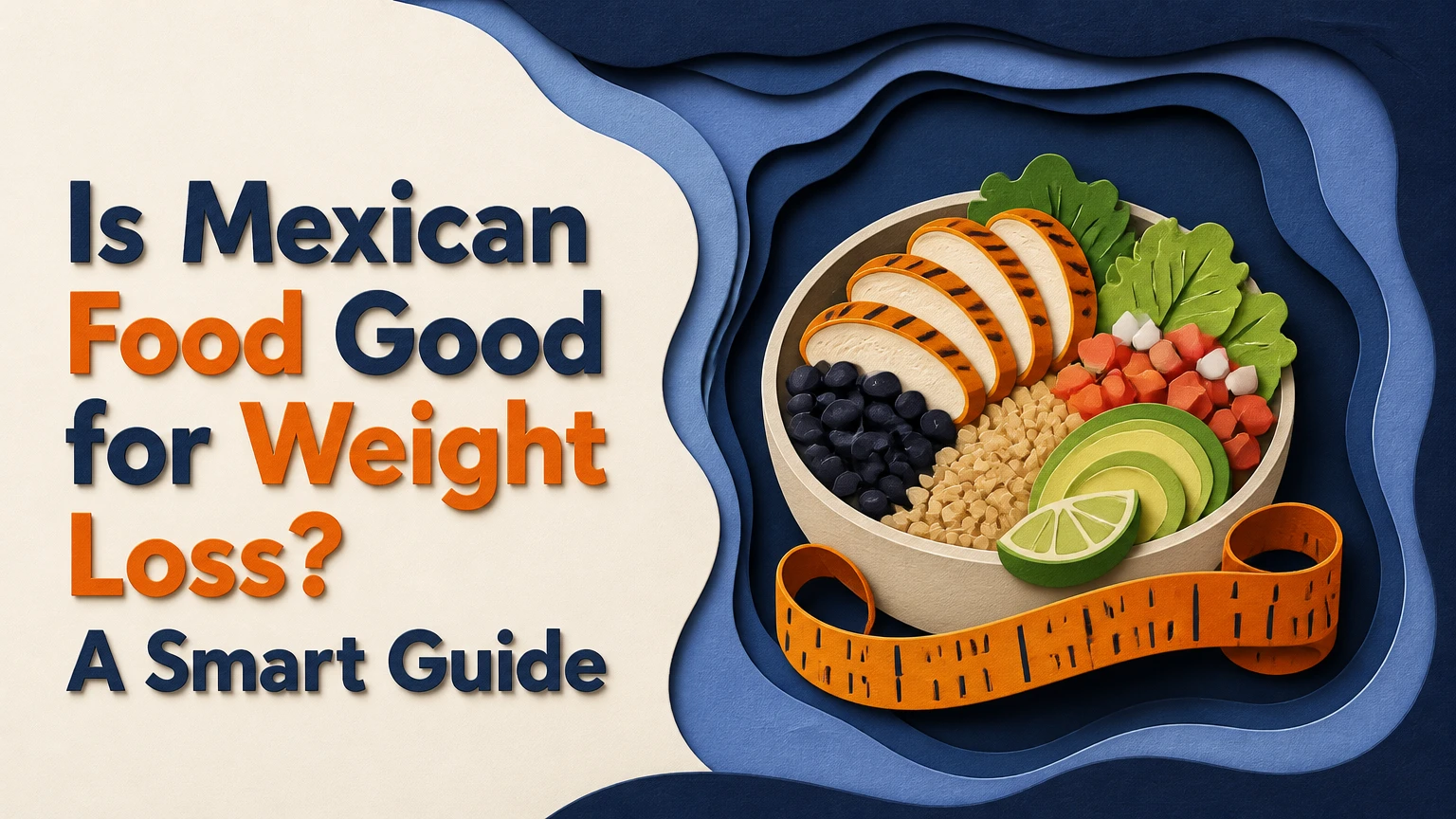
Mexican food can be good for weight loss when meals emphasize beans, vegetables, lean protein, corn tortillas, and measured fats. Weight loss still requires a sustained calorie deficit, so fried shells, large flour tortillas, chips, heavy cheese, creamy toppings, and oversized restaurant portions can turn a nutritious meal into a calorie surplus.
Key Facts
Traditional Mexican ingredients such as beans, corn, squash, nopales, tomatoes, and chiles can provide fiber, volume, and useful nutrients.
A practical weight-loss plate contains vegetables, a palm-sized protein serving, a controlled portion of beans or tortillas, and salsa for flavor.
Two small corn tortillas commonly provide about 100-120 calories, while one large flour tortilla can provide roughly 200-300 calories.
A typical home-cooked Mexican-style meal costs about $2.50-$5 per serving, while a lighter restaurant entrée commonly costs $12-$22 before extras.
Capsaicin in chiles may produce a small temporary thermic effect, but chile heat does not override excess calories.
Restaurant chips, fried shells, cheese, creamy toppings, and cooking oil often contribute more calories than the main filling.
Is Mexican Food Good for Weight Loss?
Mexican food is compatible with weight loss because its traditional food pattern combines legumes, vegetables, maize, herbs, chiles, and protein-rich foods. The deciding factor is preparation: grilled fish tacos with cabbage differ nutritionally from a fried burrito with cheese sauce, even though both belong to the broad category of Mexican-inspired food.
The term “Mexican food” covers many regional cuisines, including Yucatecan, Oaxacan, Veracruz-style, northern, and central Mexican cooking. It also covers Americanized Tex-Mex restaurant food, where large portions, fried components, refined flour, cheese, and salty sauces are more common.
Weight loss does not require eliminating tortillas, rice, beans, or avocado. Those foods can fit within a calorie-controlled diet when portions match energy needs. A useful starting meal contains 25-40 grams of protein, at least one cup of non-starchy vegetables, and either beans, tortillas, rice, or another carbohydrate in a measured amount.
What makes the cuisine useful?
Beans provide fiber and plant protein. Vegetables increase meal volume without adding many calories, while corn tortillas offer a portion-controlled carbohydrate that is usually smaller than a restaurant flour tortilla.
The limitation is calorie density. Avocado, cheese, oil, creamy sauces, fried dough, and chips are not automatically unhealthy, but small amounts can contribute substantial energy. The American Heart Association’s general dietary guidance supports vegetables, legumes, whole grains, and lean protein while recommending attention to saturated fat and sodium.
Why Can Mexican Food Keep You Full?
Mexican-style meals can improve fullness when protein, fiber, water-rich vegetables, and moderate carbohydrates appear together. Protein supports post-meal satiety, while beans and vegetables add fiber and bulk that slow eating and increase physical fullness.
A cup of cooked black beans typically supplies about 225 calories, 15 grams of protein, and 15 grams of fiber, although recipes vary. A half-cup portion supplies approximately 110-120 calories and 7-8 grams of protein, making it easier to include beans without letting the carbohydrate portion dominate the plate.
The satiety advantage depends on the whole meal. A bean-and-vegetable bowl can be filling at 450-650 calories, while a bean burrito with a large flour tortilla, cheese, rice, sour cream, and oil can exceed 900 calories.
How do chiles affect weight loss?
Capsaicin, the compound responsible for chile heat, may modestly increase thermogenesis and reduce appetite for some people. The effect is temporary and too small to compensate for a high-calorie meal, so chiles should be treated as flavor tools rather than fat-burning ingredients.
Chiles can help indirectly by making salsa, lime, cilantro, roasted tomatillo, and other low-calorie flavorings more satisfying. People with reflux, irritable bowel symptoms, or sensitivity to spicy foods may need milder preparations.
Which Mexican Foods Are Best for Weight Loss?
The best Mexican foods for weight loss are grilled, simmered, roasted, or fresh dishes built around lean protein, beans, vegetables, and controlled portions of tortillas or rice. Ceviche, grilled fajitas, broth-based soups, nopales, bean dishes, and grilled fish tacos are usually easier to fit into a calorie deficit than fried entrées.
| Food or meal | Typical serving | Typical calories | Weight-loss advantage | Main variable |
|---|---|---|---|---|
| Grilled chicken fajitas, no tortillas | 6 oz chicken plus vegetables | 350-500 | 35-45 g protein | Oil and marinade |
| Grilled fish tacos | 2 corn tortillas | 280-450 | Protein plus cabbage | Creamy sauce and batter |
| Caldo de pollo | 2-3 cups | 250-450 | High volume and fluid | Skin, rice, and fatty cuts |
| Ceviche | 1 cup | 150-300 | Seafood, citrus, vegetables | Tostadas, avocado, and serving size |
| Beans with nopales | 1 cup combined | 250-400 | Fiber and plant protein | Added oil or animal fat |
| Chicken tinga bowl | 1 bowl | 450-700 | Lean shredded chicken | Rice, cheese, and avocado |
| Carne asada plate | 4-6 oz meat | 400-700 | High protein | Fatty cut, oil, tortillas |
| Vegetable calabacitas | 1.5 cups | 150-300 | High volume | Cheese and cooking fat |
These figures are typical planning ranges, not laboratory values. Restaurant recipes vary widely because cooks may add oil to the grill, sugar to sauces, extra rice, or more cheese than the menu description suggests.
Is ceviche good for weight loss?
Ceviche can be a lean, relatively low-calorie choice when served with vegetables and limited tostadas, avocado, or mayonnaise-based sauces. Citrus changes the texture of raw seafood but does not reliably destroy every pathogen, so seafood must remain properly refrigerated and come from a reputable source.
A cup of seafood ceviche may contain roughly 150-300 calories and 20-30 grams of protein before accompaniments. Ceviche becomes less weight-loss-friendly when paired with several fried tostadas, generous avocado, or a large portion of salty packaged sides.
Pregnant people, older adults, young children, and anyone with reduced immune function should follow public-health advice about raw or undercooked seafood. A cooked seafood dish provides a safer alternative for higher-risk diners.
Are fajitas a good choice?
Chicken or shrimp fajitas are usually a strong restaurant choice because grilled protein and peppers provide substantial volume without requiring a fried shell. Ask for cooking oil, tortillas, cheese, sour cream, guacamole, and rice separately so the meal remains adjustable.
A practical order is grilled chicken or shrimp, double vegetables, one serving of beans, two corn tortillas, and salsa. That combination commonly lands around 500-750 calories depending on oil and sides, while the same platter with flour tortillas, queso, chips, and creamy toppings can exceed 1,000 calories.
Which Tortilla Should You Choose?
Corn tortillas are generally easier to portion for weight loss because small tortillas commonly contain about 50-60 calories each, compared with approximately 200-300 calories for many large flour tortillas. Tortilla choice matters, but total fillings and added fats still determine the meal’s final calorie load.
| Tortilla type | Typical size | Typical calories | Fiber range | Best use |
|---|---|---|---|---|
| Small corn tortilla | 5-6 inches | 50-60 | 1-2 g | Two or three tacos |
| Large flour tortilla | 10-12 inches | 200-300 | 1-5 g | Burritos and wraps |
| Whole-wheat flour tortilla | 8-10 inches | 140-220 | 3-7 g | Higher-fiber wrap |
| Low-carbohydrate wrap | 8-10 inches | 60-120 | 10-25 g listed fiber | Fiber-focused meal |
| Tostada shell | 5-6 inches | 60-100 | 1-3 g | Crunch with portion control |
Nixtamalized corn, the basis of many traditional tortillas, improves the availability of niacin and calcium compared with untreated corn. Corn tortillas are not calorie-free, and eating six tacos can still provide more energy than eating two tacos with a large vegetable side.
Should you skip tortillas?
Skipping tortillas is unnecessary unless a person prefers a bowl, needs to reduce carbohydrates for medical reasons, or finds tortillas easy to overeat. A bowl with vegetables, protein, beans, salsa, and a measured portion of rice can preserve the meal’s structure while reducing the likelihood of consuming several large wraps.
How Should You Use Beans?
Beans support weight loss when served as whole beans, bean soup, or lightly seasoned beans rather than as an unmeasured side cooked with substantial added fat. A useful portion is one-half to one cup, adjusted for the meal’s tortillas, rice, and protein.
| Bean preparation | Typical portion | Typical calories | Fiber | Ordering or cooking note |
|---|---|---|---|---|
| Black beans, cooked | 1/2 cup | 110-125 | 7-8 g | Choose plain or lightly seasoned |
| Pinto beans, cooked | 1/2 cup | 120-135 | 7-8 g | Check added fat |
| Frijoles de la olla | 1 cup | 220-280 | 14-16 g | Broth-based whole beans |
| Refried beans | 1/2 cup | 140-250 | 5-8 g | Recipe may include added fat |
| Bean dip | 1/2 cup | 180-350 | 5-8 g | Cheese and oil can raise calories |
| Lentil or bean soup | 1.5 cups | 250-450 | 12-20 g | Sodium varies by recipe |
Refried beans are not automatically unsuitable. Their calorie content depends on the quantity and type of fat used, and restaurant recipes are rarely standardized. Asking for whole beans or requesting refried beans without added fat gives better control.
A plant-based meal can use beans, lentils, tofu, or textured vegetable protein as the protein anchor. Add nopales, mushrooms, calabacitas, cabbage, tomatoes, and salsa, then include tortillas or rice according to energy needs.
What Should You Order at a Mexican Restaurant?
The most reliable restaurant order is grilled or broth-based protein with extra vegetables, two corn tortillas or a measured bean portion, salsa, and calorie-dense toppings on the side. Removing complimentary chips and controlling oil, cheese, sour cream, rice, and guacamole usually saves more calories than choosing a menu item labeled “light.”
Use this ordering sequence:
- Choose the cooking method. Select grilled, roasted, steamed, or broth-based food before considering toppings.
- Choose the protein. Order chicken, shrimp, fish, lean steak, beans, or another clearly identified protein.
- Add vegetables. Request fajita vegetables, cabbage, nopales, pico de gallo, lettuce, tomatoes, or squash.
- Select one main starch. Choose two corn tortillas, one-half cup of beans, or one-half to one cup of rice.
- Control fats. Order guacamole, cheese, sour cream, creamy sauce, and dressing separately.
- Set the chip boundary. Decline the basket or place a small measured serving on a plate before eating.
- Check the drink. Choose water or an unsweetened option when liquid calories are not part of the plan.
| Restaurant dish | More controlled order | Typical calories | Common calorie escalation |
|---|---|---|---|
| Fajitas | Grilled chicken, double vegetables, two corn tortillas | 500-750 | Oil, rice, chips, cheese |
| Taco salad | No fried shell, grilled protein, salsa dressing | 450-700 | Fried bowl, cheese, creamy dressing |
| Burrito | Small tortilla, beans, lean protein, vegetables, salsa | 550-850 | Rice, cheese, sour cream, large tortilla |
| Enchiladas | Two baked enchiladas, lean filling, salsa | 500-800 | Cheese-heavy sauce and sides |
| Taco plate | Two or three grilled tacos, cabbage, salsa | 350-650 | Fried fillings and creamy sauce |
| Soup entrée | Broth-based soup with protein and vegetables | 300-600 | Fried sides, rice, cheese |
A “taco salad” demonstrates the restaurant halo effect. The word salad does not remove calories from a fried flour shell, cheese, dressing, sour cream, and seasoned meat.
How Does Traditional Mexican Food Compare With Tex-Mex?
Traditional Mexican food often offers smaller corn tortillas, beans, vegetables, fresh salsas, and simmered or grilled preparations, while commercial Tex-Mex more often combines large flour tortillas, fried chips, rice, cheese, creamy toppings, and oversized portions. Neither category guarantees weight loss because cooking method and serving size remain decisive.
| Feature | Traditional Mexican pattern | Commercial Tex-Mex pattern | Weight-loss consequence |
|---|---|---|---|
| Tortilla | 5-6-inch corn tortilla | 10-12-inch flour tortilla | Larger wrapper adds 150-250 calories |
| Beans | Whole beans or bean soup | Refried beans with added fat | Added fat raises energy density |
| Vegetables | Nopales, squash, cabbage, peppers | Small garnish portion | Lower volume per calorie |
| Main cooking method | Grilling, roasting, simmering | Frying, heavy pan cooking | More absorbed oil |
| Flavor | Salsa, herbs, chiles, lime | Cheese sauce, sour cream | More calories from toppings |
| Typical meal structure | Multiple modest components | One large entrée plus chips | Greater portion risk |
| Sodium pattern | Recipe-dependent | Often high in restaurant sauces | Temporary water retention |
The comparison is about patterns, not cultural judgment. Traditional Mexican cuisine includes rich regional dishes, and Tex-Mex restaurants also offer grilled vegetables, beans, salsa, and lean proteins.
What Are Typical Calories, Costs, and Timeframes?
A home-cooked Mexican-style weight-loss meal commonly costs $2.50-$5 per serving and takes 20-45 minutes, while a lighter restaurant entrée generally costs $12-$22 and may contain 500-900 calories. A safe, sustainable rate of weight loss for many adults is about 0.5-1% of body weight per week, not a fixed result from eating Mexican food.
| Setting or meal | Typical cost per serving | Preparation time | Typical calories | Planning implication |
|---|---|---|---|---|
| Bean and vegetable tacos | $2.50-$4 | 20-30 minutes | 350-550 | Lowest-cost staple meal |
| Chicken fajita bowl at home | $3.50-$6 | 30-40 minutes | 450-700 | Easy batch cooking |
| Fish tacos at home | $5-$9 | 25-35 minutes | 400-650 | Higher food cost |
| Restaurant fajitas | $12-$22 | 10-20 minutes after ordering | 500-1,000 | Request sides separately |
| Restaurant burrito | $10-$18 | 10-20 minutes after ordering | 700-1,300 | Save half if oversized |
| Meal-prep bean bowls | $2.50-$5 | 60-90 minutes for four servings | 450-650 | Refrigerate for 3-4 days |
The scale can change quickly after restaurant food because sodium, carbohydrate storage, and meal volume affect water weight. A one-kilogram increase overnight cannot represent one kilogram of body fat; that would require an implausibly large energy surplus.
The Centers for Disease Control and Prevention recommends gradual weight loss of about 1-2 pounds per week for better long-term maintenance. Food choice supports adherence, but the calorie deficit determines fat loss.
Can You Eat Mexican Food Every Day?
You can eat Mexican food daily if meals vary across beans, vegetables, seafood, poultry, lean meat, whole grains, and unsaturated fats while sodium and calorie intake remain appropriate. Eating the same fried restaurant combination daily would create a different nutritional pattern from eating varied home-cooked meals.
A four-serving prep can use 24 ounces of cooked chicken, two cups of cooked beans, six cups of peppers and onions, four cups of cabbage or lettuce, eight corn tortillas, salsa, and a measured amount of avocado. Divide the protein and beans evenly, then add tortillas at serving time so portions remain visible.
Store cooked food promptly in shallow containers and refrigerate it for three to four days. Freeze extra portions when they will not be eaten within that period.
How Can You Adapt Mexican Food to Different Diets?
Mexican food adapts well to high-protein, vegetarian, gluten-free, and lower-carbohydrate eating patterns because the core ingredients can be rearranged without removing flavor. The best adaptation preserves vegetables and protein first, then changes tortillas, beans, rice, dairy, or fats according to the person’s medical and dietary needs.
| User situation | Keep | Modify | Practical meal |
|---|---|---|---|
| Higher-protein plan | Chicken, fish, shrimp, beans | Reduce excess rice and cheese | Fajita bowl with double protein |
| Vegetarian plan | Beans, lentils, tofu, nopales | Add protein-rich portions | Bean tacos with vegetable filling |
| Vegan plan | Beans, salsa, avocado, vegetables | Omit dairy toppings | Nopales and black-bean bowl |
| Gluten-free plan | Corn tortillas, rice, beans | Verify sauces and shared fryers | Grilled fish tacos |
| Lower-carbohydrate plan | Protein, vegetables, salsa | Limit tortillas, rice, and beans | Fajita plate with guacamole |
| Diabetes-conscious plan | Fiber-rich beans and vegetables | Pair carbohydrates with protein | Two tacos, beans, salad, salsa |
People using insulin or glucose-lowering medication should not make major carbohydrate changes without discussing them with a clinician. People with kidney disease may need individualized protein, potassium, phosphorus, and sodium guidance.
Is Mexican food suitable for low-carbohydrate diets?
Mexican food can fit a low-carbohydrate diet through fajita plates, grilled seafood, lettuce-based bowls, eggs, cheese in measured portions, guacamole, and non-starchy vegetables. Removing every bean, tortilla, and rice dish is not necessary for weight loss and may reduce fiber and dietary flexibility.
What Common Mistakes Block Progress?
The most common mistakes are unmeasured cooking oil, free chips, oversized tortillas, stacking several starches, and treating calorie-dense toppings as unlimited. Correcting the meal’s extras often produces a larger calorie reduction than replacing a lean entrée with a highly processed “diet” substitute.
- Starting with chips: A basket can add roughly 400-700 calories before the entrée. Decline it or portion a small serving.
- Stacking starches: Rice, beans, tortillas, and chips can appear together. Choose one or two controlled portions.
- Underestimating oil: Two tablespoons of oil provide about 240 calories. Use a teaspoon or measured spray at home.
- Ordering a fried shell: Replace a taco salad shell with a bowl or lettuce base.
- Adding every topping: Cheese, sour cream, guacamole, and dressing can add 300-600 calories.
- Choosing “healthy” without checking portions: An avocado-based bowl can exceed 1,000 calories when it includes oil, cheese, rice, and a large serving of meat.
An expert rule of thumb is to measure fats before reducing vegetables or protein. Fat is energy-dense, while removing protein and produce often makes hunger return sooner.
Why Did the Scale Rise After a Mexican Meal?
A scale increase after a salty Mexican restaurant meal usually reflects water, glycogen, and food volume rather than immediate fat gain. Restaurant sodium can temporarily increase fluid retention, especially when the meal also contains a large carbohydrate portion.
Do not respond with dehydration or severe restriction. Drink normally, return to usual meals, walk if comfortable, and compare a seven-day weight average rather than one morning’s number. Seek medical guidance for persistent swelling, breathing difficulty, or other concerning symptoms.
A second expert rule is to compare restaurant meals under similar conditions. Weighing the morning after a late, salty dinner creates a noisier measurement than using consistent morning weigh-ins over several days.
What Is Mexican Food Not Good for?
Mexican food is not automatically good for weight loss, low sodium intake, reflux management, or every medical condition. Fried meals, large portions, salty sauces, and rich toppings can conflict with those goals even when the dish contains vegetables or beans.
Ceviche is not appropriate for people advised to avoid raw seafood. Very spicy salsa may aggravate reflux. Restaurant beans, soups, meats, and sauces can contain substantial sodium, while dairy toppings may be unsuitable for people with lactose intolerance.
The cuisine also cannot guarantee rapid fat loss. A calorie deficit, adequate protein, sleep, activity, and long-term adherence matter more than whether the menu is Mexican, Mediterranean, or another cultural pattern.
FAQ
Are tacos good for weight loss?
Tacos can support weight loss when they use two or three small corn tortillas, grilled fish, chicken, shrimp, beans, or lean meat, plus cabbage and salsa. Fried shells, battered fillings, large portions of cheese, and creamy sauces raise calories quickly, so order toppings separately when eating out.
Is rice or beans better for weight loss?
Beans usually provide more fiber and protein per calorie than white rice, making them the more filling choice for many people. A half-cup of beans can replace part of the rice portion, but both foods can fit when the serving is measured and the meal includes vegetables and protein.
Can I eat guacamole while losing weight?
Guacamole can fit a weight-loss diet because avocado provides unsaturated fat and fiber, but calories accumulate quickly. Use about two tablespoons as a starting portion, or request guacamole on the side and add it gradually instead of accepting an unmeasured restaurant scoop.
What is the healthiest Mexican breakfast?
A balanced Mexican breakfast can include eggs, beans, salsa, vegetables, and one or two corn tortillas. Limit fried tortillas, large portions of cheese, sugary sauces, and cooking oil, then add fruit if the meal needs more carbohydrate or volume.
How do I make Mexican food lower in calories at home?
Use a measured teaspoon of oil, lean protein, whole beans, abundant vegetables, corn tortillas, and salsa or lime for flavor. Cook four servings at once, portion beans and protein into containers, and add avocado or cheese at the table using tablespoons rather than free-pouring.
Does spicy Mexican food burn fat?
Spicy Mexican food does not burn enough calories to cause meaningful weight loss by itself. Capsaicin may produce a small temporary increase in thermogenesis or reduce appetite for some people, but the sustained calorie balance of the entire diet determines fat loss.
The Bottom Line
Is Mexican food good for weight loss? Yes, when Mexican food is built around beans, vegetables, lean protein, corn tortillas, salsa, and measured fats, then eaten in portions that maintain a calorie deficit. Choose grilled or simmered dishes, control chips and toppings, and track weekly weight trends rather than judging progress from one salty restaurant meal.