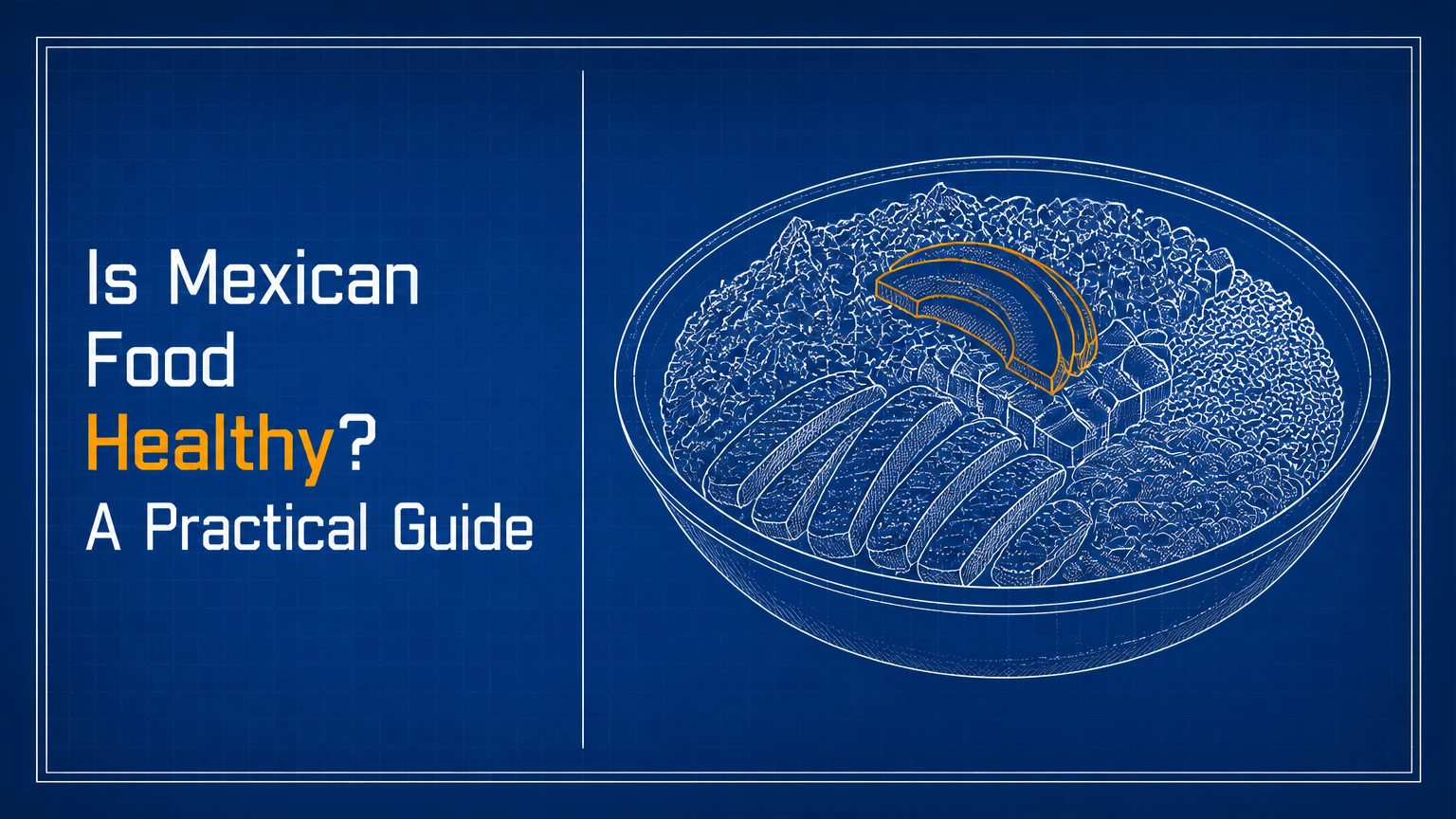
Mexican food can be healthy when meals emphasize beans, vegetables, corn tortillas, fresh salsa, and grilled or simmered proteins. Mexican restaurant food becomes less healthful when large portions, fried shells, chips, cheese, creamy toppings, refined flour, and salty sauces dominate the plate. Preparation and portion size matter more than the cuisine’s name.
Key Facts at a Glance
- Traditional Mexican cuisine commonly combines legumes, corn, vegetables, chiles, herbs, fruit, and modest amounts of animal protein.
- One cup of cooked black beans provides about 15 grams of protein and 15 grams of fiber, according to USDA FoodData Central values.
- A six-inch corn tortilla typically contains about 50-65 calories, while a large flour burrito tortilla commonly contains 200-350 calories.
- Restaurant Mexican meals can exceed 1,500 milligrams of sodium before chips, salsa, or additional toppings are counted.
- Grilled fish tacos, bean-based soups, nopales, and vegetable fajitas are usually easier to balance than fried combination platters.
- Ceviche can be lean and protein-rich, but lime juice does not reliably eliminate all foodborne pathogens from raw seafood.
What Makes Mexican Food Healthy or Unhealthy?
Mexican food is healthiest when the meal’s base is beans, vegetables, corn, or minimally processed protein, with oil, cheese, and salty sauces used in controlled amounts. The same cuisine can become calorie-dense when a meal combines a large flour tortilla, rice, beans, cheese, sour cream, guacamole, chips, and a fried filling.
Traditional Mexican cuisine includes wide regional variation. A coastal seafood dish, a bean stew from central Mexico, and a vegetable-heavy meal based on squash or cactus do not have identical nutrition profiles. “Authentic” is also not a nutrition guarantee, because traditional recipes can contain substantial sodium, added fat, or large portions.
Michael Pollan summarizes a useful eating rule in In Defense of Food (2008): “Eat food. Not too much. Mostly plants.” That principle fits many Mexican meals, especially when beans, vegetables, whole corn products, and fresh toppings occupy most of the plate.
The core ingredients and their roles
| Ingredient | Typical serving | Main nutritional contribution |
|---|---|---|
| Cooked black beans | 1 cup, 172 g | About 15 g protein and 15 g fiber |
| Corn tortilla | 1 small, 25-30 g | About 50-65 calories and 10-14 g carbohydrate |
| Avocado | 1/4 fruit, about 50 g | About 80 calories and 7 g mostly unsaturated fat |
| Nopales | 1 cup cooked, about 150 g | About 3 g fiber, modest calories, and potassium |
| Tomato salsa | 1/2 cup, about 120 g | About 20-40 calories, vitamin C, and lycopene |
Beans add fiber and plant protein. Corn tortillas provide a portion-controlled starch, particularly when they are small rather than oversized. Salsa, tomatoes, onions, chiles, cilantro, and lime add flavor with fewer calories than creamy dressings.
The main limitation is that restaurant portions often combine several nutritious ingredients in amounts that exceed a single meal’s energy needs. A burrito can contain beans, vegetables, and lean chicken while still exceeding 900 calories because the tortilla, rice, cheese, oil, and sauces accumulate.
How Does Mexican Food Provide Protein, Fiber, and Micronutrients?
Mexican food provides protein through beans, lentils, eggs, chicken, seafood, and leaner cuts of meat, while fiber comes mainly from legumes, vegetables, fruit, corn, and whole grains. Protein quality improves when people eat varied plant foods across the day, although rice and beans do not need to be consumed in the same bite to create a usable protein supply.
Corn used for tortillas is commonly treated through nixtamalization, a process involving an alkaline solution such as limewater. Nixtamalization improves dough properties and increases the bioavailability of niacin, while calcium content may rise when lime is used, although the exact effect varies by processing method.
Beans supply lysine, an amino acid that is relatively limited in many grains. Corn and rice contribute different amino acid patterns. The practical point is variety, not a need to calculate “complete” proteins at every meal.
Fiber, digestion, and blood sugar
A cup of cooked pinto beans contains roughly 15 grams of fiber, while a small corn tortilla contributes only a few grams. Beans therefore have a larger effect on fiber intake than tortillas alone.
Legume fiber includes fermentable carbohydrate that gut bacteria can metabolize into short-chain fatty acids. However, claims that every corn tortilla reliably produces a specific amount of butyrate go beyond what ordinary meal data can establish. Individual gut microbiomes, cooking methods, and total dietary patterns change the result.
For blood sugar management, beans and vegetables slow a meal’s carbohydrate delivery more effectively than replacing a corn tortilla with a large flour tortilla while keeping the same rice and sweetened drink. Portion size still matters.
Fat can help, but portions remain relevant
Avocado contains mostly unsaturated fat and can help the body absorb fat-soluble compounds from vegetables, including carotenoids in tomatoes and chiles. Avocado remains energy-dense at about 240 calories per medium fruit, so a quarter to one-half fruit is often a practical portion.
Cheese, sour cream, crema, and fried toppings can add saturated fat and calories quickly. Plain Greek yogurt can replace sour cream in home cooking, but restaurant yogurt substitutions are not always available.
Which Mexican Dishes Are Usually the Healthiest?
The healthiest Mexican dishes usually combine a lean protein or beans with vegetables, a controlled starch portion, and salsa rather than fried toppings or creamy sauces. The strongest choices are grilled fish or shrimp tacos, ceviche made with properly handled seafood, bean soup, vegetable fajitas, nopales, and small soft tacos with fresh garnishes.
| Dish | Typical restaurant calories | Protein range | Main qualification |
|---|---|---|---|
| Grilled fish tacos, 2 small | 350-650 | 25-40 g | Calories rise with creamy sauce and fried fish |
| Chicken fajitas, without tortillas | 400-700 | 30-45 g | Oil, cheese, rice, and guacamole change the total |
| Black bean soup, 1.5 cups | 250-500 | 12-22 g | Sodium may exceed 1,000 mg |
| Shrimp ceviche, 1.5 cups | 250-500 | 25-40 g | Raw seafood handling determines safety |
| Nopales with beans, 1 plate | 300-600 | 12-25 g | Added oil, cheese, and tortillas affect energy |
| Soft chicken tacos, 3 small | 450-750 | 25-40 g | Choose grilled filling and control cheese |
Is ceviche healthy?
Ceviche is often a lean, high-protein choice because seafood is marinated with lime, mixed with onion, tomato, chile, and herbs, and served without a large fried wrapper. Fish such as salmon or certain oily species can provide omega-3 fats, but lean white fish contributes much less than oily fish.
Lime juice changes the texture and acidity of raw seafood. It does not guarantee pathogen elimination, so pregnant people, older adults, young children, and people with weakened immune systems should follow medical and public-health guidance about raw seafood.
Are tacos healthy?
Soft tacos can be healthy when they use small corn tortillas, grilled or simmered filling, beans or vegetables, and fresh salsa. Three small tacos may fit a balanced meal more easily than one oversized burrito because the tortilla portion is visible and toppings are easier to control.
Hard shells are fried and can add substantial fat. Tacos become less balanced when each one includes heavy cheese, sour cream, creamy sauce, and a second starch such as rice.
Are fajitas and bean soup good choices?
Chicken or shrimp fajitas are practical choices because peppers and onions add volume while grilled protein supplies 25-45 grams of protein in a typical restaurant portion. Ask for oil, cheese, tortillas, and guacamole separately when the meal arrives with several sides.
Black bean soup provides fiber and plant protein, but restaurant soup can be salty. Pairing a smaller bowl with a vegetable side is usually more balanced than adding chips, a large rice portion, and a cheese-covered entrée.
How Many Calories and Nutrients Are in Common Mexican Meals?
Mexican restaurant meals commonly range from 400 to more than 1,500 calories, depending on tortilla size, frying, added cheese, oils, sides, and beverages. A simple bean-and-vegetable plate may stay below 600 calories, while a large burrito with rice, beans, cheese, sour cream, guacamole, and meat can exceed 1,000 calories.
| Meal or component | Typical calories | Protein | Fiber |
|---|---|---|---|
| Small corn tortilla | 50-65 | 1-2 g | 1-2 g |
| Large flour tortilla | 200-350 | 5-10 g | 1-5 g |
| 1 cup cooked beans | 220-250 | 14-16 g | 13-16 g |
| 1 cup cooked rice | 200-250 | 4-5 g | 1-4 g |
| 3 oz grilled chicken | 130-190 | 25- thirty-one g | 0 g |
| 1 oz shredded cheese | 100-120 | 6-7 g | 0 g |
| 1/2 cup guacamole | 180-240 | 2-4 g | 5-7 g |
The table uses typical ranges rather than menu guarantees. Restaurant recipes differ in oil, serving weight, salt, and preparation technique.
A fully loaded burrito is often the least transparent format because the tortilla encloses several ingredients. A bowl makes the rice, beans, protein, and toppings visible, but removing the tortilla does not automatically make the meal low-calorie if the bowl contains oversized portions of rice, cheese, and guacamole.
Is Mexican food high in sodium?
Mexican restaurant food can be high in sodium because kitchens may use salted beans, seasoned meats, packaged broths, cheese, tortillas, sauces, and chips. The American Heart Association recommends no more than 2,300 milligrams of sodium daily for most adults, with an ideal limit of 1,500 milligrams for many adults, particularly those with high blood pressure.
A single entrée can approach or exceed half of the 2,300-milligram daily limit. Sodium may also cause short-term water retention and scale-weight increases, which do not represent immediate fat gain.
How Does Mexican Food Compare With Tex-Mex?
Mexican cuisine and Tex-Mex overlap, but they are not interchangeable, and neither category has a fixed health rating. Traditional regional Mexican meals often use small corn tortillas, beans, vegetables, herbs, and simmered or grilled preparations, whereas many Americanized Tex-Mex meals emphasize large flour tortillas, melted cheese, fried shells, salty sauces, and combination platters.
| Feature | Traditional Mexican pattern | Common Tex-Mex pattern |
|---|---|---|
| Main tortilla | 25-30 g corn tortilla | 70-110 g flour tortilla |
| Typical starch combination | Tortilla with beans or vegetables | Large tortilla plus rice and beans |
| Common topping | Salsa, onion, cilantro | Cheese, sour cream, queso-style sauce |
| Frequent cooking method | Grilling, steaming, simmering | Frying, griddling with oil, baking with cheese |
| Sodium source | Broth, salted beans, cheese | Seasoned fillings, cheese sauces, chips |
| Portion structure | Several small components | One large entrée with sides |
Tex-Mex can still be a balanced choice when a diner selects grilled protein, beans, vegetables, salsa, and a modest tortilla portion. Mexican cuisine can also be heavy when dishes are fried or cheese-rich. Cooking method and serving size are more useful decision criteria than labels such as “authentic” or “Americanized.”
How Should You Order Healthy Mexican Food?
Order healthy Mexican food by controlling the meal’s four adjustable variables: fried components, starch quantity, added fats, and sodium. A reliable sequence is to choose protein or beans first, add vegetables, select one main starch, request sauces separately, and skip or limit the automatic chip basket.
- Choose grilled, roasted, steamed, or simmered food. Select fish, shrimp, chicken, beans, lentils, vegetables, or nopales instead of fried fillings.
- Pick one primary starch. Choose two or three small corn tortillas, a half portion of rice, or beans as the main carbohydrate instead of combining a large tortilla, rice, and chips.
- Add high-volume vegetables. Request peppers, onions, lettuce, tomatoes, cabbage, nopales, or pico de gallo.
- Measure rich toppings by portion. Use one to two tablespoons of sour cream, queso, or creamy sauce, or choose a quarter avocado rather than adding every topping.
- Control the starter. Ask for a small plate of chips, approximately 15 chips, or decline the basket. Salsa itself is usually low in calories, but chips are easy to eat without noticing.
- Choose water or an unsweetened drink. A 12-ounce sugar-sweetened beverage can add roughly 140-170 calories without fiber or meaningful satiety.
A useful order is grilled chicken or fish, three small corn tortillas, beans, cabbage or vegetables, salsa, and water. For a lower-sodium meal, ask whether beans and sauces are salted during cooking, because requesting “less salt” at the table may not change a pre-seasoned recipe.
What are the most common ordering mistakes?
| Mistake | Typical consequence | Better correction |
|---|---|---|
| Eating unlimited chips | 300-700 calories before the entrée | Request a small portion or remove the basket |
| Choosing a taco salad shell | 200-500 extra fried calories | Order the salad without the shell |
| Combining rice, beans, tortilla, and chips | 500-900 calories from starches | Keep beans and choose one other starch |
| Adding cheese, sour cream, and guacamole | 250-500 additional calories | Choose one rich topping |
| Ordering a fried entrée with creamy sauce | Higher fat and calorie density | Choose grilled filling and salsa |
| Drinking a sweet beverage | 140-300 liquid calories | Select water or unsweetened tea |
The “salad” label can mislead. A fried shell, cheese, seasoned meat, creamy dressing, and chips can make a taco salad more energy-dense than soft tacos with salsa.
Which Mexican Foods Fit Different Health Goals?
Mexican food can support weight loss, muscle gain, heart health, and blood sugar management when the plate is adjusted for each goal. No dish has a special metabolic effect, so the relevant variables are total energy, protein, fiber, sodium, saturated fat, and carbohydrate portion.
| Goal | Stronger choices | Limit or modify | Practical target |
|---|---|---|---|
| Weight loss | Ceviche, broth-based bean soup, grilled tacos | Fried shells, chips, sweet drinks | 400-700 calories for a typical entrée |
| Muscle gain | Chicken fajitas, lean steak, shrimp, bean bowls | Tiny protein portions, cheese-heavy extras | 25-40 g protein per meal |
| Heart health | Beans, fish, avocado, vegetables, corn tortillas | Large cheese and creamy sauces | Keep saturated fat modest |
| Blood sugar control | Beans, nopales, vegetables, lean protein | Large rice portions, sweet drinks | Start with 1/2-1 cup beans or rice |
| Lower sodium | Fresh salsa, unsalted vegetables, plain grilled protein | Broths, chips, queso, salted sauces | Ask for sauces and seasoning separately |
For weight loss
Choose grilled seafood tacos, chicken fajitas with vegetables, bean soup, or a bowl with extra vegetables and half rice. Keep guacamole to a measured serving and use salsa for acidity and heat.
Weight loss depends on the full day’s energy intake, not whether a meal contains corn or chiles. A nutritious burrito can still slow weight loss if its size and toppings create a large calorie surplus.
For muscle building
Choose a meal with approximately 25-40 grams of protein, such as chicken fajitas, shrimp, grilled fish, lean beef, or a bean-and-protein bowl. Add rice, tortillas, or beans according to training demands and total calorie needs.
Doubling protein is not always necessary. A large serving of meat plus cheese may add calories and saturated fat without improving a meal that already meets its protein target.
For heart health and diabetes
Beans, vegetables, fish, avocado, and small corn tortillas fit heart-conscious eating patterns better than frequent fried dishes with processed meats and heavy cheese. For diabetes, combine carbohydrate foods with protein, fiber, and non-starchy vegetables, then monitor personal glucose responses.
The American Diabetes Association emphasizes individualized carbohydrate management rather than a universal ban on tortillas or rice. A person’s medication, activity, and glucose pattern determine whether a given portion works.
Can Vegetarians, Gluten-Free Diners, and Sensitive Stomachs Eat Mexican Food?
Vegetarian and gluten-free diners can find balanced Mexican meals by verifying ingredients rather than assuming every bean, tortilla, or sauce is suitable. Sensitive stomachs may need smaller portions of beans, less chile, and careful attention to onion, garlic, frying oil, and dairy.
| Situation | Usually suitable | Verify before ordering |
|---|---|---|
| Vegetarian | Beans, nopales, vegetable fajitas, egg dishes | Cooking fat, broth, cheese, and shared grill |
| Vegan | Beans, vegetables, salsa, guacamole, corn tortillas | Lard or dairy in beans, rice, sauces, and tortillas |
| Gluten-free | Corn tortillas, beans, rice, ceviche, grilled protein | Cross-contact and flour added to sauces |
| Lactose-sensitive | Salsa, beans, rice, meat, avocado | Cheese, crema, queso, and hidden dairy |
| Sensitive digestion | Small bean portions, cooked vegetables, mild salsa | Large chile portions, raw onion, heavy frying |
Corn tortillas are naturally gluten-free, but cross-contact can occur on shared equipment. Beans may contain added animal fat or broth, and rice may be cooked with seasoning mixes. Ask specific questions.
Beans can cause gas because fermentable carbohydrates reach the colon. Rinsing canned beans, increasing portions gradually, and choosing well-cooked legumes can improve tolerance, but persistent pain or diarrhea warrants medical evaluation.
What Should You Cook at Home?
Home-cooked Mexican meals make sodium, oil, portion size, and ingredient quality easier to control. A balanced plate can contain one-half vegetables, one-quarter beans or lean protein, and one-quarter corn tortillas, rice, or another starch.
| Home dish | Servings | Typical cost per serving | Time |
|---|---|---|---|
| Bean and vegetable tacos | 4 | $1.50-$3.50 | 20-30 minutes |
| Chicken and pepper fajitas | 4 | $3-$6 | 25-35 minutes |
| Nopales with black beans | 4 | $1.50-$4 | 25-40 minutes |
| Fish ceviche, refrigerated | 4 | $4-$9 | 30-45 minutes |
| Tomato and lentil soup | 6 | $1.25-$3 | 35-50 minutes |
Use one to two teaspoons of oil per serving as a starting point, then build flavor with roasted chiles, cumin, oregano, garlic, lime, cilantro, and unsalted salsa. Rinse canned beans to reduce surface sodium, although rinsing does not remove all sodium from the beans.
A practical plate contains one-half to one cup of beans or lean protein, one to two cups of vegetables, and two or three small corn tortillas. Add a quarter avocado when the meal needs more fat or satiety, but do not treat guacamole as a calorie-free condiment.
What Are the Main Limitations and Safety Concerns?
Mexican food is not automatically healthy, and traditional preparation does not remove concerns about sodium, food safety, portion size, or saturated fat. Ceviche requires properly refrigerated seafood, fried foods remain energy-dense, and restaurant nutrition estimates can be inaccurate when recipes are not standardized.
Raw seafood is the main safety issue with ceviche. The Food and Drug Administration advises higher-risk groups to avoid raw or undercooked seafood, including preparations in which acid changes texture but does not guarantee pathogen control.
People with hypertension should pay special attention to salted beans, chips, cheese, sauces, and broths. People managing celiac disease need confirmation that corn tortillas, grills, fryers, and sauces avoid gluten cross-contact.
A second limitation is cultural oversimplification. Mexican cuisine includes regional dishes from Oaxaca, Yucatán, Veracruz, Puebla, the north, and many other areas. Calling all of it “healthy” or “unhealthy” hides the ingredient and preparation decisions that actually determine nutrition.
FAQ
Are corn tortillas healthier than flour tortillas?
Small corn tortillas usually contain fewer calories than large flour tortillas, often about 50-65 versus 200-350 calories each. Corn tortillas also provide a naturally gluten-free option. Flour tortillas can fit a balanced diet, but oversized versions make it easier to combine a large starch portion with rice, beans, cheese, and meat.
Is Mexican food good for weight loss?
Mexican food can support weight loss when meals emphasize beans, vegetables, grilled protein, salsa, and controlled portions of tortillas, rice, cheese, and avocado. Ceviche, bean soup, fajitas without excessive oil, and small soft tacos are practical choices. Weight loss still depends on total calorie intake over time.
What is the healthiest Mexican dish at a restaurant?
There is no universal single winner, but grilled fish tacos, shrimp ceviche, chicken fajitas with vegetables, and bean soup are usually among the easier dishes to balance. Choose fresh salsa, limit fried chips, request rich toppings separately, and verify seafood safety when ordering ceviche.
Are beans and rice a complete protein?
Beans and rice provide complementary amino acid patterns, but they do not need to be eaten together at one meal to support protein needs. Total daily protein, energy intake, and dietary variety matter more. People who avoid animal foods can also use lentils, tofu, eggs, seeds, and dairy where appropriate.
Can people with diabetes eat tacos?
People with diabetes can often include tacos by controlling tortilla quantity, choosing beans or lean protein, adding non-starchy vegetables, and avoiding sweet drinks. Glucose responses vary by person, medication, and portion. A diabetes care professional can help match carbohydrate portions to an individual treatment plan.
Does lime juice make ceviche safe?
Lime juice makes raw seafood firmer and more acidic, but it does not reliably destroy every pathogen or parasite. Use properly refrigerated seafood from a trustworthy source, follow local food-safety guidance, and avoid raw ceviche if a clinician has advised avoiding undercooked seafood.
The Bottom Line
Is Mexican food healthy? Mexican food can be a highly nutritious choice when beans, vegetables, corn tortillas, seafood, lean protein, and fresh salsa lead the meal. The largest disadvantages usually come from oversized restaurant portions, fried shells, chips, salty sauces, sweet drinks, and stacking several rich toppings together. Choose one starch, one main rich topping, a fiber-rich food, and a substantial vegetable portion for a balanced meal.