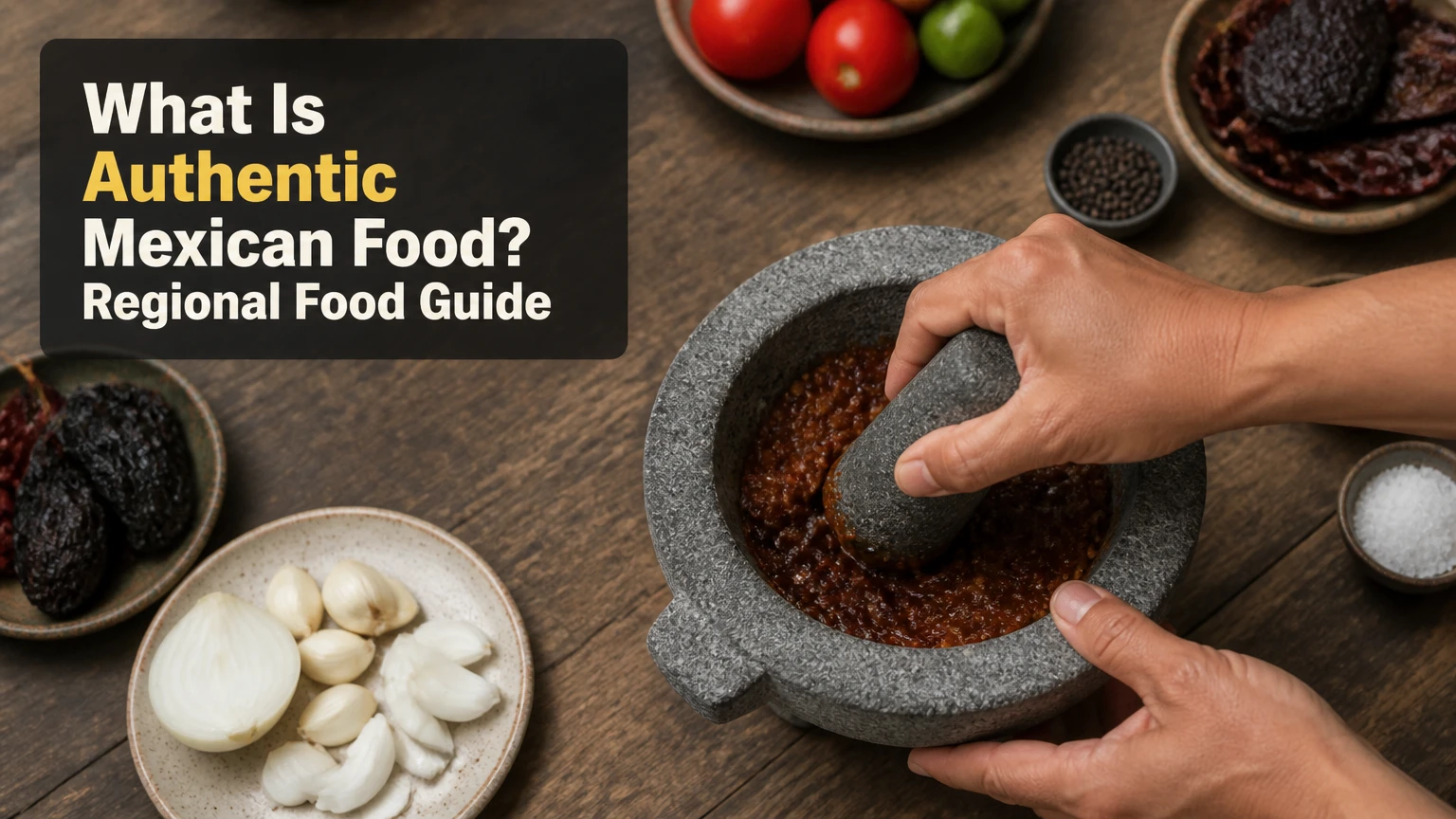
Authentic Mexican food is a living culinary tradition rooted in Indigenous Mesoamerican ingredients and techniques, then shaped by Spanish, African, Asian, Caribbean, and regional Mexican influences. Corn, beans, squash, chilies, herbs, masa, fresh produce, and layered cooking methods define the system more reliably than a single dish, spice level, or restaurant style.
Key Facts at a Glance
- Mexican cuisine combines Indigenous foodways with later regional and international influences.
- Nixtamalization turns dried corn into nutritious, workable masa for tortillas, tamales, and antojitos.
- Authentic Mexican food is not defined by extreme heat; chilies contribute fruit, smoke, acidity, color, and aroma.
- Mexico has major regional cuisines, including Oaxacan, Yucatecan, Pueblan, northern, coastal, and central Mexican traditions.
- The milpa system traditionally connects corn, beans, squash, chilies, herbs, and ecological knowledge.
- Tex-Mex is a related border cuisine with its own history, rather than a simple counterfeit version of Mexican food.
What Defines Authentic Mexican Food?
Authentic Mexican food is best understood as a regional culinary system, not a checklist of supposedly pure ingredients. A dish gains cultural credibility from its relationship to a place, community, technique, ingredient supply, and food tradition. A taco from Mexico City, a Yucatecan recado, and an Oaxacan mole can all be authentic while tasting entirely different.
UNESCO added traditional Mexican cuisine to its Representative List of the Intangible Cultural Heritage of Humanity in 2010. UNESCO describes it as “a comprehensive cultural model” involving farming, ritual practices, culinary techniques, and community customs. The recognition applies to a cultural system, not to every dish labeled Mexican.
Authenticity also changes over time. Tomatoes, cacao, chilies, corn, and beans have deep Indigenous histories, while ingredients such as wheat, rice, dairy, citrus, and many domesticated animals arrived or spread through later exchanges. Mexican cooks incorporated those ingredients into local traditions rather than freezing cuisine at a pre-contact snapshot.
Authenticity Depends on Context
A flour tortilla can be entirely traditional in northern Mexico, where wheat farming shaped regional cooking. A dish made outside Mexico can preserve a Mexican family or regional tradition, even when local ingredients require substitutions. Conversely, a restaurant in Mexico can serve highly industrial food with little connection to regional cooking.
The strongest test is not whether a dish looks rustic. Ask whose tradition it represents, where its ingredients come from, how the dish is prepared, and whether the menu identifies a specific region.
Which Ingredients Form the Foundation?
Corn, beans, squash, chilies, tomatoes, tomatillos, herbs, cacao, seeds, and local produce form the foundation of Mexican cooking. Animal proteins, dairy, wheat, rice, and imported spices add variety, but the ingredient structure remains strongly regional and plant-centered.
| Ingredient or group | Culinary role | Common examples | Typical preparations |
|---|---|---|---|
| Corn and masa | Dough, starch, aroma | White, yellow, blue, red corn | Tortillas, tamales, tlacoyos, atole |
| Beans | Protein, filling, puree | Black, pinto, flor de mayo | Refried beans, soups, antojitos |
| Chilies | Heat, color, fruit, smoke | Ancho, guajillo, pasilla, serrano | Salsas, adobos, moles |
| Squash family | Vegetable, seed, thickener | Squash, zucchini, pepitas | Stews, fillings, pipián |
| Tomatoes and tomatillos | Acidity and body | Red tomato, green tomatillo | Salsas, broths, guisados |
| Herbs and aromatics | Fragrance and balance | Epazote, hoja santa, cilantro | Beans, tamales, sauces |
| Cacao and seeds | Bitterness, richness, texture | Cacao, sesame, pumpkin seeds | Moles, drinks, pipián |
How Does the Milpa Shape Mexican Food?
The milpa is an agricultural system that commonly grows corn, beans, and squash together, with chilies and other plants added according to local conditions. Corn provides a climbing structure for beans, beans contribute nitrogen to the soil, and squash helps cover the ground, although actual milpa combinations vary by region and farmer.
The system matters culinarily because it links farming, nutrition, seasonality, and household cooking. A meal built from tortillas, beans, squash, salsa, and local herbs is not merely inexpensive; it reflects an agricultural relationship that has supported communities for centuries.
Mexico’s native corn diversity is often described as including roughly 60 or more recognized races or landrace groups, depending on the classification used. That diversity affects tortilla color, aroma, texture, yield, and regional identity.
Why Is Nixtamalization Important?
Nixtamalization cooks dried corn in an alkaline solution, traditionally with lime, then rests, washes, and grinds it into masa. The process loosens the hull, improves dough formation, increases calcium availability, and makes niacin more biologically available, which is why nixtamalized corn is central to tortillas and many masa foods.
The process is older than the modern Mexican nation and developed across Mesoamerica. Without nixtamalization, ground corn does not behave like traditional tortilla masa because the alkaline treatment changes the kernel’s structure and improves its binding properties.
How Is Masa Made From Dried Corn?
Traditional nixtamalization generally takes 12-24 hours from cooking through resting and grinding. Home cooks should use food-grade calcium hydroxide, commonly sold as cal for cooking, rather than agricultural or industrial lime.
- Rinse dried field corn and remove debris.
- Simmer the corn with water and a measured amount of food-grade lime, typically about 1% of the corn’s dry weight.
- Cook for approximately 20-30 minutes, stopping when the skin slips under light rubbing.
- Rest the corn in the alkaline liquid for 8-18 hours.
- Wash until loose hulls and excess lime are removed.
- Grind the softened kernels into masa, adding only enough water for a pliable dough.
A practical checkpoint is a kernel that breaks cleanly, has a softened outer layer, and retains a firm center. Overcooked corn produces sticky masa; underprocessed corn makes rough, fragile tortillas.
Masa harina is a legitimate shortcut when it is labeled for tortillas or tamales. The common mistake is claiming that Maseca is intended for flour tortillas. Maseca is a brand with several products, including corn masa harina and other flour products, so the package type matters. Fresh masa usually has superior aroma and tenderness, but correctly hydrated masa harina can produce excellent home tortillas.
What Traditional Dishes Should You Know?
Traditional Mexican dishes include masa-based antojitos, regional stews, grilled foods, seafood, soups, filled vegetables, and complex sauces. The same category can change substantially between states because cooks use local corn, proteins, chilies, herbs, fats, and cooking vessels.
| Dish | Format | Key preparation | Common regional association |
|---|---|---|---|
| Tacos al pastor | Small tortilla and seasoned filling | Vertical spit roasting, onion, cilantro, lime | Central Mexico |
| Carnitas | Slow-cooked meat pieces | Gentle cooking in fat, then crisping | Michoacán |
| Barbacoa | Slow-cooked meat | Long cooking with chilies and aromatics | Hidalgo and central Mexico |
| Tamales | Filled masa parcel | Wrapped and steamed | Nationwide, with local styles |
| Tlacoyos | Oval stuffed masa cake | Griddled, often topped with beans or cactus | Central Mexico |
| Sopes | Thick masa base | Cooked on a comal, topped after shaping | Central and southern Mexico |
| Tlayuda | Large toasted tortilla | Bean spread, local cheese, vegetables, or meat | Oaxaca |
| Mole negro | Thick chile-based sauce | Toasting, grinding, frying, and long simmering | Oaxaca |
| Chiles en nogada | Stuffed pepper | Fruit and savory filling, nut sauce, pomegranate | Puebla |
| Cochinita pibil | Marinated slow-cooked meat | Achiote, bitter orange, banana leaves | Yucatán |
Toppings are often simpler than diners expect. Cilantro, onion, lime, salsa, radish, avocado, or pickled vegetables can complete a dish without burying the principal filling.
How Do Mexican Regions Differ?
Mexican regional cuisine differs through climate, Indigenous communities, agricultural products, migration, and historical trade. Northern cooking commonly features wheat tortillas and grilled beef, while southern and southeastern cuisines use banana leaves, achiote, tropical acids, seafood, and distinctive Indigenous techniques.
| Region | Signature ingredients | Representative dishes | Defining cooking trait |
|---|---|---|---|
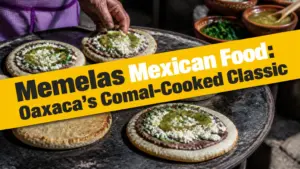
| Oaxaca | Hoja santa, cacao, quesillo, local chilies | Mole negro, tlayudas, memelas | Toasted ingredients and complex sauces |
| Puebla | Walnuts, pomegranate, dried chilies | Mole poblano, chiles en nogada | Festive sauces and filled dishes |
| Yucatán | Achiote, bitter orange, habanero | Cochinita pibil, sopa de lima | Recados, citrus, and underground-style cooking |
| Northern Mexico | Wheat, beef, flour tortillas | Carne asada, machaca, cabrito | Grilling, flour tortillas, dried meats |
| Veracruz | Seafood, tomatoes, olives, capers | Veracruz-style fish, arroz a la tumbada | Gulf and Spanish-Caribbean influences |
| Jalisco | Dried chilies, masa, goat meat | Birria, torta ahogada | Brothy braises and chile sauces |
| Michoacán | Corn, beans, local herbs | Carnitas, uchepos, corundas | Masa specialties and slow cooking |
| Baja California | Pacific seafood, flour tortillas | Fish tacos, aguachile variations | Coastal produce and seafood |
Regional labels offer more useful information than the word “authentic” alone. “Oaxacan” signals a different ingredient network from “Yucatecan,” and a restaurant that names its state or city often gives diners a clearer cultural reference point.
Is Mexican Food Always Spicy?
Mexican food is not always spicy, because cooks use chilies for flavor, color, acidity, smoke, and aroma as well as heat. A salsa may contain a hot pepper in a small quantity, while a chile ancho, pasilla, or guajillo sauce can deliver depth with moderate heat.
Heat depends on pepper variety, ripeness, growing conditions, preparation, and amount. Removing seeds may reduce some texture and loosened capsaicin, but the highest concentration of capsaicin is generally associated with the inner membranes, not the seeds alone.
How Can Diners Choose Mild Dishes?
Choose grilled corn foods, bean-based antojitos, quesillo, squash dishes, mild moles, or sauces served separately when heat tolerance is low. Ask whether a salsa is smoky, fruity, acidic, or hot, because “spicy” can describe several different sensations.
A useful restaurant question is: “¿Pica mucho?” This asks whether the dish is very hot. Diners can also request salsa on the side, which preserves the dish’s flavor while allowing controlled heat.
Is Authentic Mexican Food Healthy?
Authentic Mexican food can support a nutritious diet because beans, corn, squash, tomatoes, chilies, herbs, and fresh produce provide fiber, minerals, complex carbohydrates, and varied plant compounds. Health depends on portion size, preparation method, added salt, frying, sugary beverages, and the balance of the full meal.
Nixtamalized corn contributes calcium from the alkaline treatment and improves niacin availability, but a tortilla is not automatically a complete meal. Beans complement masa nutritionally, while vegetables, seeds, seafood, and moderate amounts of animal protein broaden the meal’s nutrients.
| Dietary need | Suitable traditional choices | Ask or verify | Main caution |
|---|---|---|---|
| Vegetarian | Bean tlacoyos, enfrijoladas, squash, nopales | Check broth, lard, and fillings | Refried beans may use animal fat |
| Vegan | Salsas, beans, nopales, guacamole, corn tortillas | Confirm cheese, cream, and cooking fat | Tamales may contain animal fat |
| Gluten-free | Corn tortillas, tamales, tacos, pozole | Verify shared fryers and wheat sauces | Flour tortillas contain wheat |
| Lower-heat | Bean dishes, grilled vegetables, mild salsa | Request sauce separately | “Mild” varies by restaurant |
| Higher-fiber | Beans, whole corn masa, vegetables | Ask about portion and preparation | Fried toppings increase energy density |
| Dairy-free | Tacos, salsas, beans, many stews | Confirm cream and cheese | Some sauces contain dairy |
How Does Tex-Mex Compare With Mexican Food?
Tex-Mex is a legitimate regional cuisine from the Texas-Mexico borderlands, while Mexican food refers to many cuisines within Mexico. The two overlap in ingredients and history, but Tex-Mex commonly emphasizes flour tortillas, seasoned ground meat, melted yellow cheese, chili gravy, and combination plates in ways that are not representative of every Mexican region.
| Feature | Mexican regional cooking | Tex-Mex cooking | Practical distinction |
|---|---|---|---|
| Tortilla | Corn or regional wheat | Flour and crisp fried shells | Northern Mexico also uses wheat |
| Cheese | Quesillo, cotija, panela, fresco | Yellow cheese and Monterey Jack | Cheese varies by dish and location |
| Seasoning | Whole chilies, herbs, seeds, acids | Chili powder, cumin, oregano | Blends can overlap |
| Common format | Tacos, tamales, moles, antojitos | Enchilada plates, nachos, combo meals | Restaurant formats differ |
| Beans | Whole, stewed, mashed, regional | Refried or chili-seasoned | Both traditions use beans |
| Culinary history | Indigenous and regional Mexican roots | Borderland Mexican-American development | Neither category requires erasing the other |
The overview’s contrast between Mexican cuisine and Tex-Mex is directionally useful but too rigid. Wheat flour, cumin, processed cheese, and sour cream do not automatically make food inauthentic, and corn tortillas do not guarantee quality. Context and preparation matter more than a single ingredient.
How Can You Recognize a Serious Mexican Restaurant?
A serious Mexican restaurant usually identifies a region, prepares salsas and masa with care, explains unfamiliar dishes, and offers a menu structure that extends beyond generic combination plates. No single visual cue proves authenticity, but several operational signals provide useful evidence.
Look for:
- Regional names such as Oaxacan, Yucatecan, Veracruz-style, or Michoacán.
- Corn tortillas that smell toasted and flex without cracking.
- Salsas with distinct roasted, fresh, smoky, or acidic profiles.
- Masa dishes made to order or served within a short holding window.
- Menus that explain ingredients such as hoja santa, huitlacoche, achiote, or epazote.
- Seasonal specials rather than an identical menu across every location.
- Staff who can identify a dish’s region and major allergens.
- A balance of simple foods and labor-intensive preparations.
A small menu is not automatically better. A broad menu can represent a family restaurant, while a narrow menu can be highly specialized or merely limited by supply.
How Much Does Authentic Mexican Food Cost?
Typical street tacos in Mexico cost about 15-45 Mexican pesos each, while a mid-range traditional restaurant meal commonly costs about 250-600 pesos per person before premium drinks or tasting menus. Prices vary by city, protein, rent, tourism, imported ingredients, labor, and whether the food is served in a market, fonda, or destination restaurant.
| Eating context | Typical price in Mexico | Typical preparation time | What usually affects price |
|---|---|---|---|
| Market taco | 15-45 MXN each | 2-8 minutes service | Filling, city, location |
| Simple antojito plate | 80-180 MXN | 10-25 minutes | Masa work and toppings |
| Fonda lunch menu | 100-220 MXN | 20-40 minutes | Soup, entrée, side, dessert |
| Mid-range dinner | 250-600 MXN per person | 30-90 minutes | Regional sauce and service |
| Mole specialty | 180-450 MXN per serving | 6-24 hours preparation | Toasting, grinding, reduction |
| Tasting menu | 900-2,500 MXN per person | 1.5-3 hours | Courses, labor, location |
These are typical planning ranges, not fixed national prices. Mexico City, Oaxaca City, Mérida, coastal resorts, and small inland towns can differ substantially.
What Are the Best Beginner Cooking Projects?
A beginner should start with a roasted salsa, fresh corn tortillas from masa harina, or bean-based antojitos because each teaches one technique without requiring a full day of preparation. A simple salsa verde takes roughly 15-25 minutes, while a complex mole can require 6-24 hours of staged preparation.
For salsa verde, roast or simmer tomatillos, blend them with a modest amount of chile, garlic, onion, cilantro, and salt, then adjust acidity. For tortillas, hydrate masa harina until it resembles soft modeling clay, rest it for 15-30 minutes, press thinly, and cook on a hot comal until brown spots and light puffing appear.
The most useful progression is:
- Salsa verde, to learn acidity and heat balance.
- Bean enfrijoladas, to learn sauce texture and tortilla handling.
- Fresh tortillas, to learn hydration and comal temperature.
- Carnitas or another slow braise, to learn tenderness and crisping.
- Mole or pipián, only after learning controlled toasting and blending.
Fresh masa is worth seeking for tamales and delicate tortillas, but masa harina is often more practical for a first attempt. Beginners should prioritize hydration, heat control, and salt before buying rare ingredients.
What Common Mistakes Ruin Mexican Dishes?
The most common failures involve incorrect masa hydration, burned chilies, watery salsa, excessive cumin, and treating every Mexican dish as interchangeable. Recovery usually requires changing the technique rather than adding more seasoning.
| Mistake | Result | Recovery | Prevention |
|---|---|---|---|
| Dry masa | Cracked tortillas | Add water gradually and rest dough | Cover masa while working |
| Wet masa | Sticky, shapeless tortillas | Mix in small amounts of masa harina | Add liquid slowly |
| Burned dried chilies | Harsh bitterness | Replace them; dilution rarely works | Toast briefly over moderate heat |
| Raw blended salsa | Flat, grassy flavor | Roast selected ingredients or simmer salsa | Build char and acidity |
| Too much cumin | One-note seasoning | Add stock, tomato, or more base ingredients | Use cumin selectively |
| Long chili soaking | Dull flavor | Toast first, then soak briefly | Keep the soaking liquid only when clean |
One practitioner rule is that dried chilies should smell fruity, woody, or smoky after toasting, never acrid. Another is that a tortilla press cannot correct badly hydrated masa. Equipment reveals technique; it does not replace it.
What Are the Limits of the Word Authentic?
“Authentic” cannot prove that a dish is historically unchanged, morally superior, or better tasting. The term can also erase Indigenous, Afro-Mexican, regional, diasporic, and contemporary cooks when people use it to demand a single frozen version of Mexican cuisine.
A responsible description names the reference point: “traditional Yucatecan,” “Oaxacan-style,” “Mexican-American border cuisine,” or “family recipe from Puebla.” That wording gives diners useful context without pretending that one household, state, or generation owns the entire cuisine.
Mexican food outside Mexico may adapt to local produce, dietary rules, cost, and regulations. A substitution becomes misleading when a business presents a heavily altered dish as a specific regional classic without explanation, not merely because the substitution exists.
Frequently Asked Questions
Are burritos authentic Mexican food?
Burritos have roots in northern Mexican and borderland food traditions, but their size, fillings, and restaurant format vary widely. A simple flour tortilla filled with beans or meat can fit northern Mexican cooking, while oversized restaurant burritos with rice, cheese, and many fillings often belong to Mexican-American or Tex-Mex restaurant culture.
What is the most authentic Mexican dish?
No single dish represents all Mexican cuisine. Tacos, tamales, mole, pozole, regional soups, antojitos, seafood, and vegetable preparations can all be traditional when connected to a particular place and method. Choosing a regional dish is more meaningful than selecting one national “most authentic” winner.
Can authentic Mexican food be made without animal products?
Yes. Beans, corn masa, squash, nopales, mushrooms, tomatoes, tomatillos, chilies, herbs, and seeds support many traditional or tradition-based meatless meals. Diners must verify cooking fat, broth, cheese, and cream because vegetarian-looking beans, tamales, and sauces may contain animal ingredients.
Does authentic Mexican food use hard taco shells?
Mexico has crisped and fried tortilla preparations, including tostadas and some regional antojitos, but the rigid folded shell common in many United States restaurants is not the default form of a Mexican taco. A crisp tortilla can be traditional; the filling, shape, and regional context determine the comparison.
Is Mexican food always made with corn tortillas?
No. Corn tortillas dominate many regions and dishes, but wheat flour tortillas are traditional in northern Mexico and parts of the borderlands. Tortilla choice follows local agriculture and dish type, so a flour tortilla is not automatically Tex-Mex or inauthentic.
What should someone order at a Mexican restaurant for the first time?
Order one simple masa item, one regional specialty, and a salsa served separately. Examples include tacos with a clearly identified filling, a tamal or tlacoyo, and a regional dish such as mole, birria, or cochinita pibil. Ask about heat, cooking fat, and the dish’s place of origin.
The Bottom Line
Authentic Mexican food is a diverse cultural and culinary system built from Indigenous Mesoamerican foundations, regional ecology, inherited techniques, and centuries of adaptation. Corn masa, nixtamalization, beans, squash, chilies, salsas, comal cooking, and regional knowledge provide stronger signals than heat level or restaurant stereotypes. The best way to understand what is authentic Mexican food is to identify the dish’s region, ingredients, technique, and cultural context before judging its appearance.