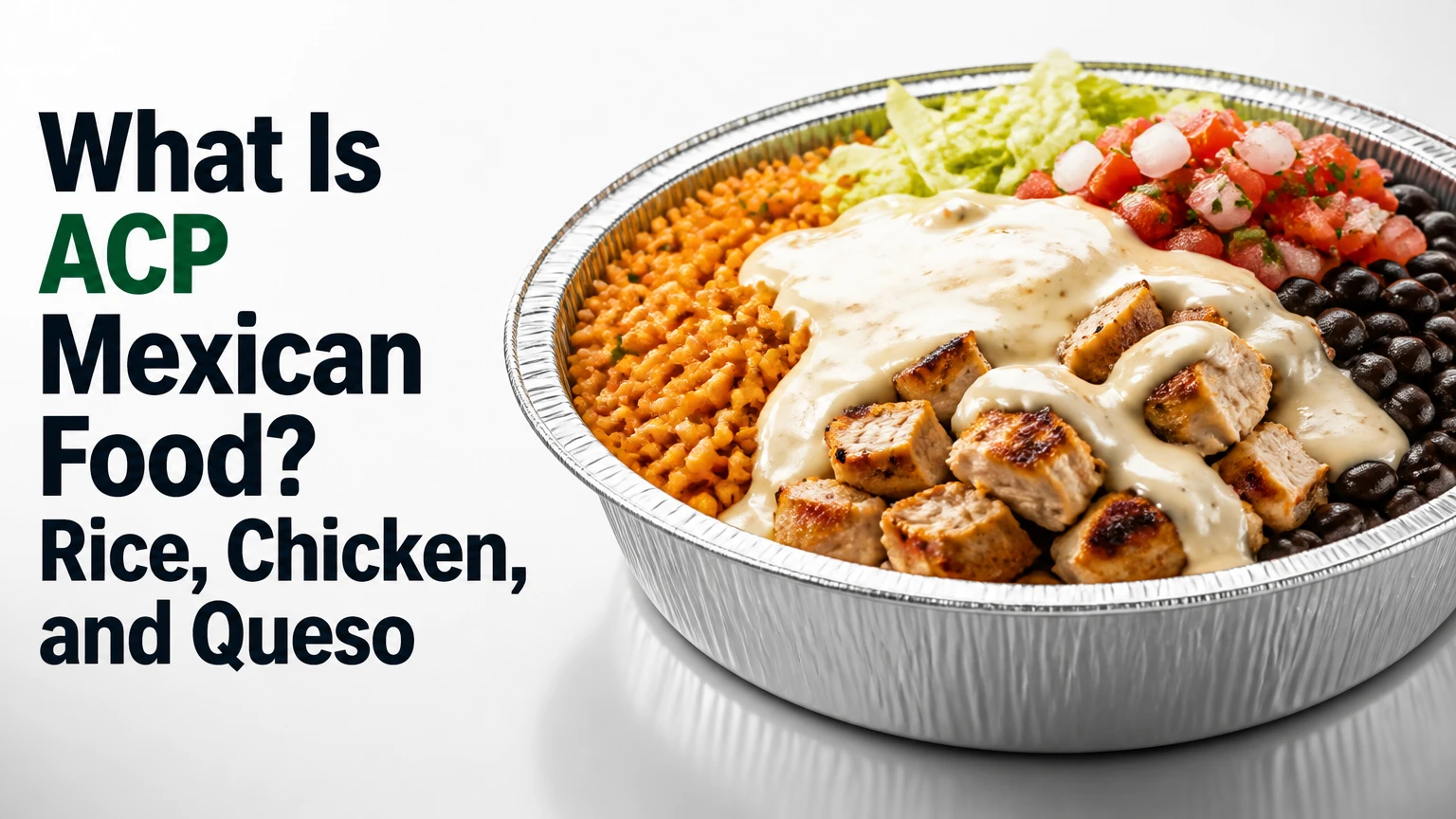
ACP Mexican food is a restaurant-style plate of seasoned Mexican rice, grilled chicken, and a generous pour of warm white queso. ACP usually means Arroz con Pollo, or “rice with chicken,” although the American restaurant version is assembled quickly from separate components rather than cooked as a traditional one-pot meal.
Key Facts About ACP
- ACP combines Mexican-style rice, grilled chicken, and smooth white queso on one plate.
- The dish usually takes about 10-15 minutes from order to service in a casual restaurant.
- Restaurant names and recipes vary, so ACP is a regional menu convention rather than a standardized national recipe.
- A typical full portion costs approximately $11-$16 before optional upgrades, depending on location and protein.
- Traditional arroz con pollo usually contains no queso and cooks chicken and rice together.
- Queso on the side gives diners more control over sodium, richness, and portion size.
What Is ACP Mexican Food?
ACP Mexican food is a Southern and Midwestern American Mexican-restaurant specialty built from three layers: tomato-seasoned rice, grilled chicken strips, and white cheese sauce. The chicken commonly receives fajita-style seasoning, while the queso may contain white American cheese, milk, cream, and pickled jalapeño.
The acronym comes from arroz con pollo, the Spanish name for rice with chicken. Restaurant ACP, however, is usually a composed plate. A kitchen cooks rice in batches, grills chicken to order or in short batches, and ladles queso over the top during final assembly.
The result is creamy, salty, savory, and filling. ACP does not represent one fixed recipe used by every Mexican restaurant. One menu may include sautéed onions and peppers, while another may offer plain rice, extra queso, or steak substitutions under a similar name.
Why Does ACP Have Different Meanings?
ACP has different meanings because independent restaurants use the acronym as a practical menu shorthand. In many parts of the American South, a customer who orders ACP expects rice, chicken, and queso, while a Spanish-speaking diner may reasonably expect traditional arroz con pollo.
NPR’s 2018 reporting, “What Did the South Do to Arroz con Pollo? It’s a Cheese-Covered Mystery,” documented the regional spread of cheese-covered arroz con pollo and the uncertainty surrounding a single origin story. The safest description is therefore regional restaurant terminology, not an ancient or universally recognized Mexican dish.
How Is ACP Assembled?
ACP is assembled by cooking each major component separately and combining the components immediately before service. A typical restaurant plates 8-14 ounces of rice, adds 4-7 ounces of grilled chicken, and pours approximately 4-8 ounces of queso over the center, although portions differ substantially.
The plate works because each layer contributes a different physical quality. Fluffy rice absorbs some cheese, seared chicken supplies browned flavor and protein, and warm queso creates a smooth coating that binds the plate together.
| Component | Typical ingredients | Typical restaurant amount | Main function |
|---|---|---|---|
| Mexican rice | Long-grain rice, tomato, onion, garlic, broth | 8-14 oz | Starchy base and mild seasoning |
| Grilled chicken | Breast or thigh, lime, garlic, cumin, chili seasoning | 4-7 oz | Seared protein and savory contrast |
| White queso | White American cheese, milk, cream, jalapeño | 4-8 oz | Creamy sauce and salt |
| Optional vegetables | Onion, bell pepper, mushroom, zucchini | 2-4 oz | Texture, sweetness, and color |
| Optional garnish | Pico de gallo, avocado, cilantro, jalapeño | 1-3 oz | Acidity, freshness, or heat |
What Does ACP Taste Like?
ACP tastes primarily creamy, salty, savory, and mildly tomato-seasoned, with charred chicken flavor underneath the queso. Heat ranges from nearly none to moderate, because restaurants may use plain queso, jalapeño queso, salsa, or fresh peppers.
The rice should remain identifiable beneath the sauce. Properly prepared rice has separate grains and enough surface dryness to absorb queso without becoming paste. Chicken should taste seasoned before the cheese is added, since mild meat can disappear under a thick sauce.
Acidic toppings improve the balance. Pico de gallo, lime, salsa verde, or pickled jalapeños cut through the richness more effectively than adding additional cheese or creamy toppings.
What Ingredients Are in ACP?
The core ingredients are rice, chicken, and queso blanco, while the seasoning and garnish depend on the restaurant. Mexican-style rice often begins with oil-toasted long-grain rice, tomato sauce or paste, onion, garlic, cumin, and broth.
Chicken may be sliced breast or thigh meat. Typical seasoning includes salt, black pepper, garlic, cumin, chili powder, paprika, and lime. Some kitchens use a prepared fajita blend, which can raise the sodium level substantially.
White queso is often a processed cheese sauce rather than melted blocks of traditional Mexican cheese. White American cheese is common because its emulsifying salts help produce a smooth sauce that stays fluid during service. Queso blanco recipes differ, so the color does not prove a specific cheese or regional formula.
Does ACP Always Contain White Queso?
ACP usually contains white queso, but the sauce is a restaurant convention rather than a universal requirement. Some menus use yellow cheese sauce, Monterey Jack-based queso, shredded cheese, or a smaller drizzle instead of the familiar white pour.
Ask the server whether the plate includes queso when a menu lists only “ACP” or “arroz con pollo.” The question matters because a traditional arroz con pollo entrée may contain rice and chicken without cheese, while an Americanized ACP plate commonly arrives heavily sauced.
How Long Does ACP Take and How Much Does It Cost?
A typical ACP order reaches the table in 10-15 minutes and costs about $11-$16, with location, restaurant type, portion size, and protein choice creating the largest differences. Shrimp or combination versions commonly add approximately $3-$5.
Restaurants can serve ACP quickly because rice and queso remain prepared in advance, while chicken cooks on a flat-top grill or plancha. A lunch plate may cost 15%-30% less than a dinner portion, but the actual size difference depends on the restaurant.
| Restaurant variable | Typical range | Effect on the plate | Ordering implication |
|---|---|---|---|
| Standard ACP price | $11-$16 | Chicken, rice, queso | Compare lunch and dinner menus |
| Shrimp upgrade | Plus $3-$5 | Adds seafood and shorter cooking margin | Ask whether shrimp is grilled or sautéed |
| Full queso amount | 4-8 oz | Adds richness and sodium | Request half portion or side queso |
| Service time | 10-15 minutes | Depends on grill queue | Longer waits occur during peak dinner |
| Lunch discount | 15%-30% | Often changes price more than ingredients | Check whether lunch includes full queso |
Prices change with inflation and local operating costs. A menu’s listed amount is more reliable than a national average, especially in cities where casual restaurant prices differ sharply from rural markets.
What Are the Main ACP Variations?
The main ACP variations replace the chicken, add grilled vegetables, or combine multiple proteins. Names such as ACF, ACC, ACP Texano, and ACP California appear on some menus, but they are not standardized labels across the restaurant industry.
| Menu variation | Protein or topping | Typical added ingredients | Typical price effect |
|---|---|---|---|
| ACP | Grilled chicken | Rice and white queso | Base price |
| ACF | Grilled steak | Rice, queso, skirt or flank steak | Plus $2-$4 |
| ACC | Grilled shrimp | Rice, queso, shrimp seasoning | Plus $3-$5 |
| ACP Texano | Chicken, steak, shrimp | Mixed grilled proteins and queso | Plus $4-$8 |
| ACP Especial | Chicken | Sautéed onion and bell pepper | Plus $1-$3 |
| ACP Vegetariano | Vegetables or beans | Pepper, onion, mushroom, zucchini | Similar or $1-$2 less |
| ACP California | Chicken | Avocado or guacamole | Plus $2-$4 |
| Spicy ACP | Chicken | Salsa, jalapeño, or hot sauce | Free to plus $1 |
A vegetarian plate may still contain dairy in the queso, so “vegetarian” does not mean vegan. Diners avoiding dairy need to ask whether the kitchen can omit the cheese and whether the rice or beans contain animal-derived ingredients.
Which ACP Variation Should You Order?
Chicken ACP is the most predictable choice because the dish’s standard format centers on grilled chicken. Steak suits diners who prefer a stronger seared flavor, shrimp cooks quickly but can become firm, and Texano versions provide variety at a higher price and greater portion size.
For balance, request grilled vegetables and pico de gallo. For portion control, order standard chicken ACP with queso on the side. For extra heat, use salsa or jalapeño separately so the acidity and spice remain distinct from the cheese sauce.
How Does ACP Compare With Traditional Arroz con Pollo?
ACP differs from traditional arroz con pollo in cooking method, cheese use, chicken format, and texture. Restaurant ACP usually assembles grilled boneless chicken over separately cooked rice and covers both with queso, while traditional arroz con pollo braises chicken and rice together in one seasoned pot.
| Feature | Restaurant ACP | Traditional arroz con pollo |
|---|---|---|
| Cooking method | Separate grilling, simmering, and saucing | One-pot braise or simmer |
| Chicken | Boneless strips or chopped pieces | Bone-in or boneless pieces, depending on country |
| Rice | Tomato-seasoned grains cooked separately | Rice absorbs broth and chicken juices together |
| Cheese | White queso commonly included | Cheese usually absent |
| Vegetables | Optional onion and pepper | Often peas, carrot, pepper, olives, or herbs |
| Texture | Distinct rice, seared meat, fluid sauce | Moist, integrated rice and braised meat |
| Service style | Casual restaurant plate | Home meal, family dish, or restaurant entrée |
| Typical eating time | About 10-15 minutes after ordering | Longer preparation, often 45-90 minutes |
Neither version is automatically more authentic in every context. Traditional arroz con pollo has many national and family variations, while ACP describes a specific American restaurant adaptation that prioritizes speed, rich queso, and component contrast.
Is ACP the Same as Arroz con Pollo?
ACP is related to arroz con pollo by name, but the two dishes are not the same preparation. ACP is the cheese-covered restaurant adaptation; traditional arroz con pollo is generally a rice-and-chicken dish cooked together with broth, seasonings, and regional vegetables.
Calling ACP “traditional Mexican arroz con pollo” creates confusion. The restaurant plate may be inspired by the name while following Tex-Mex or American casual-dining methods rather than a single Mexican culinary tradition.
Is ACP Healthy, High in Calories, or High in Sodium?
A full restaurant ACP plate is typically calorie-dense and high in sodium because it combines a large rice portion, cooking oil, seasoned chicken, and several ounces of queso. A reasonable restaurant estimate is about 900-1,500 calories and potentially more than 2,000 milligrams of sodium, but only the restaurant can provide an exact figure.
The estimate changes with queso quantity, rice volume, chicken cut, oil, and added vegetables. Queso contributes concentrated fat and sodium, while rice contributes most of the starch. Guacamole adds unsaturated fat and calories; pico de gallo adds flavor with relatively little energy.
| Ordering choice | Typical change | Likely benefit | Trade-off |
|---|---|---|---|
| Queso on the side | Removes uncontrolled 4-8 oz pour | Controls each bite and portion | Less integrated sauce |
| Half rice | Removes about 4-7 oz rice | Reduces starch and plate volume | Less food for mixing |
| Extra vegetables | Adds 2-4 oz produce | Increases texture and fiber | May add $1-$3 |
| Grilled chicken | Uses 4-7 oz lean protein | Keeps the standard format | Seasoning may remain salty |
| Pico de gallo | Adds 1-3 oz fresh topping | Adds acidity and freshness | Shorter shelf life |
| No queso | Removes dairy sauce | Reduces fat and sodium | ACP loses its defining feature |
People managing sodium, dairy intake, or calorie intake should ask for queso on the side, half rice, and fresh salsa. Those changes preserve the recognizable meal while making the portion easier to control.
How Do Restaurants Make ACP?
Restaurants make ACP by holding cooked rice and queso, grilling seasoned chicken, and plating the components in a fixed sequence. A practical workflow takes roughly 3-5 minutes of active chicken cooking and less than two minutes for final assembly once the components are ready.
- Cook the rice. Toast long-grain rice in oil, add tomato seasoning and broth, then simmer until the grains separate and the surface is relatively dry.
- Season the chicken. Coat thin chicken strips with salt, garlic, cumin, chili seasoning, and lime, allowing approximately 15-30 minutes for a short marinade.
- Heat the cooking surface. Use a hot plancha or skillet, commonly around 375-425°F, with enough oil to prevent sticking.
- Grill the chicken. Cook strips until browned and the thickest piece reaches 165°F, the safe minimum internal temperature identified by the USDA.
- Warm the queso. Keep the sauce fluid without boiling it, because excessive heat can damage texture or cause separation.
- Plate the rice. Spread approximately 8-14 ounces across a shallow plate or bowl.
- Add the chicken and queso. Place 4-7 ounces of chicken on the rice, then pour 4-8 ounces of queso over the center.
- Finish the dish. Add salsa, vegetables, avocado, cilantro, or tortillas according to the order.
A home cook should use a thermometer for chicken rather than relying on color. The USDA’s 165°F standard applies to poultry, including sliced breast and thigh meat.
What Makes Restaurant Queso Stay Smooth?
Restaurant queso stays smooth when cheese, liquid, heat, and emulsifying salts remain in balance. White American cheese is widely used because its formulation helps prevent the fat and water from separating during controlled heating.
Real cheddar or Monterey Jack can produce a grainy or oily sauce if melted directly at high heat. Sodium citrate can improve emulsification in a scratch recipe, but too much creates a processed flavor, so home cooks should follow a measured recipe rather than adding it casually.
What Are Common ACP Problems?
Common ACP problems include broken queso, wet rice, under-seasoned chicken, excessive salt, and rubbery shrimp. Each failure comes from a specific mismatch between heat, moisture, seasoning, or holding time, so the correction should target the cause rather than adding more toppings.
| Problem | Likely cause | Practical correction | Prevention |
|---|---|---|---|
| Oily or clumped queso | High heat or unsuitable cheese | Whisk in warm milk and lower heat | Use emulsified cheese sauce |
| Mushy rice | Excess broth or wet surface | Spread rice briefly to release steam | Measure liquid and avoid overcooking |
| Bland chicken | Mild seasoning under heavy queso | Add measured fajita seasoning | Season before grilling |
| Rubbery shrimp | Overcooking during holding | Cook shrimp last and serve immediately | Use short, high-heat cooking |
| Excessive salt | Salty queso plus seasoned rice | Request half queso and fresh salsa | Taste each component separately |
| Cold center | Large plate and delayed service | Warm plate and serve immediately | Assemble after all components finish |
A common practitioner rule is to taste rice and chicken separately before assembly. Queso should connect the components, not compensate for seasoning that was missing earlier.
How Should You Order ACP?
Order ACP with standard chicken, queso on the side, and an acidic fresh topping when you want the clearest view of the dish and greater control over richness. Ask whether the restaurant uses white queso, how large the rice portion is, and whether vegetables cost extra.
Useful ordering phrases include:
- “Can I get the chicken ACP with queso on the side?”
- “Please add grilled onions and peppers.”
- “Can I have pico de gallo or salsa verde?”
- “Is the rice cooked with any ingredients I should know about?”
- “Can the dish be made without dairy?”
A diner with a large appetite may prefer ACP Texano, while someone sharing food may find one full plate large enough for two lighter servings. Someone avoiding dairy should not assume that removing visible queso makes the entire plate dairy-free, because rice, beans, marinades, and grill practices vary.
Can You Reheat ACP?
ACP reheats best when rice, chicken, and queso are separated before storage. Refrigerate leftovers within two hours, use a sealed container, and consume them within 3-4 days under standard USDA leftover guidance.
Warm rice and chicken in a covered skillet with a small splash of water. Reheat queso gently in short intervals, stirring between intervals, because high microwave heat can make the sauce oily or grainy. Do not repeatedly cool and reheat the entire plate.
Can You Make ACP at Home?
You can make restaurant-style ACP at home in about 35-50 minutes, depending on whether the rice and queso are prepared from scratch. The most important success factor is controlling moisture: rice should be fluffy, chicken should be strongly seasoned, and queso should remain warm without boiling.
For four servings, use approximately 1.5 cups dry long-grain rice, 1.5 pounds chicken, and 16-24 ounces queso sauce. Cook the rice with tomato, onion, garlic, broth, and cumin. Grill sliced chicken in a hot skillet until it reaches 165°F, then divide the rice and chicken among plates before adding queso.
Home cooks should avoid pouring sauce over rice straight from a covered pot. Steam trapped in wet rice dilutes the queso and creates a soft, heavy texture. Resting the cooked rice uncovered for 5-10 minutes improves the final result.
Frequently Asked Questions
What does ACP stand for on a Mexican restaurant menu?
ACP usually stands for Arroz con Pollo, meaning rice with chicken. On many American Mexican restaurant menus, the acronym identifies a plate of Mexican-style rice, grilled chicken, and white queso. The abbreviation is regional, so the exact ingredients should be confirmed with the restaurant.
Is ACP spicy?
ACP is usually mild unless the restaurant adds hot salsa, jalapeños, or spicy seasoning. White queso may contain pickled jalapeño, but the heat level is often low. Request salsa on the side when you want adjustable heat rather than a uniformly spicy plate.
Does ACP contain gluten?
ACP may be naturally gluten-free in its basic form, but restaurant preparation can introduce gluten through seasoning blends, flour tortillas, shared grills, or thickened sauces. Diners with celiac disease or a serious allergy should ask about ingredients and cross-contact before ordering.
Is ACP suitable for meal prep?
ACP can work for meal prep for 3-4 refrigerated days if the rice, chicken, and queso are stored separately. Separate storage protects texture and makes reheating easier. Queso should be reheated gently, while chicken must reach a hot serving temperature without prolonged cooking.
What can you order instead of ACP?
Traditional arroz con pollo is the closest alternative when you want integrated rice and chicken without queso. Fajitas provide grilled meat and vegetables with more control over starch and sauce, while a burrito bowl can offer similar ingredients in adjustable portions.
The Bottom Line
ACP Mexican food is a regional American restaurant plate consisting of seasoned Mexican rice, grilled chicken, and warm white queso. Its name comes from arroz con pollo, but its separate cooking process, cheese sauce, and fast-casual assembly distinguish it from traditional one-pot versions.
Choose ACP for a rich, filling comfort meal that arrives quickly. Request queso on the side, half rice, and fresh salsa when you want better control over the dish’s typical 900-1,500 calorie range and potentially high sodium load. When ordering, remember that ACP recipes and menu names vary by restaurant.