Traditional Mexican food includes corn tortillas, tacos, tamales, chilaquiles, pozole, mole, enchiladas, quesadillas, sopes, tostadas, birria, and regional dishes such as cochinita pibil and tlayudas. Mexican cuisine combines Indigenous ingredients and techniques with ingredients introduced from Spain after the 16th century, producing distinct foods across Mexico’s regions.
Key Facts at a Glance
- Mexican cuisine was added to UNESCO’s Representative List of the Intangible Cultural Heritage of Humanity in 2010.
- Maize, beans, and chile peppers form the historic foundation of many Mexican food systems.
- The milpa traditionally grows maize with beans and squash, allowing the crops to support one another.
- Nixtamalization treats maize with an alkaline solution, creating nutritious, cohesive masa for tortillas and tamales.
- Traditional Mexican food varies by region, climate, Indigenous community, available ingredients, and cooking method.
- A market taco in Mexico commonly costs less than a restaurant tasting menu, but prices vary by city and neighborhood.
What Defines Traditional Mexican Food?
Traditional Mexican food is a regional culinary system rather than a fixed list of recipes. Its identity comes from linked ingredients, farming practices, grinding methods, cooking vessels, family knowledge, and communal occasions. A tortilla, for example, represents a chain that can include native maize, lime treatment, stone grinding, hand pressing, and comal cooking.
UNESCO describes traditional Mexican cuisine as “a comprehensive cultural model comprising farming, ritual practices, age-old skills, culinary techniques and ancestral community customs and manners.” The 2010 inscription recognized the cuisine’s living cultural practices, not one national dish.
Indigenous and Spanish Contributions
Indigenous cooks developed maize agriculture, nixtamalization, stone grinding, earthen ovens, comales, tamales, cacao preparations, and chile-based sauces long before European contact. Spain introduced ingredients including domesticated livestock, wheat, rice, dairy, onions, garlic, and many herbs and spices.
The result differs by region. Northern Mexico developed flour tortillas and grilled beef traditions in arid landscapes, while southeastern cooking uses achiote, sour orange, banana leaves, and tropical ingredients. Mexican food therefore cannot be judged by one restaurant style or one popular dish.
The Milpa and the Core Ingredient System
The milpa is a traditional intercropping system centered on maize, commonly grown with beans and squash. Maize provides a climbing structure for beans, beans contribute nitrogen to the soil, and squash leaves help shade the ground and retain moisture.
| Ingredient | Traditional role | Common preparation | Resulting foods |
|---|---|---|---|
| Maize | Staple grain and masa source | Nixtamalized, ground, dried | Tortillas, tamales, pozole |
| Beans | Protein, fiber, and crop partner | Simmered, mashed, refried | Frijoles de olla, enfrijoladas |
| Chile peppers | Heat, aroma, color, preservation | Fresh, dried, toasted | Salsas, adobos, moles |
| Squash | Vegetable, seed, and milpa crop | Roasted, stewed, toasted | Calabacitas, pepita sauces |
| Tomato | Acid, sweetness, and body | Raw, roasted, simmered | Salsa roja, soups, guisados |
| Tomatillo | Tart green fruit | Roasted or boiled | Salsa verde, enchiladas |
How Does Nixtamalization Create Masa?
Nixtamalization cooks maize in water containing culinary lime, or calcium hydroxide, then rests, rinses, and grinds the kernels into masa. The process loosens the hull, improves the availability of niacin, adds calcium, and changes the corn’s structure so it can form a cohesive dough without gluten.
A typical home process uses 1-2% culinary lime by the dry-maize weight. The corn usually simmers for 20-30 minutes and rests in the alkaline liquid for 8-16 hours, although the exact time depends on kernel variety, age, and desired texture.
Step-by-Step Tortilla Process
- Measure the maize and lime. Use 1 kilogram of dried field corn with approximately 10-20 grams of food-grade calcium hydroxide and enough water to cover the kernels by several centimeters.
- Simmer the kernels. Cook gently for 20-30 minutes. The outer skin should loosen when rubbed, while the center remains firm.
- Rest the cooked maize. Cover the pot and leave the kernels in the liquid for 8-16 hours at room temperature only when local food-safety practice permits; refrigerate if the room is warm.
- Rinse and rub. Remove loose skins and excess lime under clean running water. Do not remove every trace of the softened outer layer because it contributes flavor and color.
- Grind the kernels. Use a stone grinder, hand mill, or powerful wet-grain grinder until the dough feels smooth and cohesive.
- Adjust the masa. Knead in small amounts of water until the dough feels like soft modeling clay, without sticking heavily to the hands.
- Press and cook. Press 30-35 gram dough balls into thin rounds and cook on a comal at roughly 230-260°C for about 45-60 seconds per side.
A tortilla is ready when it develops brown flecks and may inflate during the final cooking stage. Dry, cracking edges indicate insufficient hydration or excessive pressing; a gummy center usually means the tortilla is too thick or the comal is too cool.
Masa Harina Versus Fresh Masa
Fresh masa gives the most immediate corn aroma and usually needs only minor hydration adjustment. Masa harina is dried nixtamalized dough that offers longer storage and consistent results, but brands vary in absorbency.
| Masa option | Typical preparation time | Water requirement | Best use | Main limitation |
|---|---|---|---|---|
| Fresh tortilleria masa | 10-20 minutes | Usually minimal | Daily tortillas, tamales | Spoils quickly, often within 1-3 days |
| Masa harina | 15-25 minutes | About 1.2-1.5 parts water by weight | Home tortillas | Needs resting and hydration adjustment |
| Coarse prepared masa | 20-35 minutes | Moderate | Gorditas, sopes | Less suitable for thin tortillas |
| Whole-kernel nixtamal | 12-18 hours total | Lime bath plus rinse water | Traditional projects | Requires grinder and planning |
What Are the Main Types of Traditional Mexican Food?
The main categories are antojitos, masa-based dishes, soups and stews, complex sauces, grilled foods, vegetable preparations, and regional specialties. Categorizing dishes by their base and cooking method makes the cuisine easier to understand than ranking foods as universally “authentic.”
Tacos and Antojitos
Antojitos are small Mexican foods often eaten as snacks, quick meals, or street food. Tacos are the best-known example, but sopes, gorditas, tlacoyos, tostadas, quesadillas, and pambazos belong to the same broad world.
| Dish | Base and filling | Cooking method | Typical serving context |
|---|---|---|---|
| Tacos al pastor | Corn tortilla, chile-marinated sliced meat, pineapple | Vertical spit roasting | Evening street stand |
| Barbacoa tacos | Corn tortilla, slow-cooked sheep or goat | Pit or covered braise | Weekend breakfast |
| Tacos de canasta | Soft tortilla with potato, beans, or chicharrón | Basket steaming and oil warming | Commuter lunch |
| Tacos dorados | Rolled tortilla with chicken, potato, or beans | Shallow or deep frying | Home meal or market |
| Sopes | Thick masa base with beans and toppings | Comal cooking, then topping | Snack or casual meal |
| Tlayuda | Large crisp tortilla with beans and toppings | Comal or grill | Oaxaca evening meal |
Tacos al pastor developed from spit-roasting traditions associated with Lebanese migration, while the marinade and toppings became distinctly Mexican. Barbacoa varies significantly: central Mexican versions often use sheep or goat, while other regions use different meats and cooking arrangements.
Tamales
Tamales consist of seasoned masa wrapped around a filling and steamed inside a corn husk or leaf. Common fillings include chile sauces, beans, vegetables, poultry, and other regional ingredients; sweet tamales may contain fruit, sugar, or cinnamon.
The wrapper changes with geography. Dried corn husks are common in many central and northern preparations, while banana leaves are prominent in parts of the Gulf and southeast. Steaming commonly takes 60-120 minutes, depending on size and filling moisture.
A properly cooked tamal separates cleanly from its wrapper. Masa that smears onto the husk needs more steaming, while dry, crumbly masa usually indicates insufficient fat or liquid.
Chilaquiles, Enchiladas, and Quesadillas
Chilaquiles use fried or baked tortilla pieces simmered briefly in red or green salsa, then finished with crema, fresh cheese, onion, and often eggs. Enchiladas use filled tortillas covered with salsa, while quesadillas fold a tortilla around cheese or another filling and cook on a comal.
These foods differ mainly in tortilla treatment and sauce timing. Chilaquiles should retain some structure, enchiladas should soften while holding their filling, and quesadillas should brown without becoming brittle.
Pozole and Other Soups
Pozole is a soup built around nixtamalized whole maize, broth, and meat or vegetables. White, red, and green versions are associated with different flavor bases, although recipes vary among states and families.
| Soup or stew | Main base | Typical cooking time | Characteristic finish |
|---|---|---|---|
| Pozole rojo | Hominy, chile sauce, broth | 2-4 hours | Cabbage, radish, oregano |
| Pozole verde | Hominy, green herbs, seeds | 2-4 hours | Lettuce, onion, lime |
| Birria | Chile-marinated meat and broth | 3-6 hours | Onion, cilantro, tortilla |
| Caldo de res | Beef, maize or vegetables, broth | 2-3 hours | Lime, onion, fresh chile |
| Sopa de tortilla | Tomato-chile broth, fried strips | 45-75 minutes | Avocado, cheese, crema |
Pozole is often associated with celebrations because the dish feeds many people and allows extensive table garnishing. The best texture comes from cooking the hominy until the kernel opens partially without disintegrating.
Mole and Regional Sauces
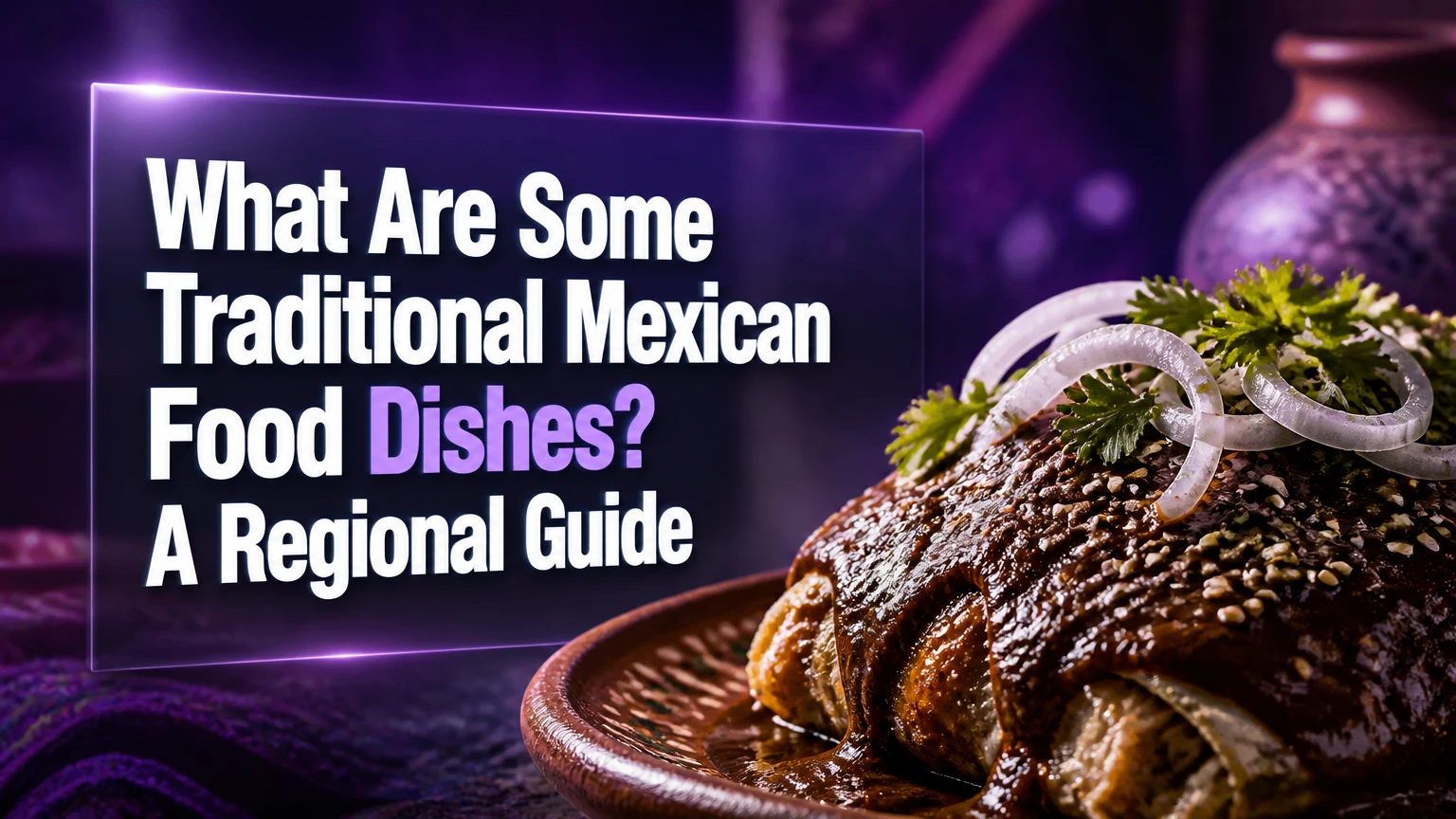
Mole is a family of sauces rather than one recipe. Mole poblano may contain dried chiles, spices, seeds, nuts, fruit, aromatics, and a small amount of cacao or chocolate, while mole negro from Oaxaca has a darker, more layered profile.
Recipe counts vary, so claims that every mole contains exactly 30 or more ingredients are too rigid. A complex mole can require several hours because ingredients are toasted separately, blended, strained, fried in stages, and simmered until the sauce loses raw flavors.
Important Salsa Families
Salsa roja typically uses red tomatoes and dried or fresh chiles. Salsa verde relies on tomatillos, whose acidity balances rich fillings. Pico de gallo uses raw tomato, onion, fresh chile, cilantro, and lime, so it depends more on ingredient freshness than lengthy cooking.
Which Traditional Mexican Foods Are Regional?
Traditional Mexican foods differ because Mexico contains arid northern plains, highland valleys, Pacific and Gulf coasts, tropical lowlands, and the Yucatán Peninsula. Regional food reflects climate, Indigenous languages and communities, local crops, preservation needs, and available livestock or seafood.
| Region | Representative foods | Defining ingredients | Typical technique |
|---|---|---|---|
| Northern Mexico | Flour tortillas, machaca-style dishes, grilled meats | Wheat, dried meat, chile | Grilling and drying |
| Central Mexico | Barbacoa, chilaquiles, mole poblano | Maize, maguey, dried chiles | Pit cooking and grinding |
| Oaxaca | Tlayudas, mole negro, memelas | Cacao, herbs, beans, native maize | Comal cooking and sauce grinding |
| Yucatán | Cochinita-style dishes, papadzules, sopa de lima | Achiote, sour orange, citrus | Banana-leaf cooking |
| Veracruz and Gulf | Fish preparations, tamales wrapped in leaves | Seafood, herbs, tropical produce | Steaming and braising |
| Jalisco | Birria, tortas ahogadas | Dried chiles, meat, bread | Slow braising |
Cochinita-style cooking traditionally uses achiote and sour orange with slow cooking in banana leaves. A vegetarian cook can apply the same flavor structure to mushrooms, jackfruit, squash, or beans, although the result should be named as an adaptation rather than presented as the original dish.
Which Cooking Methods Shape Mexican Flavor?
Comal cooking, roasting, grinding, steaming, braising, and pit cooking shape Mexican flavor more than heat alone. Dry roasting concentrates sweetness and creates toasted notes, while grinding releases oils from chiles, seeds, spices, and herbs into sauces.
| Method | Temperature or duration | Example | Advantage | Risk |
|---|---|---|---|---|
| Comal roasting | 200-260°C, 3-12 minutes | Tomatillo salsa | Concentrates flavor without added oil | Small ingredients scorch quickly |
| Sofrito or frying | 120-170°C, 5-15 minutes | Mole base | Rounds raw aromatics and chile flavors | Burnt spices become bitter |
| Steaming | 60-120 minutes | Tamales | Preserves soft masa texture | Undercooked centers |
| Slow braising | 2-6 hours | Birria, pozole | Tenderizes firm cuts and blends broth | Evaporation and excess salt |
| Stone grinding | 5-30 minutes | Salsa, mole, masa | Releases oils and creates texture | Uneven particle size |
An expert rule of thumb is to toast dried chiles only until fragrant and flexible, often 10-30 seconds per side. Blackened chile skin contributes acrid bitterness, not desirable smokiness.
How Much Does Traditional Mexican Food Cost?
Traditional Mexican food in Mexico commonly ranges from about 20-45 MXN for a single market taco or tamale, 80-180 MXN for a fonda set meal, and 3,500-4,500 MXN for a high-end tasting menu. Prices vary by city, inflation, location, service, and whether the meal is sold in a market, neighborhood diner, or destination restaurant.
| Dining setting in Mexico | Typical price per person | Serving time | Typical meal |
|---|---|---|---|
| Market or street stand | 20-45 MXN per item | 5-15 minutes | Taco, tamal, quesadilla |
| Neighborhood fonda | 80-180 MXN | 30-45 minutes | Soup, main dish, drink |
| Casual regional restaurant | 180-500 MXN | 45-90 minutes | Birria, mole, seafood |
| Destination tasting menu | 3,500-4,500 MXN | 2-3.5 hours | Multi-course regional menu |
These are typical planning ranges, not fixed national prices. Mexico City, Los Cabos, Cancún, and tourist centers often cost more than smaller inland markets, while overseas restaurants may charge several times the local equivalent.
Are Traditional Mexican Foods Healthy?
Traditional Mexican foods can provide substantial fiber, calcium, plant protein, and vegetables, but health depends on portion size, preparation method, sodium, added fats, and the specific dish. Beans, nixtamalized maize, squash, nopales, tomatoes, tomatillos, herbs, and fresh salsas offer a strong nutritional base.
Nixtamalization improves the culinary function of maize and makes niacin more available, but a tortilla is still a carbohydrate food. Fried tacos, creamy toppings, heavily salted broths, and large portions change the nutritional profile.
For a balanced plate, combine two or three small corn tortillas with beans or another protein, cooked vegetables, fresh salsa, and a modest amount of cheese or crema. Traditional food is not automatically low-calorie, gluten-free, vegetarian, or low-sodium.
Dietary Alternatives
- Vegetarian: Choose enfrijoladas, bean tlacoyos, calabacitas, huitlacoche quesadillas, mushroom tacos, and vegetable tamales.
- Vegan: Request no dairy, lard, or animal broth in beans, masa, salsas, and tamales.
- Gluten-free: Corn tortillas and masa are naturally gluten-free, but shared fryers and wheat flour tortillas create cross-contact risks.
- Lower-spice: Select bean dishes, quesadillas, soups, and tomato-based preparations; ask for salsa on the side.
- Higher-protein: Choose bean-and-egg breakfasts, grilled seafood, chicken dishes, or meals with both beans and maize.
What Common Mistakes Ruin Mexican Food?
The most common failures are dry masa, burned chiles, watery salsas, gummy nopales, and under-steamed tamales. Each problem has a mechanical cause that can usually be corrected before the entire meal is discarded.
| Problem | Likely cause | Immediate fix | Prevention |
|---|---|---|---|
| Cracking tortillas | Masa lacks water | Knead in water by teaspoons | Rest masa 15-30 minutes |
| Bitter salsa | Chiles burned | Replace the burned chiles | Toast 10-30 seconds per side |
| Gummy nopales | Excess mucilage | Salt, rest 20-30 minutes, rinse, sear | Use high heat and avoid crowding |
| Raw tamal center | Short steaming time | Steam another 15-30 minutes | Keep water below the rack |
| Watery salsa | Excess liquid or weak reduction | Simmer until thickened | Drain boiled tomatillos |
| Tough braised meat | Insufficient time or heat | Continue covered cooking | Maintain a gentle simmer |
Salt does not reliably remove all nopales mucilage, but salting followed by rinsing and hot dry-searing can reduce the slippery texture. For salsa, roasting improves sweetness, while boiling preserves a brighter, sharper flavor.
Which Dishes Should Beginners Try First?
Beginners should start with chilaquiles, fresh salsa, bean tacos, quesadillas, and simple pozole-style soup because these dishes teach salsa balance, tortilla handling, seasoning, and texture without requiring specialized equipment. Mole and whole-kernel nixtamalization are better later projects because both demand timing and repeated texture adjustments.
A Practical Progression
- Make a raw tomato salsa and a roasted tomatillo salsa.
- Cook beans with onion and herbs until creamy.
- Heat purchased corn tortillas on a dry skillet.
- Prepare chilaquiles and stop cooking while the tortilla pieces retain some structure.
- Make fresh masa tortillas using a press.
- Try tamales after learning how hydrated masa should feel.
- Attempt a regional mole or long braise with a full day available.
A molcajete creates a coarse, aromatic salsa because it crushes ingredients rather than liquefying them. A blender is faster and smoother, but it can over-aerate a sauce and produce a texture unlike a hand-ground preparation.
What Is Traditional Mexican Food Not?
Traditional Mexican food is not the same as every dish labeled Mexican outside Mexico. Tex-Mex, Cal-Mex, New Mexican cuisine, and Mexican-American restaurant food have their own histories and may use flour tortillas, yellow cheese, hard shells, or spice blends uncommon in particular Mexican regions.
Those cuisines are not inherently inferior. They are distinct food traditions. The useful question is whether a diner wants a regional Mexican dish, a Mexican-derived style, or a locally adapted restaurant meal.
Traditional Mexican food is also not uniformly hot. Chile peppers contribute aroma, acidity, color, fruitiness, and depth, and many dishes use mild chiles or serve heat separately. A dish can be deeply chile-based without being intensely spicy.
FAQ About Traditional Mexican Food
What Is the Most Famous Traditional Mexican Dish?
Tacos are probably the most internationally recognized traditional Mexican food, but no single dish represents the entire country. Tacos al pastor, mole poblano, tamales, pozole, chilaquiles, and regional specialties such as tlayudas each express different ingredients, techniques, and histories.
What Should I Order at a Mexican Restaurant for the First Time?
Order a dish that reveals the restaurant’s cooking base, such as chilaquiles for salsa and tortilla texture, pozole for broth and hominy, or a taco plate for tortillas and fillings. Ask which dishes are prepared regionally and request salsa separately if you are uncertain about heat.
Is Mexican Food Always Spicy?
Mexican food is not always spicy. Chiles may be mild, smoky, fruity, earthy, or acidic, and many dishes use them primarily for flavor and color. Remove the salsa, fresh chile, or chile garnish to reduce heat without changing the basic dish.
What Is the Difference Between a Taco and a Tostada?
A taco uses a folded or soft tortilla around a filling, while a tostada uses a crisp, flat tortilla with toppings layered above it. Tostadas are commonly fried or baked until rigid, so their texture and serving method differ from soft tacos.
Can Traditional Mexican Food Be Vegetarian?
Traditional Mexican cuisine includes many vegetarian foods, especially beans, squash, corn, mushrooms, nopales, huitlacoche, salsas, and vegetable tamales. Diners should verify that beans, rice, masa, and sauces contain no animal fat or broth because recipes differ among cooks and regions.
What Ingredients Should I Buy First?
Start with corn tortillas, dried or canned beans, tomatoes, tomatillos, onions, garlic, fresh cilantro, limes, and two chile types with different heat levels. Add masa harina, dried oregano, epazote, achiote, and dried chiles after learning how your preferred salsa and tortilla textures develop.
The Bottom Line
Traditional Mexican food is a diverse culinary system built around maize, beans, chiles, regional produce, grinding, steaming, roasting, braising, and communal cooking. Tacos, tamales, chilaquiles, pozole, mole, enchiladas, sopes, and regional dishes such as tlayudas are some of the clearest examples, but the strongest definition comes from the techniques and cultural context behind them. For a first taste, choose chilaquiles, bean tacos, pozole, or a regional taco, then explore how Mexican food changes from one state and cooking tradition to another.