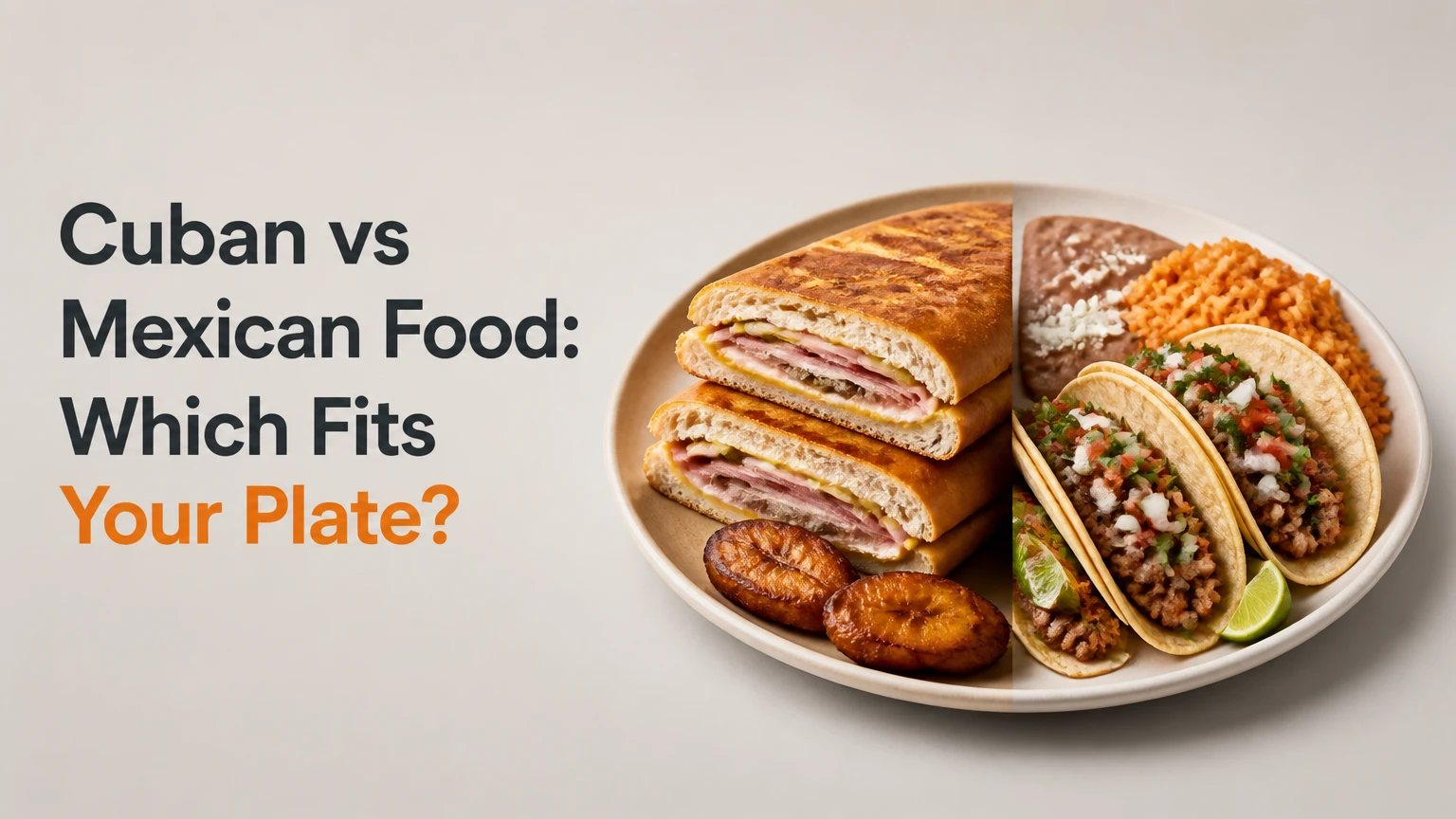
Cuban and Mexican food differ most in their flavor architecture, staple foods, and treatment of heat. Cuban cuisine centers on garlic-forward sofrito, citrus, rice, beans, plantains, and slow-cooked meats, while Mexican cuisine centers on corn masa, chiles, tomatoes, herbs, salsas, and strong regional variation. Cuban food is usually milder; Mexican food offers a wider heat range.
Key Facts at a Glance
- Cuban cuisine commonly builds savory depth with onion, green bell pepper, garlic, cumin, oregano, and sour orange.
- Mexican cuisine uses nixtamalized corn, fresh and dried chiles, tomatoes, herbs, beans, and regional spice systems.
- Cuban dishes usually emphasize braising, roasting, marinating, and cohesive plate-style meals.
- Mexican dishes frequently use a sequence of toasting, charring, grinding, frying, steaming, or grilling.
- Mexican cuisine gives vegetarians more traditional protein and masa-based choices, although Cuban cuisine has strong bean, rice, plantain, and vegetable dishes.
- The best choice depends on heat tolerance, desired texture, meal portability, dietary restrictions, budget, and access to regional cooking.
What Is the Difference Between Cuban and Mexican Food?
Cuban food is a Caribbean cuisine shaped by Spanish, African, Indigenous Caribbean, and broader regional influences. Mexican food is a Mesoamerican cuisine shaped by Indigenous foodways, Spanish colonial ingredients, and hundreds of regional traditions. The comparison is useful, but neither cuisine is a single uniform style.
Cuban cooking often begins with sofrito, a gently cooked mixture of onion, bell pepper, and garlic. Sour orange, lime, cumin, oregano, bay leaf, olives, raisins, beans, rice, and plantains create a profile that is savory, aromatic, tangy, sweet, and usually restrained in heat.
Mexican cooking begins from several foundations rather than one universal base. Corn masa, dried or fresh chiles, tomato, tomatillo, onion, garlic, cilantro, epazote, avocado, beans, and local herbs change substantially from Sonora to Oaxaca, Yucatán, Puebla, Veracruz, and Michoacán.
The distinction is cultural as well as culinary. UNESCO recognized traditional Mexican cuisine on its Representative List of the Intangible Cultural Heritage of Humanity in 2010, describing it as “a comprehensive cultural model” involving farming, ritual, community, and culinary techniques. Cuba’s food identity is similarly tied to family cooking, agriculture, migration, and local adaptation, but it does not operate through one nationally codified culinary system.
Cuban vs Mexican Food: Master Comparison
The table below compares the cuisines by attributes that affect a real meal, not by stereotypes about spice.
| Decision factor | Cuban cuisine | Mexican cuisine | Practical consequence |
|---|---|---|---|
| Primary starch | Long-grain rice, bread, green plantain | Corn masa, tortillas, rice | Choose Cuban for rice-centered plates; choose Mexican for tacos and masa dishes |
| Aromatic base | Onion, green pepper, garlic sofrito | Onion, garlic, tomato, tomatillo, chile | Cuban flavor is cohesive; Mexican sauces vary by chile and region |
| Acid source | Sour orange, lime, vinegar in selected dishes | Lime, tomatillo, vinegar, citrus | Mexican food often tastes sharper at the table |
| Heat range | Usually mild, with sweet peppers and modest chile use | Mild to very hot, depending on chile and region | Mexican menus allow more heat control, but require more questions |
| Common legumes | Black beans, red beans, split peas | Pinto beans, black beans, fava beans, chickpeas in some regions | Both support plant-based meals; Mexican beans pair more often with masa |
| Main cooking rhythm | Marinate, sauté, braise, roast | Toast, char, grind, fry, steam, grill | Cuban cooking rewards long simmering; Mexican cooking rewards sauce technique |
| Typical plate format | Protein, rice, beans, plantains, salad | Tacos, antojitos, soups, stews, tamales, composed plates | Cuban meals are often complete plates; Mexican meals range from snacks to feasts |
| Typical entrée price | $12-$25 in U.S. casual restaurants | $10-$30; street foods often $3-$8 | Mexican food has a wider low-cost range |
| Home cooking time | 45 minutes to 6 hours | 20 minutes to 8 hours | Quick Mexican meals are easier; complex sauces take longer |
| Best-known flavor impression | Garlic, citrus, cumin, savory sweetness | Chile, lime, tomato, herbs, toastiness | Select Cuban for aromatic comfort; select Mexican for layered variation |
Which Cuisine Is Spicier?
Mexican cuisine is generally spicier because fresh and dried chiles are structural ingredients, while Cuban cuisine usually uses chiles sparingly and relies on sweet peppers, garlic, and citrus. Mexican heat is not automatic, however. A cheese-filled quesadilla, bean tostada, or mild tomato salsa may contain little capsaicin, while a chile de árbol salsa can be intensely hot.
Cuban food is not flavorless because it is mild. Garlic, cumin, oregano, sour orange, black pepper, olives, and slow-cooked onions create depth without the burn associated with hot chiles. Cachucha peppers, used in some Cuban cooking, contribute aroma and sweetness rather than strong heat.
A practical heat scale is more useful than a national label.
| Dish or ingredient | Cuisine | Typical heat level | What creates the sensation |
|---|---|---|---|
| Ropa vieja | Cuban | 0-1/5 | Garlic, cumin, tomato, citrus |
| Black beans with rice | Cuban | 0/5 | Onion, pepper, garlic, herbs |
| Fresh pico de gallo | Mexican | 1-2/5 | Fresh chile, lime, onion |
| Tacos al pastor with salsa | Mexican | 1-4/5 | Achiote marinade plus chosen salsa |
| Mole negro | Mexican | 1-3/5 | Dried chiles, spices, seeds, cacao |
| Chile de árbol salsa | Mexican | 4-5/5 | Small dried hot chiles |
The practitioner rule is simple: ask whether heat is mixed into the dish or added as salsa. Separate salsa lets a sensitive diner enjoy Mexican food without accepting the cook’s maximum heat level.
How Do the Cooking Methods Compare?
Cuban cooking typically develops flavor through gentle sautéing, citrus marination, roasting, and braising. Mexican cooking more often develops flavor by changing the condition of ingredients first, especially through charring tomatoes, toasting dried chiles, grinding sauces, and cooking masa.
Cuban Method: Build a Sofrito and Braise
- Warm oil over medium heat and soften diced onion and green bell pepper for 6-10 minutes.
- Add minced garlic during the final 30-60 seconds so it becomes fragrant without turning bitter.
- Add marinated meat, beans, vegetables, or broth, then maintain a low simmer.
- Cook until connective tissue softens, usually 45 minutes to 4 hours depending on the cut and recipe.
- Adjust salt and acid at the end, because citrus brightness fades during long cooking.
A good Cuban sofrito should smell sweet and savory, not sharply browned. Adding garlic first is a common failure because small garlic pieces scorch before the onion releases enough moisture.
Mexican Method: Toast, Char, Grind, and Balance
- Toast dried chiles in a dry skillet for roughly 15-30 seconds per side.
- Char tomatoes, tomatillos, onion, or garlic until their skins darken and their interiors soften.
- Soak toasted chiles in hot, nonboiling water for about 15 minutes.
- Blend or grind the ingredients with spices, seeds, herbs, or broth.
- Fry the sauce briefly to concentrate its aroma before simmering it with the filling.
Mexican sauce technique depends on sequence. Boiling dried chiles aggressively can produce bitter liquid, while under-toasting leaves the sauce flat and grassy. The correct endpoint is fragrance, not blackened flesh.
| Technique | Cuban use | Mexican use | Skill or equipment requirement |
|---|---|---|---|
| Sofrito | Rice, beans, stews, picadillo | Salsas, fillings, soups | Heavy skillet, 10 minutes |
| Citrus marination | Roast meat, seafood, poultry | Yucatán-style marinades, seafood, adobos | 30 minutes to overnight |
| Braising | Ropa vieja, beans, stews | Birria-style dishes, moles, beans | Dutch oven or pressure cooker |
| Comal cooking | Less central in common Cuban meals | Tortillas, chiles, vegetables | Comal or cast-iron pan |
| Chile toasting | Limited | Salsas, adobos, moles | Dry skillet, 1-3 minutes |
| Sauce grinding | Sofrito and selected sauces | Salsas, moles, recados | Blender, mortar, or food processor |
| Plantain frying | Tostones and maduros | Regional side dishes | Oil, 10-20 minutes |
| Masa preparation | Not a defining staple | Tortillas, tamales, tlacoyos | Masa harina or fresh masa |
What Are the Signature Dishes?
Cuban signature dishes tend to combine a seasoned central preparation with rice, beans, root vegetables, or plantains. Mexican signature dishes cover a much larger range, from handheld antojitos and breakfast foods to soups, tamales, regional stews, and ceremonial dishes.
Cuban Dishes to Recognize
- Ropa vieja: Shredded beef simmered with tomato, onion, peppers, garlic, and spices until tender.
- Lechón asado: Slow-roasted meat marinated in garlic-heavy mojo made with sour orange or lime.
- Moros y cristianos: Rice and black beans cooked together, often with aromatics and rendered seasoning.
- Picadillo: Ground beef with tomato, olives, capers, raisins, and sofrito, producing a sweet-salty balance.
- Tostones: Twice-fried green plantain rounds, flattened between frying stages and salted.
- Maduros: Ripe plantains fried until their natural sugars brown and soften.
- Cuban sandwich: Cuban bread pressed with sliced cured meat, roast meat, Swiss cheese, pickles, and mustard.
Cuban food is particularly effective when texture contrast is intentional. Crisp plantains, soft beans, tender shredded meat, and acidic pickles keep a rice-centered plate from becoming monotonous.
Mexican Dishes to Recognize
- Tacos al pastor: Thinly sliced marinated meat cooked on a vertical spit and served with tortilla, onion, herbs, salsa, and often pineapple.
- Mole poblano: A thick sauce using dried chiles, spices, seeds, nuts, fruit, and cacao, with recipes varying widely.
- Chiles en nogada: Stuffed poblano chiles with walnut sauce and pomegranate, commonly associated with Puebla.
- Pozole: Hominy soup with meat or beans, garnished with cabbage, radish, onion, oregano, and lime.
- Enchiladas: Filled tortillas covered with chile or tomato sauce; preparation varies by region.
- Tamales: Masa dough steamed in corn husks or plantain leaves around savory or sweet fillings.
- Cochinita pibil: Yucatán-style slow-cooked meat seasoned with achiote and sour orange, traditionally prepared in a covered pit or oven.
- Tlacoyos: Oval masa cakes filled with beans or other ingredients and topped with salsa, cheese, or vegetables.
Mexican food cannot be represented accurately by tacos alone. Corn processing, regional chiles, and local cooking methods matter more than the restaurant category on a sign.
Which Cuisine Is Better for Dietary Needs?
Mexican cuisine usually offers more traditional vegetarian and vegan variety because beans, masa, squash, mushrooms, nopales, huitlacoche, and vegetables can form the main dish. Cuban cuisine can also work well for plant-based diners, particularly through black beans, rice, yucca, plantains, avocado, and vegetable stews, but cooks may use animal fat or stock without advertising it.
| Dietary need | Easier cuisine | Order or cook | Verify before eating |
|---|---|---|---|
| Vegetarian | Mexican | Bean tlacoyos, vegetable tacos, nopales, quesadillas | Lard in beans, stock in sauces |
| Vegan | Mexican | Corn tortillas, beans, salsa, nopales, avocado | Cheese, cream, lard, chicken stock |
| Gluten-free | Both | Rice and beans; corn tortillas; plantains | Wheat in bread, flour tortillas, shared fryers |
| Dairy-free | Cuban | Ropa vieja with rice and beans; roast seafood | Butter, cheese in sandwiches, creamy toppings |
| Lower-fat | Mexican or Cuban | Grilled seafood, bean soup, fresh salsa | Fried tortillas, creamy sauces, fatty cuts |
| High-protein | Both | Beans plus eggs, poultry, seafood, or meat | Portion size and cooking fat |
Corn tortillas are naturally gluten-free when made from masa, but cross-contact at restaurants remains possible. Diners with celiac disease should ask about shared griddles, flour tortillas, and seasoning blends.
Which Is Healthier, Cuban or Mexican Food?
Neither cuisine is automatically healthier; preparation determines the result. A Cuban bowl of beans, rice, vegetables, and grilled seafood can be nutrient-dense, while a heavily fried sandwich may be high in sodium and saturated fat. A Mexican bean-and-vegetable taco plate can be balanced, while fried shells, large cheese portions, and creamy toppings raise energy density.
The most useful comparison is meal construction.
| Meal choice | Typical strengths | Typical concern | Practical adjustment |
|---|---|---|---|
| Cuban black beans and rice | Fiber, plant protein, steady carbohydrates | Sodium and added fat | Request less added fat and add salad |
| Ropa vieja plate | Protein, braised vegetables, filling texture | Large meat and rice portion | Choose half rice and extra vegetables |
| Mexican bean tacos | Fiber, masa, vegetables, customizable salsa | Fried toppings or cheese overload | Use soft corn tortillas and fresh toppings |
| Pozole | Broth, hominy, cabbage, radish, lime | Sodium and large portions | Add garnishes, choose a moderate bowl |
| Cuban sandwich | Portable, crisp, substantial | Processed meat, cheese, sodium | Share it and add fruit or salad |
| Mole with rice | Complex spices and sauce | Calorie-dense seeds, nuts, and added fat | Use a smaller sauce portion |
A useful home rule is to make half the plate vegetables or beans, then divide the remaining space between a staple and protein. That rule works across both cuisines.
Which Is Easier and Cheaper to Cook?
Mexican food is usually easier to cook quickly, while Cuban food is often simpler in ingredient count but slower when braising is involved. Typical home costs range from $2-$5 per serving for bean, rice, tortilla, and vegetable meals, and from $5-$10 per serving for dishes using seafood or larger meat portions.
| Meal type | Cuisine | Active time | Total time | Typical home cost per serving |
|---|---|---|---|---|
| Black beans and rice | Cuban | 20-35 minutes | 45-120 minutes | $2-$4 |
| Ropa vieja | Cuban | 35-50 minutes | 3-5 hours | $6-$10 |
| Tostones with beans | Cuban | 25-35 minutes | 35-45 minutes | $2-$5 |
| Bean tacos | Mexican | 15-25 minutes | 20-30 minutes | $2-$4 |
| Fresh salsa and tortillas | Mexican | 20-30 minutes | 25-40 minutes | $2-$5 |
| Mole from scratch | Mexican | 90-150 minutes | 3-8 hours | $6-$12 |
| Pozole | Mexican | 35-50 minutes | 2-5 hours | $5-$9 |
Mexican cooking becomes expensive when a recipe requires many dried chiles, nuts, seeds, spices, and long preparation. Cuban cooking becomes expensive when a meal relies on large cuts of meat, imported sour orange, or restaurant labor.
For a first attempt, cook Cuban black beans with rice if you want forgiving seasoning and a one-pot workflow. Cook bean tacos with fresh salsa if you need dinner in under 30 minutes.
What Are the Regional Differences and Restaurant Caveats?
Mexican cuisine has more visible regional segmentation than Cuban cuisine in many international restaurant markets. Northern Mexico is associated with wheat flour tortillas and grilled meats, central regions with complex antojitos and sauces, Oaxaca with moles and distinctive masa foods, and Yucatán with achiote, sour orange, and pit-style cooking.
Cuban food also changes by place and community. Havana, eastern Cuba, rural households, Miami restaurants, and Cuban-American diners may use different ingredients, portion sizes, and substitutions. A restaurant menu outside Cuba may adapt seasoning, bread, available seafood, and cooking fats to local supply.
“Authentic” is therefore a poor ordering shortcut by itself. Ask which region, family tradition, or preparation the restaurant represents. Mexican food in a Yucatecan restaurant should not be judged by whether it resembles northern tacos, just as a Miami Cuban sandwich does not define every Cuban meal.
Mexican food is often easier to find in smaller cities because tacos, burritos, and salsa bars have broad commercial distribution. Cuban restaurants are more concentrated in areas with established Cuban communities, especially South Florida, parts of New Jersey, New York, and selected metropolitan neighborhoods.
Which Should You Choose?
Choose Cuban Food for Mild, Savory Comfort
Choose Cuban food when you want garlic, citrus, cumin, slow-cooked texture, rice, beans, and plantains without significant chile heat. A dependable order is ropa vieja with black beans, rice, and maduros, provided the restaurant can accommodate your dietary restrictions.
Cuban food is also a strong choice for packed lunches. A pressed sandwich travels better than a tortilla filled with wet salsa, while beans and rice reheat reliably for two to three days when refrigerated promptly.
Choose Mexican Food for Regional Variety
Choose Mexican food when you want to compare chiles, masa, fresh herbs, salsas, soups, tamales, and regional preparations. Mexican cuisine offers more distinct pathways for repeated dining because a Yucatecan plate, Oaxacan mole, northern grilled meal, and central Mexican antojito can share few ingredients beyond the broad culinary tradition.
Ask for salsa on the side if heat is uncertain. Request corn tortillas if you want a traditional masa flavor and do not have a wheat preference.
Choose Mexican Food for Vegetarian or Vegan Meals
Mexican food is usually the easier choice for vegetarian and vegan diners because beans, masa, squash, nopales, mushrooms, and salsa can carry the meal without imitation products. Confirm that beans are not cooked with lard, sauces do not contain meat stock, and rice is prepared separately from animal-based broth.
Cuban food remains viable when the kitchen offers plain black beans, rice, fried or baked plantains, yucca, avocado, and vegetables. The limitation is that some traditional bean preparations rely on rendered fat for their characteristic richness.
Choose Either Cuisine for Seafood
Choose based on preparation rather than national label. Cuban seafood often favors garlic, citrus, tomato, and straightforward roasting or stewing, while Mexican seafood may emphasize lime, chile, tomato, avocado, or regional marinades.
Seafood freshness matters more than the cuisine name. A simply seasoned fresh fish plate is preferable to an elaborate sauce covering poor-quality ingredients.
Choose Cuban Food for a Simpler Flavor Profile
Cuban food is the better fit when you dislike cilantro, strong chile flavor, or heavily layered sauces. The cuisine still has complexity, but its complexity often comes from time, aromatics, acid, and sweet-savory contrast rather than dozens of spices.
Cuban cuisine is not ideal when you want crisp raw toppings, multiple salsa options, or substantial plant-based menu breadth. Mexican cuisine usually offers those features more consistently.
Common Mistakes and Better Fixes
- Burning Cuban garlic: Add onion and pepper first, then garlic for the final 30-60 seconds of sautéing.
- Using harsh acid in Cuban marinades: Combine orange juice and lime rather than replacing all sour orange with strong vinegar.
- Treating Mexican chile varieties as interchangeable: Ancho, guajillo, pasilla, chipotle, and chile de árbol differ in heat, sweetness, smoke, and texture.
- Boiling dried chiles: Toast briefly, soak in hot water off the heat, and discard bitter soaking liquid if the recipe calls for it.
- Using stale tortillas: Warm fresh corn tortillas on a dry comal for 20-30 seconds per side and keep them covered.
- Assuming every bean is vegetarian: Ask about lard, meat stock, and shared cooking equipment.
- Confusing Tex-Mex with all Mexican food: Tex-Mex commonly uses flour tortillas, large portions, yellow cheese, and cumin-forward fillings, while Mexican regional food has a broader ingredient and technique system.
- Overloading Cuban plates with starch: Balance rice, beans, and plantains with salad, vegetables, or a smaller central portion.
The most counterintuitive rule is that Mexican food can be mild without being bland, while Cuban food can be intensely seasoned without being spicy. Heat and flavor intensity are separate variables.
FAQ
Is Cuban food similar to Mexican food?
Cuban and Mexican food share Spanish colonial ingredients, rice, beans, citrus, garlic, and some cooking methods, but their dominant structures differ. Cuban cooking centers more on sofrito, rice plates, plantains, and braises, while Mexican cooking centers more on corn masa, chiles, salsas, and regional techniques.
Do Cuban dishes use corn tortillas?
Corn tortillas are not a defining everyday staple of Cuban cuisine. Cuban meals more commonly use rice, bread, plantains, yucca, and other starchy foods, whereas Mexican cuisine uses corn masa for tortillas, tamales, tlacoyos, and many other preparations.
Can Mexican food be non-spicy?
Mexican food can be non-spicy because many dishes use chiles for aroma, color, or depth rather than high heat, and some contain little chile at all. Ask for salsa separately, choose beans or cheese-filled dishes, and avoid chile de árbol or habanero sauces when you are heat-sensitive.
Is Cuban food always heavy?
Cuban food is not always heavy, although restaurant plates can contain generous portions of rice, beans, fried plantains, and rich meat preparations. Grilled seafood, citrus-marinated poultry, vegetable sides, black beans, and moderate rice portions create a lighter Cuban meal.
Which cuisine has more gluten-free options?
Both cuisines can provide gluten-free meals, but Mexican cuisine has a particularly strong foundation in corn masa. Cuban dishes based on rice, beans, plantains, yucca, seafood, and meat can also be gluten-free, but diners should verify bread, marinades, flour tortillas, and cross-contact.
What is the best first dish to try?
Try Cuban black beans with rice and maduros for a mild, cohesive introduction to Cuban flavors. Try bean tacos with fresh salsa for a fast Mexican introduction, or choose pozole if you want a brothy dish with hominy and customizable garnishes.
The Bottom Line
Cuban vs Mexican food is not a contest between mild and spicy versions of the same cuisine. Cuban food is usually the stronger choice for garlic, citrus, rice, beans, plantains, slow-cooked comfort, and low heat. Mexican food is usually the stronger choice for corn masa, regional variety, fresh salsa, chile complexity, quick meals, and traditional vegetarian options. Choose the cuisine that matches your desired heat, texture, dietary needs, budget, and cooking time.